Best Ammo for Suppressed Shooting
A suppressor only silences one of the three noises a gunshot makes. Which ammunition you feed it decides whether you hear the other two.

The most common disappointment with a first suppressor is that it did not make the rifle quiet. The can is usually fine. The ammunition is usually the problem.
A gunshot makes three distinct noises, and a suppressor only addresses one of them.
The three noises
1. Muzzle blast. High-pressure gas leaving the barrel. This is what a suppressor is for, and it is where all the marketing decibel figures come from.
2. The sonic crack. Any bullet travelling faster than roughly 1,125 fps at sea level generates a small sonic boom that follows it downrange. No suppressor can address this, because it is not happening at the muzzle - it is happening along the bullet's entire flight path.
3. Mechanical noise. The bolt cycling, the hammer falling. On a quiet setup with subsonic ammunition this becomes the loudest thing you hear, which surprises people.
Ammunition selection controls number two entirely. It also influences number three, because subsonic loads cycle the action with less violence.
Subsonic vs supersonic
Subsonic means the bullet stays below the speed of sound. Removes the crack. Costs you velocity and therefore energy, and may not cycle your gun.
Supersonic means normal full-power ammunition. Retains ballistic performance and range. You will hear a crack.
The trade is not subtle. If quiet is the point, subsonic is not optional.
By caliber
.300 Blackout — the purpose-built answer
.300 Blackout exists in large part because of this problem. It was designed to launch heavy subsonic projectiles and to cycle an AR-15 action while doing it, from a short barrel.
Subsonic .300 Blackout typically uses heavy bullets in the 190-220gr range, trading velocity for mass. What you need to check is whether the specific load is built to expand at subsonic velocity - many are not, and a hollow point that does not open at 1,050 fps is just an expensive round nose.
.300 Blackout Price Index
Live · Oct 10, 2026Live .300 Blackout Pricing
Prices updated Oct 10, 2026
Wolf Performance Ammo Polyformance Steel Case .300 AAC Blackout 145 Grain 20-Rounds
.300 Blackout · 145gr · 20 rds

NOSLER Custom Brass 300 AAC Blackout Bulk Brass 250rd
.300 Blackout · 250 rds

SELLIER BELLOT SB300BLKB 300 AAC Blackout 147gr Full Metal Jacket Ammunition | 20 Rounds
.300 Blackout · 147gr · 20 rds

SELLIER BELLOT SB300BLKSUBA 300 AAC Blackout 200gr Full Metal Jacket Subsonic Ammunition | 20 Rounds
.300 Blackout · 200gr · 20 rds

MAGTECH 300 AAC Blackout HPFB 115Gr 50rd
.300 Blackout · 115gr · 50 rds

ARMSCOR Precision 300 AAC Blackout 147gr Full Metal Jacket Ammunition | 100 Rounds
.300 Blackout · 147gr · 100 rds
Critical safety note: .300 Blackout will chamber in a 5.56 rifle and must never be fired in one. The case is a necked-up 5.56 case, so a .300 Blackout round can be inadvertently loaded into a 5.56 chamber with catastrophic results. Keep them physically separated, and label magazines.
.22 LR — the cheapest quiet there is
Subsonic .22 LR through a rimfire suppressor is the quietest and by far the least expensive way to shoot suppressed. Most standard-velocity .22 LR is already subsonic or close to it; purpose-labelled subsonic loads have more margin.
.22 LR Price Index
Live · Oct 10, 2026Note what that market floor implies. Suppressed rimfire shooting costs a fraction per round of anything else on this page, which makes it the sensible way to get comfortable with a suppressed platform.
The trade-off: rimfire cans foul faster than anything else and most need to be user-serviceable for that reason. Buy accordingly.
9mm — the pistol answer
Subsonic 9mm is straightforward. Standard 147gr loads are typically already subsonic, which makes this the least fussy suppressed setup in the centerfire world. Lighter 115gr loads are generally supersonic.
Live 9mm Pricing
Prices updated Oct 10, 2026
MAGTECH 9mm Luger Steel Case 124 FMJ 50rd
9mm · 50 rds

SELLIER BELLOT 9mm 124Gr 1200 FPS FMJ 50rd
9mm · 124gr · 50 rds

SELLIER BELLOT 9mm 115gr FMJ Brass Ammunition | 50 Rounds
9mm · 115gr · 50 rds
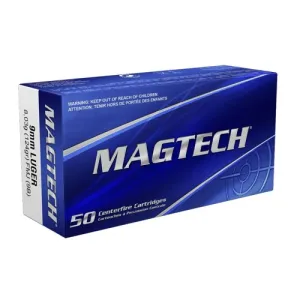
MAGTECH 9mm 124gr FMJ 50rd
9mm · 124gr · 50 rds

Winchester USA Forged 9mm 115 Grain 1000-Rounds Bulk FMJ
9mm · 115gr · 1,000 rds

MILI CUSTOM DEFENSE AMMUNITION 9mm 155gr Subsonic FMJ 50rd
9mm · 155gr · 50 rds
Our full breakdown of 9mm loads by job is in best 9mm ammo.
5.56 — the awkward one
There is no good subsonic 5.56. The case capacity and bullet weights available do not lend themselves to it, and subsonic 5.56 will not reliably cycle an AR without significant tuning.
Suppressing a 5.56 rifle is still worthwhile - it substantially reduces muzzle blast and makes the rifle far more pleasant to shoot, particularly indoors or from a short barrel. It just will not be quiet in the way people imagine. Accept the crack, or shoot a different cartridge.
The cycling problem
Subsonic loads generate less gas pressure. An action tuned for full-power ammunition may short-stroke.
The usual fixes, cheapest first:
- An adjustable gas block — the correct solution on an AR, and it lets one rifle run both.
- A lighter buffer or recoil spring — helps, but shifts the tuning rather than making it adjustable.
- Accept manual operation — a bolt gun or a manually cycled semi-auto is perfectly quiet and has no cycling problem at all.
Fouling: the part that changes what you buy
Suppressors push gas back into the action. A suppressed gun runs dirtier and hotter than the same gun unsuppressed, and the effect compounds fast.
This is why we do not recommend the cheapest steel-cased ammunition for a suppressed host even though it saves money elsewhere. Dirty ammunition plus suppressor blowback makes a gun unpleasant within a couple of hundred rounds. Buy brass-cased and cleaner-burning; the difference in cost per round is small next to the difference in how the gun runs.
The general case-material argument is in steel case vs brass case ammo.
Cost Per Round Calculator
The only number that matters when comparing ammo. Shipping included.
Get alerted when .300 Blackout price drops hit.
We watch every listing and email you the moment the cost per round drops.
Set Up a Free Price Alert- Suppressors we track
- .300 Blackout by cost per round
- .22 LR by cost per round
- Muzzle energy vs velocity explained
AmmoSpotter earns a commission when you buy through links on this page. It never changes what you pay, and it never decides what we recommend — our picks are ranked on live cost-per-round data pulled from every retailer we track. Full disclosure.
Frequently Asked Questions
Why is my suppressed rifle still loud?+
Does subsonic ammo work in a semi-auto?+
Is subsonic ammo less effective?+
Does suppressed shooting foul the gun more?+
What is the quietest common caliber to shoot suppressed?+

About the author
AmmoSpotter Research Desk
Price & Ballistics Research
The AmmoSpotter Research Desk analyzes live retail pricing across every ammunition, firearm and accessory listing we track. Recommendations here are ranked against real cost-per-round data pulled daily from the retailers we monitor - not against manufacturer marketing copy.
- ✓Tracks 180,000+ live product listings across 6 retailer feeds
- ✓Records price history on every listing, every day
- ✓Cost-per-round methodology applied to all ammunition rankings
- ✓No product is ranked without a verifiable in-stock retail price
- ✓Affiliate relationships never influence rankings
Related Guides

Muzzle Energy vs Muzzle Velocity: What Actually Matters
Every ammunition box prints a velocity figure, and most print an energy figure next to it. Both are real. Both get used to argue things they cannot support — that one cartridge "hits harder," that a lighter bullet is ...

How to Buy Ammo Online Without Overpaying (2026 Guide)
Most ammunition buying advice stops at "shop around." That is not a process, and it is not why people overpay. People overpay because ammunition is priced in a unit nobody compares — the box — while the thing being bo...

Cost Per Round: The Only Ammo Price Metric That Matters
There is exactly one reason ammunition is hard to price-compare: it is advertised in boxes and consumed in rounds. Box counts are not standardized. A "box" of 9mm might be 50 rounds. A "value pack" might be 100, or 11...

Best 9mm Ammo 2026: Range, Carry and Duty Loads Ranked
9mm Luger is the most-produced, most-competitive cartridge in the American market. That is good news and bad news: prices are low, and the sheer number of listings makes it easy to pay 30% more than you needed to for ...

Suppressor Buying Guide: What You Actually Need to Know First
- The suppressor is one of four costs. The others are the federal transfer and its tax, the dealer's transfer fee, and the mount. - Buy for the host you actually shoot most, not the host you imagine shooting. A rimfir...

Best Ammo for Suppressed Rifles 2026: Subsonic Loads Ranked on Live Prices
- A suppressor silences muzzle blast. It does nothing about a supersonic bullet's crack. The ammunition, not the can, decides how quiet the rifle actually is. - .300 Blackout in 200–220 grain is the only mainstream ce...