Best Ammo for Suppressed Rifles
The can is a one-time cost. The ammo is forever — here is what actually goes quiet, by host, priced live.

What actually makes ammo good for a suppressed rifle?
Three things, in this order.
It has to stay under the speed of sound. Roughly 1,125 feet per second at sea level, lower when it is cold. Above that the bullet drags a shockwave with it and the crack happens downrange, where your suppressor has no influence at all. This is the single biggest determinant of perceived noise and it is entirely an ammunition decision.
It has to cycle your action. Subsonic loads make less gas. A rifle tuned for supersonic ammunition will frequently short-stroke on them. This is a real problem, not a theoretical one, and it is why the buying advice on this page is always "test one box first."
It should not be filthy. Suppressors raise back-pressure, which drives more combustion products back into the action and the chamber. You will clean more. Unjacketed lead — which is to say all cheap .22 LR — accelerates this dramatically inside the can itself.
Everything else is downstream of those three. We track 16,170 ammunition listings, and the ones that satisfy all three at once are a much smaller set than the marketing suggests.
Our Picks, by Host

Sellier & Bellot .300 BLK 200gr FMJ Subsonic
The entry point into subsonic .300 Blackout. Plain FMJ, brass case, 200 grain — the load you buy to find out whether your gas system will run subsonic at all before you commit to a case of anything.
Pros
- ✓Sits at the bottom of the subsonic .300 BLK market in our tracking
- ✓Brass case, reloadable
- ✓Sold in 20-round boxes, so a cycling test is cheap
Cons
- ✗FMJ, so it is a range and testing load, not a hunting one
- ✗20-round boxes cost more per round than bulk

PSA Mixtape .300 BLK 220gr TMJ, 250 rounds
220 grain, sold by the can. Once you know your rifle cycles subsonic reliably, this is where the per-round cost actually drops.
Pros
- ✓Heaviest common bullet weight, which is the easiest to keep subsonic
- ✓Bulk packaging brings the per-round number down
- ✓Ships in a sealed can
Cons
- ✗250 rounds is a real commitment if your rifle turns out to be picky
- ✗Heavier bullets need more gas to cycle, not less

Winchester Super Suppressed .300 BLK 200gr, 125 rounds
A line built specifically around suppressed use rather than adapted to it. Loaded to stay under the sound barrier with a margin, in a mid-size bulk pack.
Pros
- ✓Designed as a suppressed-use load, not a repurposed heavy bullet
- ✓125-round pack sits between test box and full case
Cons
- ✗Costs more per round than generic 200gr FMJ
- ✗Open-tip range bullet, not a terminal-performance load

CCI Standard Velocity .22 LR 40gr, 500 rounds
Nothing else on this page is close on cost per round. Standard-velocity .22 LR is already under the sound barrier from the box, so a rimfire can does its whole job without a special load.
Pros
- ✓By far the lowest cost per round of any option here
- ✓Already subsonic without paying a subsonic premium
- ✓Reliable in semi-autos that choke on true low-velocity loads
Cons
- ✗Unjacketed lead fouls a rimfire can quickly
- ✗Rimfire only — this is a second host, not a substitute for a centerfire rifle

CCI Quiet-22 40gr, 50 rounds
Loaded far below standard velocity. In a manually operated rifle it is about as quiet as a firearm gets. It will not reliably cycle a semi-auto, and that is the trade you are making.
Pros
- ✓Lowest-velocity common factory rimfire load
- ✓Cheap enough to shoot in volume
Cons
- ✗Will not cycle most semi-autos
- ✗Sold in 50-round boxes, so it is not the cheapest per round

Sellier & Bellot .308 Win 200gr Subsonic BTHP
If the suppressed rifle you already own is a .308, this is the cheapest way into subsonic without a bullet-weight experiment. Expect to work the bolt by hand in a gas gun.
Pros
- ✓One of the least expensive subsonic .308 loads we track
- ✓Boat-tail hollow point rather than a flat FMJ
Cons
- ✗Subsonic .308 costs several times what subsonic .300 BLK does per round
- ✗Almost never cycles a semi-auto without gas system work
Do you actually need subsonic ammo?
Only if the host is a centerfire rifle.
On a rimfire rifle, standard-velocity .22 LR is already below the sound barrier straight from the box — you get the benefit without paying for it. On a 9mm carbine, most 147-grain factory loads are already subsonic for the same reason. The "subsonic premium" only exists for centerfire rifle cartridges, where the default commercial load is supersonic by a wide margin and going quiet means buying something built specifically for it.
That is worth being blunt about, because a lot of buyers put a can on a 5.56 rifle, shoot supersonic ammunition through it, and conclude that suppressors are overrated. They are not. That rifle is doing exactly what physics requires it to do.
What does subsonic ammunition actually cost?
This is the part every suppressor guide leaves out, and it is the number that determines whether the can gets used or sits in the safe.
Compare the three markets directly:
.300 Blackout Price Index
Live · Oct 21, 2026.22 LR Price Index
Live · Oct 21, 2026.308 Winchester Price Index
Live · Oct 21, 2026Two things fall out of those blocks. First, the gap between .22 LR and everything else is not incremental — it is an order-of-magnitude difference in cost per trigger pull, which is why almost everyone who owns a rimfire can shoots it more than any other suppressed host they own. Second, .300 Blackout as a whole sits well above high-volume cartridges, and the subsonic half of that market sits above the cartridge's own average, because 200 and 220 grain loads have no cheap surplus equivalent pulling the floor down. Why ammo prices move covers the supply mechanics behind that gap in more detail.
Run your own annual number rather than estimating it:
Cost Per Round Calculator
The only number that matters when comparing ammo. Shipping included.
If you shoot the volume described in how many rounds it takes to get good, the ammunition will outrun the price of the suppressor itself inside a couple of seasons. Plan for that when you are choosing a host, not after.
Best subsonic .300 Blackout
.300 Blackout exists because someone wanted a subsonic, suppressed, AR-compatible cartridge that would run on a standard bolt and magazine. Everything else about it is a consequence of that goal, and it is the reason this is the only centerfire rifle cartridge where subsonic ammunition is a genuine mass market rather than a specialty item.
What to look for on the label:
- 200 to 220 grain. Lighter bullets in this cartridge are the supersonic side of the product line. If the box does not say subsonic, check the grain weight.
- Bulk packaging if your rifle already runs it. The step from a 20-round box to a 125- or 250-round pack is where the per-round cost actually moves.
- Bullet construction matched to purpose. FMJ and TMJ are range loads. Expanding subsonic bullets are a separate, more expensive product, and heavy subsonic projectiles that expand reliably at those velocities are genuinely hard to engineer.
Here is the current .300 Blackout market, cheapest per round first, straight to the retailer:
Cheapest .300 Blackout Per Round
Prices updated Oct 21, 2026
Wolf Performance Ammo Polyformance Steel Case .300 AAC Blackout 145 Grain 20-Rounds
.300 Blackout · 145gr · 20 rds

NOSLER Custom Brass 300 AAC Blackout Bulk Brass 250rd
.300 Blackout · 250 rds

MAGTECH 300 AAC Blackout HPFB 115Gr 50rd
.300 Blackout · 115gr · 50 rds
SELLIER BELLOT SB300BLKSUBA 300 AAC Blackout 200gr Full Metal Jacket Subsonic Ammunition | 20 Rounds
.300 Blackout · 200gr · 20 rds

ARMSCOR Precision 300 AAC Blackout 147gr Full Metal Jacket Ammunition | 100 Rounds
.300 Blackout · 147gr · 100 rds

SELLIER BELLOT SB300BLKB 300 AAC Blackout 147gr Full Metal Jacket Ammunition | 20 Rounds
.300 Blackout · 147gr · 20 rds

ARMSCOR 300 AAC Blackout 147gr Full Metal Jacket Ammunition | 20 Rounds
.300 Blackout · 147gr · 20 rds

MagTech Tactical/Training Brass .300 AAC Blackout 123-Grain 50-Rounds Full Metal Jacket
.300 Blackout · 123gr · 50 rds
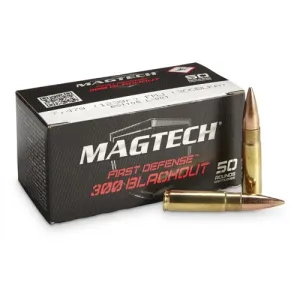
MAGTECH 300 AAC Blackout 123Gr FMJ 50rd
.300 Blackout · 123gr · 50 rds
That grid mixes supersonic and subsonic, because the cheapest .300 Blackout is generally the light supersonic stuff. Filter by grain weight when you shop it — the full .300 Blackout catalog lets you sort by cost per round with the grain weight on every card. If you have not committed to the platform yet, 5.56 vs .300 Blackout is the comparison to read first, and our 5.56 guide covers what you would be giving up on the supersonic side.
Is rimfire the cheapest suppressed shooting there is?
Yes, and it is not close.
Standard-velocity .22 LR leaves the muzzle below the sound barrier without any special loading, which means you are not paying a subsonic premium — you are just buying ordinary .22 LR. Combine that with a rimfire can and the cost per suppressed trigger pull drops below every centerfire option by a factor that the price index blocks above make obvious.
Two categories worth distinguishing:
- Standard velocity — subsonic as loaded, and still energetic enough to cycle most semi-autos.
- Reduced-velocity loads marketed specifically as quiet — considerably slower, and generally will not cycle a semi-automatic action. Excellent in a bolt gun, frustrating in a 10/22.
Do not buy high-velocity .22 LR for suppressed use. It is supersonic, it cracks, and it defeats the point.
Bulk .22 LR, Cheapest Per Round
Prices updated Oct 21, 2026
Federal American Eagle Brass .22 LR 38 Grain 4000-Rounds Bulk CPHP
.22 LR · 38gr · 4,000 rds

BROWNING BPR Value Pack 22LR 36gr Hollow Point Ammunition | 800 Rounds
.22 LR · 36gr · 800 rds

REMINGTON 22 LR 38Gr Standard V LRN 550rd
.22 LR · 38gr · 550 rds

WINCHESTER AMMO 22 LR USA 36Gr Copper Plated HP 500rd
.22 LR · 36gr · 500 rds

Aguila Super Extra High Velocity Bulk .22 LR 40-Grain 500-Rounds CPSP
.22 LR · 40gr · 500 rds
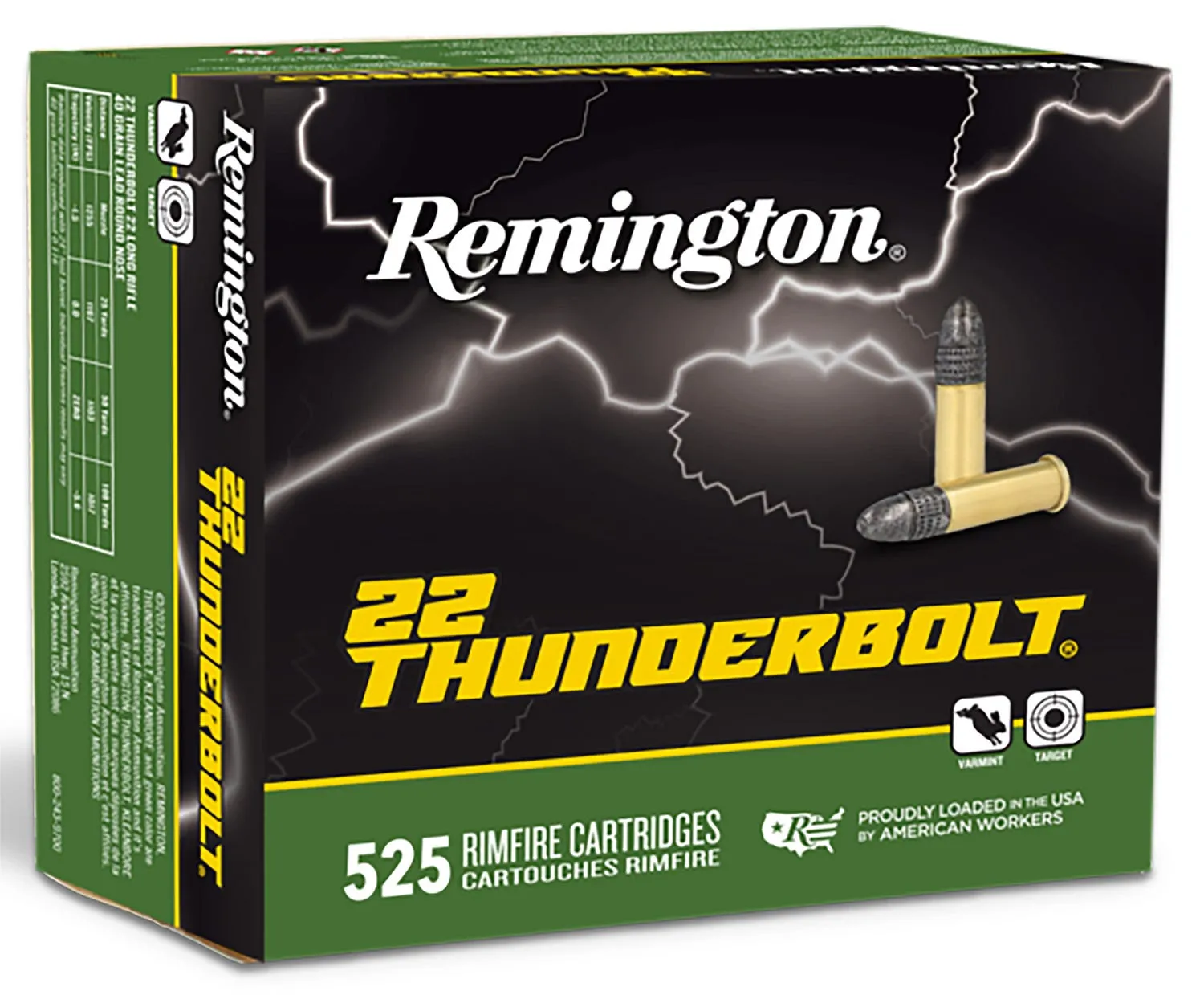
Remington Thunderbolt Bulk .22 LR 40 Grain 525-Rounds LRN
.22 LR · 40gr · 525 rds
Our .22 LR ammo guide goes deeper on which bulk lots are actually worth buying, including the accuracy trade-offs that come with the cheapest tier.
Subsonic .308: when does it make sense?
When you already own the rifle and do not want to buy another one.
Subsonic .308 is a real product category with real options from major manufacturers, and it works. The two costs are that it sits at a substantial multiple of subsonic .300 Blackout per round, and that dropping a .308 to subsonic velocity leaves nowhere near enough gas to cycle a semi-automatic action — you are working a bolt, either by design or by hand.
The case for it is that a .308 bolt gun with a .30-caliber can and subsonic loads is a complete, quiet system with no new firearm purchase. The case against it is that a .300 Blackout upper on a lower you already own generally costs less than the ammunition difference over a couple of years.
Live .308 Winchester Prices
Prices updated Oct 21, 2026
BARNAUL AMMO 308 WIN 145Gr FMJ Poly Coated Steel Case 20rd
.308 Winchester · 145gr · 20 rds

BARNAUL AMMO 308 Win 150Gr HPBT Polycoated Steel Case 20rd
.308 Winchester · 150gr · 20 rds

BARNAUL AMMO 308 Win 140gr SP Polycoated Steel Case 20rd
.308 Winchester · 140gr · 20 rds

BARNAUL AMMO 308 Win 145Gr FMJ Zinc Steel Case 20rd
.308 Winchester · 145gr · 20 rds

BARNAUL AMMO 308 Win 168Gr SPBT Polycoated Steel Case 20rd
.308 Winchester · 168gr · 20 rds

BARNAUL AMMO 308 Win 168Gr FMJBT Polycoated Steel Case 20rd
.308 Winchester · 168gr · 20 rds
What about 5.56 and 9mm carbines?
5.56 subsonic is a dead end for most people. Getting a .224 bullet under the sound barrier requires a projectile heavy enough that common twist rates will not stabilize it, and the resulting load will not cycle an AR without meaningful work. This is precisely the problem .300 Blackout was designed to solve. Shoot your 5.56 suppressed if you like — the reduction in muzzle blast at the shooter's position is real and worthwhile — but understand you are buying comfort, not silence.
9mm carbines are the easy case. 147-grain factory loads are subsonic as sold, they are ordinary production ammunition at ordinary production prices, and a pistol-caliber carbine has no gas system to tune. If you want quiet cheaply on a centerfire host, a PCC and a 9mm can is a shorter path than any rifle cartridge. Our 9mm ammo guide breaks down what the 147-grain tier costs against the lighter weights.
9mm Luger Price Index
Live · Oct 21, 2026What to check before you buy a case
- Grain weight, not just the word "subsonic." Marketing language is inconsistent. The bullet weight is not.
- Whether it cycles your specific rifle. One box. Every time. Before the case.
- Case material. Steel case is cheaper but not reloadable, and some ranges will not allow it.
- Bulk pack economics. The per-round figure on every card in the grids above already does this arithmetic for you.
- Whether it will ship to you. Some jurisdictions restrict ammunition delivery. Check the shipping rules before you check out, not after.
Everything on this page is priced from live listings across the retailers we track, not from a spreadsheet someone updated last quarter. What we will and will not claim about ammunition is set out in how we rank ammunition — we do not run acoustic or ballistic testing and we do not publish figures as though we do. If you are still choosing the can itself, start with the suppressor buying guide.
Get alerted when .300 Blackout price drops hit.
We watch every listing and email you the moment the cost per round drops.
Set Up a Free Price AlertAmmoSpotter earns a commission when you buy through links on this page. It never changes what you pay, and it never decides what we recommend — our picks are ranked on live cost-per-round data pulled from every retailer we track. Full disclosure.
Frequently Asked Questions
What is the best ammo for a suppressed rifle?+
Does subsonic ammo cost more than regular ammo?+
Will subsonic ammo cycle my AR?+
Is subsonic 5.56 worth buying?+
How much does a suppressor change what ammo I should buy?+
Does suppressed shooting foul the barrel or the can faster?+

About the author
AmmoSpotter Research Desk
Price & Ballistics Research
The AmmoSpotter Research Desk analyzes live retail pricing across every ammunition, firearm and accessory listing we track. Recommendations here are ranked against real cost-per-round data pulled daily from the retailers we monitor - not against manufacturer marketing copy.
- ✓Tracks 180,000+ live product listings across 6 retailer feeds
- ✓Records price history on every listing, every day
- ✓Cost-per-round methodology applied to all ammunition rankings
- ✓No product is ranked without a verifiable in-stock retail price
- ✓Affiliate relationships never influence rankings
Related Guides

Suppressor Buying Guide: What You Actually Need to Know First
- The suppressor is one of four costs. The others are the federal transfer and its tax, the dealer's transfer fee, and the mount. - Buy for the host you actually shoot most, not the host you imagine shooting. A rimfir...

Best Ammo for Suppressed Shooting: Subsonic, Supersonic and What Actually Goes Quiet
The most common disappointment with a first suppressor is that it did not make the rifle quiet. The can is usually fine. The ammunition is usually the problem. A gunshot makes three distinct noises, and a suppressor o...

5.56 vs .300 Blackout: Which One Is Actually Worth Feeding?
- .300 Blackout costs materially more per round than 5.56, every day, in every brand we track. That gap is structural, not a temporary spike. - Both cartridges run in the same lower, the same bolt carrier group and th...

Best .22 LR Ammo 2026: Bulk, Match and Hunting on Live Prices
- .22 LR is the cheapest trigger time available, and it is not close. The live floor below is roughly what a single centerfire rifle round costs in loose change. - Bulk barely helps. Across our catalog the 50-round bo...
Best .300 Blackout Ammo 2026: Supersonic and Subsonic on Live Prices
.300 Blackout exists to solve one problem: fitting a heavy, slow bullet into an AR-15 that cycles reliably with nothing changed but the barrel. It does that well. What it does not do is cost the same as feeding the ri...
Best Subsonic 9mm Ammo for Suppressed Shooting, on Live Prices
A suppressor on a 9mm pistol or carbine solves only part of the noise problem. It traps and slows the gas behind the bullet, which is where the muzzle report comes from. It does nothing about the bullet itself. If tha...