Best 12 Gauge Buckshot for Home Defense
Buckshot is sold in five-shell boxes, which hides the fact that it is some of the most expensive ammunition per trigger pull you will ever buy. Here is how to choose a load and what it costs across every retailer we track.

A shotgun kept for the house is usually loaded with whatever came in the box it was sold with, or with whatever was on the shelf the day it was bought. Nobody patterns it. Nobody checks what it costs per trigger pull, because a box of buckshot rings up under ten dollars and that feels cheap.
It is not cheap. Buckshot is some of the most expensive ammunition per shot in the entire catalog, and the packaging is what hides it.
What buckshot actually costs once you normalize the box
This is the part the shelf price never tells you.
Across the 12 gauge ammunition we track, roughly 150 listings are buckshot, and here is how they are packaged:
| Shells per box | Buckshot listings |
|---|---|
| 5 | 72 |
| 10 | 40 |
| 25 | 24 |
| 100+ (case) | 8 |
Nearly half the buckshot on the market ships five shells at a time. That is the entire pricing illusion in one number: a five-shell box at $9 and a 25-shell box at $18 look like the cheap option and the expensive option, and they are the exact opposite.
12 Gauge Price Index
Live · Oct 29, 2026That index covers the whole 12 gauge market, target loads included, which is why the floor sits where it does — the cheapest shells in the catalog are clays and trap loads, not defensive ammunition. Buckshot lives well above the floor. Across the buckshot listings alone, the spread from the cheapest shell to the most expensive is more than thirty to one, and almost none of that gap is performance. Most of it is packaging and payload.
Cost Per Round Calculator
The only number that matters when comparing ammo. Shipping included.
00 buck, #1 buck or #4 buck for a house gun?
The pellet size argument gets treated as settled. It is not, and the honest version of it is short.
00 buck is roughly .33 inch, usually eight or nine pellets in a 2.75-inch shell. It is the default everywhere: every major maker loads it, every defensive shotgun class is built around it, and it is the easiest load in the world to re-buy in the same configuration twice. That last point matters more than people expect — a load you cannot find again is a load you will end up replacing and re-patterning.
#1 buck is roughly .30 inch, commonly twelve or sixteen pellets. It is the size that the more analytical corner of the shotgun world has argued for over the years, on the logic that it adds pellets without dropping below a useful penetration threshold. It is meaningfully harder to find on a shelf than 00.
#4 buck is smaller again, at twenty-one or twenty-seven pellets. More impacts, less penetration per pellet. It is a legitimate choice, and it is also the one most likely to be marketed as a safer indoor option, which oversells it.
None of that resolves into a ranking, because the variable that dominates is not pellet diameter. It is what your gun does with the shell.
The pattern is the product
A shotgun does not fire a bullet. It fires a payload that begins spreading the moment it leaves the barrel, and how fast it spreads depends on the wad, the pellet hardness, whether the shot is buffered, the choke, and the barrel itself.
Two shells with identical labels — same pellet size, same count, same shell length — can print very different patterns out of two different shotguns. This is why "best buckshot" lists that never mention your gun are close to useless.
What to actually do:
- Buy one box of the load you are considering.
- Shoot it on paper at the longest distance inside your home. For most houses that is under ten yards.
- Look at the spread. A tight, predictable group is what you are buying; a wide, ragged one means the load and the gun disagree.
- Repeat with a second candidate load before you decide.
That process costs two boxes of ammunition and an afternoon, and it is the only part of this article that produces a real answer. Everything else is narrowing the field.
Why "tactical" buckshot costs several times the bulk stuff
The price spread inside buckshot is not brand prestige. It is construction, and it is worth understanding before you decide it is or is not worth paying for.
At the bottom of the market you get conventional wads, unbuffered and unplated pellets, and 25-shell boxes. At the top you get wads engineered specifically to control the shot column after it exits the muzzle, buffering material packed between pellets to reduce deformation, plated shot, and five-shell boxes. Federal's FLITECONTROL and Hornady's Versatite are the two designs most often specified by name in shotgun instruction, and both are sold in small boxes at premium pricing.
That is a defensible thing to pay for, on one condition: that it patterns better in your gun than the load costing a third as much. Sometimes it does. Sometimes a cheap import 00 buck prints just as well through a particular barrel, and the premium buys nothing. The only way to find out is step 2 above.
Why the whole market moves underneath these numbers — component costs, import policy, demand spikes — is covered in why ammo prices move.
Buckshot Worth Patterning, By Job

Fiocchi Defense Dynamics 12 GA-2.75 9 Pellet 1Buck 25-Rounds
A nine-pellet 00 buck load sold in a 25-shell box rather than the usual five, which is what makes it cheap per trigger pull rather than just cheap per box. It sits at the bottom of the buckshot half of our 12 gauge catalog and is carried by more than one retailer we track, so the price is competed rather than set.
Pros
- ✓25 shells per box instead of 5
- ✓Standard 9-pellet 2.75-inch 00 buck
- ✓Stocked at multiple tracked retailers
Cons
- ✗Plain wad and unbuffered pellets - pattern it before you trust it

SELLIER BELLOT 12Ga 00 Buckshot 2 3/4" 9 Pellet 1200 FPS 25rd
Sellier & Bellot sells conventional 9-pellet 00 buck in 25-shell boxes at a price that makes it realistic to shoot a box into paper instead of guessing. Buying the load you will actually keep loaded, in a quantity you can afford to shoot, is worth more than any spec on the label.
Pros
- ✓25-shell box at a bulk price
- ✓Also offered in #1 and #4 buck for direct comparison
- ✓Widely stocked
Cons
- ✗Basic construction; no buffering or plating

FEDERAL AMMO 12Ga 2 3/4" Max 9 Pellet 00 Buckshot 1325 FPS 25rd
Federal's 25-round 9-pellet 00 buck is the load most ranges, agencies and shotgun classes are built around. It is not the tightest patterning thing Federal makes, but it is the most available, and availability is a real specification when you want the same lot twice.
Pros
- ✓Bulk box from a major maker
- ✓Easy to re-buy in the same load
- ✓Common enough to find in classes and matches
Cons
- ✗Costs more per shell than the import 00 buck above

FEDERAL AMMO 12Ga 2-3/4" 9 Pellets-00 Buck w/Flitecontrol 5rd
Federal's FLITECONTROL wad is engineered to hold the shot column together after it leaves the muzzle rather than opening on gas like a conventional wad. That design intent is why it is the reference load in most defensive shotgun instruction. It sells in five-shell boxes and prices accordingly.
Pros
- ✓Wad designed specifically to tighten the pattern
- ✓The common benchmark in defensive shotgun courses
Cons
- ✗Five-shell boxes make per-shell cost several times the bulk loads
- ✗Availability comes and goes

Hornady Critical Defense Brass 12 GA-2.75 00 Buck 8 Pellet 10-Rounds
Hornady's Critical Defense buckshot uses the Versatite wad and an eight-pellet 00 payload in a 10-shell box. Fewer, larger pellets in a load built around wad control is a defensible trade if it patterns well in your barrel - and that is the only way to know.
Pros
- ✓10-shell box splits the difference on cost
- ✓Wad designed for pattern control
- ✓Nickel-plated brass
Cons
- ✗Mid-tier price per shell
- ✗Eight pellets instead of nine - pattern density differs

SELLIER BELLOT 12Ga 4 Buckshot 2 3/4" 27 Pellet 1185 FPS 10rd
Twenty-seven #4 pellets instead of nine 00 pellets, in a 10-shell box at a bulk-tier price. More pellets is more chances to connect and less penetration per pellet - a real trade-off, not a free upgrade. Worth patterning against 00 buck in your own gun before you commit.
Pros
- ✓27 pellets per shell
- ✓Priced with the bulk 00 buck, not the premium loads
- ✓Direct comparison to the same maker's 00 buck
Cons
- ✗Smaller pellets carry less individual penetration
- ✗#4 buck is stocked less consistently than 00
How much buckshot do you actually need?
Less than you think, and more than most people own.
- Loaded: enough to fill the magazine tube and whatever on-board carrier the gun wears. For most home shotguns that is somewhere between five and twelve shells.
- Patterned: one or two boxes of the same load, fired at your actual distances. Non-negotiable.
- Spare: one more box of the identical load, so you are not re-patterning after you shoot the first one up.
That is three or four boxes total, not a case. Buckshot is the wrong ammunition to stockpile, because the only thing volume buys you here is the ability to shoot more of a load you have already validated — and validation, not volume, is the constraint.
Practice volume is a separate purchase entirely. Cheap target loads are what you use to learn to run the gun: loading, mount, recoil management, follow-up shots. They cost a fraction of buckshot per shell and the skill transfers almost completely. The general argument for shooting more of the cheap stuff is in how many rounds does it take to get good, and the same logic that keeps a pistol shooter buying bulk 9mm for practice and a small quantity of duty ammo for carry — laid out in best 9mm ammo — applies here without modification.
12 Gauge Loads Carried by Multiple Retailers
Prices updated Oct 29, 2026
Sellier & Bellot Shotshell 12 Gauge 2.75 00 Buck 12 Pellets SB12BSE 10/250
12 Gauge · 10 rds

PPU Stars and Stripes Defense 12 GA 10-Rounds 2.75
12 Gauge · 10 rds

B&P Helice Electro 12 GA-2.75 #7.5 Shot 1 oz 10-Rounds
12 Gauge · 10 rds
RIO Ammunition ROYAL TURKEY BUFFERED COPPER MAGNUM 12GA 3-INCH 1-3/4OZ #6 SHOT MAXDR 10 ROUNDS PER BOX
12 Gauge · 10 rds

Federal Shorty 12 GA #8 10-Rounds 1.75
12 Gauge · 10 rds
Sterling Shotshell 12 GA 9 Pellet 00 Buck 10-Rounds 2.75
12 Gauge · 10 rds
Where the cheap end of the 12 gauge market actually is
Worth saying plainly, because it is the opposite of what a "best buckshot" article usually implies: the cheapest 12 gauge shells we track are not defensive loads at all. They are 25-shell target and clays loads, and they are cheap by a wide margin.
That is not a knock on them. It is the buying strategy. Target loads are what you shoot to get good with the gun; buckshot is what sits in it. Two products, two logics, and only one of them should be bought on price.
Cheapest 12 Gauge Shells by Cost Per Shell (Target Loads)
Prices updated Oct 29, 2026
Estate Super Sport Competition Target Load 12 GA #7.5-Shot 1oz 200-Rounds 2.75
12 Gauge · 200 rds

NORMA AMMO 12Ga Claystrike 2.75" #8 Shot 7/8oz 25rd
12 Gauge · 25 rds

Fiocchi Shooting Dynamics 12 GA-2.75 #8 Shot 1 oz 250-Rounds
12 Gauge · 250 rds
Fiocchi Target Load 12 GA-2.75 #8 Shot 1 oz 250-Rounds
12 Gauge · 250 rds
Aguila Shotshell 12 GA-2.75 #8 Shot 1-1/8 oz 250-Rounds
12 Gauge · 250 rds
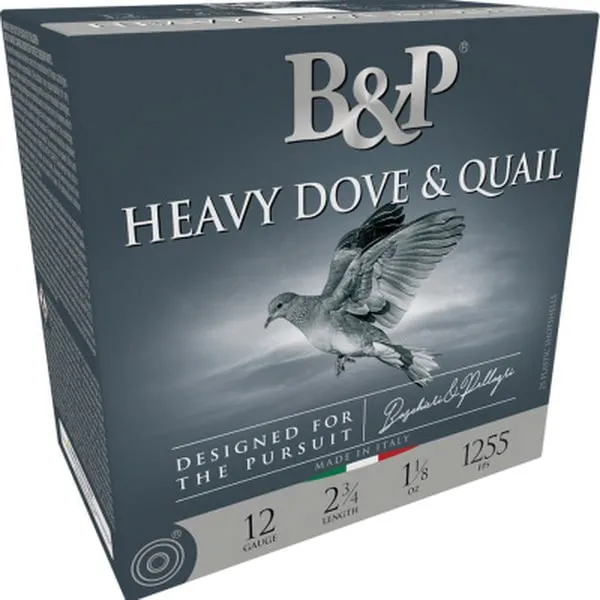
B&P Heavy Dove & Quail 12 GA-2.75 #9 Shot 1-1/8 oz 25-Rounds
12 Gauge · 25 rds
The full catalog, sorted the way it should be sorted, is at every 12 gauge listing by cost per shell.
Buy the pattern, not the label
The decision is smaller than the internet makes it. Pick two candidate loads — one bulk 00 buck and one premium wad-controlled load is a good pair. Buy a box of each. Shoot them on paper at across-the-house distance. Keep the one your gun likes, buy one more box of it, and stop reading.
Then go spend the money you saved on target loads and actually learn to run the gun.
Get alerted when 12 Gauge price drops hit.
We watch every listing and email you the moment the cost per round drops.
Set Up a Free Price Alert- Every 12 gauge listing by cost per shell
- How AmmoSpotter ranks ammunition
- Why ammo prices move
- How many rounds does it take to get good?
- Best 9mm ammo: range, carry and duty loads
AmmoSpotter earns a commission when you buy through links on this page. It never changes what you pay, and it never decides what we recommend — our picks are ranked on live cost-per-round data pulled from every retailer we track. Full disclosure.
Frequently Asked Questions
Is 00 buck the best buckshot for home defense?+
What is the difference between 00 buck, #1 buck and #4 buck?+
How much buckshot do I need to buy?+
Why is buckshot so much more expensive than target loads?+
Does buckshot overpenetrate walls?+
Do I need to pattern my buckshot?+
Shop the data

About the author
AmmoSpotter Research Desk
Price & Ballistics Research
The AmmoSpotter Research Desk analyzes live retail pricing across every ammunition, firearm and accessory listing we track. Recommendations here are ranked against real cost-per-round data pulled daily from the retailers we monitor - not against manufacturer marketing copy.
- ✓Tracks 180,000+ live product listings across 6 retailer feeds
- ✓Records price history on every listing, every day
- ✓Cost-per-round methodology applied to all ammunition rankings
- ✓No product is ranked without a verifiable in-stock retail price
- ✓Affiliate relationships never influence rankings
Related Guides

Best 9mm Ammo 2026: Range, Carry and Duty Loads Ranked
9mm Luger is the most-produced, most-competitive cartridge in the American market. That is good news and bad news: prices are low, and the sheer number of listings makes it easy to pay 30% more than you needed to for ...

How AmmoSpotter Ranks Ammunition (And What We Refuse to Claim)
Most ammunition rankings on the internet are one of two things: a static list assembled once and never revisited, or an affiliate page ordered by commission rate. Neither tells you what to buy today. This page is our ...

Why Ammo Prices Move: The Five Forces Behind Every Spike
From the outside, ammunition pricing looks arbitrary. One cartridge climbs while another does not. A caliber that was plentiful in spring is thin by autumn. Prices rise fast and fall slowly. It is not arbitrary. Five ...

How Many Rounds Does It Take to Get Good?
Almost every shooter is round-count constrained and almost none of them have written the number down. Ammunition is the actual budget line that determines how much you improve, and it is the one people plan least. So ...
Best 12 Gauge Target Loads for Clays 2026: What a Flat Actually Saves You
Clays is the only shooting discipline where you know, before you leave the house, exactly how much ammunition you are going to spend. A round of trap is 25 targets. That is one box. A hundred-target day is four boxes,...

Best Home Defense Shotguns 2026: Every Tier, Priced Live
- The shotgun is the cheap part. Becoming competent with one costs more in shells than most entry-tier pumps cost outright. - 12 gauge is the widest-priced chambering we track — the catalog spans from roughly a third ...