How Many Rounds Does It Take to Get Good?
Round count is the constraint most shooters are actually operating under, and almost nobody budgets for it honestly. Here is what a real training plan costs at today's prices.

Almost every shooter is round-count constrained and almost none of them have written the number down. Ammunition is the actual budget line that determines how much you improve, and it is the one people plan least.
So let us plan it.
The honest answer to "how many rounds"
There is no threshold at which someone becomes good. There is a rate of improvement, and it is driven by three things in this order:
- Frequency — how often you practice
- Structure — whether the practice has a goal and a measurement
- Volume — how many rounds, which matters least of the three
That ordering is why the shooter who does 15 minutes of dry fire four nights a week and 100 rounds a month will pass the one who fires 500 rounds twice a year. Skill decays between sessions; long gaps mean each trip is spent partly recovering ground.
A working annual plan
| Level | Rounds/month | Rounds/year | What it supports |
|---|---|---|---|
| Maintenance | 50-100 | 600-1,200 | Holding existing skill |
| Improvement | 150-250 | 1,800-3,000 | Measurable progress |
| Serious/competitive | 400+ | 5,000+ | Competition-level performance |
Now price it. That is the part that changes decisions.
9mm Luger Price Index
Live · Oct 10, 2026.223 / 5.56 NATO Price Index
Live · Oct 10, 2026Cost Per Round Calculator
The only number that matters when comparing ammo. Shipping included.
Run your own round count against those floors. Two things usually become obvious:
One: the annual ammunition bill is larger than most people assume, and it recurs every year.
Two: a few cents per round is not a trivial saving at these volumes. Five cents across 3,000 rounds is $150 a year, which is a class you could not otherwise afford.
That is the entire reason this site sorts by cost per round. See cost per round explained.
Where the leverage is
Dry fire — free, and the highest-return activity available
Presentation from the holster, trigger press, sight alignment, reloads, malfunction clearance. All of it trains at zero ammunition cost, and you can do it four nights a week instead of twice a month.
What dry fire cannot teach: recoil management, follow-up shot cadence, and where the gun actually prints. Those require live fire.
The effective pattern is frequent dry fire validated by periodic live fire. Not one or the other.
.22 LR — fundamentals at a fraction of the cost
.22 LR Price Index
Live · Oct 10, 2026Compare that floor against the 9mm and 5.56 figures above. The ratio is the argument.
Rimfire carries trigger control, sight alignment, position and transitions almost completely. It does not carry recoil management. Using .22 for volume fundamentals and centerfire for recoil work multiplies your repetitions per dollar substantially.
Cheapest .22 LR Tracked Today
Prices updated Oct 10, 2026
Federal American Eagle Brass .22 LR 38 Grain 4000-Rounds Bulk CPHP
.22 LR · 38gr · 4,000 rds

BROWNING BPR Value Pack 22LR 36gr Hollow Point Ammunition | 800 Rounds
.22 LR · 36gr · 800 rds

REMINGTON 22 LR 38Gr Standard V LRN 550rd
.22 LR · 38gr · 550 rds

WINCHESTER AMMO 22 LR USA 36Gr Copper Plated HP 500rd
.22 LR · 36gr · 500 rds

WINCHESTER USA 22LR 36gr Hollow Point Ammunition | 222 Rounds
.22 LR · 36gr · 222 rds

WINCHESTER AMMO 22 LR 40Gr Wildcat Lead 50rd
.22 LR · 40gr · 50 rds
Structure — free, and routinely skipped
Rounds fired without a goal produce very little. Every session should have:
- A specific skill you are working on
- A measurement — a par time, a group size, a hit percentage
- A record of the result, so you can tell whether you are improving
Firing 200 rounds at a silhouette at seven yards teaches almost nothing after the first fifty. Firing 200 rounds against a timer with a defined standard teaches a great deal.
Buying to the plan
Once you have an annual number, buying gets simple:
- Work out your annual round count from the table above.
- Set a target cost per round using the market floor as your benchmark.
- Set an alert at that number.
- Buy in quantity when it fires, not when you are out.
The last point matters more than it looks. Buying ammunition the week you run out means buying at whatever the market is asking. Buying against an alert means buying at the bottom of the range. Across a few thousand rounds a year that difference funds real training.
Get alerted when 9mm price drops hit.
We watch every listing and email you the moment the cost per round drops.
Set Up a Free Price AlertBulk 9mm Practice Ammo
Prices updated Oct 10, 2026
Winchester USA Forged 9mm 115 Grain 1000-Rounds Bulk FMJ
9mm · 115gr · 1,000 rds

CCI Ammunition Blazer Aluminum 9mm 115-Grain 1000-Rounds Bulk FMJ
9mm · 115gr · 1,000 rds
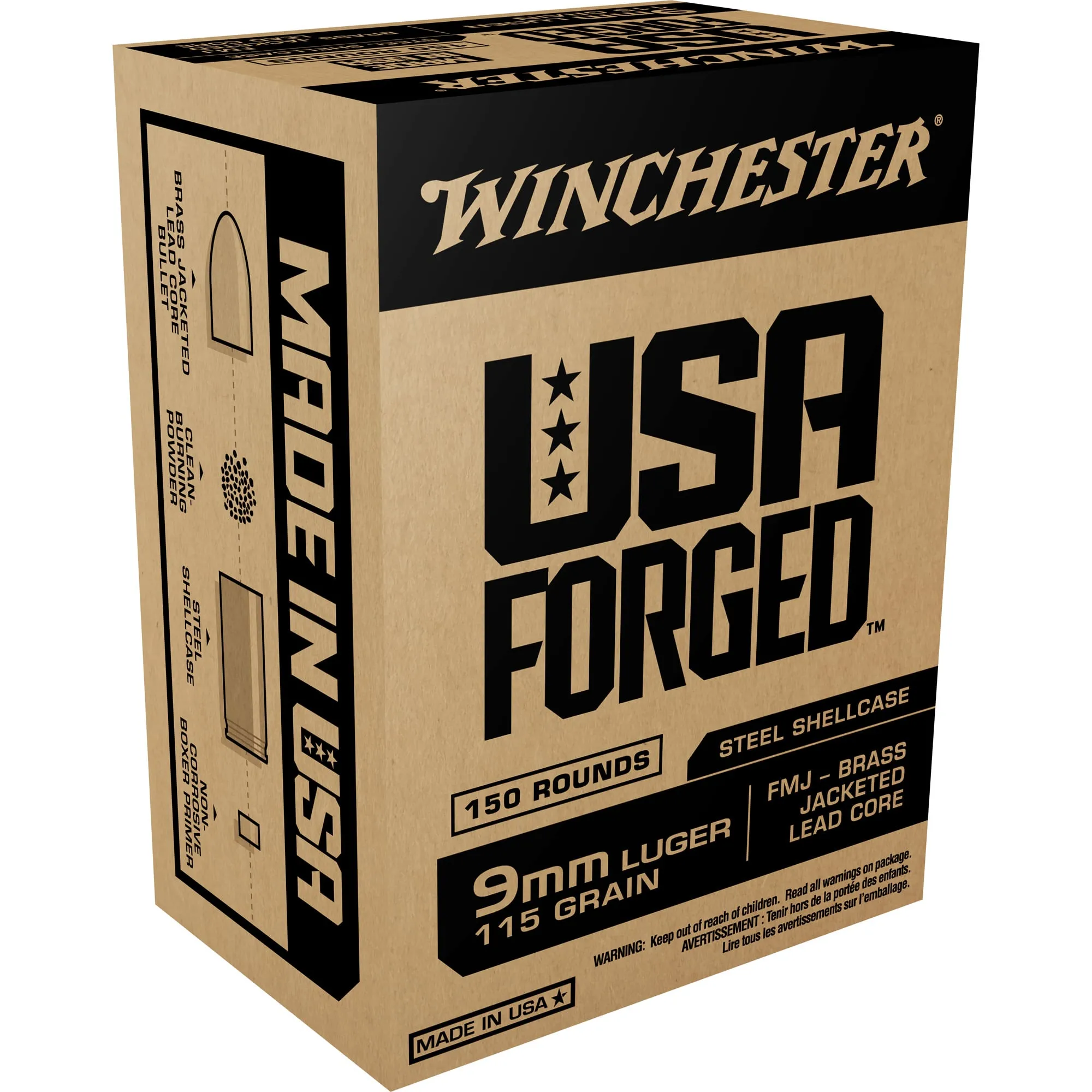
Winchester USA 9mm Ammunition, 1000 Rounds FMJ 115Gr - WIN9SK
9mm · 115gr · 1,000 rds

PMC Ammunition Bronze Brass 9mm 124 Grain 1000-Rounds Bulk FMJ
9mm · 124gr · 1,000 rds

PMC Ammunition Bronze Brass 9mm 115-Grain 1000-Rounds Bulk FMJ
9mm · 115gr · 1,000 rds

Winchester Centerfire Handgun Brass 9mm 115-Grain 1000-Rounds FMJ Bulk
9mm · 115gr · 1,000 rds
- Best 9mm ammo for practice and carry
- AR-15 ammo guide and cost of ownership
- How to buy ammo online without overpaying
- .22 LR by cost per round
AmmoSpotter earns a commission when you buy through links on this page. It never changes what you pay, and it never decides what we recommend — our picks are ranked on live cost-per-round data pulled from every retailer we track. Full disclosure.
Frequently Asked Questions
How many rounds a month should I shoot to improve?+
Is dry fire actually a substitute for live fire?+
Does .22 LR training transfer to centerfire?+
How much does a year of shooting cost?+
Is it better to shoot a lot occasionally or a little often?+
Shop the data

About the author
AmmoSpotter Research Desk
Price & Ballistics Research
The AmmoSpotter Research Desk analyzes live retail pricing across every ammunition, firearm and accessory listing we track. Recommendations here are ranked against real cost-per-round data pulled daily from the retailers we monitor - not against manufacturer marketing copy.
- ✓Tracks 180,000+ live product listings across 6 retailer feeds
- ✓Records price history on every listing, every day
- ✓Cost-per-round methodology applied to all ammunition rankings
- ✓No product is ranked without a verifiable in-stock retail price
- ✓Affiliate relationships never influence rankings
Related Guides

Cost Per Round: The Only Ammo Price Metric That Matters
There is exactly one reason ammunition is hard to price-compare: it is advertised in boxes and consumed in rounds. Box counts are not standardized. A "box" of 9mm might be 50 rounds. A "value pack" might be 100, or 11...

How to Buy Ammo Online Without Overpaying (2026 Guide)
Most ammunition buying advice stops at "shop around." That is not a process, and it is not why people overpay. People overpay because ammunition is priced in a unit nobody compares — the box — while the thing being bo...

Best 9mm Ammo 2026: Range, Carry and Duty Loads Ranked
9mm Luger is the most-produced, most-competitive cartridge in the American market. That is good news and bad news: prices are low, and the sheer number of listings makes it easy to pay 30% more than you needed to for ...

AR-15 Ammo Guide: What to Feed It and What It Costs
An AR-15 is a one-time purchase. Ammunition is a subscription. Most people research the rifle for months and then buy whatever 5.56 is on the shelf, which is exactly backwards from where the money goes. This guide cov...
How Much Practice Ammo Does a New Shooter Need? Budget It in Dollars, Not Boxes
- Decide on rounds per month, not boxes per year. Then price that number against the live market — the blocks on this page do it for you. - Ammunition labelled "practice" or "training" is not the cheapest practice amm...

How Much Ammo Should You Actually Keep On Hand? A Round-Count Plan Priced Live
- Your on-hand number has three separate parts: practice stock , a defensive reserve , and a price-spike buffer . Size each one separately. - Practice stock is monthly rounds fired multiplied by the months you want to...