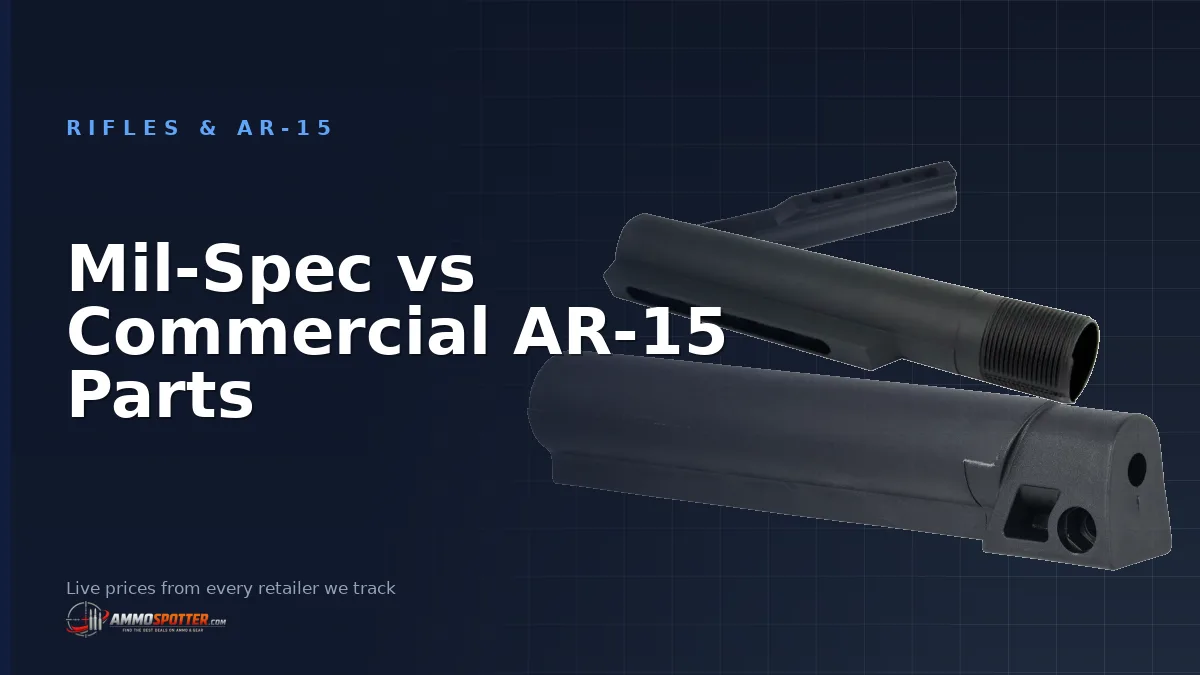
Mil-Spec vs Commercial AR-15 Parts: What the Label Actually Decides
Mil-spec means a tube size on the buffer tube and a steel and testing standard on the bolt carrier. Here's what fits, what it costs, and what to check.
100 results
Mil-spec means a tube size on the buffer tube and a steel and testing standard on the bolt carrier. Here's what fits, what it costs, and what to check.
A typical AR-15 handguard costs about $165. Here's how to check fit, which install parts the listing leaves out, and why you should compare two stores and buy now.
Hogs have no season in much of the South, so cost per round matters. Here's which cartridges have cheap bulk ammo, which don't, and what to buy.
AR-15 parts don't come with a round-count lifespan. Here's what to inspect, what to replace, and why the bolt-side wear parts cost about $21 in total.
Smokeless powder is almost impossible to buy online. Here's how beginners should choose a powder, why the manual comes first, and what to buy online instead.
An empty .308 case costs about the same as a cheap loaded round. Here's what sizing, trimming and cleaning do, which steps you can skip, and what the tools cost.
The mount is the cheapest part of a suppressor, but it decides which guns your can fits. Here's how direct thread, QD and HUB compare on cost.
Steel-cased 9mm is only about 8% cheaper than brass and often out of stock. In .223 and 7.62x39, steel saves far more. Here's how to decide.
For a box or two, the store usually wins. For a case, online wins because shipping spreads to almost nothing. Here's how to compare cost per round in the aisle.
Most appendix holsters are IWB holsters that work in either spot, so your gun usually decides. Revolvers and 1911s go strong side. Here's what each option costs.
For most buyers a 16-inch barrel wins: cheapest of the common lengths and no paperwork. Here's what 14.5, 10.5 and 20-inch barrels really cost once you add parts and ammo.
Complete AR-15 uppers come almost entirely from one company, so you can't shop around. Here's what to check, when to wait, and what the caliber costs you later.
In 9mm, a PCC costs about half as much per round to shoot as an AR-15. In 10mm or .45 ACP, the savings mostly vanish. Here's what to buy at each budget.
The AK isn't the cheap rifle anymore. Here's how the AR-15 and AK-47 compare on price, magazines, optic mounts, parts and ammo.
Ammo for a lever gun ranges about 30-fold per round, and .45-70 has no bulk tier. Here's why .357 is the value pick and how to find the best price.
About 7 in 10 ammo listings cost more than their lowest recorded price. Here's how our alerts catch the drops, and why they pay off most on bulk cases.
.350 Legend is the cheapest straight-wall rifle round to feed, about half the price of .450 Bushmaster. Here's what to buy for practice, deer and suppressed shooting.
Non-lead rules are layered: federal, state and local. Here's how to find lead-free ammo, what copper and non-toxic shot cost, and what changes when you switch.
Cheap .45 ACP is 230-grain FMJ in 100-round boxes or bulk, about a third of the typical price. Here's how to find it, and why sorting by box price steers you wrong.
For bear country, carry heavy 200–220 grain hard cast or flat nose. For deer and hog, use a bonded expanding bullet. Practice with cheap 180-grain FMJ, but test your carry load.
For a snub .38, buy cheap 50-round practice boxes and one short-barrel defensive load. Here's what each costs and why box price fools people.
Budget practice ammo in rounds per month, not boxes. Here's why "training" ammo isn't cheapest, why cases barely help in 9mm, and how .22 LR cuts the bill.
Use the primer your load data names. Pistol and rifle primers fit the same pockets but aren't interchangeable, and right now primers are hard to find.
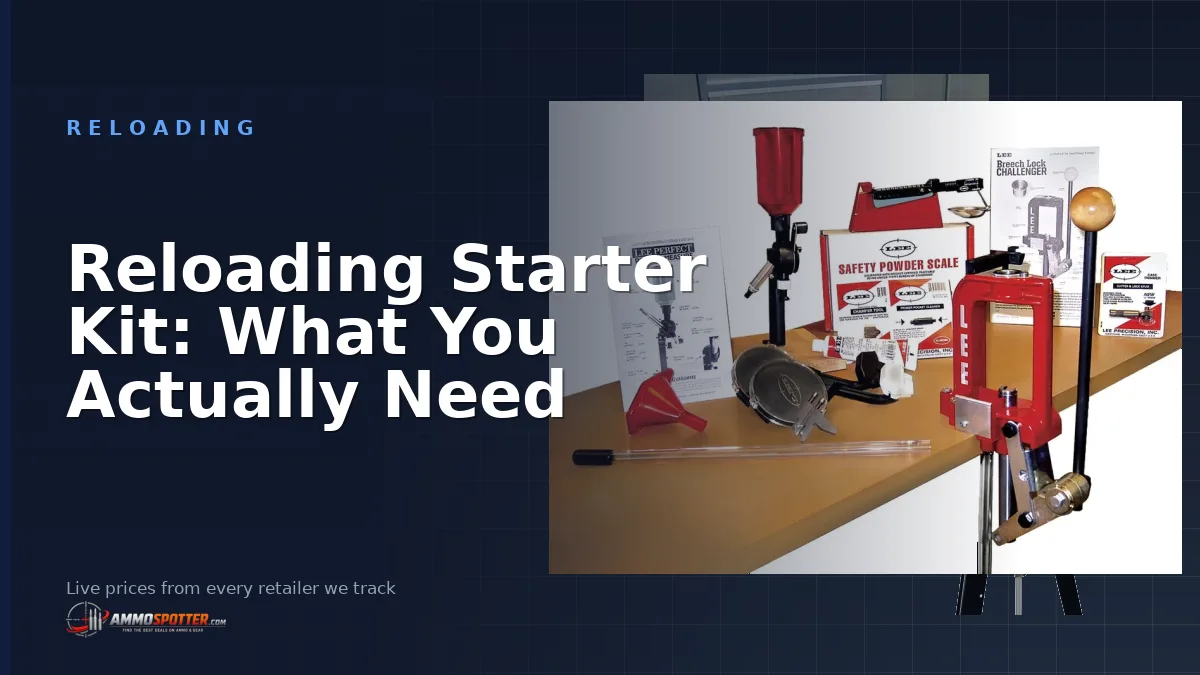
Kits look complete but skip dies, a caliper and a load manual. Here's what to buy first, what it all costs, and the powder and primer problem.