Best 12 Gauge Target Loads for Clays
Clays shooters burn a box every round, so the only number that matters is cost per shell — and our catalog says buying by the flat does something different to that number than everyone assumes.
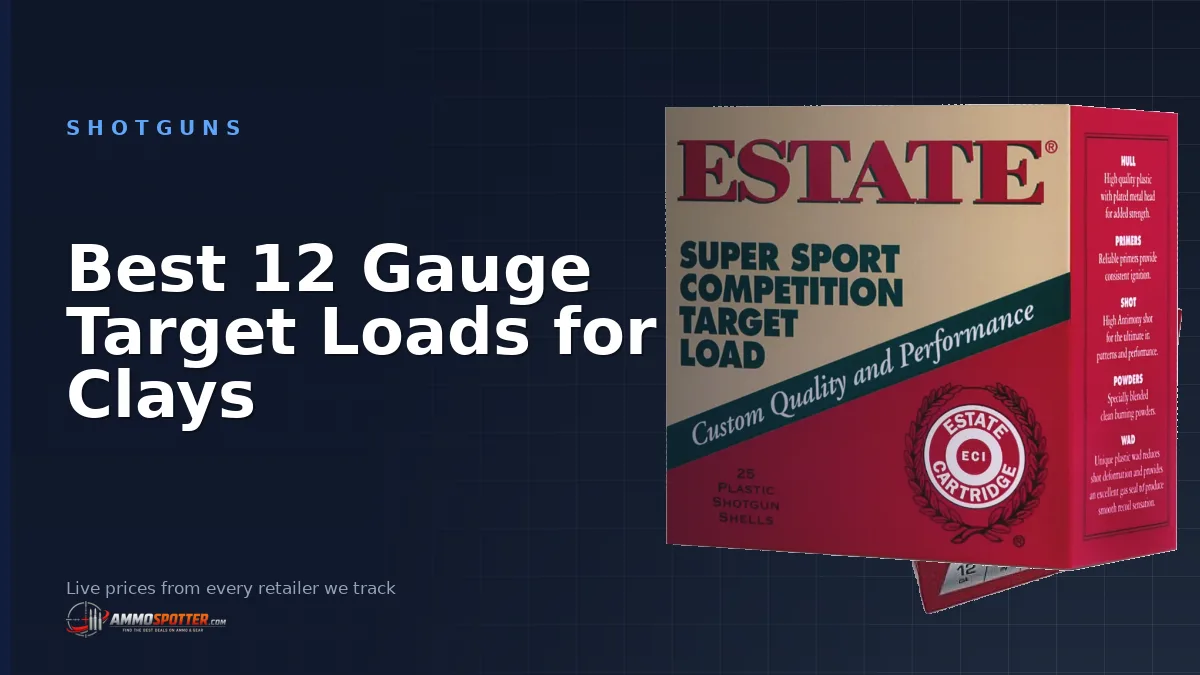
Clays is the only shooting discipline where you know, before you leave the house, exactly how much ammunition you are going to spend. A round of trap is 25 targets. That is one box. A hundred-target day is four boxes, every time, no exceptions.
Which means everything about buying target loads reduces to one number — cost per shell — and almost every "best target loads" list ignores it entirely in favour of arguing about shot hardness.
Here is what our catalog actually says.
What 12 gauge target loads actually cost per shell right now
Start with the whole market, then narrow.
12 Gauge Price Index
Live · Sep 26, 2026That index spans all 1,900 12 gauge listings we track — turkey loads, buckshot, slugs, premium waterfowl steel, everything. The average sits well above a dollar a shell because of the top of that range, where a single listing runs past nineteen dollars per shell. Target loads live at the very bottom of it, and the market floor you see above is set by a clays load, not a defensive one.
Cheapest 12 Gauge Shells Right Now
Prices updated Sep 26, 2026
Estate Super Sport Competition Target Load 12 GA #7.5-Shot 1oz 200-Rounds 2.75
12 Gauge · 200 rds

NORMA AMMO 12Ga Claystrike 2.75" #8 Shot 7/8oz 25rd
12 Gauge · 25 rds

NORMA AMMO 12Ga Claystrike 2.75" #7.5 Shot 1oz 25rd
12 Gauge · 25 rds

WINCHESTER AMMO 12Ga RE 2-3/4 LS 1-1/8 8 USA Valor 25rd
12 Gauge · 25 rds

WINCHESTER AMMO 12Ga RE 2-3/4 LS 1-1/8 7-1/2 USA Valor 25rd
12 Gauge · 25 rds

NORMA AMMO 12Ga Claystrike 2.75" #7.5 Shot 7/8oz 25rd
12 Gauge · 25 rds
If that grid is full of target ammunition, that is not a coincidence — it is the entire economics of the gauge. Clays shooters are the volume buyers in shotgunning, so the manufacturers compete hardest exactly where you are shopping.
Cost Per Round Calculator
The only number that matters when comparing ammo. Shipping included.
Does buying a flat of target loads actually save money?
This is the question the whole category runs on, and the answer in our data is more interesting than "yes."
Here is every 12 gauge target and clays listing we track, grouped by how many shells come in the package:
| Shells per package | Listings | Lowest per shell | Average per shell |
|---|---|---|---|
| 11–25 | 273 | $0.360 | $0.579 |
| 26–100 | 17 | $0.386 | $0.510 |
| 101–250 | 32 | $0.354 | $0.413 |
Read the two columns separately, because they say opposite things.
The lowest column says the flat is barely a discount at all. The cheapest 25-shell box of target ammunition we track and the cheapest 250-shell flat are separated by about six tenths of a cent per shell. Buy 250 shells one box at a time at the floor price, versus 250 in a flat at the floor price, and you have saved roughly the price of a cup of coffee — before shipping, which we will come back to.
The average column says the flat is a very large discount. The typical flat costs meaningfully less per shell than the typical box. Not because cases are sold at a bulk rate, but because of what gets packaged as a case in the first place: nobody flats a premium sporting load, so the 101–250 bucket is almost entirely plain, high-volume club ammunition, while the 11–25 bucket contains everything from $0.36 Claystrike to specialty loads several times that.
So the honest version of the advice is this: buying by the flat does not unlock a discount, it removes your ability to overpay. If you are already disciplined about buying the cheapest box on the shelf, a flat saves you very little. If you buy whatever your club has behind the counter, a flat will save you real money — for reasons that have nothing to do with bulk pricing. We found the same pattern across the catalog in is bulk ammo cheaper, and it is worth internalising before you buy a pallet of anything.
What #7.5, #8 and #9 shot actually change
Shot size is the argument clays shooters have instead of the caliber arguments everyone else has. The practical version is short.
#7.5 is the trap standard. Trap targets are leaving and are broken at longer range, so you want the pellet that retains the most energy at distance. Every major manufacturer's flagship trap load is #7.5, which is why it dominates the case-quantity listings above.
#8 is the skeet and sporting default. Those targets are closer and often crossing, so a denser pattern of smaller pellets is the better bet. The pellet-count advantage over #7.5 is real; the energy disadvantage is irrelevant at skeet distances.
#9 is a short-range skeet specialty — maximum pattern density, minimal retained energy. Plenty of people shoot a full round of skeet with it and score fine.
If you shoot a mix of disciplines and do not want to stock three shot sizes, #8 is the reasonable compromise, and the thing you should actually optimise is which of the two is cheaper this week. Check your discipline's rulebook first — registered events cap shot size, payload and velocity, and those caps vary by governing body.
Is a heavy 1-1/8 oz payload worth the recoil?
Target loads come in three common payloads: 1-1/8 oz, 1 oz, and 7/8 oz. Traditional trap doctrine says heavier is better, because more pellets in the air is more chances to break the target.
Here is what our pricing says about that trade: there is no meaningful price penalty for the lighter loads. The 7/8 oz Claystrike and the 1 oz competition case in our picks below both sit at the catalog floor, right alongside the 1-1/8 oz flats. The lighter payload is not a budget option and the heavier one is not a premium one — they cost the same.
That changes the calculus. If payload weight were something you paid extra to reduce, you would have to decide whether it was worth it. Since it isn't, the only question is whether you shoot better with more pellets or with less recoil, and over a 100-target day with a fixed-breech gun, most people are worse off by the third box with the heavy stuff. Recoil fatigue is a scoring problem, not a comfort problem.
This is the same logic that applies to volume training with any cartridge — the load that lets you shoot more of them is usually the load that makes you better. We worked through that arithmetic at length in how many rounds does it take to get good.
12 Gauge by the Case and Flat
Prices updated Sep 26, 2026Estate Super Sport Competition Target Load 12 GA #7.5-Shot 1oz 200-Rounds 2.75
12 Gauge · 200 rds
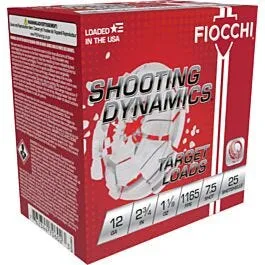
Fiocchi Target Load 12 GA-2.75 #7.5 Shot 1-1/8 oz 250-Rounds
12 Gauge · 250 rds
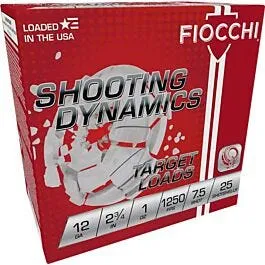
Fiocchi Shooting Dynamics Target Loads 12 GA-2.75 #7.5 Shot 1 oz 250-Rounds
12 Gauge · 250 rds
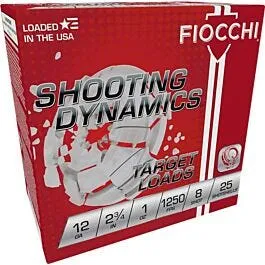
Fiocchi Target Load 12 GA-2.75 #8 Shot 1 oz 250-Rounds
12 Gauge · 250 rds
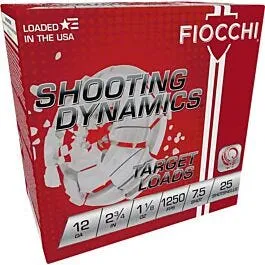
Fiocchi Shooting Dynamics Target Loads 12 GA-2.75 #7.5 Shot 1-1/8 oz 250-Rounds
12 Gauge · 250 rds
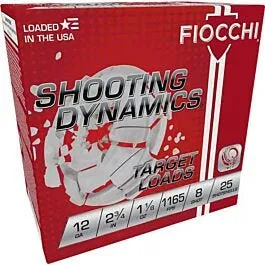
Fiocchi Shooting Dynamics Target Loads 12 GA-2.75 #8 Shot 1-1/8 oz 250-Rounds
12 Gauge · 250 rds
Which brands actually compete at the bottom of the 12 gauge market
Winchester and Federal carry the most 12 gauge listings in our catalog by a wide margin, and both reach the market floor on per-shell price. Remington sits just above them, with Fiocchi, B&P, Rio, Nobel Sport Italia and Aguila clustered slightly higher on brand-tagged listings.
One caveat worth knowing, because it will cost you money if you don't: case-quantity listings frequently arrive from retailer feeds with no brand field attached. Several of the cheapest Fiocchi and Estate flats we track are not tagged to a brand at all. If you shop by brand page you will systematically miss the cheapest flats, because the cheapest flats are the ones missing the brand label. Shop the 12 gauge caliber page sorted by cost per shell instead, and let the price do the filtering.
Our Picks for Clays
Estate Super Sport Competition Target Load 12 GA #7.5-Shot 1oz 200-Rounds 2.75
A 200-shell case of 1 oz #7.5 competition load. At the time this was written it sat at the absolute bottom of every 12 gauge listing we track on a per-shell basis, and it does it in a case size that is easier to carry to a trap field than a full 250 flat.
Pros
- ✓Bottom of the entire 12 gauge catalog on cost per shell
- ✓1 oz payload — lighter recoil over a long day
- ✓200-shell case is a manageable weight to haul
Cons
- ✗Single tracked retailer, so the price is not competed
- ✗Case quantities move in and out of stock quickly
Fiocchi Shooting Dynamics Target Loads 12 GA-2.75 #7.5 Shot 1-1/8 oz 250-Rounds
Fiocchi Shooting Dynamics in the classic 1-1/8 oz #7.5 trap configuration, sold by the 250-shell flat. This is the load most clubs are full of, and buying it a flat at a time is how it gets to the bottom tier of our per-shell rankings instead of the middle.
Pros
- ✓Full 250-shell flat
- ✓1-1/8 oz #7.5 is the default trap payload
- ✓Fiocchi loads the same recipe in 1 oz if you want less recoil
Cons
- ✗Heavy enough that shipping can eat the savings
- ✗Brand-tagged Fiocchi boxes price higher than these flats
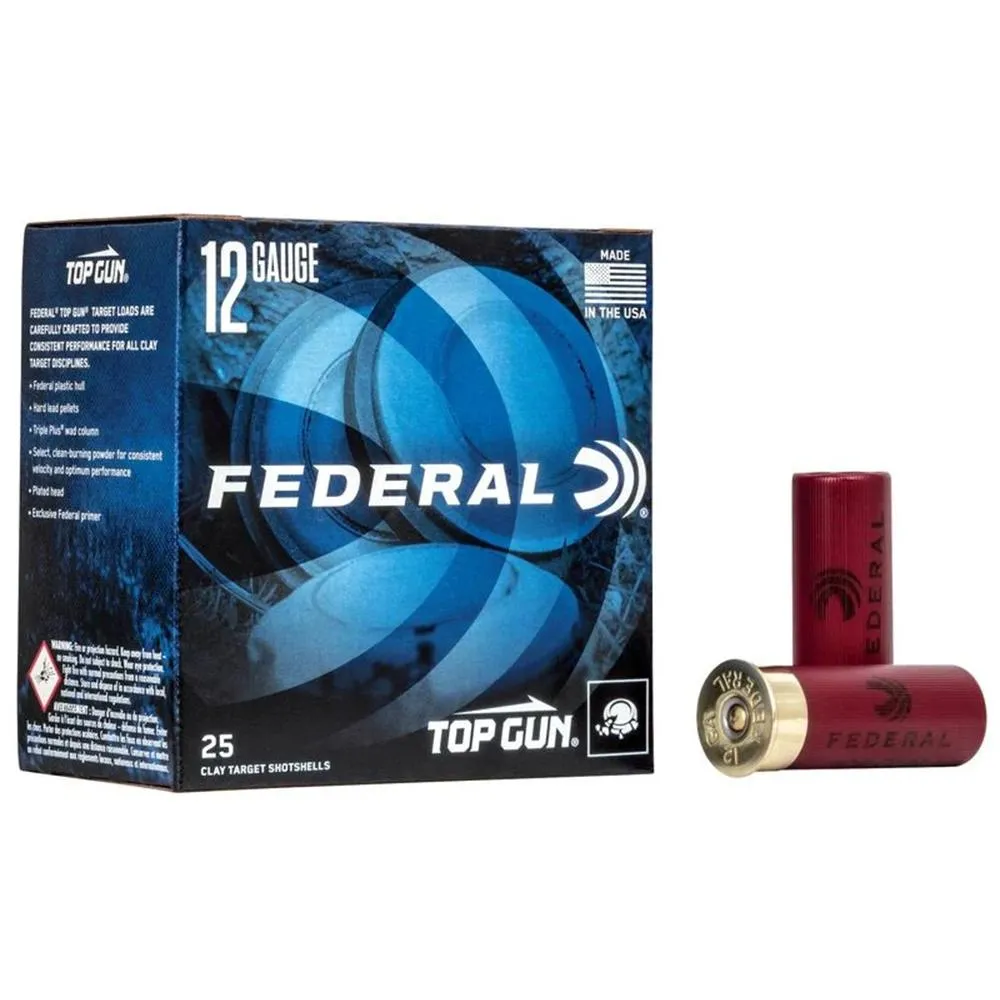
Federal Top Gun 12 GA-2.75 #7.5 Shot 1-1/8 oz 250-Rounds
Federal Top Gun is the load you can find at almost any club, which matters when you run out mid-event. Buying it by the flat puts it a fraction of a cent above the Fiocchi flats while being substantially easier to re-buy in the same recipe.
Pros
- ✓Widely stocked — easy to replace with the identical load
- ✓Full 250-shell flat
- ✓1-1/8 oz #7.5 trap standard
Cons
- ✗Costs slightly more per shell than the import flats
- ✗Also sold in 25-round boxes that price well above the flat

Remington Gun Club 12 GA #7.5-Shot 250-Rounds 2.75
Remington Gun Club by the 250-shell flat. Gun Club has been the default American club load for decades for the simple reason that it is consistent and everywhere. It prices in the same band as Federal Top Gun on our per-shell numbers.
Pros
- ✓Full 250-shell flat
- ✓Consistent, long-established recipe
- ✓Also available in 25-round boxes for testing
Cons
- ✗Nothing exotic — no performance argument over Top Gun
- ✗Single tracked retailer on the flat
NORMA AMMO 12Ga Claystrike 2.75" #7.5 Shot 7/8oz 25rd
Norma Claystrike in a 7/8 oz #7.5 recipe, sold in 25-shell boxes at the very floor of our per-shell pricing. If you are not ready to buy 250 at a time, this is the proof that a box buyer is not automatically overpaying — and 7/8 oz is genuinely gentler over 100 targets.
Pros
- ✓Sits at the catalog floor despite being a 25-shell box
- ✓7/8 oz payload is noticeably lighter on recoil
- ✓Also offered in #8 shot
Cons
- ✗Lighter payload means less margin for a sloppy lead
- ✗Less commonly stocked at clubs than Winchester or Remington
WINCHESTER AMMO 12Ga Super-Target Heavy 2-3/4" 7-1/2Shot 25rd
Winchester Super-Target Heavy in 1-1/8 oz #7.5. Winchester carries more 12 gauge listings in our catalog than any other brand, which is another way of saying you will never struggle to find this. It is the baseline every other box load gets measured against.
Pros
- ✓The most widely tracked 12 gauge brand in our catalog
- ✓Heavy 1-1/8 oz payload for windy trap days
- ✓Offered in #7.5 and #8 in the same line
Cons
- ✗Box pricing, so it will not reach the flat floor
- ✗Heavy loads beat you up over a full day
When shipping erases the flat discount
Everything above is item price. The per-shell figures we publish do not include shipping, and a 250-shell flat of 12 gauge weighs roughly what you would expect 250 shotgun shells to weigh.
That matters more here than in almost any other category. When the gap between a box at the floor and a flat at the floor is fractions of a cent per shell, a shipping charge does not shave the saving — it inverts it. The flat is worth ordering when you are buying several at once, when the retailer is running free shipping over a threshold, or when your local prices are genuinely above our tracked floor. It is not worth ordering one flat, shipped, to beat a box price by six tenths of a cent.
Ammunition shipping is also regulated unevenly. Several states and cities require a licence or an FFL to receive ammunition, and some retailers simply will not ship to certain ZIP codes. Describe your situation to the retailer before you assume — and read ammo shipping restrictions first, which covers how to check the rules that apply where you live rather than guessing.
When is the right time to buy target loads?
Shotshell pricing does not behave like rifle or handgun ammunition. It is driven less by defensive panic buying and more by lead commodity pricing, season, and the club supply chain — which means the spikes are smaller but the floor is stickier. The forces behind those moves are the same five we laid out in why ammo prices move, just weighted differently for shotgunning.
The practical implication: do not wait for a crash that is not coming. If you shoot clays weekly, your consumption is predictable, and the correct strategy is to buy at or near the tracked floor whenever you are low rather than trying to time it. The same discipline applies to rimfire, where volume shooters face an identical problem — see best .22 LR ammo for how that plays out in the cheapest cartridge on the market.
Get alerted when 12 Gauge price drops hit.
We watch every listing and email you the moment the cost per round drops.
Set Up a Free Price AlertWhat to actually buy
If you shoot trap: a flat of 1-1/8 oz #7.5 from whichever of Federal Top Gun, Remington Gun Club or Fiocchi Shooting Dynamics is cheapest per shell today. They are functionally interchangeable and the price ordering between them changes.
If you shoot skeet or sporting: the same three lines in #8, or drop to 1 oz or 7/8 oz and take the recoil savings for free.
If you shoot occasionally: buy boxes at the floor and stop feeling bad about it. Our data says you are giving up almost nothing per shell, and you are not storing 250 shells of a load you may not like.
If you are shooting more than a flat a month: buy several flats at once from one retailer, get the shipping under a free threshold, and stop thinking about it until they run out.
AmmoSpotter earns a commission when you buy through links on this page. It never changes what you pay, and it never decides what we recommend — our picks are ranked on live cost-per-round data pulled from every retailer we track. Full disclosure.
Frequently Asked Questions
What is the best shot size for clays — #7.5, #8 or #9?+
Does buying a 250-round flat of target loads actually save money?+
How much does a round of trap cost in ammunition?+
Is 1 oz or 1-1/8 oz better for target loads?+
Can target loads be shipped to my address?+
Are cheap import target loads worth buying?+
Shop the data

About the author
AmmoSpotter Research Desk
Price & Ballistics Research
The AmmoSpotter Research Desk analyzes live retail pricing across every ammunition, firearm and accessory listing we track. Recommendations here are ranked against real cost-per-round data pulled daily from the retailers we monitor - not against manufacturer marketing copy.
- ✓Tracks 180,000+ live product listings across 6 retailer feeds
- ✓Records price history on every listing, every day
- ✓Cost-per-round methodology applied to all ammunition rankings
- ✓No product is ranked without a verifiable in-stock retail price
- ✓Affiliate relationships never influence rankings
Related Guides

Best 12 Gauge Buckshot for Home Defense: Pellet Size, Patterns and What It Costs
A shotgun kept for the house is usually loaded with whatever came in the box it was sold with, or with whatever was on the shelf the day it was bought. Nobody patterns it. Nobody checks what it costs per trigger pull,...
Shotgun Shell Price Index: Target, Buckshot and Slug Cost Per Shell
A box of shotgun shells can hold 5, 10, 15, 25, 100 or 250 shells, and the load inside can be a practice target shell or a premium turkey load. So the price on the box tells you almost nothing. The only useful compari...
12 Gauge vs 20 Gauge: Recoil, Payload and What Each Actually Costs
The usual advice is that 12 gauge is cheap and universal, 20 gauge is light and costs more. Half of that is right. We track live prices on the shotgun catalog, and the ammunition side of this argument does not break t...

Bulk vs Box: How Much You Actually Save Buying a Case
The standard advice is to buy by the case because bulk is cheaper. We track every live ammunition listing we can get, normalized to cost per round, so we tested that advice against the data instead of assuming it. The...
Shotgun Choke and Shot Size Chart: Constriction, Pellet Diameter and What Each Size Costs
Most choke charts are a table of constrictions someone copied off a Briley catalogue in 2009 and everyone has been reprinting since. They are usually correct and they are always incomplete, because they never answer t...

How AmmoSpotter Ranks Ammunition (And What We Refuse to Claim)
Most ammunition rankings on the internet are one of two things: a static list assembled once and never revisited, or an affiliate page ordered by commission rate. Neither tells you what to buy today. This page is our ...