The AR-15 Ammo Guide
The rifle is the cheap part. Here is what an AR-15 actually eats, which loads suit which job, and what a year of shooting one costs at today's prices.

An AR-15 is a one-time purchase. Ammunition is a subscription. Most people research the rifle for months and then buy whatever 5.56 is on the shelf, which is exactly backwards from where the money goes.
This guide covers what the platform eats, what to buy for each job, and what it costs to keep running.
.223 / 5.56 NATO Price Index
Live · Oct 10, 2026First: what is your rifle chambered in?
This is stamped on the barrel. Check it before you buy anything in quantity.
| Roll mark | Runs .223 Rem | Runs 5.56 NATO |
|---|---|---|
| 5.56 NATO | Yes | Yes |
| .223 WYLDE | Yes | Yes |
| .223 REM | Yes | No |
5.56 NATO is loaded to higher pressure with a longer throat. Firing it in a rifle chambered strictly for .223 Remington can generate excessive pressure. The reverse - .223 in a 5.56 chamber - is entirely safe.
The full explanation is in .223 vs 5.56: the difference that matters.
Second: what is your twist rate?
This determines what will shoot well, as opposed to what is safe.
| Twist | Stabilizes | Practical ceiling |
|---|---|---|
| 1:12 | ~55gr | Older varmint uppers |
| 1:9 | ~69-75gr | Most general-purpose carbines |
| 1:8 | ~77-80gr | Best all-round for match |
| 1:7 | 77gr+ | Military spec |
Buying a case of 77gr match ammunition for a 1:9 barrel is how people conclude their rifle is inaccurate when the ammunition simply is not stabilizing.
The three purchases
Practice ammunition
This is 90% of what you will buy, and it is a commodity. Criteria in order: brass case, 55gr M193-spec or equivalent FMJ, established manufacturer, lowest landed cost per round.
Cheapest 5.56 / .223 Practice Ammo Right Now
Prices updated Oct 10, 2026
RED ARMY STANDARD 223 Remington 56Gr FMJ Steel Case 20rd
.223 Remington · 56gr · 20 rds

BARNES AMMO 223 Cal Varmint Grenade FB 50Gr 100rd
.223 Remington · 50gr · 100 rds

BARNAUL AMMO 223 Rem 55Gr HPBT Polycoated Steel Case 20rd
.223 Remington · 55gr · 20 rds

BARNAUL AMMO 223 Rem 62Gr SPBT Polycoated Steel Case 20rd
.223 Remington · 62gr · 20 rds

BARNAUL AMMO 223/5.56 62Gr FMJBT Steel Case 20rd
.223 Remington · 62gr · 20 rds
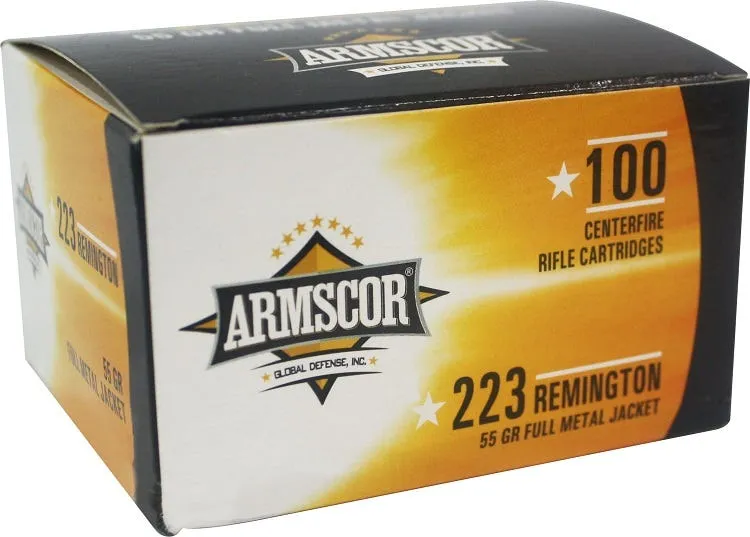
Armscor Rifle Ammo Brass .223 Rem 55-Grain 100-Rounds FMJ
.223 Remington · 55gr · 100 rds

Wolf Military Classic Steel .223 Rem 55 Grain 500-Rounds Bulk FMJ
.223 Remington · 55gr · 500 rds

Winchester M855 5.56 Bulk Ammo 62 Grain FMJ 1000rds (Unpainted Tip) - WM8551000
5.56x45mm NATO · 62gr · 1,000 rds

PMC Ammunition Bronze .223 Rem 55 Grain 1000-Rounds FMJ Bulk
.223 Remington · 55gr · 1,000 rds
Green tip M855 is not an upgrade to this - it is a barrier round with a steel core that many ranges prohibit, and it usually costs more. We compared them directly in M193 vs M855.
Defensive ammunition
FMJ is a poor choice inside a house. You want a bonded soft point or controlled-expansion design that sheds energy quickly rather than passing through wall sections.
Counter-intuitively, a well-chosen rifle load is often a better interior choice than a heavy pistol bullet, because a rapidly expanding rifle projectile gives up its energy in fewer barriers. The load has to be selected for it, though - the cartridge does not do it by itself.
Precision ammunition
Buy one box, shoot it for group, then buy deep on that specific lot number. Match ammunition is bought differently from practice ammunition: lot consistency is the product you are paying for, and mixing lots throws away what you paid for.
This only applies if your twist rate supports the bullet weight.
The cost lever nobody uses: case material
For a high-volume shooter, steel-cased ammunition is the largest single cost variable available - larger than any case discount or promotional cycle.
The honest trade-offs: dirtier, not reloadable, occasionally harder extraction in a tight hot chamber, and frequently banned at indoor ranges because bimetal projectiles are magnetic.
For outdoor high-volume practice in a loose-chambered rifle you do not reload for, it is legitimate. For a match chamber, a suppressed rifle, or anything under warranty, buy brass. Full breakdown in steel case vs brass case ammo.
What a year actually costs
The arithmetic is simple and most people avoid doing it.
Annual rounds x cost per round = your real cost of ownership.
At 100 rounds a month you are buying 1,200 rounds a year. At 300 a month - one meaningful range session a week - you are buying 3,600. Run the current per-round figure from the index above against your own number:
Cost Per Round Calculator
The only number that matters when comparing ammo. Shipping included.
Two conclusions usually fall out of this:
- The rifle is the cheap part. Most shooters spend more on ammunition in three years than they spent on the rifle.
- A few cents per round is real money. Five cents saved across 3,600 rounds is $180 a year, for zero compromise in what you are shooting.
Buying in bulk
5.56 is the caliber where bulk buying pays hardest, because shipping is a larger share of landed cost on rifle ammunition than on handgun ammunition. A 1,000-round case amortizes a flat shipping rate across twenty times more rounds than a 50-round box.
Bulk 5.56 / .223 - 500 Rounds and Up
Prices updated Oct 10, 2026Wolf Military Classic Steel .223 Rem 55 Grain 500-Rounds Bulk FMJ
.223 Remington · 55gr · 500 rds
PMC Ammunition Bronze .223 Rem 55 Grain 1000-Rounds FMJ Bulk
.223 Remington · 55gr · 1,000 rds
Winchester M855 5.56 Bulk Ammo 62 Grain FMJ 1000rds (Unpainted Tip) - WM8551000
5.56x45mm NATO · 62gr · 1,000 rds

Red Army Standard Centerfire Rifle Steel .223 Rem 55-Grain 500-Rounds Bulk FMJ
.223 Remington · 55gr · 500 rds

PMC Ammunition X-Tac Rifle Brass 5.56 55 Grain 1000-Rounds FMJBT Bulk
5.56x45mm NATO · 55gr · 1,000 rds

Wolf Performance Ammo PolyFormanc Steel Bulk .223 Rem 55 Grain 500-Rounds
.223 Remington · 55gr · 500 rds
Always test the case per-round rate against the small-pack rate first. See is bulk ammo actually cheaper.
Set a target, then stop watching
Decide what cost per round you consider a good buy for your caliber, using the index at the top of this page as the benchmark. Set an alert at that number. Buy when it fires.
Get alerted when .223 Remington price drops hit.
We watch every listing and email you the moment the cost per round drops.
Set Up a Free Price Alert- Best 5.56 and .223 ammo, by job
- M193 vs M855 green tip
- Every .223 / 5.56 listing by cost per round
- AR-15 rifles we track
AmmoSpotter earns a commission when you buy through links on this page. It never changes what you pay, and it never decides what we recommend — our picks are ranked on live cost-per-round data pulled from every retailer we track. Full disclosure.
Frequently Asked Questions
What ammo does an AR-15 use?+
How much does it cost to shoot an AR-15 for a year?+
Can I shoot steel-cased ammo in my AR-15?+
What is the best all-around AR-15 load?+
Does barrel twist rate limit which ammo I can buy?+

About the author
AmmoSpotter Research Desk
Price & Ballistics Research
The AmmoSpotter Research Desk analyzes live retail pricing across every ammunition, firearm and accessory listing we track. Recommendations here are ranked against real cost-per-round data pulled daily from the retailers we monitor - not against manufacturer marketing copy.
- ✓Tracks 180,000+ live product listings across 6 retailer feeds
- ✓Records price history on every listing, every day
- ✓Cost-per-round methodology applied to all ammunition rankings
- ✓No product is ranked without a verifiable in-stock retail price
- ✓Affiliate relationships never influence rankings
Related Guides

Best 5.56 & .223 Ammo 2026: Practice, Defense and Precision
5.56x45mm NATO and .223 Remington are the most-purchased rifle cartridges in America, and the most confusing to buy. The same rifle will accept ammunition ranging from bulk steel-cased plinking loads to match ammuniti...

.223 vs 5.56: The Difference That Actually Matters
The cases are dimensionally near-identical. The ammunition will chamber in either rifle. That is exactly why this matters — nothing physically stops you from making the mistake. The two real differences 1. Pressure 5....

M193 vs M855: Which 5.56 Should You Actually Buy?
The green tip looks like a premium tier. It is not. M855 is a specialized barrier round that trades close-range fragmentation and range access for the ability to punch through light steel — and it usually costs more t...

Steel Case vs Brass Case Ammo: What You Actually Give Up
Steel-cased ammunition occupies a strange place in shooting culture: universally used, frequently condemned, rarely analyzed. The honest position is narrower than either camp claims. Steel is cheaper. It is cheaper fo...

Red Dot vs LPVO 2026: Which Optic Belongs on Your Rifle
- A red dot is faster, lighter, cheaper to mount and forgiving of bad body position. An LPVO lets you identify a target and call a shot past the distance a dot can resolve. - The mount is the hidden cost. Most dots we...

AR-15 Ammo Guide 2026: What to Feed It, Why, and What It Costs
The rifle is the cheap part. Over any realistic ownership period an AR-15 costs less than the ammunition that goes through it, which means the ammunition decision is the expensive one — and it is the one most buyers m...