How Much Practice Ammo Does a New Shooter Need?
Pick a rounds-per-month number, then price it against the live market. The caliber you choose changes the answer by a factor of four.
Start with rounds per month, because that is the number you control
"How much ammo do I need" has no fixed answer, and anyone giving you one is guessing at your schedule. What does have an answer is the cost of a habit, once you name the habit.
Pick a number of rounds per month that you will genuinely shoot. Then price it. Here is 9mm at today's market:
9mm Luger Price Index
Live · Oct 3, 2026Those two figures — the floor and the average — are the whole budgeting problem. At the floor, 100 rounds a month is a rounding error on a monthly budget. At the market average, the same 100 rounds a month costs roughly three times as much, because the average includes defensive hollow point, specialty loads and every overpriced listing in the catalog.
You are not choosing between calibers at that point. You are choosing between shopping and not shopping.
Cost Per Round Calculator
The only number that matters when comparing ammo. Shipping included.
Ammunition labelled "practice" is not the cheap ammunition
This is the finding that surprised us when we went looking.
Of the 724 live 9mm listings we track, exactly 28 carry "practice" or "training" in the product title. The cheapest of those 28 comes in above the cheapest plain full metal jacket 9mm in the catalog, and the cheapest 9mm listing of any kind is a steel-case FMJ with nothing on the box about training at all.
The explanation is mundane. "Training" and "Range" are product-line names — Federal Champion Training, MagTech Range/Training, Fiocchi Training Dynamics, Norma Range and Training. They denote a positioning tier above the house-brand bulk FMJ that actually occupies the bottom of the market. The label tells you what the maker intends the ammunition for. It tells you nothing about price.
That does not make the lines bad. They are brass-cased, consistent, and several are stocked by more than one retailer, which is worth something if you are buying the same box every month.
Training-Labelled 9mm, Cheapest First
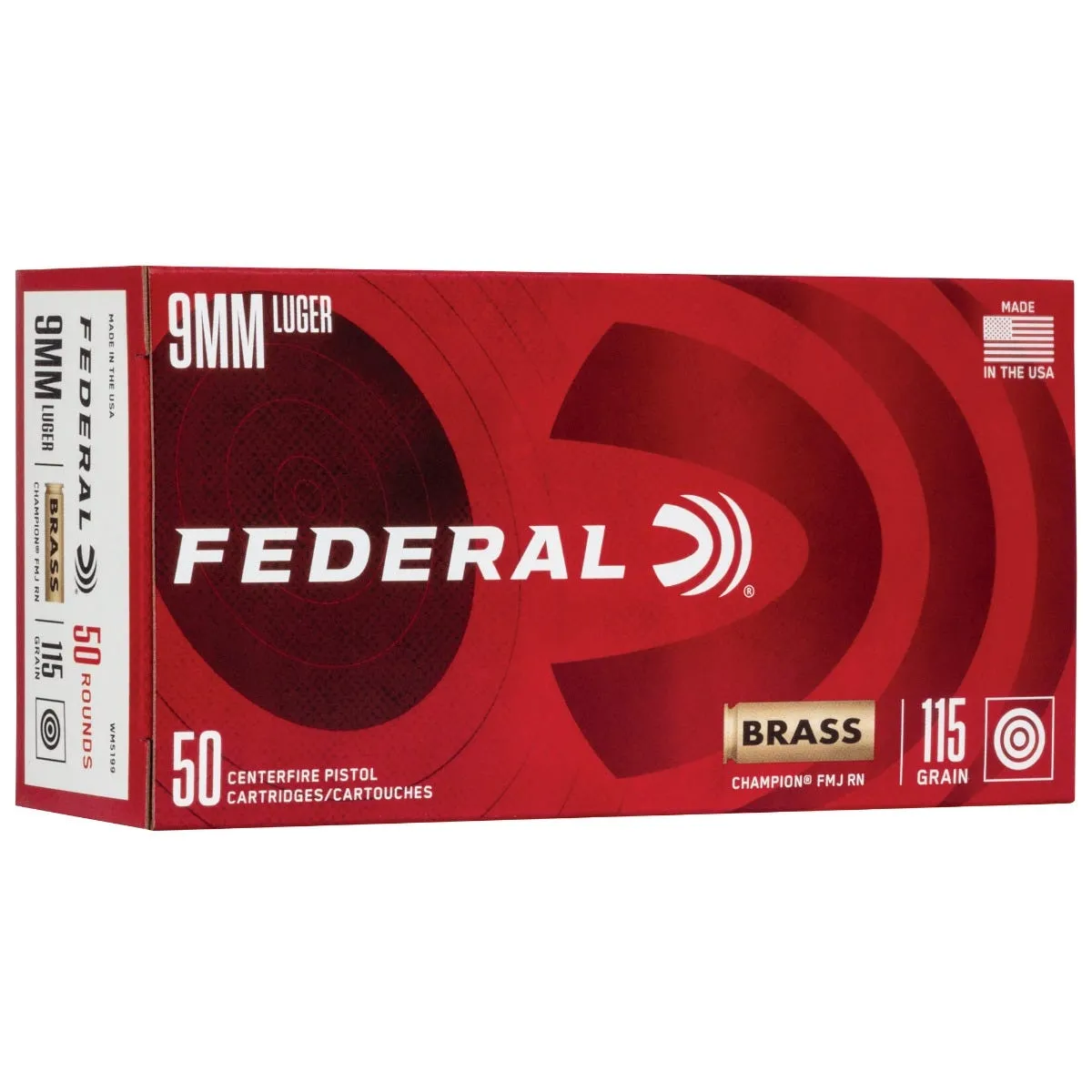
Federal Champion Training Brass 9mm 115-Grain 50-Rounds FMJ
Federal Champion Training in a 50-round box of 115-grain brass FMJ. It is the lowest-priced per round of any 9mm listing we carry with 'training' on the label, and it is stocked by more than one of our retailers, which matters when you are buying it repeatedly.
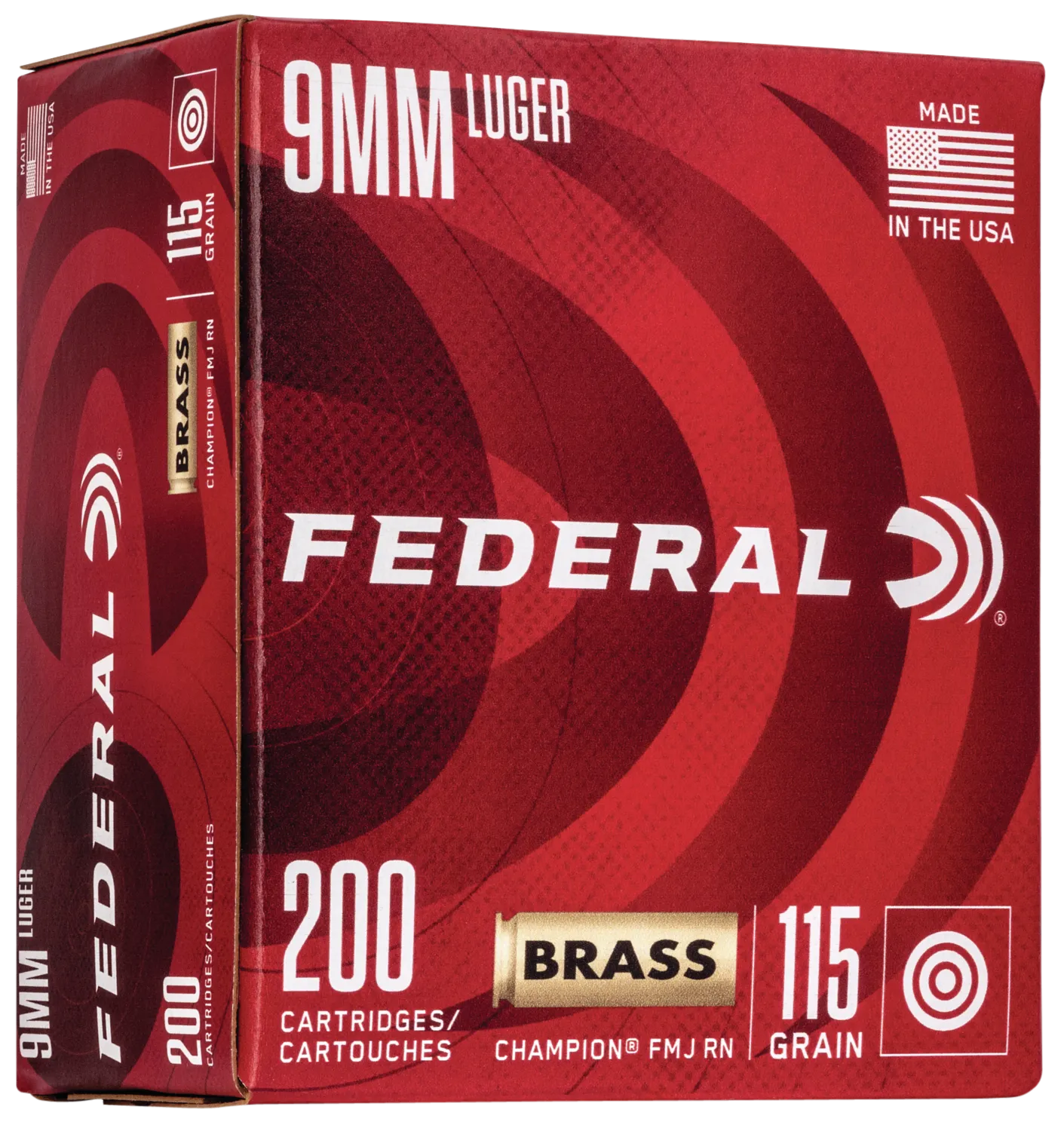
Federal Champion Training Brass Bulk 9mm 115 Grain 200-Rounds FMJ
The identical Champion Training load in a 200-round box. Note how little the per-round price moves against the 50-round version — the bigger pack saves you trips, not money.

MagTech Range/Training Brass 9mm 124-Grain 50-Rounds FMJ
MagTech Range/Training on the heavier 124-grain bullet, also multi-retailer. Worth a box if your carry load is 124 grain and you want practice recoil closer to it.
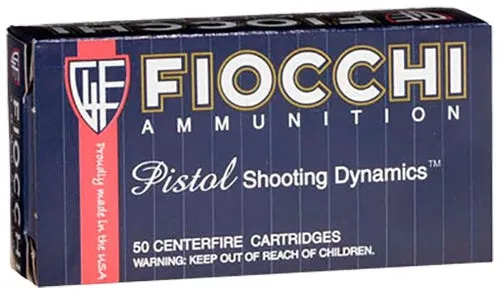
Fiocchi Training Dynamics Brass 9mm 124-Grain 50-Rounds FMJ
Fiocchi Training Dynamics, 124-grain brass FMJ. Priced a little above the Federal and MagTech boxes, listed by two retailers, and useful purely as a second source when the cheaper boxes go out of stock.
If you do not care about the label, the bottom of the market looks like this instead:
Cheapest 9mm Right Now, By Cost Per Round
Prices updated Oct 3, 2026
MAGTECH 9mm Luger Steel Case 124 FMJ 50rd
9mm · 50 rds

SELLIER BELLOT 9mm 124Gr 1200 FPS FMJ 50rd
9mm · 124gr · 50 rds

SELLIER BELLOT 9mm 115gr FMJ Brass Ammunition | 50 Rounds
9mm · 115gr · 50 rds
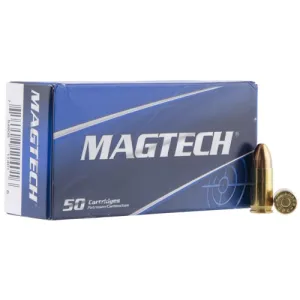
MAGTECH 9mm 115gr Full Metal Jacket Brass Ammunition | 50 Rounds
9mm · 115gr · 50 rds

MILI CUSTOM DEFENSE AMMUNITION 9mm 155gr Subsonic FMJ 50rd
9mm · 155gr · 50 rds
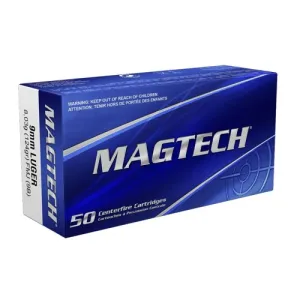
MAGTECH 9mm 124gr FMJ 50rd
9mm · 124gr · 50 rds
Will a case save you money? In 9mm, barely
The received wisdom is to buy deep. Our data only half supports it.
Comparing the cheapest listing in each pack size for 9mm, the 1,000-round case and the 50-round box sit within a couple of cents of each other per round. What does fall with pack size is the average — the typical 50-round box in our catalog costs considerably more per round than the typical case, because small boxes are where premium defensive and specialty loads live and nobody sells those by the thousand.
So the case discount is largely a product-mix illusion. What buying a case actually gets you:
- Price protection. You have locked a cost per round against a market that moves. Our piece on why ammo prices move covers what you are insuring against.
- No decision. You stop re-shopping every month, which for most people is the real reason the practice stops.
- No stock-out. Single-retailer listings disappear. Cases are the simplest fix.
What it does not get you is a volume discount worth planning around. If you want the full version of that argument, we took it apart in is bulk ammo actually cheaper.
Bulk 9mm, 500 Rounds and Up
Prices updated Oct 3, 2026
Winchester USA Forged 9mm 115 Grain 1000-Rounds Bulk FMJ
9mm · 115gr · 1,000 rds

CCI Ammunition Blazer Aluminum 9mm 115-Grain 1000-Rounds Bulk FMJ
9mm · 115gr · 1,000 rds
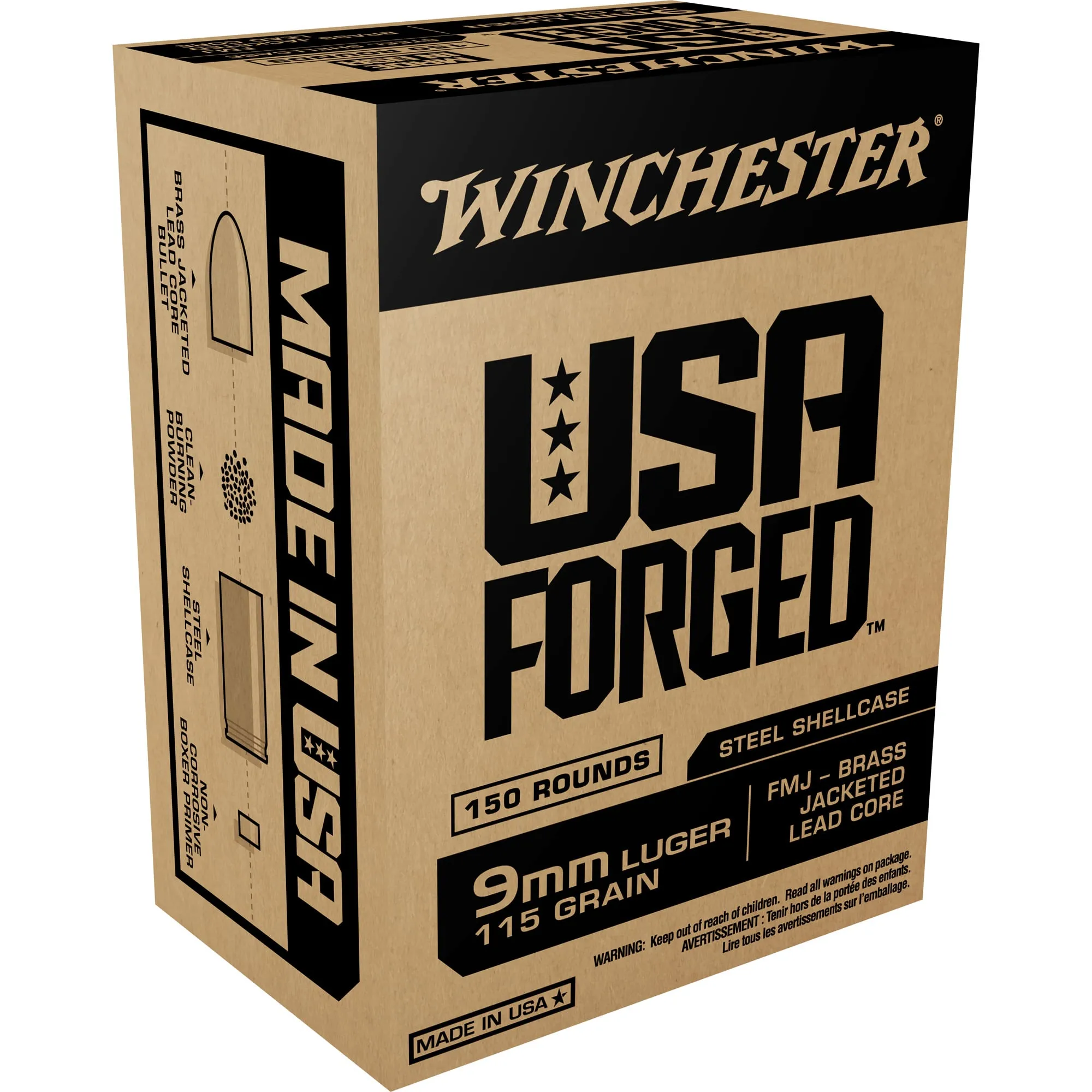
Winchester USA 9mm Ammunition, 1000 Rounds FMJ 115Gr - WIN9SK
9mm · 115gr · 1,000 rds

Winchester Centerfire Handgun Brass 9mm 115-Grain 1000-Rounds FMJ Bulk
9mm · 115gr · 1,000 rds

PMC Ammunition Bronze Brass 9mm 124 Grain 1000-Rounds Bulk FMJ
9mm · 124gr · 1,000 rds

PMC Ammunition Bronze Brass 9mm 115-Grain 1000-Rounds Bulk FMJ
9mm · 115gr · 1,000 rds
The .22 LR substitution is worth more than every other saving combined
Here is the comparison that should shape a new shooter's first year.
.22 LR Price Index
Live · Oct 3, 2026Set that floor against the 9mm floor above. Rimfire runs at roughly a quarter of the centerfire cost per round at the bottom of the market, and the gap widens at average prices. In practical terms: the cheapest 325-round .22 LR value packs in our catalog cost a fraction of what the cheapest 9mm case costs, for a comparable number of rounds.
What that buys a new shooter is repetitions. Trigger control, sight alignment and follow-through are the same skills in rimfire, and they are easier to learn without recoil and muzzle blast in the way. What rimfire cannot teach is recoil management or working a defensive pistol under load — those need the real gun.
The sensible structure is both: rimfire for volume, centerfire for the specific things only centerfire teaches. If you are going that route, our .22 LR buying guide covers which bulk packs are worth buying and which are bulk-priced for no reason.
Bulk .22 LR Value Packs
Prices updated Oct 3, 2026
FEDERAL AMMO Champion Value Pack 22LR 36gr Lead Hollow Point Ammunition | 325 Rounds
.22 LR · 36gr · 325 rds
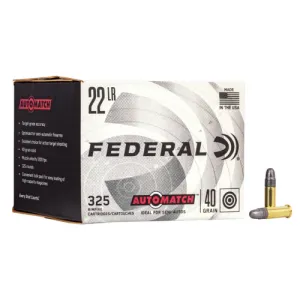
FEDERAL AMMO AutoMatch 22LR 1200 FPS 40Gr 325rd
.22 LR · 40gr · 325 rds
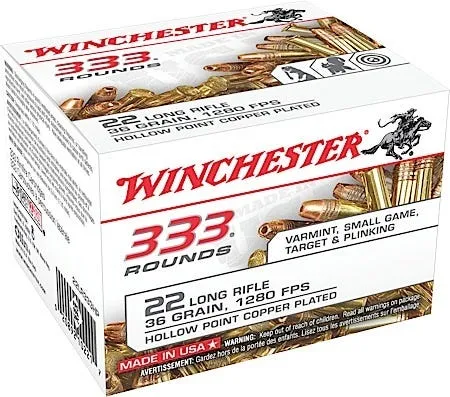
Winchester USA Brass .22 LR 36 Grain 333-Rounds Bulk CPHP
.22 LR · 36gr · 333 rds
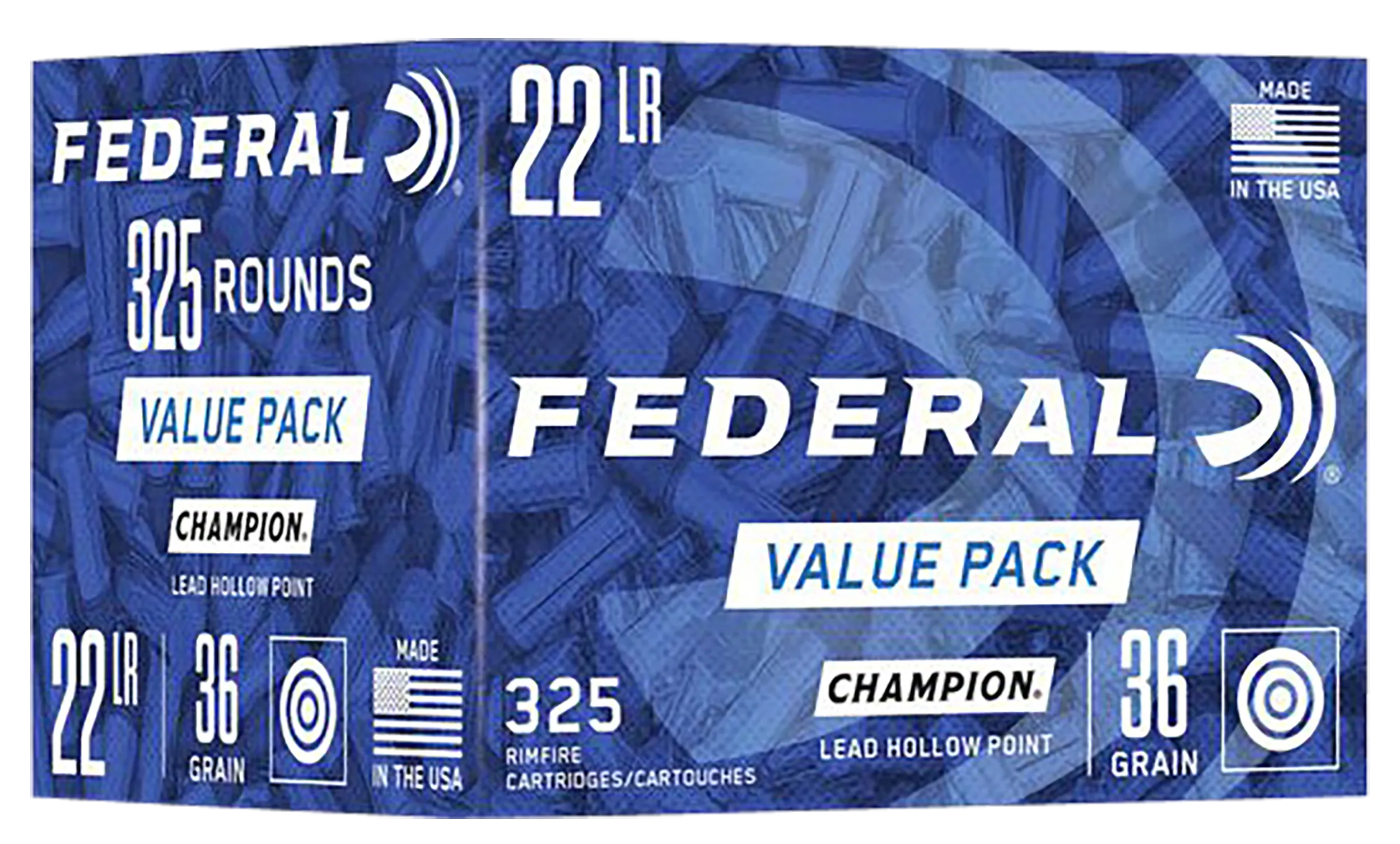
Federal Champion Training Value Pack Brass .22 LR 36 Grain 325-Rounds LHP
.22 LR · 36gr · 325 rds
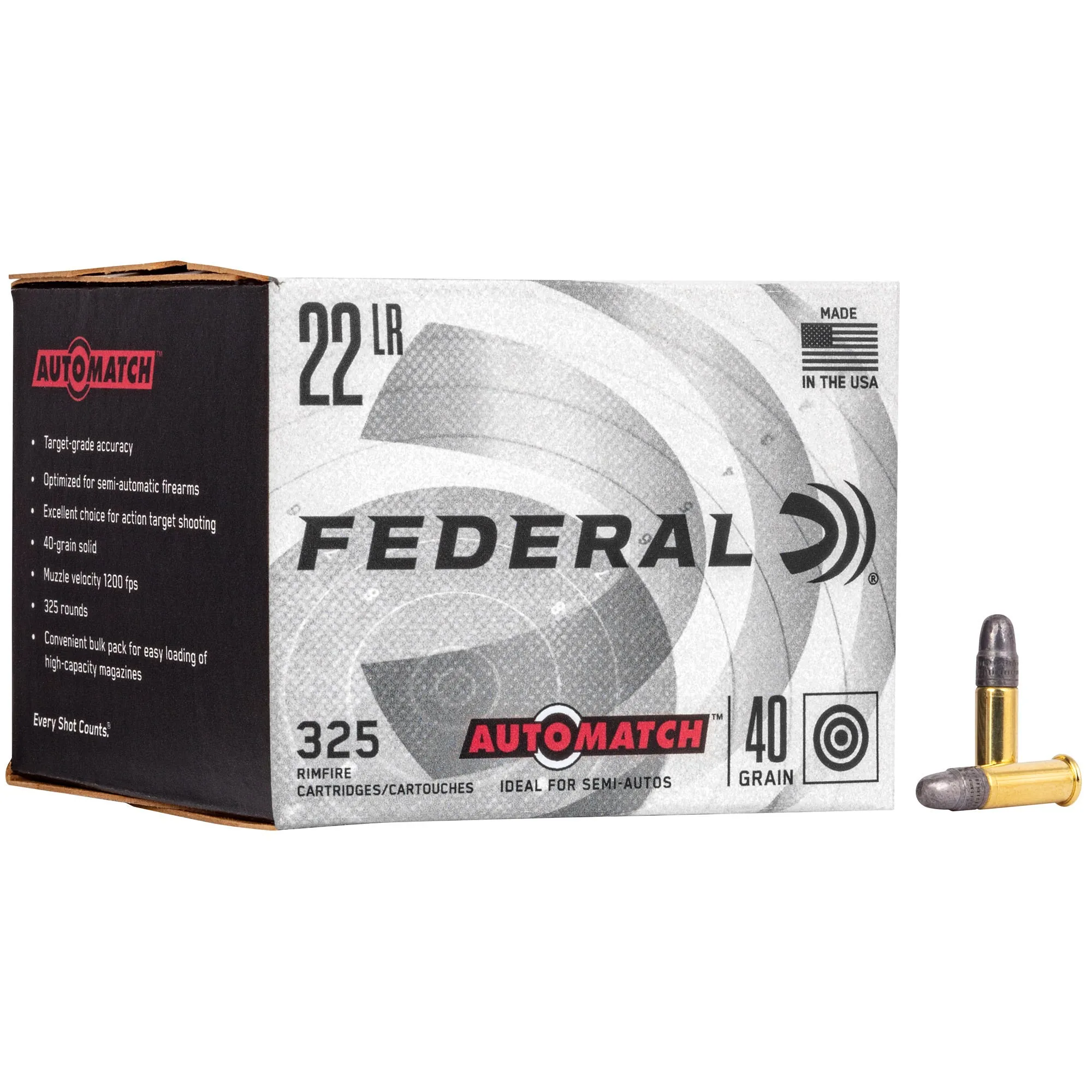
Federal Champion Training Bulk Ammo Brass .22 LR 40-Grain 325-Rounds LRN
.22 LR · 40gr · 325 rds
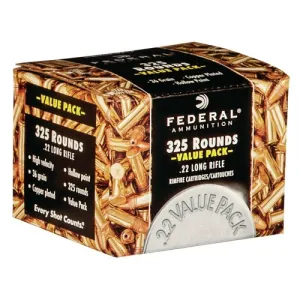
FEDERAL AMMO Value Pack 22LR 36gr Copper Plated Hollow Point Ammunition | 325 Rounds
.22 LR · 36gr · 325 rds
Which starter caliber is actually cheapest to shoot?
If you have not bought the gun yet, the running cost is a legitimate input. Live market floors, computed the same way as the index blocks above:
| Caliber | Market floor / round | Market average / round | Live listings |
|---|---|---|---|
| .22 LR | $0.058 | $0.162 | 309 |
| 9mm | $0.240 | $0.739 | 724 |
| .380 ACP | $0.308 | $0.845 | 185 |
| .40 S&W | $0.356 | $0.862 | 308 |
| .45 ACP | $0.376 | $1.069 | 351 |
| .38 Special | $0.420 | $0.910 | 211 |
| .223 Remington | $0.450 | $1.119 | 387 |
| .357 Magnum | $0.540 | $1.225 | 213 |
Two things in that table are worth stopping on.
.380 ACP costs more than 9mm. It is a smaller cartridge in every dimension and it is more expensive per round, at the floor and on average. Volume beats material cost: there are roughly four times as many 9mm listings as .380 listings in our catalog, and the loading lines that serve 9mm are far longer.
.38 Special costs more than .45 ACP. A revolver is often recommended as a simple first gun, and the simplicity is real — but the ammunition is not the cheap option it looks like.
9mm is the cheapest centerfire practice cartridge in our data by a clear margin, with the deepest listing count behind it. That is the unglamorous reason it is the default recommendation, and it holds up. Our 9mm buying guide covers the load tiers, and the 9mm deal page has the live ladder.
How much carry ammunition do you actually have to buy?
Separate budget, different logic.
Defensive hollow point in 9mm averages roughly two and a half times the cost per round of practice FMJ across our listings, and the cheapest JHP sits well above the cheapest FMJ. So this is the part of the purchase you count in rounds, not boxes.
You need enough to confirm the gun feeds the specific load reliably, plus what you carry, plus a reserve. That is a one-time cost of a few boxes, not a recurring one — and it is the reason the pairing packs exist.
The Practice-And-Defend Pairing Pack
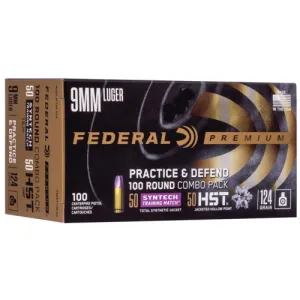
FEDERAL AMMO 9mm 124Gr Practice & Defend HST Premium 100rd
Federal's Practice & Defend box pairs 50 rounds of practice FMJ with 50 rounds of HST defensive ammunition. It is a genuinely sensible idea for a first defensive purchase, and it is priced well above buying the two components separately — read it as paying for the decision being made for you.
Once the gun is verified, stop shooting your carry ammunition for fun. Practice with the cheapest FMJ that runs in it. For how deep to go on the reserve side, we worked through that separately in how much ammo you should actually keep on hand.
What we will not tell you
We will not tell you the number of rounds it takes to become competent. We do not run training courses, we do not score students, and any figure we published would be a number we made up. Our ranking methodology sets out where that line sits in general.
What we can do is the arithmetic. You bring the round count; the live market supplies the price, and this page turns one into the other. If you want the round-count side argued on its own terms, how many rounds it takes to get good is the companion to this piece — and if you are at the stage of buying the hardware to feed it, how many magazines you actually need is the other half of the first-year shopping list.
One last piece of budgeting advice the data genuinely supports: set your rounds-per-month number low enough that you will actually hit it, buy at the floor rather than the average, and put the difference into more range trips. Consistency beats volume, and it is cheaper.
Get alerted when 9mm price drops hit.
We watch every listing and email you the moment the cost per round drops.
Set Up a Free Price AlertAmmoSpotter earns a commission when you buy through links on this page. It never changes what you pay, and it never decides what we recommend — our picks are ranked on live cost-per-round data pulled from every retailer we track. Full disclosure.
Frequently Asked Questions
How much ammo does a new shooter need per range trip?+
Is ammunition labelled 'practice' or 'training' cheaper?+
Is it cheaper to practice with .22 LR instead of 9mm?+
Should a new shooter buy ammunition by the case?+
How much carry ammunition do I need to buy?+
Why does .380 ACP cost more than 9mm?+

About the author
AmmoSpotter Research Desk
Price & Ballistics Research
The AmmoSpotter Research Desk analyzes live retail pricing across every ammunition, firearm and accessory listing we track. Recommendations here are ranked against real cost-per-round data pulled daily from the retailers we monitor - not against manufacturer marketing copy.
- ✓Tracks 180,000+ live product listings across 6 retailer feeds
- ✓Records price history on every listing, every day
- ✓Cost-per-round methodology applied to all ammunition rankings
- ✓No product is ranked without a verifiable in-stock retail price
- ✓Affiliate relationships never influence rankings
Related Guides

How Many Rounds Does It Take to Get Good?
Almost every shooter is round-count constrained and almost none of them have written the number down. Ammunition is the actual budget line that determines how much you improve, and it is the one people plan least. So ...

Best First Handgun for a New Shooter (2026): Pick the Gun, Then Fund the Round Count
- Buy the gun you can afford to shoot 500 rounds through, not the most gun you can afford to buy. - 9mm is the default first chambering for one unglamorous reason: it is the cheapest centerfire pistol round on the mar...
The Real Cost of a Year of Training, by Caliber
The gun is a one-time cost. The ammunition is the bill that arrives every year for as long as you own it, and for most shooters it passes the purchase price of the firearm within two or three seasons. The number itsel...

How Much Ammo Should You Actually Keep On Hand? A Round-Count Plan Priced Live
- Your on-hand number has three separate parts: practice stock , a defensive reserve , and a price-spike buffer . Size each one separately. - Practice stock is monthly rounds fired multiplied by the months you want to...

How Much Does It Cost to Own an AR-15 for a Year? Priced on Live Data
- The rifle is a one-time cost. Ammunition is the recurring one, and at realistic round counts it dwarfs everything else. - We track 380 live .223 Remington ammunition listings. The spread between the market floor and...
Best 9mm Ammo for a Subcompact or Micro Pistol: Short-Barrel Loads on Live Prices
A micro-compact 9mm solves the carry problem. It fits inside the waistband, holds enough rounds, and disappears under a T-shirt. What it gives up is barrel length, and in a handgun cartridge barrel length is velocity....