How Much Ammo Should You Actually Keep On Hand?
The right number is not a round count someone else picked. It is how fast you shoot, how long you want to go without buying, and what that costs at today's floor price.

How much ammo should you have? Start with how fast you shoot
There is no correct round count that applies to everyone, and any article that gives you one is guessing about your life. A person who shoots twice a year and a person who shoots a match every weekend should not own the same quantity of ammunition.
What does generalize is the structure. Every sensible stock breaks into three parts that behave differently:
- Practice stock. The rounds you will shoot at the range. This is the big number, it turns over, and it is almost all price-sensitive range ammo.
- Defensive reserve. The load in your carry gun or home-defense firearm, plus enough to prove it works and to rotate it. This is a small number of expensive rounds.
- Price-spike buffer. Extra practice ammo held so a sudden price jump or an empty shelf does not stop you training. This is a decision about risk and cash, not about need.
Lumping them together is how people end up with thousands of rounds of one thing and twenty rounds of what they would actually rely on.
How many rounds does a year of practice actually use?
Start from your range log, or from an honest estimate of it. The table below is purely arithmetic: monthly rounds, and what that becomes over a year. Find the row that matches what you really shoot, not what you would like to shoot.
| Shooting pattern | Rounds per month | Rounds per year | Six months of cover |
|---|---|---|---|
| A box a month | 50 | 600 | 300 |
| A range trip every other week | 100 | 1,200 | 600 |
| Weekly practice | 200 | 2,400 | 1,200 |
| Classes or regular matches | 500 | 6,000 | 3,000 |
How much live fire is actually worth doing, and where dry fire and structured practice beat simply buying more ammunition, is covered in How Many Rounds Does It Take to Get Good?. That piece is about skill. This one is about inventory: once you know your monthly number, the rest of the plan is multiplication.
What does a year of training cost at today's prices?
This is where a round count becomes a budget. The blocks below show the live market floor, average and 30-day direction for the three calibers most people train with.
9mm Luger Price Index
Live · Nov 18, 2026.223 / 5.56 Price Index
Live · Nov 18, 2026.22 LR Price Index
Live · Nov 18, 2026The formula is simple: annual rounds × cost per round = annual ammunition budget. Use the market floor if you are willing to shop for it, and the market average if you are not.
A worked example, using a price from our listings at the time of writing: Federal American Eagle 9mm 115-grain FMJ was listed at $0.296 per round in 50-round boxes. At that price, the "box a month" shooter's 600 rounds a year costs $177.60, and the weekly shooter's 2,400 rounds costs $710.40. Redo that arithmetic with the live floor above before you plan around it; prices move.
Two things fall out of that math. First, the gap between the floor and the average, multiplied by a year of rounds, is what shopping around is worth to you. Second, rimfire changes the picture completely. If a meaningful share of your practice is fundamentals, a .22 LR trainer cuts the cost of those rounds sharply; see Best .22 LR Ammo for what to buy.
Cost Per Round Calculator
The only number that matters when comparing ammo. Shipping included.
How big should your defensive reserve be?
Much smaller than your practice stock, and more deliberate. A reasonable defensive reserve covers three things:
- Every magazine you keep loaded, for every defensive firearm, plus spares you actually carry or stage. How many magazines that is, and why, is its own question, answered in How Many Magazines Do You Actually Need?
- Proof of function. Enough of the exact load to run through your gun and confirm it feeds, fires and ejects reliably. A load that works in one pistol is not automatically proven in another.
- Rotation. Carry rounds get chambered, unloaded and handled repeatedly. Replacing them on a schedule, and shooting the old ones in practice, means you need a supply beyond what is in the magazines.
That typically lands at a few boxes, not a few cases. It also costs more per round than it looks. At the time of writing, the Remington Golden Saber 9mm 124-grain listing below was $1.415 per round against $0.296 for the American Eagle practice load above, nearly five times as much. That ratio is the argument for sizing a defensive reserve on purpose instead of buying defensive ammo in bulk by reflex. Current prices are in the cards:
Defensive Reserve Loads, Live Prices
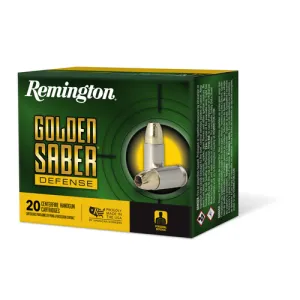
Remington Golden Saber Defense Handgun Ammo Brass 9mm 124-Grain 20-Rounds BJHP
A mainstream bonded hollow point in 20-round boxes. Buy enough to fill every magazine you carry or stage, plus enough to prove the load cycles in your gun before you trust it.
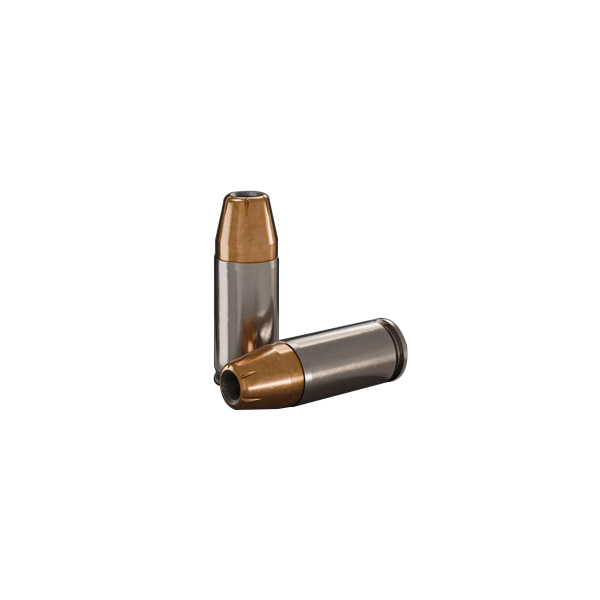
Underwood Ammo Handgun Nickel Plated Brass 9mm +P 147 Grain 20-Rounds JHP
A heavier +P load. Confirm your pistol is rated for +P before buying a reserve of it, and expect more recoil in a small carry gun.
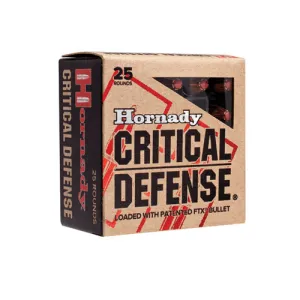
Hornady Critical Defense .38 Special +P 110gr Ammunition w/FTX Bullets (25/Box) 90311
A +P revolver load in 25-round boxes. Revolvers are less ammunition-sensitive than semi-autos, but the reserve logic is identical: cylinder, speedloaders, and a box to verify point of impact.
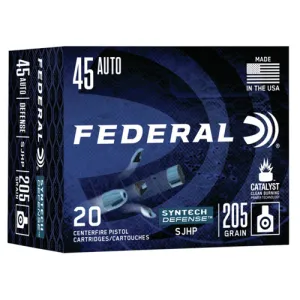
Federal Syntech Defense Handgun Ammo Brass .45 ACP 20-Rounds 205 Grain SJHP
Federal's polymer-jacketed defensive load in 20-round boxes. Heavier calibers push the per-round cost of a reserve up, which is a reason to size it deliberately rather than by habit.
Choosing between those loads is covered in Best 9mm Ammo and our concealed carry ammo guide. We do not run our own terminal ballistics testing; how we rank without it is explained in How AmmoSpotter Ranks Ammunition.
How many months of buffer protects you from a price spike?
This is the part people overbuy. A buffer exists so that when prices jump or a caliber disappears from shelves, you can keep training on what you already own until the market settles.
Express it in months of your own consumption, not in round counts. Three to six months of cover is a reasonable default for most people; the table above converts that to rounds. Beyond that, you are no longer insuring your training, you are speculating on prices, and the cash sitting in ammo cans is money you could have spent on a class, a gun or anything else.
When to top up the buffer is a timing question. Buy it when the 30-day trend in the price index is flat or falling, not after a spike has already started, because that is when everyone else is also buying. What actually drives those moves is laid out in Why Ammo Prices Move, and which calibers have been rising is tracked in Which Calibers Got More Expensive This Year.
Is buying a case cheaper than buying boxes as you go?
Sometimes, and not always by as much as the case label implies. These are the cheapest 9mm listings we track at 1,000 rounds or more, live:
Cheapest 9mm by the Case, 1,000+ Rounds
Prices updated Nov 18, 2026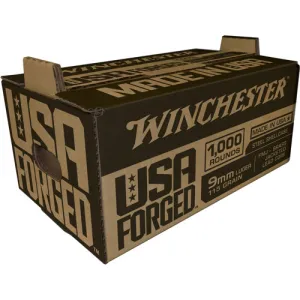
Winchester USA Forged 9mm 115 Grain 1000-Rounds Bulk FMJ
9mm · 115gr · 1,000 rds
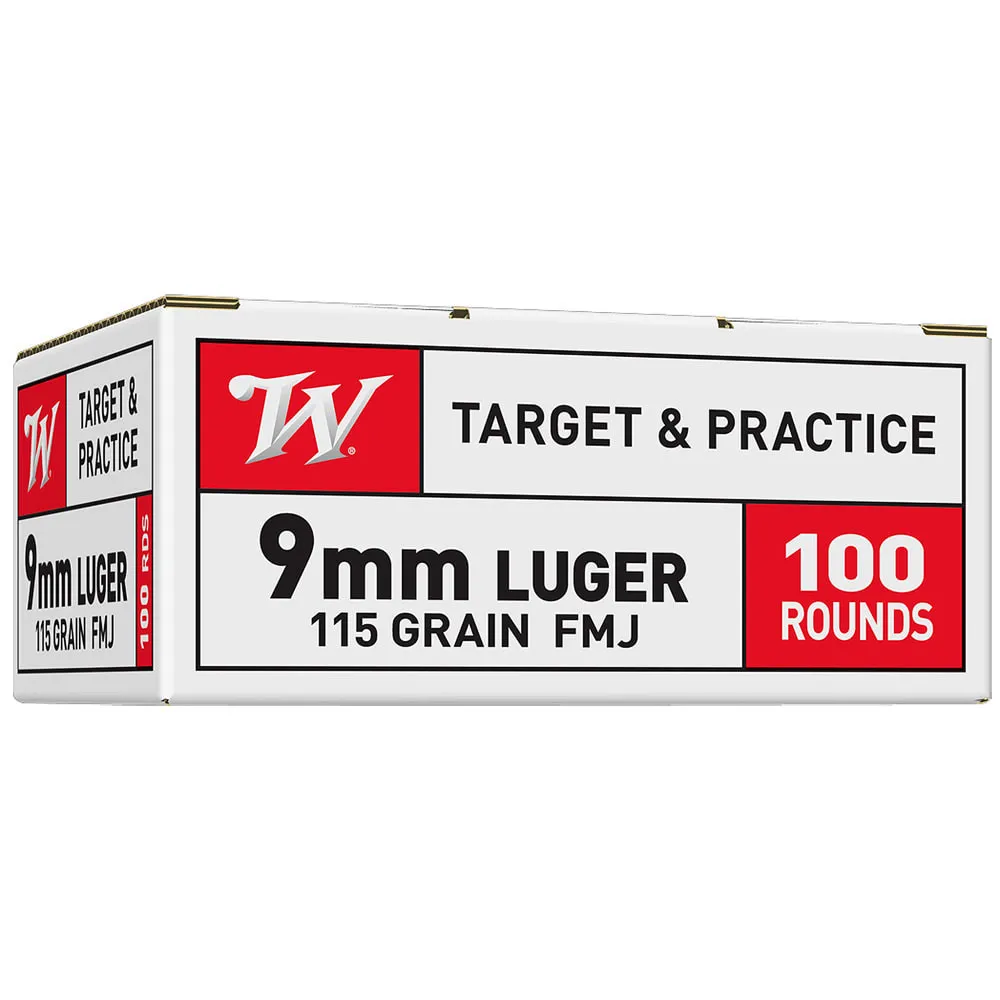
Winchester 9mm Target & Practice FMJ 115gr Case of 1000rds USA9MMVP
9mm · 115gr · 1,000 rds

Winchester Centerfire Handgun Brass 9mm 115-Grain 1000-Rounds FMJ Bulk
9mm · 115gr · 1,000 rds

CCI Ammunition Blazer Aluminum 9mm 115-Grain 1000-Rounds Bulk FMJ
9mm · 115gr · 1,000 rds

PMC Ammunition Bronze Brass 9mm 115-Grain 1000-Rounds Bulk FMJ
9mm · 115gr · 1,000 rds

PMC Ammunition Bronze Brass 9mm 124 Grain 1000-Rounds Bulk FMJ
9mm · 124gr · 1,000 rds
Compare those per-round figures with the 9mm floor in the price index above, which includes single boxes. If the case price is not clearly below what you could pay for boxes, the only thing a case buys you is the buffer itself. That can still be worth having, but it should be a conscious choice. The full case-versus-box analysis is in Is Bulk Ammo Cheaper?, and for rifles, the practice loads worth stocking are in Best 5.56 & .223 Ammo.
When keeping more ammo on hand stops making sense
A bigger stock has costs beyond the purchase price.
Storage. Ammunition does not expire on a date, but heat cycling and humidity degrade it. A garage or a vehicle is a poor place for a large stock, and .22 LR is more vulnerable than sealed centerfire. What dry storage takes and costs is covered in How Long Does Ammo Last?
Legal limits. Fire codes, local ordinances, leases and some state rules can restrict how much ammunition you store, how it is stored, or how you can buy it. These rules vary widely and change, so check your own jurisdiction before you plan a large stock. State Ammo Purchase Restrictions is a starting point, not a legal answer.
Shipping. If your plan depends on buying cases online, confirm retailers can ship to your address first. Ammo Shipping Restrictions explains how to check.
Mobility. Ammunition is heavy. A stock you cannot move if you relocate is a liability as much as an asset.
A five-minute way to set your number
- Write down your monthly round count per caliber, from what you really shot over the last few months.
- Pick your cover period. Three to six months for most people.
- Practice stock = monthly rounds × months of cover.
- Add a defensive reserve sized to your loaded magazines, proof of function and rotation.
- Price it with the live index above: practice rounds at the floor you are willing to shop for, defensive rounds at the load you actually carry.
- Top up when the trend is flat or falling, not in the middle of a spike.
If the annual figure surprises you, that is the useful outcome. It is easier to adjust a plan than a closet full of the wrong ammunition. Live prices for every caliber are on the ammo deals page, and the full 9mm list is on the 9mm caliber page.
Get alerted when 9mm price drops hit.
We watch every listing and email you the moment the cost per round drops.
Set Up a Free Price AlertAmmoSpotter earns a commission when you buy through links on this page. It never changes what you pay, and it never decides what we recommend — our picks are ranked on live cost-per-round data pulled from every retailer we track. Full disclosure.
Frequently Asked Questions
How much ammo should I have for home defense?+
How much ammo should I keep on hand for training?+
Is 1,000 rounds of 9mm a lot?+
Should I buy ammo in bulk before prices go up?+
Are there limits on how much ammo I can store at home?+
Shop the data

About the author
AmmoSpotter Research Desk
Price & Ballistics Research
The AmmoSpotter Research Desk analyzes live retail pricing across every ammunition, firearm and accessory listing we track. Recommendations here are ranked against real cost-per-round data pulled daily from the retailers we monitor - not against manufacturer marketing copy.
- ✓Tracks 180,000+ live product listings across 6 retailer feeds
- ✓Records price history on every listing, every day
- ✓Cost-per-round methodology applied to all ammunition rankings
- ✓No product is ranked without a verifiable in-stock retail price
- ✓Affiliate relationships never influence rankings
Related Guides

How Many Rounds Does It Take to Get Good?
Almost every shooter is round-count constrained and almost none of them have written the number down. Ammunition is the actual budget line that determines how much you improve, and it is the one people plan least. So ...

How Long Does Ammo Last? Shelf Life and Long-Term Storage
- Ammunition has no expiry date. It has storage conditions, and the failure mode is almost always moisture. - The order of risk is water, then heat, then age. Age alone, in a dry closet at stable temperature, is the l...

Bulk vs Box: How Much You Actually Save Buying a Case
The standard advice is to buy by the case because bulk is cheaper. We track every live ammunition listing we can get, normalized to cost per round, so we tested that advice against the data instead of assuming it. The...

How Many Magazines Do You Actually Need?
Magazines are a rounding error next to what you spend on ammunition, and they cause a disproportionate share of malfunctions. That asymmetry is the whole argument: buying enough good magazines is the cheapest reliabil...

Best Gun Safes for Home Defense 2026: What the Price Data Says to Buy
- We track 103 live gun vault and safe listings . Ninety-nine of them cost under $270, four cost over $1,199, and exactly one sits in between — the mid-priced gun safe is a category that barely exists at these retaile...
How Much Practice Ammo Does a New Shooter Need? Budget It in Dollars, Not Boxes
- Decide on rounds per month, not boxes per year. Then price that number against the live market — the blocks on this page do it for you. - Ammunition labelled "practice" or "training" is not the cheapest practice amm...