When Is the Cheapest Time of Year to Buy Ammo?
The calendar is the weakest signal in ammunition pricing. Here is what actually moves the number, and how to buy off live cost per round instead of guessing at a month.

The question assumes ammunition behaves like patio furniture — that there is a predictable end-of-season dip, and that a patient buyer beats an impatient one by waiting for it.
It does not work that way. The forces that set ammunition prices are demand shocks and component costs, and neither of them consults a calendar. What you get instead is long stretches of drift punctuated by moves that nobody scheduled.
That is not a reason to give up on timing. It is a reason to replace month with number.
Is there really a cheap season for ammunition?
Seasonality shows up in markets where supply and demand both follow the weather. Ammunition has half of that at best.
On the supply side, manufacturing runs continuously. Plants schedule production against forecast demand and component availability, not against quarters. When a line is retooled for a different cartridge, that decision was made months earlier and has nothing to do with the season you happen to be shopping in.
On the demand side there is a genuine seasonal component — hunters buy in the fall, ranges get busier in warm weather — but it sits underneath a much larger and much less orderly force: consumer surge buying. When enough people decide simultaneously that ammunition might get harder to obtain, demand can multiply in a matter of days. Nothing in the annual calendar produces a move on that scale.
So the honest answer to "when is ammo cheapest" is: when the market floor for your cartridge is low. Which is a thing you can check.
9mm Luger Price Index
Live · Oct 10, 2026That block is generated at the moment you load this page, from listings we track across retailers. It is the answer to the question the headline asks, restated in the only unit that matters.
What actually moves ammunition prices
Four forces, roughly in order of how hard they hit.
Demand surges. Political events, high-profile legislative proposals, and general uncertainty pull years of future purchasing into a few weeks. Retail inventory clears, backorders stack up, and prices reset upward until supply catches back up. These are the moves that people remember, and they are the reason "I'll wait for a better price" has burned so many buyers.
Component and commodity costs. Copper, lead, brass, powder and primers all price independently of the ammunition market. When input costs rise, the floor rises with them, and it does not come back down just because the season changed. Primer availability in particular has been the binding constraint on loaded ammunition supply more than once.
Manufacturer capacity allocation. A plant that can produce several cartridges will run the ones with the best margin and the deepest order book. When capacity shifts toward one cartridge, the others get thinner on shelves and firmer on price — regardless of month.
Retailer inventory and promotional cycles. This is the only genuinely scheduled force on the list. Retailers clear slow-moving stock, run holiday promotions, and discount to hit quarterly numbers. It is real, it is predictable, and it is also the smallest of the four in magnitude. It moves specific SKUs at specific stores, not the market.
The parts of the year that are actually scheduled
Three calendar effects are worth understanding, as long as you understand what they do and do not cover.
Autumn hunting demand. Deer, elk and waterfowl seasons concentrate a large volume of buying into a short window, and that buying is cartridge-specific. If you shoot .308 Winchester, .30-06, .270, 6.5 Creedmoor or 12 gauge, you are competing with hunters in the fall for the same shelf space. The practical move is to buy your season's supply well ahead of it, not to wait for a post-season clearance that may only cover the loads nobody wanted.
Season dates vary by state and by species, and they change. Check your state wildlife agency for the current calendar rather than relying on last year's.
The holiday retail window. Late-year promotions are genuine, and they are also the most heavily marketed period in retail. A percentage off a retailer's list price is not the same as a low cost per round. Run the comparison before you assume.
New-product cycles. The industry introduces product in the first part of the year, which occasionally puts pressure on the outgoing version of a load. This is a small effect and an unreliable one, but it is the one case where "last year's model" logic sometimes applies to ammunition.
Notice what none of these are: a general, market-wide, repeatable month where everything is cheaper.
So when should you buy? When the number is low
Replace the calendar question with a price question, and it becomes answerable.
For any cartridge, three figures tell you where you stand:
- Market floor per round — the realistic bottom across everything we track, not a single outlier listing.
- Market average per round — what the middle of the market is charging.
- Lowest box price — the cheapest way in, which matters if you are not buying a case.
When the floor sits well below the average, there is a real deal available and someone is discounting. When the floor and the average converge, the market is tight and waiting is unlikely to help you.
Here is the same read on the two highest-volume rifle cartridges:
.223 / 5.56 NATO Price Index
Live · Oct 10, 2026And on the highest-volume shotshell:
12 Gauge Price Index
Live · Oct 10, 2026Our ammo price index carries the same read across every cartridge we track, updated continuously. If you want the mechanics of how these numbers are built and where the traps are, cost per round explained covers the arithmetic in detail.
How to read a price without fooling yourself
Three errors do most of the damage.
Comparing box prices instead of round prices. A cheaper box is not cheaper ammunition. Box counts vary — 20, 50, 100, 250, 500, 1000 — and comparing sticker prices across different counts is comparing nothing at all. Normalize first.
Cost Per Round Calculator
The only number that matters when comparing ammo. Shipping included.
Forgetting shipping and hazmat. A low per-round price on a single box frequently loses to a higher per-round price on a case once shipping is included. This is most of why bulk works, and it is covered properly in is bulk ammo cheaper.
Anchoring to a price you paid years ago. The most common reason a buyer refuses to transact is that they remember paying less once. That memory is not a market. If the current floor is genuinely low relative to the current average, that is the information you have.
Below is what the bottom of the 9mm market looks like right now, sorted by cost per round:
Cheapest 9mm by Cost Per Round
Prices updated Oct 10, 2026
Winchester USA Forged 9mm 115 Grain 1000-Rounds Bulk FMJ
9mm · 115gr · 1,000 rds

CCI Ammunition Blazer Aluminum 9mm 115-Grain 1000-Rounds Bulk FMJ
9mm · 115gr · 1,000 rds

Aguila Centerfire Handgun Bulk 9mm 115 Grain 300-Rounds FMJ
9mm · 115gr · 300 rds
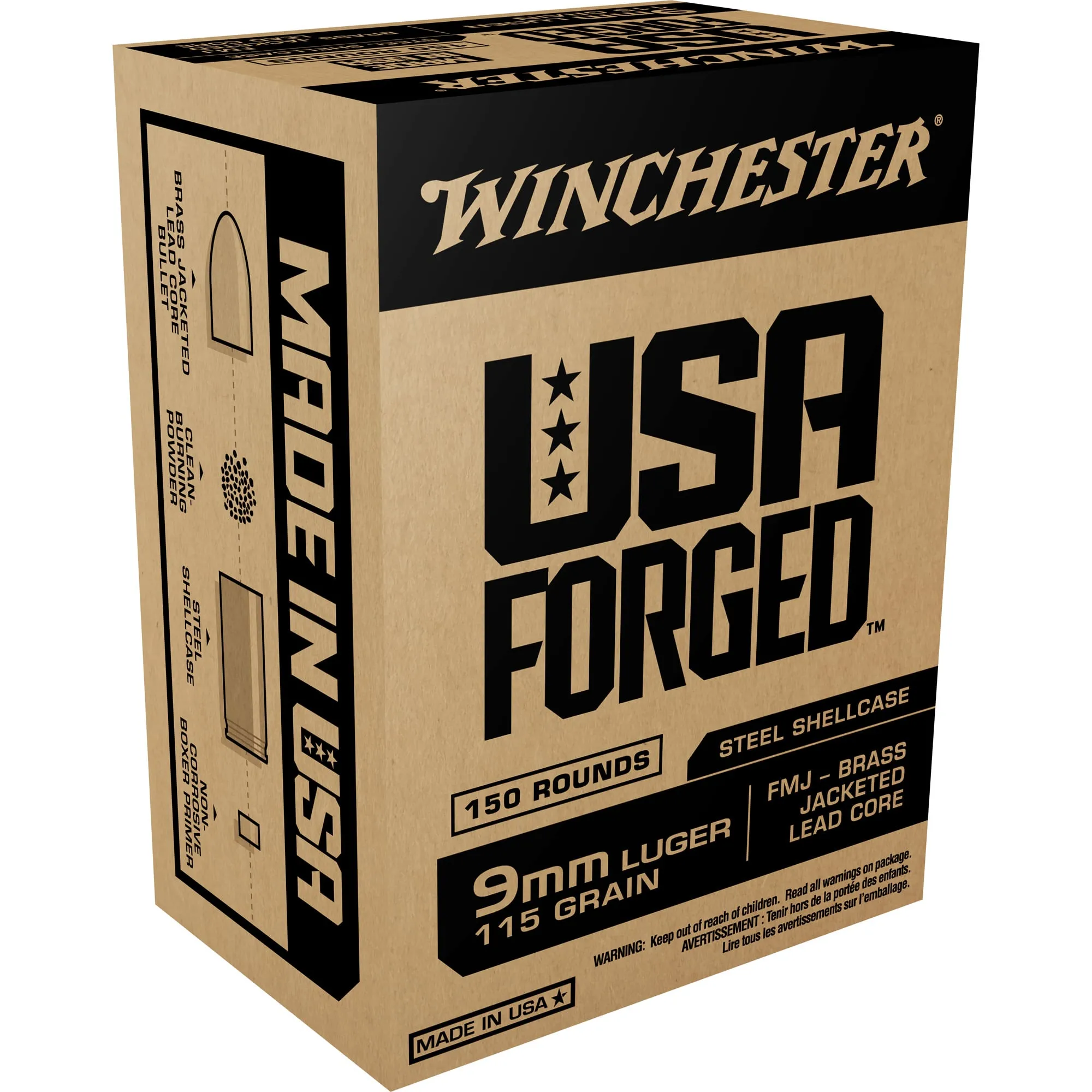
Winchester USA 9mm Ammunition, 1000 Rounds FMJ 115Gr - WIN9SK
9mm · 115gr · 1,000 rds

Aguila Centerfire Handgun Bulk 9mm 124-Grain 300-Rounds FMJ
9mm · 124gr · 300 rds
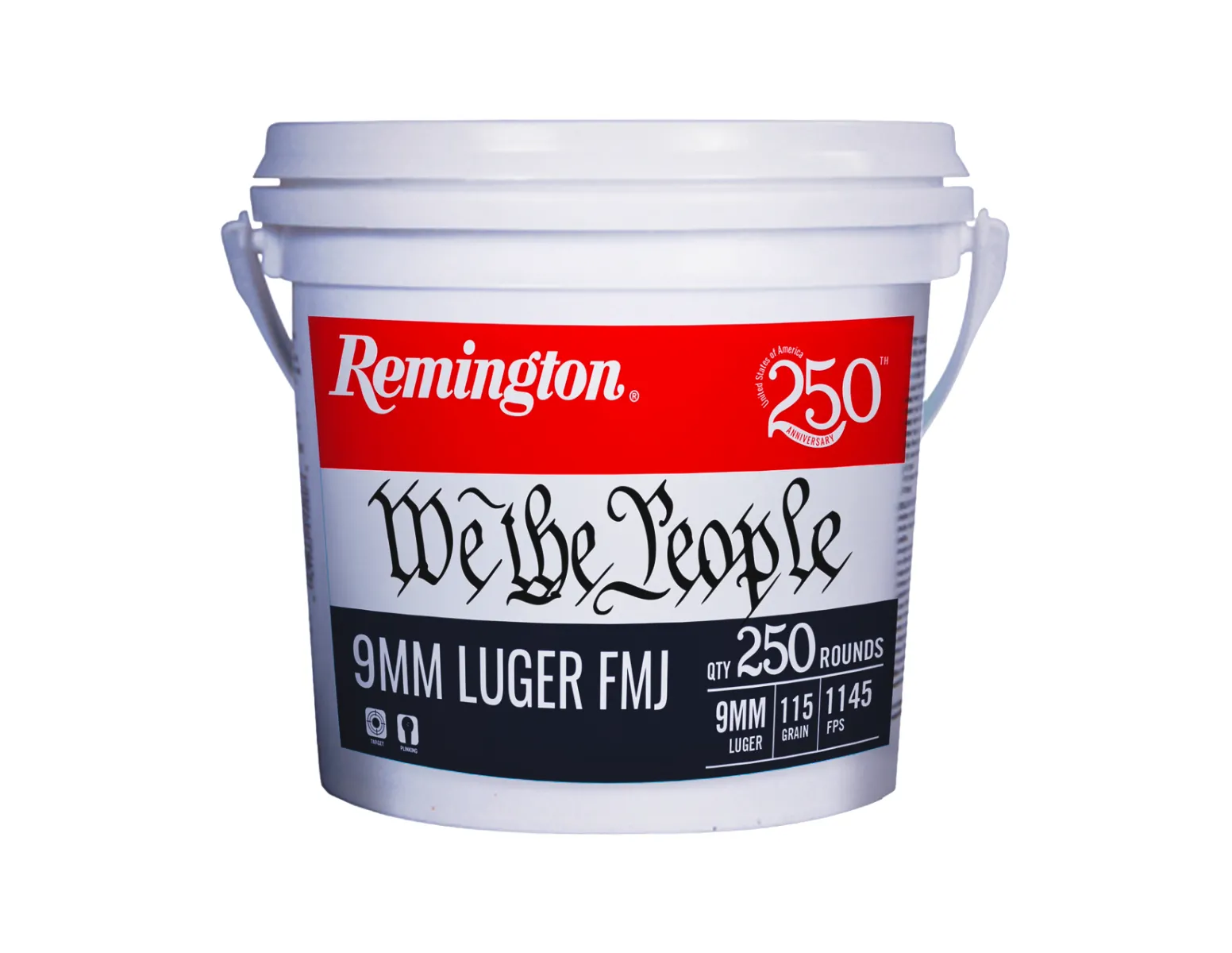
Remington UMC We The People 9mm 115 Grain 250-Rounds FMJ
9mm · 115gr · 250 rds
Does timing beat buying steadily?
For most shooters, no.
Timing requires you to be right about a future price, hold cash while you wait, and have the discipline to actually pull the trigger when the moment arrives. Steady buying requires none of that. If you shoot a known volume per year, buying a portion of it at regular intervals averages you into the market and removes the single worst outcome — being empty during a surge, when both price and availability go against you at once.
The one place timing genuinely pays is at the edges: when the floor for your cartridge drops meaningfully below its recent average, buy deeper than usual. That is not a calendar decision. It is a price decision, and it requires you to be watching.
Get alerted when 9mm price drops hit.
We watch every listing and email you the moment the cost per round drops.
Set Up a Free Price AlertWhich cartridges are worth watching closely?
The cartridges where attention pays off are the ones you shoot in volume, because a small per-round difference compounds across a case.
For handgun shooters that is almost always 9mm — check the live floor on the 9mm caliber page, and see best 9mm ammo for which loads are worth buying at that price. For rifle shooters it is .223 and 5.56, where the .223 / 5.56 caliber page and best 5.56 and .223 ammo do the same job.
Defensive and hunting ammunition is a different calculation. You buy it in small quantities, you shoot little of it, and the right load matters far more than the per-round price. Do not spend attention timing a purchase of two boxes.
The strategy, in four lines
- Know your annual round count for the cartridges you actually shoot in volume.
- Buy against cost per round, checked live, not against the month on the calendar.
- Buy deeper when the floor drops well below the average; buy your baseline anyway when it does not.
- Set an alert so the market tells you, rather than you checking.
If you want the full purchasing process — retailer vetting, shipping and hazmat, state restrictions, and how to avoid the common overpayment traps — start with how to buy ammo online without overpaying. Or go straight to all tracked ammunition and sort by cost per round.
Shipping and possession rules vary by state and locality, and they change. Confirm the current rules for your address before ordering.
AmmoSpotter earns a commission when you buy through links on this page. It never changes what you pay, and it never decides what we recommend — our picks are ranked on live cost-per-round data pulled from every retailer we track. Full disclosure.
Frequently Asked Questions
Is there a cheapest month to buy ammo?+
Does ammo get cheaper after hunting season?+
Should I wait for Black Friday to buy ammo?+
Do elections make ammo more expensive?+
How do I know if ammo is cheap right now?+
Is it better to buy in bulk or wait for a lower price?+
Shop the data

About the author
AmmoSpotter Research Desk
Price & Ballistics Research
The AmmoSpotter Research Desk analyzes live retail pricing across every ammunition, firearm and accessory listing we track. Recommendations here are ranked against real cost-per-round data pulled daily from the retailers we monitor - not against manufacturer marketing copy.
- ✓Tracks 180,000+ live product listings across 6 retailer feeds
- ✓Records price history on every listing, every day
- ✓Cost-per-round methodology applied to all ammunition rankings
- ✓No product is ranked without a verifiable in-stock retail price
- ✓Affiliate relationships never influence rankings
Related Guides

AmmoSpotter Ammo Price Index: What Ammunition Costs Right Now
Most published ammunition pricing is one of two things: manufacturer MSRP, which nobody pays, or a hand-updated article that was accurate the week it was written. This page is neither. Every figure below is computed a...

How to Buy Ammo Online Without Overpaying (2026 Guide)
Most ammunition buying advice stops at "shop around." That is not a process, and it is not why people overpay. People overpay because ammunition is priced in a unit nobody compares — the box — while the thing being bo...

Bulk vs Box: How Much You Actually Save Buying a Case
The standard advice is to buy by the case because bulk is cheaper. We track every live ammunition listing we can get, normalized to cost per round, so we tested that advice against the data instead of assuming it. The...

Cost Per Round: The Only Ammo Price Metric That Matters
There is exactly one reason ammunition is hard to price-compare: it is advertised in boxes and consumed in rounds. Box counts are not standardized. A "box" of 9mm might be 50 rounds. A "value pack" might be 100, or 11...

Black Friday Ammo Deals: What Actually Gets Discounted (And What Never Does)
- Discounting concentrates in volume range ammo, bulk cases and accessories. Premium defensive, match and low-supply cartridges move far less. - A percentage off a list price tells you nothing. Cost per round against ...

When to Buy Hunting Ammo: What Our Price Record Shows About the Season Curve
- We compared every hunting-caliber listing against itself between March and August 2026. Nearly all of them got more expensive. - Shotshells moved hardest: 12 gauge +8.57%, 20 gauge +7.94% over the window. - Deer rif...