Storing Guns and Ammo: Humidity, Safes and Rust
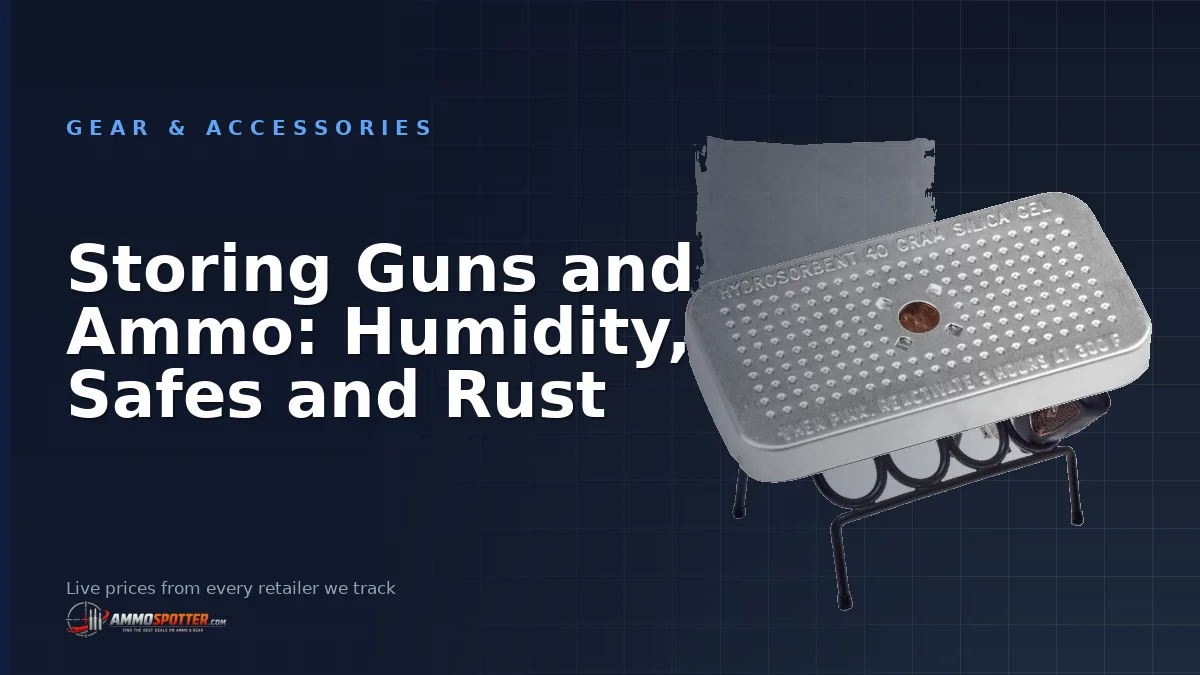
A safe keeps guns secure, but it doesn't control humidity. Here's what rusts, what to buy first, and how to store ammo so it lasts.
34 results
A safe keeps guns secure, but it doesn't control humidity. Here's what rusts, what to buy first, and how to store ammo so it lasts.
Steel-cased 9mm is only about 8% cheaper than brass and often out of stock. In .223 and 7.62x39, steel saves far more. Here's how to decide.
For a box or two, the store usually wins. For a case, online wins because shipping spreads to almost nothing. Here's how to compare cost per round in the aisle.
About 7 in 10 ammo listings cost more than their lowest recorded price. Here's how our alerts catch the drops, and why they pay off most on bulk cases.
For clays, cost per shell is what counts. Shoot #7.5 for trap and #8 for skeet. A flat mostly stops you overpaying, and shipping can wipe out the savings.
A rifle marked .308 takes either round. Here's why the pressure argument is mostly a myth, when headspace matters, and what each label costs per round.
7.62x39 has the cheapest rounds, but 5.56 is cheaper and easier to find once you leave steel case. Here's how they compare on ammo, rifles and hunting.
.380 is the smaller round but costs more per round than 9mm, because it's rarely sold in bulk. Here's why, and how to choose between them.
A .22 LR round costs about a quarter of a 9mm round, and bricks really are cheaper than boxes. Here's what plinking, subsonic, match and magnum rimfire cost now.
Buying ammo by the case usually saves a few cents at most. Here's where bulk really pays (.22 LR), where it backfires (ammo cans), and when to buy deep.
Your yearly ammo bill is rounds per year times cost per round. Here's how to work out yours with live prices, and why .22 LR saves the most.
Ammo shipping is usually a flat fee per order, so the more rounds you spread it over, the less it costs. Here's when a case saves you money and when it doesn't.
Your ammo stock has three parts: practice ammo, a small defensive reserve, and a few months of buffer for price spikes. Here's how to size each one and what it costs.
Ammo lasts a very long time if it stays dry and at a steady temperature. Here's what ruins it, how to store it, and what bulk buying really saves.
State ammo rules change too often for any map to stay right. Learn the six types of restriction, how to check your address, and why fees mean you should buy bigger and less often.
The big Black Friday cuts land on bulk 9mm, 5.56, .22 LR and accessories. Premium ammo barely moves. Check every sale by cost per round.
Over time, you'll spend more on ammo than on your AR-15. Here's how to match ammo to your barrel, what to buy for practice and defense, and how to pay less.
For 9mm and 5.56, factory ammo is hard to beat. For 6.5 Creedmoor, .30-06 and .357 Magnum, reloading still pays. Here's how to run the numbers for your caliber.
.22 LR is the cheapest trigger time you can buy. Here's what it costs today, why a brick isn't much cheaper than a box, and when match ammo pays off.
.308 is two markets: cheap practice ammo and pricier hunting and match loads. Here's what each costs and how to buy without overpaying.
A 1,000-round case isn't always the cheapest 5.56, and 500-round cases are often the worst value. Shop by cost per round, and here's a checklist to do it right.
The cheapest ammo store changes by cartridge and by week. Compare cost per round including shipping, and check a store can ship to you first.
5.56 costs about twice as much per round as 9mm, and nobody can tell you where it's heading. Here's what it costs now and how to know a good price when you see one.
The cheapest 9mm runs about 24 cents a round. Here's how we track 9mm prices, which brands are cheapest, and how to set a buy price instead of guessing.