.308 Winchester vs 6.5 Creedmoor
Everyone assumes 6.5 Creedmoor costs more to feed. Across our whole catalog the averages are within about three cents of each other — the gap is somewhere else entirely.

Is 6.5 Creedmoor actually more expensive than .308?
This is the assumption behind most of the argument, and our data does not support it in the form people usually state it.
Here are both markets, live:
.308 Winchester Price Index
Live · Oct 29, 20266.5 Creedmoor Price Index
Live · Oct 29, 2026As of this writing, .308 Winchester averages $1.945 per round across 374 live listings. 6.5 Creedmoor averages $1.913 across 233. The newer cartridge is about three cents a round cheaper on average.
That is not what anyone expects, and it is not a rounding artifact — it is what happens when you normalize an entire catalog instead of comparing the two boxes on the shelf in front of you. The averages are close because the middle and top of both markets are made of the same thing: brass-cased hunting and match ammunition with expensive bullets, sold in 20-round boxes, by the same handful of manufacturers.
The averages are nearly identical. The floors are not.
Here is where the real difference lives.
The market floor for .308 is $0.650 per round. For 6.5 Creedmoor it is $0.950. That is roughly a 46 percent premium at the bottom of the market, and it holds at the box level too — the cheapest box of .308 we track is $11.99, against $16.99 for the cheapest 6.5 Creedmoor.
The reason is structural. .308 has been a military and surplus cartridge for seventy years, which means it has an imported steel-case FMJ tier underneath it holding the floor down. 6.5 Creedmoor has no equivalent. Its cheapest listings are Sellier & Bellot brass — a 140-grain FMJBT at $16.99 for 20 ($0.850 per round, which is the single cheapest 6.5 Creedmoor listing we carry) and 131- and 140-grain soft points at $18.99 ($0.950). Those are respectable prices for brass-cased ammunition. They are not cheap ammunition, because cheap 6.5 Creedmoor does not exist.
Cheapest .308 Winchester Right Now
Prices updated Oct 29, 2026
BARNAUL AMMO 308 WIN 145Gr FMJ Poly Coated Steel Case 20rd
.308 Winchester · 145gr · 20 rds

BARNAUL AMMO 308 Win 145Gr FMJ Zinc Steel Case 20rd
.308 Winchester · 145gr · 20 rds

BARNAUL AMMO 308 Win 150Gr HPBT Polycoated Steel Case 20rd
.308 Winchester · 150gr · 20 rds

BARNAUL AMMO 308 Win 140gr SP Polycoated Steel Case 20rd
.308 Winchester · 140gr · 20 rds

BARNAUL AMMO 308 Win 168Gr SPBT Polycoated Steel Case 20rd
.308 Winchester · 168gr · 20 rds

BARNAUL AMMO 308 Win 168Gr FMJBT Polycoated Steel Case 20rd
.308 Winchester · 168gr · 20 rds
Cheapest 6.5 Creedmoor Right Now
Prices updated Oct 29, 2026
SELLIER BELLOT SB65A Rifle 6.5 Creedmoor 140 gr Full Metal Jacket Boat Tail Ammunition | 20 Rounds
6.5 Creedmoor · 140gr · 20 rds

SELLIER BELLOT SB65C 6.5 Creedmoor 140gr Soft Point Ammunition | 20 Rounds
6.5 Creedmoor · 140gr · 20 rds

Sellier and Bellot Rifle Ammo 6.5 Creedmoor 140 Grain 20 Rounds
6.5 Creedmoor · 140gr · 20 rds

Sellier and Bellot Rifle Brass 6.5 Creedmoor 156 Grain 20-Rounds SP
6.5 Creedmoor · 156gr · 20 rds

Sellier and Bellot Centerfire Rifle Brass 6.5 Creedmoor 131-Grain 20-Rounds SP
6.5 Creedmoor · 131gr · 20 rds

Sellier and Bellot Rifle Ammo 6.5 Creedmoor 140-Grain 20-Rounds SP
6.5 Creedmoor · 140gr · 20 rds
Where .308 actually wins
Volume. That is the whole answer, and it is a bigger answer than it sounds.
If you are a hunter who fires twenty rounds a year, the floor gap costs you six dollars annually and is not worth a paragraph of thought. If you are shooting a few hundred rounds a year working on positional shooting, load development or just staying sharp, the cheap tier is the difference between practicing and rationing. How many rounds it takes to get good makes the case better than a price table does: round count is the variable that actually moves your groups, and a cartridge with no budget tier quietly caps how much you shoot.
.308 also has the deeper catalog — 374 live listings against 233 — which in practice means more retailers stocking it, more loads to choose from, and a better chance that something is discounted in any given week. Our full breakdown of the loads is in best .308 Winchester ammo, and every live listing in both .308 and 7.62x51 NATO is on the .308 / 7.62 NATO ammo page.
Worth being honest about the trade-off, though: that steel-case floor comes with dirtier chambers, non-reloadable cases and import-dependent supply. It is a real option, not a free lunch.
Where 6.5 Creedmoor actually wins
Two things, and neither is price.
Wind and distance. The 6.5mm bullets commonly loaded for the Creedmoor carry higher ballistic coefficients for their weight than typical .308 bullets. In plain terms, they hold velocity better and get pushed around less by crosswind. That advantage compounds with range — it is small at 200 yards and substantial at 800. If your shooting happens inside a couple hundred yards, you are paying for a benefit you will not collect.
Recoil. 6.5 Creedmoor recoils noticeably less than .308 for comparable rifle weight. This gets treated as a comfort feature and it is not. Less recoil means you spot your own impacts, you flinch less, and you shoot longer strings before form degrades. For most shooters that is worth more than the ballistic coefficient argument they think they are buying.
We do not run our own testing, and we are not going to hand you a drop chart we did not generate. How we rank ammunition sets out exactly what we will and will not claim — we rank on live price, availability across retailers and published manufacturer specification, and we defer to manufacturer and published ballistic data for everything else.
Which one should you hunt with?
For deer-sized game at ordinary ranges, both cartridges are comfortably adequate and this argument is mostly recreational.
.308 has the deeper factory hunting catalog, in the widest spread of bullet weights, and it is more likely to be on the shelf of a rural sporting goods store the day before opening. 6.5 Creedmoor gives you less recoil, which is a genuine advantage for shooters who flinch, and excellent sectional density for its bore. Bullet construction matters more than either — a controlled-expansion or bonded bullet in the cartridge you shoot well beats the theoretically superior cartridge you flinch with. Best deer hunting ammo by caliber works through this by species and range.
At the top of the range the two markets converge again. The most expensive 6.5 Creedmoor listing we track is a Federal Custom Shop 130-grain load at $93.89 for 20 rounds — $4.695 each. Premium is premium in either bore.
Live 6.5 Creedmoor Listings We Rate Highest
Prices updated Oct 29, 2026
Winchester White Box Ammo 6.5 Creedmoor 20-Round 125 Grain Open Tip Range
6.5 Creedmoor · 125gr · 20 rds

Sellier and Bellot eXergy Brass 6.5 Creedmoor 120 Grain 20-Rounds TAC-EX-Blue
6.5 Creedmoor · 120gr · 20 rds

Hornady American Whitetail 6.5 Creedmoor 129-Grain 20 Rounds InterLock
6.5 Creedmoor · 129gr · 20 rds
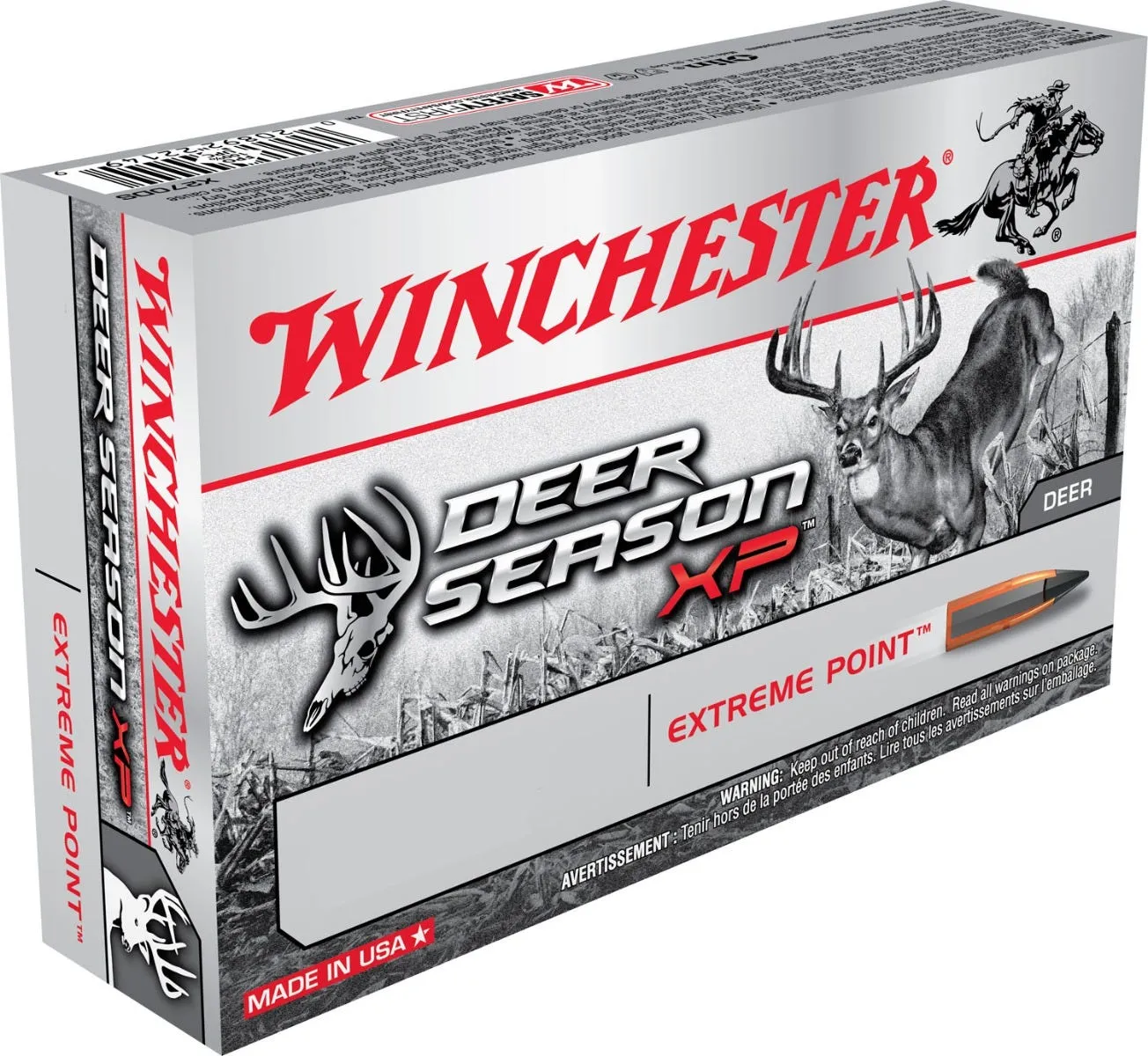
Winchester Deer Season XP Brass 6.5 Creedmoor 125 Grain 20-Rounds EP
6.5 Creedmoor · 125gr · 20 rds
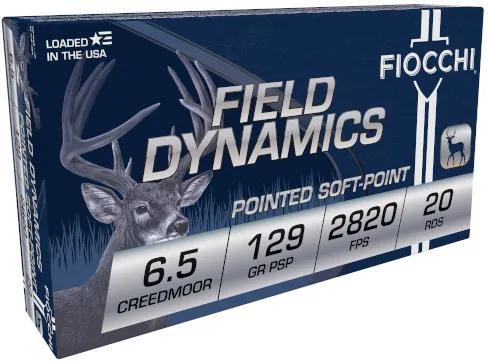
Fiocchi Field Dynamics Brass 6.5 Creedmoor 129-Grain 20-Rounds PSP
6.5 Creedmoor · 129gr · 20 rds
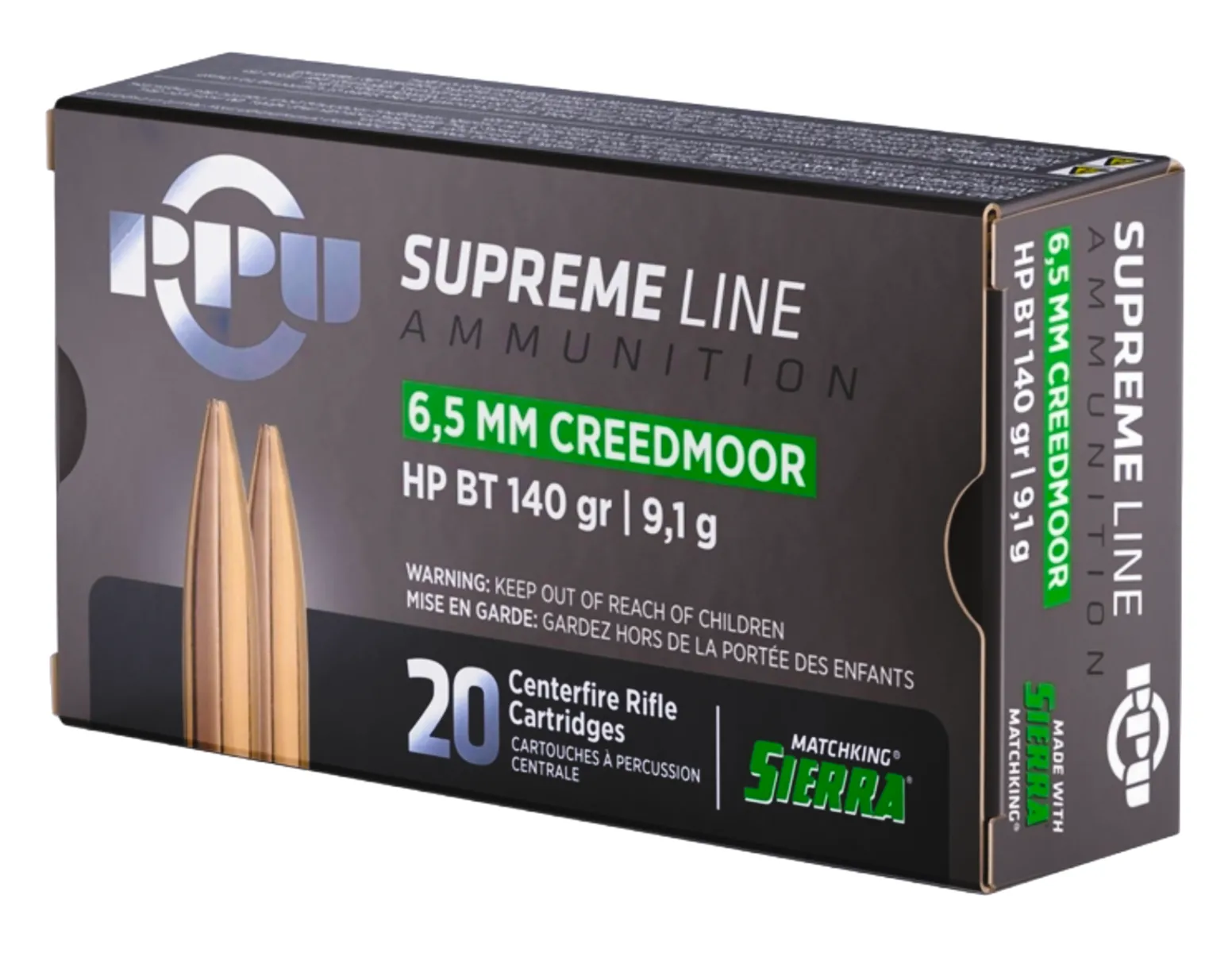
PPU Supreme 6.5 Creedmoor 140 Grain 20-Rounds SMBTHP
6.5 Creedmoor · 140gr · 20 rds
Does the answer change if you reload?
Yes, and it flips harder toward 6.5 Creedmoor than most comparisons admit.
The value of reloading is proportional to the gap between factory ammunition and component cost. .308 has a cheap factory tier that undercuts casual handloading; 6.5 Creedmoor does not, so the payback on a press arrives sooner and the ceiling on what you save is higher. Add that 6.5 Creedmoor's audience skews toward precision shooting, where handloading is normal anyway, and the case gets stronger. Is reloading still cheaper than buying ammo runs the actual numbers against live component prices.
The counterweight is barrel life. It is generally accepted that 6.5 Creedmoor is harder on throats than .308 — a smaller bore fed a similar powder charge erodes faster. Be skeptical of any specific round-count figure quoted for either cartridge, because barrel life depends on load, rate of fire, and where you set the threshold for "worn out." For a hunter it is irrelevant. For someone shooting a thousand rounds a year at distance, a barrel is a consumable and belongs in the cost-per-round math alongside the ammunition.
Is 6.5 Creedmoor a fad, or is it settled?
Catalog depth is the least romantic way to answer this and probably the most reliable one.
A cartridge that retailers have stopped stocking shows up in our data as thinning listings and widening price spreads long before anyone writes an article about it. 6.5 Creedmoor's 233 live listings sit in the same order of magnitude as .308's 374 — that is a cartridge with a functioning market and real competition among manufacturers, not a novelty with one boutique supplier. What actually happens when a new cartridge launches covers the pattern these things follow and how to tell a real adoption curve from a marketing push.
Prices in both will move regardless. The forces that push them — component costs, contract production, demand shocks — are the same ones described in why ammo prices move, and none of them are cartridge-specific.
So which should you actually buy?
Answer these in order and the choice usually makes itself.
- How much will you shoot? Above a few hundred rounds a year, .308's cheap tier is the strongest single argument in this comparison. Below that, it barely registers.
- At what distance? Past roughly 500 yards, 6.5 Creedmoor's wind performance starts genuinely earning its keep. Inside 300, you are buying a benefit you will not use.
- Do you flinch? Be honest. Lower recoil beats a better ballistic coefficient for almost everyone.
- Do you reload? If yes, 6.5 Creedmoor's lack of a budget tier hurts less, and the payback comes faster.
- What can you get? Check both live indexes above and the 6.5 Creedmoor ammo page before committing to a rifle. Availability where you live beats a spec sheet.
- Add shipping before you compare, and confirm the retailer ships to your address — restrictions vary and change, so check before you order.
For most people, the correct answer is the rifle they already own. Neither cartridge is enough better than the other to justify buying a new one, and the money is better spent on ammunition, glass, or a barrel that shoots. If you are starting from nothing and want the widest possible ammunition market at the lowest possible floor, that is .308 — and if you want the flattest-shooting, softest-recoiling option in a short action, that is 6.5 Creedmoor. Both are defensible. Only one of them lets you practice cheaply, and for most shooters that is the constraint that actually binds.
Get alerted when 6.5 Creedmoor price drops hit.
We watch every listing and email you the moment the cost per round drops.
Set Up a Free Price AlertAmmoSpotter earns a commission when you buy through links on this page. It never changes what you pay, and it never decides what we recommend — our picks are ranked on live cost-per-round data pulled from every retailer we track. Full disclosure.
Frequently Asked Questions
Is 6.5 Creedmoor more expensive than .308?+
Which is cheaper to shoot a lot of, .308 or 6.5 Creedmoor?+
Is 6.5 Creedmoor better than .308 for long range?+
Which is better for deer, .308 or 6.5 Creedmoor?+
Does 6.5 Creedmoor wear out barrels faster than .308?+
Can I convert my .308 rifle to 6.5 Creedmoor?+

About the author
AmmoSpotter Research Desk
Price & Ballistics Research
The AmmoSpotter Research Desk analyzes live retail pricing across every ammunition, firearm and accessory listing we track. Recommendations here are ranked against real cost-per-round data pulled daily from the retailers we monitor - not against manufacturer marketing copy.
- ✓Tracks 180,000+ live product listings across 6 retailer feeds
- ✓Records price history on every listing, every day
- ✓Cost-per-round methodology applied to all ammunition rankings
- ✓No product is ranked without a verifiable in-stock retail price
- ✓Affiliate relationships never influence rankings
Related Guides

Best .308 Winchester Ammo 2026: Hunting, Match and Practice Loads on Live Prices
- .308 is really two markets. The cheap tier lives near the live floor; the hunting and match tier sits multiples above it. The catalog average describes neither. - Steel-case FMJ sets the price floor for this cartrid...

Best Deer Hunting Ammo by Caliber (2026): What Each Cartridge Costs to Feed
- The mainstream deer cartridges — .308 Winchester, 6.5 Creedmoor, .30-06 Springfield — cost close enough per round that price should not pick your rifle. - Cost per round is misleading on hunting ammo: you buy it in ...

Is Reloading Still Cheaper Than Buying Ammo? Run the Numbers
Reloading used to be a straightforward economic decision. It is not anymore, and the reason is that factory ammunition production volume has diverged enormously between cartridges. The honest 2026 answer: reloading sa...

Cost Per Round: The Only Ammo Price Metric That Matters
There is exactly one reason ammunition is hard to price-compare: it is advertised in boxes and consumed in rounds. Box counts are not standardized. A "box" of 9mm might be 50 rounds. A "value pack" might be 100, or 11...

Best 6.5 Creedmoor Ammo 2026: Match, Hunting and the Thin Budget Tier
- 6.5 Creedmoor barely has a budget tier. Across the live listings we track, the catalog average is roughly double the market floor and the top of the range is close to five times it. - That spread is composition, not...
Best Precision Rifles Under $2,000 (2026): What the Live Catalog Actually Offers
- We track 410 live centerfire precision-pattern bolt-action listings. 259 of them are under $2,000 , and the median of those is $1,179 — the budget is not the binding constraint. - The binding constraints are glass a...