Best Deer Hunting Ammo by Caliber
Every common deer cartridge, ranked by what a box actually costs today rather than by muzzle energy on a chart.

What deer ammo actually costs right now
We track 16,204 live ammunition listings across the retailers we index, with price history behind every one. That is the only reason this guide can tell you what a cartridge costs instead of guessing. The blocks below are pulled at page load, so they are current whenever you are reading this.
.308 Winchester Price Index
Live · Oct 10, 20266.5 Creedmoor Price Index
Live · Oct 10, 2026.30-06 Springfield Price Index
Live · Oct 10, 2026Two things are worth noticing. First, the market floor and the market average are very far apart in every deer cartridge. That spread is not noise — it is the gap between bulk FMJ or steel practice ammo and actual hunting loads, both of which live under the same caliber label. Second, the three headline cartridges track each other closely. Whatever the numbers say today, they will say something similar about all three, because they compete for the same buyer.
Is .308 Winchester still the default deer cartridge?
Yes, and the reason is inventory rather than ballistics. .308 is the deepest hunting-load catalog we track: bonded, monolithic, cup-and-core, reduced-recoil, heavy-for-caliber, in every bullet weight from 130 to 180 grains. If a bullet design exists, someone loads it in .308.
Ballistically it is unremarkable and completely sufficient. Inside 300 yards, which covers the overwhelming majority of deer killed in North America, nothing about the cartridge is a limitation. The rifles are short, common, cheap on the used rack, and share a bolt face with half the hunting world.
Live .308 Winchester Deals by Cost Per Round
Prices updated Oct 10, 2026
BARNAUL AMMO 308 WIN 145Gr FMJ Poly Coated Steel Case 20rd
.308 Winchester · 145gr · 20 rds

BARNAUL AMMO 308 Win 140gr SP Polycoated Steel Case 20rd
.308 Winchester · 140gr · 20 rds

BARNAUL AMMO 308 Win 145Gr FMJ Zinc Steel Case 20rd
.308 Winchester · 145gr · 20 rds

BARNAUL AMMO 308 Win 150Gr HPBT Polycoated Steel Case 20rd
.308 Winchester · 150gr · 20 rds

BARNAUL AMMO 308 Win 168Gr SPBT Polycoated Steel Case 20rd
.308 Winchester · 168gr · 20 rds

BARNAUL AMMO 308 Win 168Gr FMJBT Polycoated Steel Case 20rd
.308 Winchester · 168gr · 20 rds
Note that the cheapest .308 listings are almost never hunting ammo. They are surplus-grade FMJ and steel-case practice loads, which are the wrong bullet for game and legal to hunt with in fewer places than people assume. Use them to practice and sight in cheaply, then confirm zero with the hunting load you will actually carry. Our .308 Winchester ammo guide breaks the catalog down by role, and all .308 and 7.62 deals sort live by cost per round.
Does 6.5 Creedmoor cost more to feed than .308?
Less than the internet argument suggests. Compare the two index blocks above — they generally sit within a few cents of each other on average cost per round, and the floor difference reflects how much cheap bulk .308 practice ammo exists, not what hunting loads cost.
What 6.5 Creedmoor genuinely buys you is a better bullet shape and noticeably less recoil for the same terminal effect on deer. What it costs you is catalog depth: fewer loads, fewer bargain-bin options, and a market that skews toward match and premium hunting ammunition rather than plinking fodder. That skew is visible in the numbers — the gap between its floor and its average is narrower than .308's, because there is less junk at the bottom to drag the floor down.
Live 6.5 Creedmoor Deals by Cost Per Round
Prices updated Oct 10, 2026
Sellier and Bellot Rifle Ammo 6.5 Creedmoor 140 Grain 20 Rounds
6.5 Creedmoor · 140gr · 20 rds

SELLIER BELLOT SB65A Rifle 6.5 Creedmoor 140 gr Full Metal Jacket Boat Tail Ammunition | 20 Rounds
6.5 Creedmoor · 140gr · 20 rds

SELLIER BELLOT SB65C 6.5 Creedmoor 140gr Soft Point Ammunition | 20 Rounds
6.5 Creedmoor · 140gr · 20 rds

SELLIER BELLOT SB65B 6.5 Creedmoor 131gr Soft Point Ammunition | 20 Rounds
6.5 Creedmoor · 131gr · 20 rds

Sellier and Bellot Centerfire Rifle Brass 6.5 Creedmoor 131-Grain 20-Rounds SP
6.5 Creedmoor · 131gr · 20 rds

Sellier and Bellot Rifle Brass 6.5 Creedmoor 156 Grain 20-Rounds SP
6.5 Creedmoor · 156gr · 20 rds
If you are choosing between the two, we wrote the comparison out in full: .308 vs 6.5 Creedmoor. The short answer is that recoil tolerance and rifle availability should decide it, not price. For load-level picks, see the 6.5 Creedmoor ammo guide.
Are .30-06, .270 and .243 worth paying for?
All three are excellent and all three are chosen for reasons other than cost.
.30-06 Springfield does everything .308 does with a little more case capacity and a heavier bullet selection. If you might also hunt elk or moose with the same rifle, it is the better buy. Its index block above tracks .308 closely.
.270 Winchester is the flat-shooting open-country classic. It is a narrower market than .30-06 and skews toward mid-tier and premium hunting loads, so there is less cheap ammunition available to bring its average down.
.243 Winchester is the low-recoil entry point and the cartridge most often handed to a new or smaller-framed hunter. It is entirely adequate for deer with a properly constructed bullet; it is unforgiving of a poorly constructed one, because there is less bullet to work with.
Live .270 Winchester Deals
Prices updated Oct 10, 2026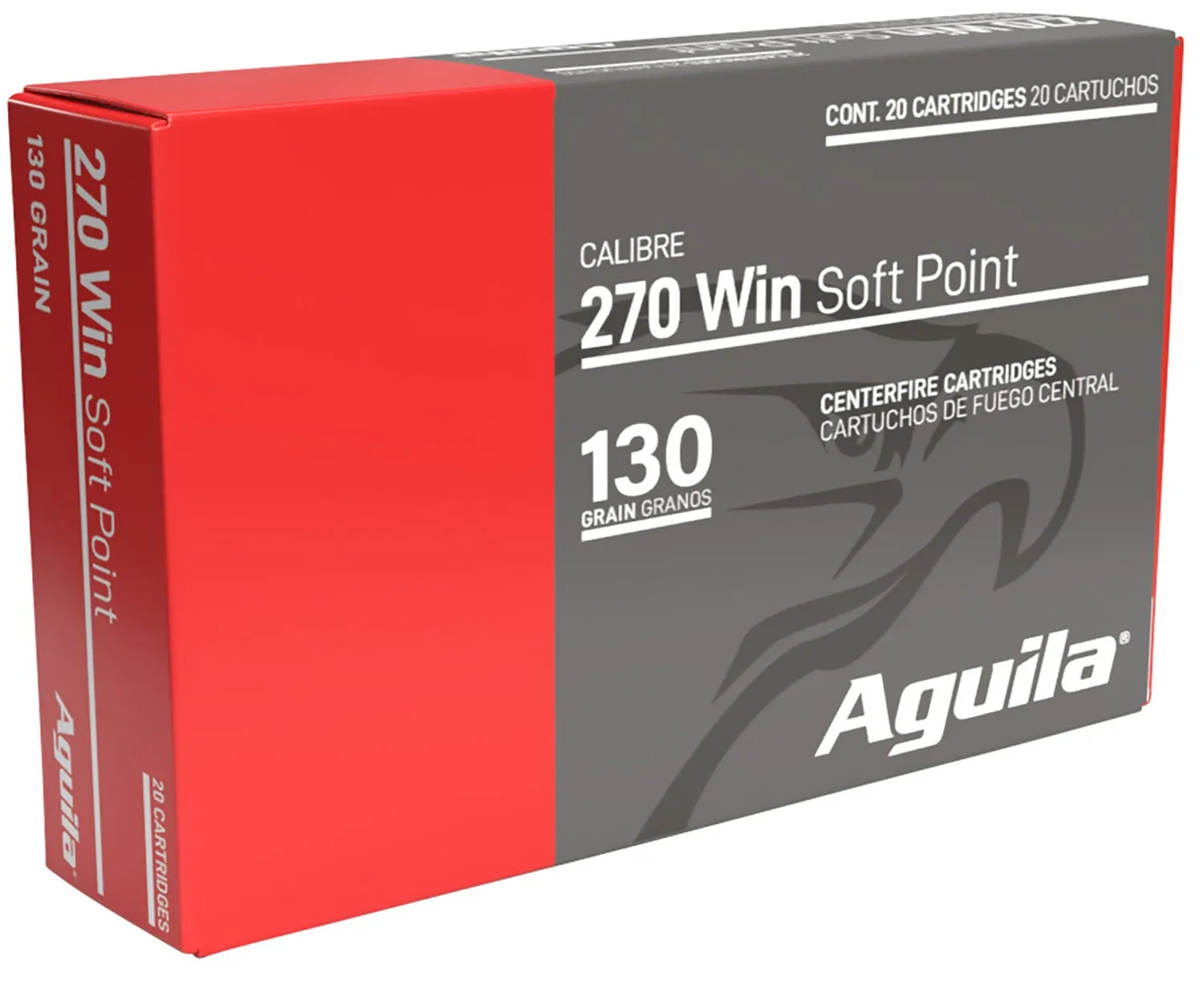
Aguila Interlock Brass .270 Win 130 Grain 20-Rounds BTSP
.270 Winchester · 130gr · 20 rds
AGUILA AMMO 270 Win 130 Grain Soft Point 20rd
.270 Winchester · 130gr · 20 rds
SELLIER ELLOT SB270A 270 Win 150gr Soft Point Ammunition | 20 Rounds
.270 Winchester · 150gr · 20 rds
Sellier and Bellot 270WIN 150GR SP 20rds400
.270 Winchester · 150gr · 20 rds
Live .243 Winchester Deals
Prices updated Oct 10, 2026
BARNES AMMO VarminAtor HP FB 6mm 58Gr 0.243Dia 100rd
.243 Winchester · 58gr · 100 rds

BARNES AMMO Varmint Grenade FB 6mm 62Gr 0.243Dia 250rd
.243 Winchester · 62gr · 250 rds

Aguila Interlock Brass .243 Win 100 Grain 20-Rounds BTSP
.243 Winchester · 100gr · 20 rds

SELLIER BELLOT 243 Win 100Gr 2904 FPS SP 20rd
.243 Winchester · 100gr · 20 rds
The pattern across all of these is the same: cartridges with a large practice-ammo market show a low floor and a wide spread, while hunting-only cartridges show a high floor and a narrow one. That is a fact about the market, not about the cartridge's ability to kill a deer. If you want the mechanics of why prices in one caliber move while another sits still, we covered it in why ammo prices move.
What do shotgun and straight-wall hunters pay?
This is where deer hunting gets expensive, and almost nobody in this group chose to be here — they hunt in a county or state that restricts rifle cartridges.
12 Gauge Price Index
Live · Oct 10, 202620 Gauge Price Index
Live · Oct 10, 2026Be careful reading those two blocks: they cover all 12 and 20 gauge ammunition, and the floor is set by target and field loads, not slugs. Sabot slugs are a different market entirely — they are sold five to a box, use a jacketed projectile, and land at the top of the gauge's price range rather than the bottom. Rifled foster slugs are considerably cheaper than sabots and are the right answer for a smoothbore barrel. If the slug-versus-buckshot distinction is new to you, start with birdshot vs buckshot vs slug.
Live 12 Gauge Deals by Cost Per Round
Prices updated Oct 10, 2026
Estate Super Sport Competition Target Load 12 GA #7.5-Shot 1oz 200-Rounds 2.75
12 Gauge · 200 rds

NORMA AMMO 12Ga Claystrike 2.75" #8 Shot 7/8oz 25rd
12 Gauge · 25 rds

NORMA AMMO 12Ga Claystrike 2.75" #7.5 Shot 7/8oz 25rd
12 Gauge · 25 rds

WINCHESTER AMMO 12Ga RE 2-3/4 LS 1-1/8 8 USA Valor 25rd
12 Gauge · 25 rds

NORMA AMMO 12Ga Claystrike 2.75" #8 Shot 1oz 25rd
12 Gauge · 25 rds

WINCHESTER AMMO 12Ga RE 2-3/4 LS 1-1/8 7-1/2 USA Valor 25rd
12 Gauge · 25 rds
Straight-wall cartridges — .350 Legend, .450 Bushmaster, .444 Marlin and similar — exist because states opened rifle seasons to cartridges that behave like slugs downrange. They shoot flatter than a slug, recoil less than a 12 gauge, and cost real money per round. .350 Legend is the cheapest of the group to feed and the most widely stocked.
Live .350 Legend Deals
Prices updated Oct 10, 2026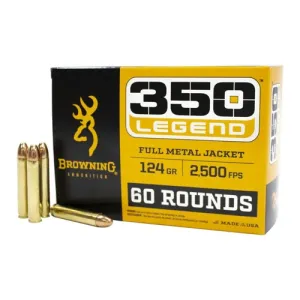
BROWNING AMMO 350 Legend FMJ 124Gr Value Pack 60rd
.350 Legend · 124gr · 60 rds
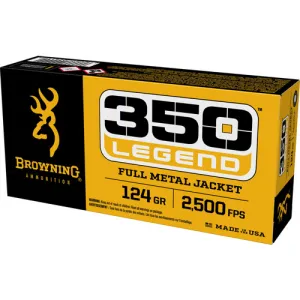
BROWNING 350 Legend 124gr Full Metal Jacket Ammunition | 20 Rounds
.350 Legend · 124gr · 20 rds
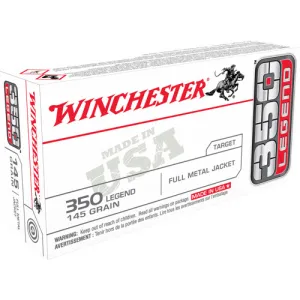
WINCHESTER AMMO 350 Legend 145Gr USA FMJ 20rd
.350 Legend · 145gr · 20 rds
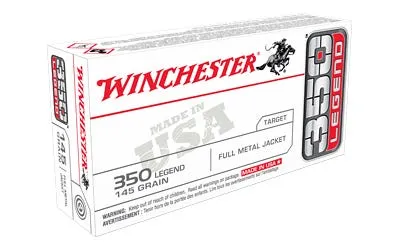
Winchester USA White Box Ammo .350 Legend 145 GR 20 Rounds per Box
.350 Legend · 145gr · 20 rds
Can you hunt deer with .300 Blackout or a .357 lever gun?
Where it is legal, yes, with real constraints.
.300 Blackout Price Index
Live · Oct 10, 2026.300 Blackout works on deer at short range with a supersonic expanding load. Subsonic 190- to 220-grain loads are for suppressed shooting and are a poor choice for game — they expand unreliably and carry very little energy. Do not confuse the two because they share a headstamp. Our suppressed shooting ammo guide covers where subsonic actually belongs, and the suppressor buying guide covers the process side if you are going that route.
.357 Magnum Price Index
Live · Oct 10, 2026.357 Magnum from a 16- to 20-inch lever gun is a legitimate 100-yard deer cartridge and a genuinely pleasant one to shoot. Out of a revolver it is a much shorter proposition. Either way, use a heavy hard-cast or a purpose-built hunting hollow point, not a 125-grain defensive load.
How many boxes of hunting ammo should you buy?
Fewer than you think, bought earlier than you think.
A realistic season is one box to confirm zero, one box held in reserve, and one to three rounds actually fired at an animal. That is two boxes of 20 for most hunters, three if you shoot a lot of confirmation groups. Buy them together, from the same lot, because lot changes can move point of impact enough to matter at distance.
The practice rounds are a separate budget line, and they should be the cheapest thing in the same caliber that shoots to a similar zero — not your hunting load. This is the opposite of the volume-shooting math in how many rounds does it take to get good, where round count is the whole point. Here, round count is nearly irrelevant and bullet choice is everything.
Cost Per Round Calculator
The only number that matters when comparing ammo. Shipping included.
Timing matters more than quantity. Hunting loads are thinnest in stock and least discounted in the weeks before opening day. If you know what you shoot, buy in late winter. The seasonal pattern is consistent enough that we wrote it up: when is the cheapest time of year to buy ammo.
How we decide what to recommend
We do not shoot ballistic gelatin and we do not run our own terminal testing. Anyone claiming a proprietary gel protocol on a deal-aggregation site is either buying it from someone else or making it up.
What we do have is every listing, every retailer, and thirty days of price history behind each one. So our recommendations are structural: which cartridges have deep enough catalogs to keep you supplied, where the price floor is real versus set by ammunition you should not hunt with, and what a given load actually costs today rather than what it cost when a guide was published two years ago. For bullet performance itself, we point at manufacturer specifications and published, independently conducted testing — and we say when we are doing that. The full standard is written down in how we rank ammunition.
That approach also means we are cautious about new cartridges. A cartridge with three loads and two sources is a supply risk regardless of how well it shoots, which is the pattern we described in what actually happens when a new cartridge launches. For deer, the boring answer is usually the correct one.
If you also shoot small game or train with a rimfire in the off-season, the same cost-per-round logic applies at a much lower price point — see the .22 LR ammo guide.
Get alerted when .308 Winchester price drops hit.
We watch every listing and email you the moment the cost per round drops.
Set Up a Free Price AlertAmmoSpotter earns a commission when you buy through links on this page. It never changes what you pay, and it never decides what we recommend — our picks are ranked on live cost-per-round data pulled from every retailer we track. Full disclosure.
Frequently Asked Questions
What is the best all-around deer cartridge?+
How much does deer hunting ammo cost per round?+
Do I need premium bullets to hunt deer?+
What can I hunt deer with in a straight-wall-only state?+
How many boxes of hunting ammo do I need for the season?+
Is it cheaper to buy deer ammo before or during the season?+

About the author
AmmoSpotter Research Desk
Price & Ballistics Research
The AmmoSpotter Research Desk analyzes live retail pricing across every ammunition, firearm and accessory listing we track. Recommendations here are ranked against real cost-per-round data pulled daily from the retailers we monitor - not against manufacturer marketing copy.
- ✓Tracks 180,000+ live product listings across 6 retailer feeds
- ✓Records price history on every listing, every day
- ✓Cost-per-round methodology applied to all ammunition rankings
- ✓No product is ranked without a verifiable in-stock retail price
- ✓Affiliate relationships never influence rankings
Related Guides

.308 vs 6.5 Creedmoor: What the Live Price Data Actually Says
- On catalog average the two cartridges cost essentially the same. .308 averages $1.945 per round across our listings; 6.5 Creedmoor averages $1.913. - The real gap is at the bottom. .308's floor is $0.650 per round; ...

Best .308 Winchester Ammo 2026: Hunting, Match and Practice Loads on Live Prices
- .308 is really two markets. The cheap tier lives near the live floor; the hunting and match tier sits multiples above it. The catalog average describes neither. - Steel-case FMJ sets the price floor for this cartrid...

Best 6.5 Creedmoor Ammo 2026: Match, Hunting and the Thin Budget Tier
- 6.5 Creedmoor barely has a budget tier. Across the live listings we track, the catalog average is roughly double the market floor and the top of the range is close to five times it. - That spread is composition, not...

Birdshot vs Buckshot vs Slug: Shotgun Ammo Explained
A shotgun is the most versatile firearm most people own, and that versatility comes entirely from the ammunition. The gun does not change. What comes out of it changes completely. Three families, three jobs, and a pri...
Best .350 Legend Ammo 2026: Straight-Wall Deer Loads on Live Prices
- .350 Legend has a trimmed floor of $0.752 per round and the cheapest box in our index is $14.99 — the only straight-wall rifle cartridge we track with a box under $20. - Against .450 Bushmaster ($1.523 floor) and .4...
Lead-Free Hunting Ammo: Where It's Required and What It Costs
- Non-lead requirements are a patchwork , not a national rule: a longstanding federal non-toxic shot requirement for migratory waterfowl, extra conditions on many federal properties, and state or zone-specific program...