12 Gauge vs 20 Gauge
Target shells cost close to the same in both gauges. The gap opens up in buckshot, in slugs, and above all in how much choice you get.
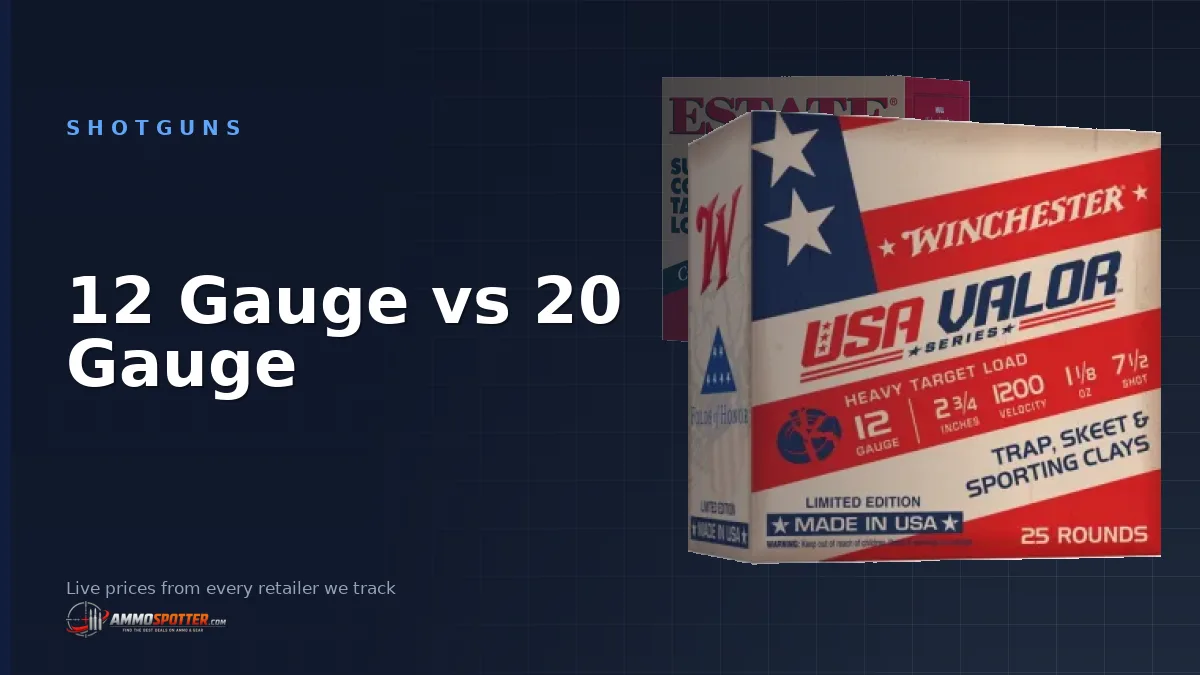
The usual advice is that 12 gauge is cheap and universal, 20 gauge is light and costs more. Half of that is right. We track live prices on the shotgun catalog, and the ammunition side of this argument does not break the way most people repeat it.
Target shells cost close to the same in both gauges. The real 20 gauge premium sits in buckshot, in slugs, and most of all in how little there is to choose from. This piece puts the numbers where the argument usually puts assumptions.
Is 20 gauge ammo more expensive than 12 gauge?
Here are both markets, live. Read them side by side:
12 Gauge Price Index
Live · Sep 26, 202620 Gauge Price Index
Live · Sep 26, 2026When this comparison was written, the 12 gauge floor was $0.360 a shell and the 20 gauge floor was $0.380. Two cents. For clay shooting — the thing most shotgun owners actually spend money on — the gauges cost the same to feed within rounding.
The cleanest proof is a single product line. Winchester's USA Valor target load is sold in both gauges, and both were listed at $8.99 for 25 shells. The 12 gauge box throws 1-1/8 ounces of shot and the 20 gauge box throws 7/8. You pay the same money for a quarter less lead.
12 Gauge Target and Field Loads

WINCHESTER AMMO 12Ga RE 2-3/4 LS 1-1/8 7-1/2 USA Valor 25rd
Winchester USA Valor 12 gauge, 1-1/8 oz of #7.5, in a 25-round box. Note the price and hold it in mind — the same line in 20 gauge is directly below and costs exactly the same per shell.
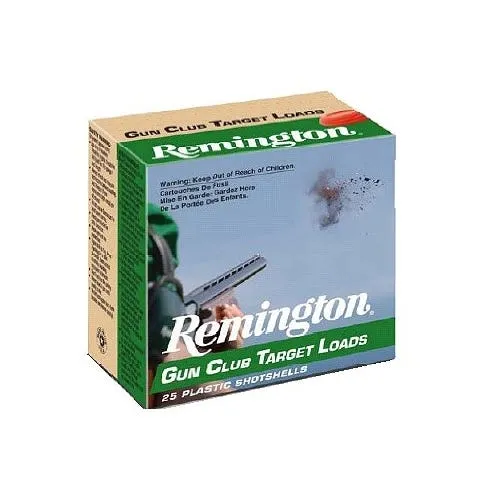
Remington Gun Club Target Loads 12 GA 2.75-inch 1-1/8oz #8 Shot 25rds
Remington Gun Club 1-1/8 oz target loads, listed by more than one retailer. Competing listings on one product mean the price is less likely to jump when a single retailer sells out.

Estate Super Sport Competition Target Load 12 GA #7.5-Shot 1oz 200-Rounds 2.75
Estate Super Sport in a 200-round flat. Volume packaging is where 12 gauge quietly wins: flats and cases this size have no equivalent in the 20 gauge catalog.
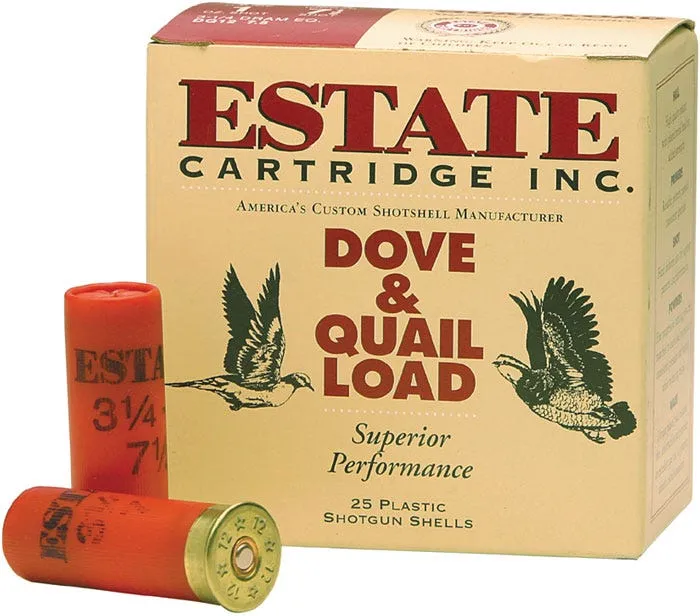
Estate XHG12 Upland Hunting Heavy Game Load 12ga 2-3/4in shell 6 shot size 250rds
Estate's upland heavy game load in #6 shot, 250 shells to the case. A hunting load priced within a couple of cents of clay ammunition, which only happens in the high-volume gauge.
20 Gauge Target and Field Loads

WINCHESTER AMMO 20Ga RE 2-3/4 LS 7/8 7-1/2 USA Valor 25rd
Winchester USA Valor 20 gauge, 7/8 oz of #7.5. Identical box price and identical cost per shell to the 12 gauge version above, with a quarter less lead in the shell.

Aguila Competition Target Load 20 GA #7.5 25-Rounds 2.75
Aguila's 20 gauge competition target load in #7.5. Sits near the bottom of the 20 gauge index, which is close enough to the 12 gauge floor that clay shooting costs about the same in either gauge.
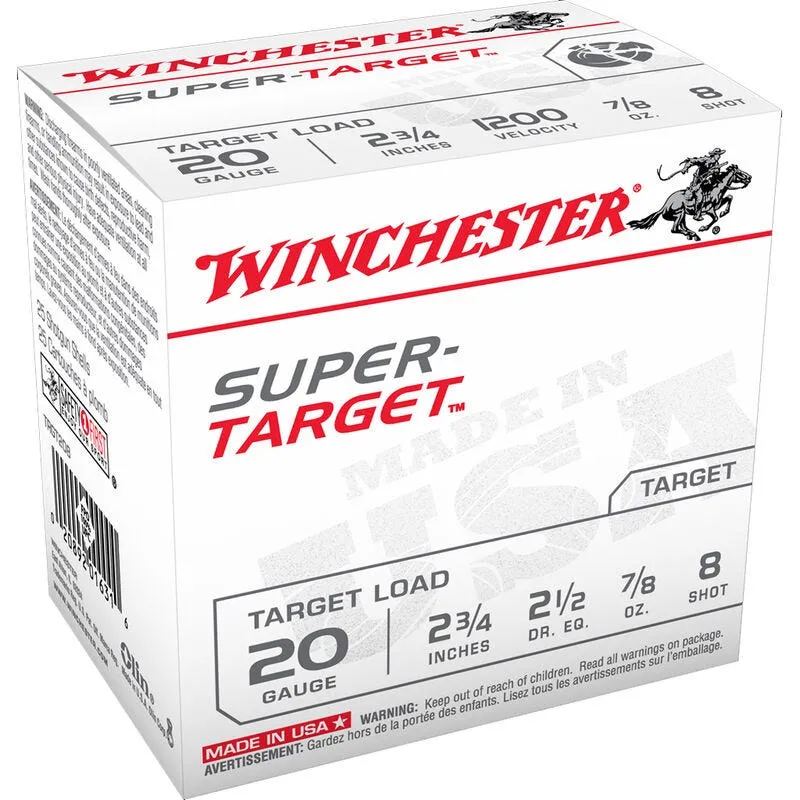
Winchester Super-Target 20 Gauge Ammunition 100 Round Value Pack 2-3/4 Chamber
Winchester Super-Target in a 100-round pack, carried by more than one retailer. This is roughly where 20 gauge bulk packaging stops; 12 gauge routinely goes to 250.
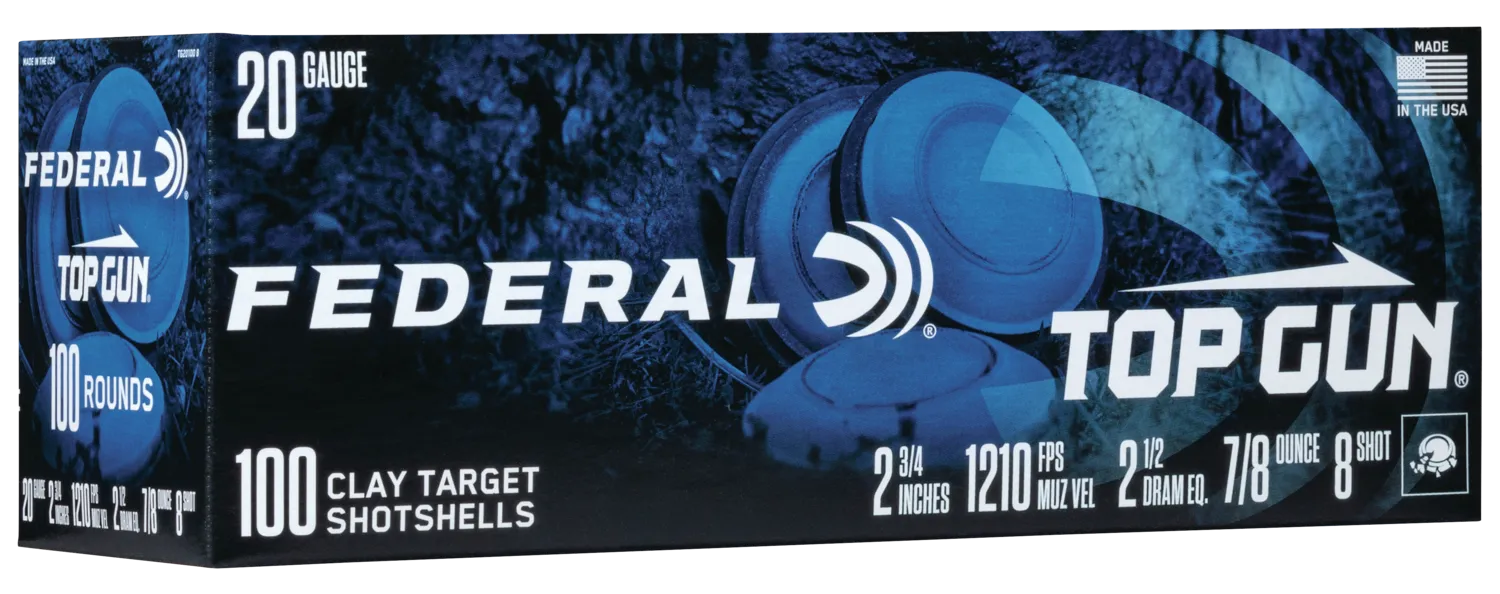
Federal Top Gun 20 GA #8 100-Rounds 2.75
Federal's Top Gun in a 100-round 20 gauge pack, two retailers deep. A direct counterpart to the 12 gauge Top Gun cases, at a smaller pack size.
Now look at the two averages in the index blocks above, because they invert what you would expect. The 12 gauge average price per shell is higher than the 20 gauge average. That is not because ordinary 12 gauge shells cost more. It is because 12 gauge has a deep premium tier — tungsten waterfowl loads, turkey loads, specialty defensive ammunition — that drags the mean upward. 20 gauge does not have as much expensive ammunition available to buy. An average is a poor guide to what you will actually pay in any cartridge, which is why we publish the floor alongside it. How we rank ammunition explains what we do and do not read into these figures.
Where is the 20 gauge premium real?
In defensive ammunition, and you can see it on identical product.
Rio's Royal Buck is sold in both gauges with nine pellets of #1 buckshot. Same brand, same line, same pellet size, same pellet count. The 20 gauge box costs more per shell:
12 Gauge Buckshot and Slugs
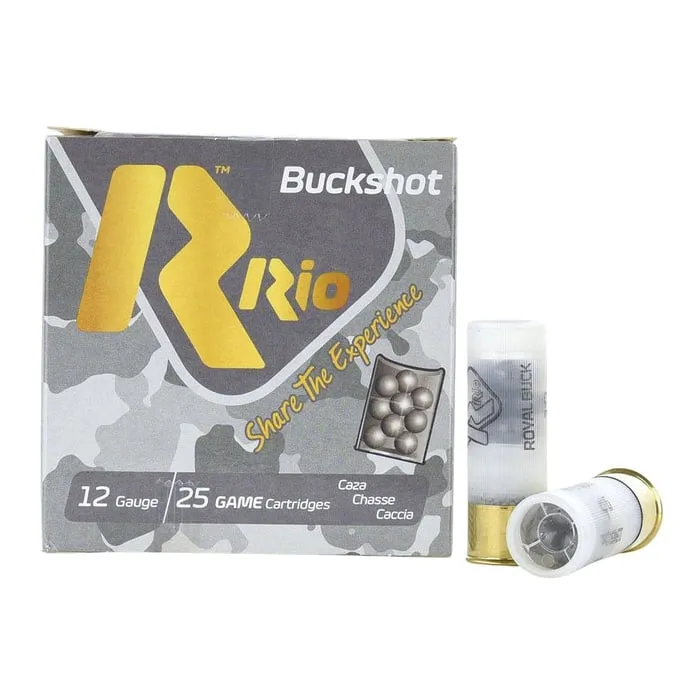
Rio Ammunition Royal Buck 12 GA-2.75 #1 Buck 9 Pellet 25-Rounds
Rio Royal Buck, 12 gauge, nine pellets of #1 buckshot. The 20 gauge version of this exact load appears in the block below — same brand, same line, same pellet count — which makes it the cleanest gauge-to-gauge price comparison in the shotgun catalog.

Fiocchi Defense Dynamics 12 GA-2.75 9 Pellet 1Buck 25-Rounds
Fiocchi Defense Dynamics, nine pellets of #1 buck, two retailers listing it. Defensive buckshot at close to target-load money is a 12 gauge-only phenomenon.
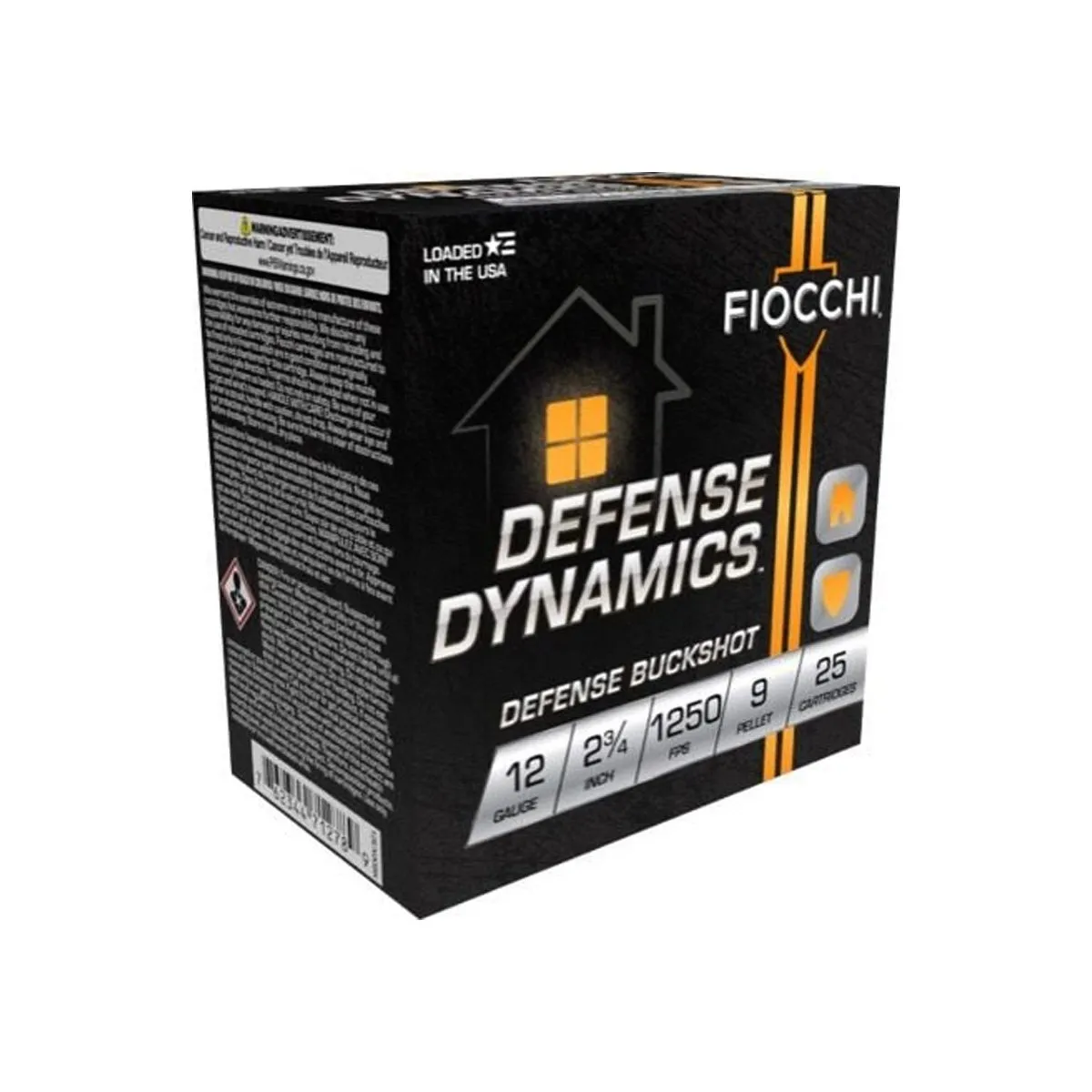
250 Rounds Of Fiocchi Defense Dynamics 12GA Buckshot
A full case of Fiocchi Defense Dynamics buckshot. Buying defensive ammunition by the case, at the lowest per-shell price on this page, is not an option the 20 gauge catalog offers at all.

Norma Whitetail 12 GA-2-3/4 Slug 1 oz 25-Rounds
Norma Whitetail 1 oz slugs in a 25-round box, two retailers deep. Slug supply in 12 gauge is deep enough that 25-round boxes are normal rather than a special order.
20 Gauge Buckshot and Slugs
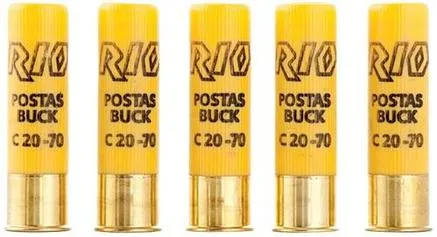
RIO Ammunition ROYAL BUCK 9 PELLET BUCKSHOT 20GA 2-3/4INCH #1 BUCK 25 ROUNDS PER BOX
Rio Royal Buck in 20 gauge — nine pellets of #1 buck, same brand and line as the 12 gauge box above. Compare the two cards directly: this is what the gauge premium costs on identical product.

Sellier & Bellot 20 GA Ammunition 25 RDs 2-5/8 #2 Buckshot 1oz
Sellier & Bellot 20 gauge buckshot in #2. Smaller pellets than #1 or #00, which is typical of what the 20 gauge defensive shelf actually contains.
NOBEL AMMO 20Ga 2-3/4" Buckshot Law Enforcement 10rd
Nobel Sport 20 gauge buckshot in a 10-round pack. Small packs dominate the 20 gauge defensive listings, which raises the cost of practising with the load you keep loaded.
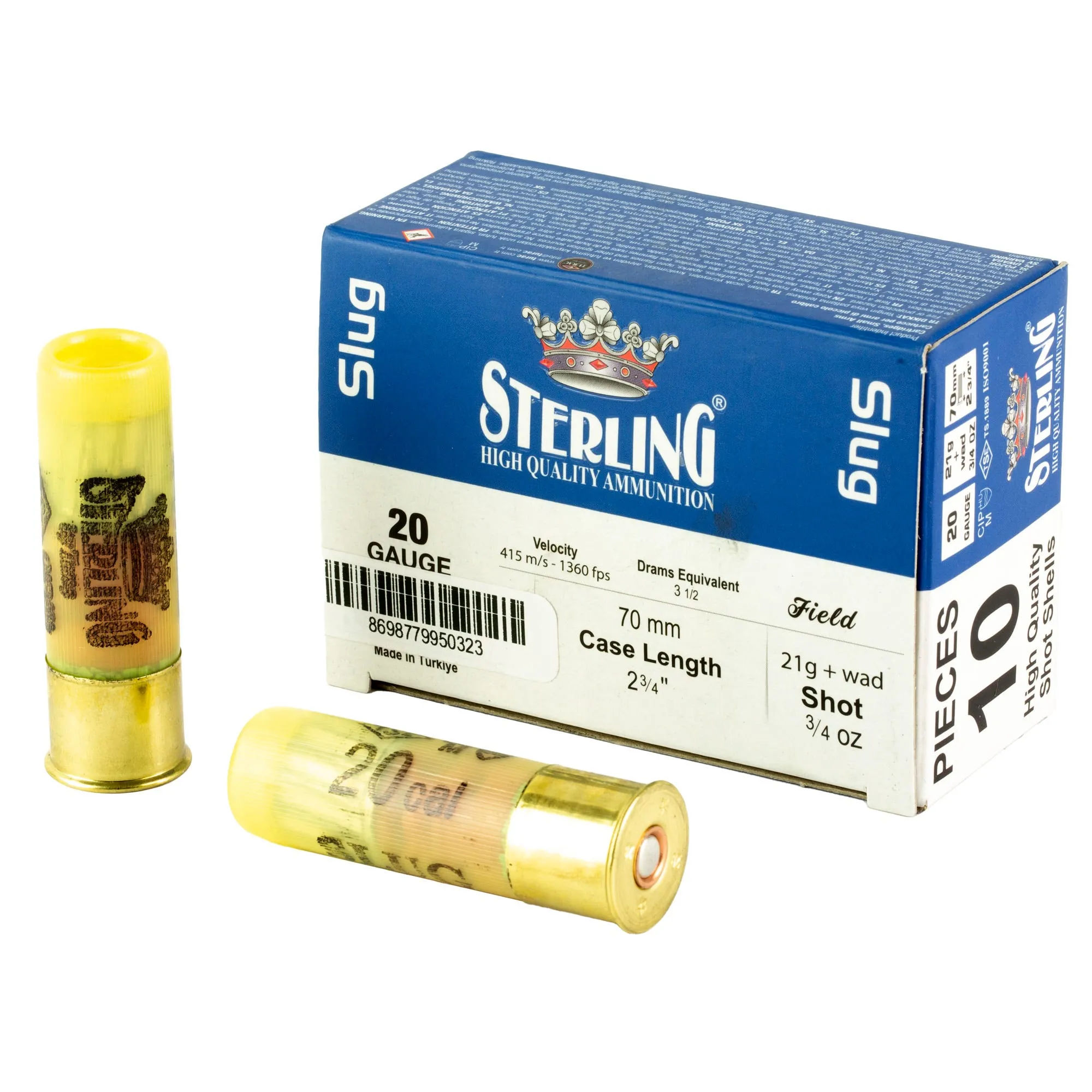
Sterling Big Game Series 20 GA-2.75 Slug 7/8 oz 10-Rounds
Sterling Big Game 7/8 oz slugs in 20 gauge. When this was written it was cheaper per shell than the same maker's 12 gauge slug — proof the gauge premium is a tendency, not a rule. Check both before assuming.
Then look at what surrounds each of those cards. The 12 gauge block contains a 250-shell case of buckshot. There is no 20 gauge equivalent — not at a higher price, not at all. The 20 gauge defensive shelf is 25-round boxes and 10-round law enforcement packs, and it skews toward smaller pellet sizes like #2 and #4 rather than #1 and #00.
It is not a clean sweep, though, and it is worth saying so. Sterling's Big Game slug was cheaper per shell in 20 gauge than in 12 when this was written. Gauge premiums are a tendency in this catalog, not a law. Check the specific load you want rather than assuming.
Cost Per Round Calculator
The only number that matters when comparing ammo. Shipping included.
For what the pellet sizes and shot types actually do, see birdshot vs buckshot vs slug. For the full picture across shell categories, our shotgun shell price index tracks target, buckshot and slug pricing separately.
How much less selection does 20 gauge give you?
This is the gap that matters most and gets discussed least.
Across our live shotgun listings, 12 gauge outnumbers 20 gauge by roughly three and a half to one. In buckshot the ratio is worse — we carry several times more 12 gauge buckshot listings than 20 gauge. In slugs, worse again. The 20 gauge shelf is real, but it is narrow, and narrow shelves behave badly when supply tightens. A cartridge with hundreds of competing listings has somewhere for demand to go when one product sells out. A cartridge with a dozen does not.
Packaging tells the same story. 12 gauge is sold in 100-shell value packs, 200-shell flats, 250-shell cases and, at the top end, 500-shell lots. In 20 gauge, the great majority of listings are 25-round boxes, a hundred-shell pack is near the ceiling, and cases are rare.
12 Gauge in Bulk Packs (100+ Shells)
Prices updated Sep 26, 2026Estate Super Sport Competition Target Load 12 GA #7.5-Shot 1oz 200-Rounds 2.75
12 Gauge · 200 rds
Fiocchi Target Load 12 GA-2.75 #7.5 Shot 1-1/8 oz 250-Rounds
12 Gauge · 250 rds
Fiocchi Shooting Dynamics Target Loads 12 GA-2.75 #7.5 Shot 1 oz 250-Rounds
12 Gauge · 250 rds
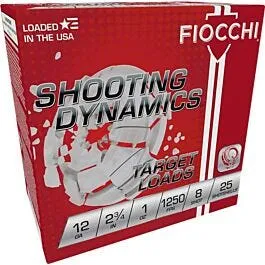
Fiocchi Target Load 12 GA-2.75 #8 Shot 1 oz 250-Rounds
12 Gauge · 250 rds
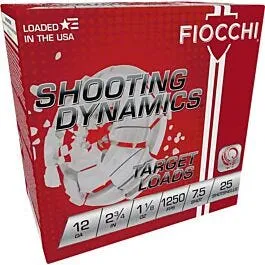
Fiocchi Shooting Dynamics Target Loads 12 GA-2.75 #7.5 Shot 1-1/8 oz 250-Rounds
12 Gauge · 250 rds
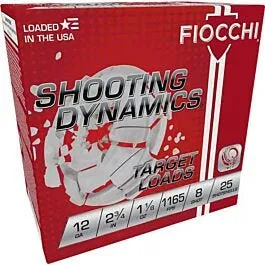
Fiocchi Shooting Dynamics Target Loads 12 GA-2.75 #8 Shot 1-1/8 oz 250-Rounds
12 Gauge · 250 rds
20 Gauge in Bulk Packs (100+ Shells)
Prices updated Sep 26, 2026Winchester Super-Target 20 Gauge Ammunition 100 Round Value Pack 2-3/4 Chamber
20 Gauge · 100 rds
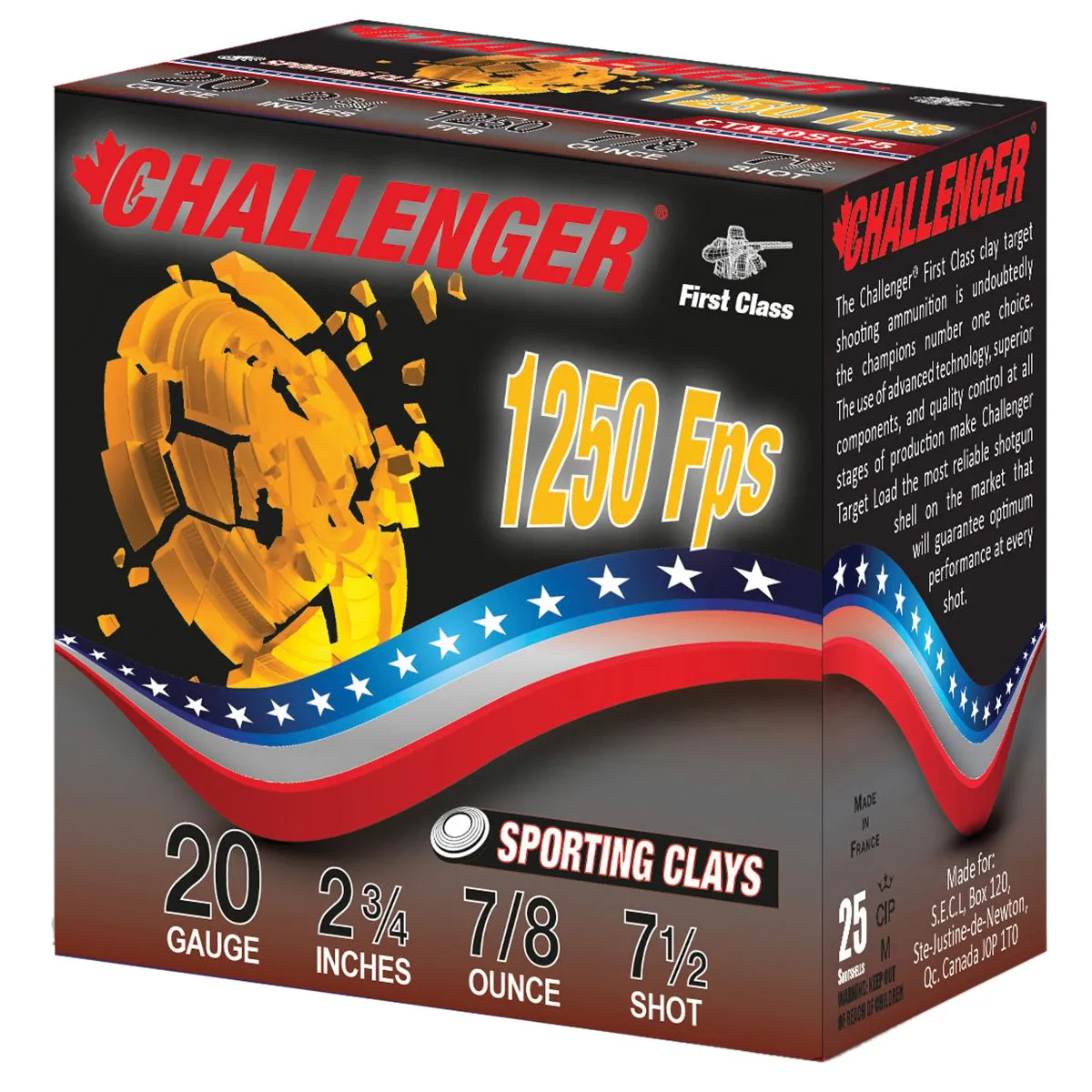
Challenger First Class Sporting Clay 20 Gauge 2-3/4" #7.5 7/8 Ounce 250rds Case
20 Gauge · 250 rds
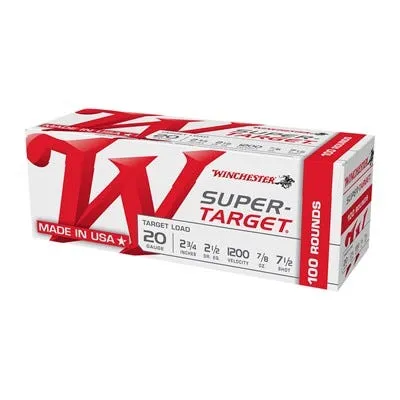
Winchester Super Target 20 GA #7.5-Shot 100-Rounds 2.75
20 Gauge · 100 rds
WINCHESTER AMMO 20Ga 2-3/4" #8 Super-Target 7/8 oz 100rd
20 Gauge · 100 rds
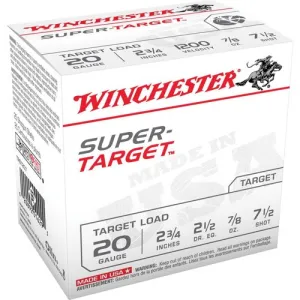
WINCHESTER AMMO 20Ga 2-3/4" #7.5 Super-Target 7/8 oz 100rd
20 Gauge · 100 rds
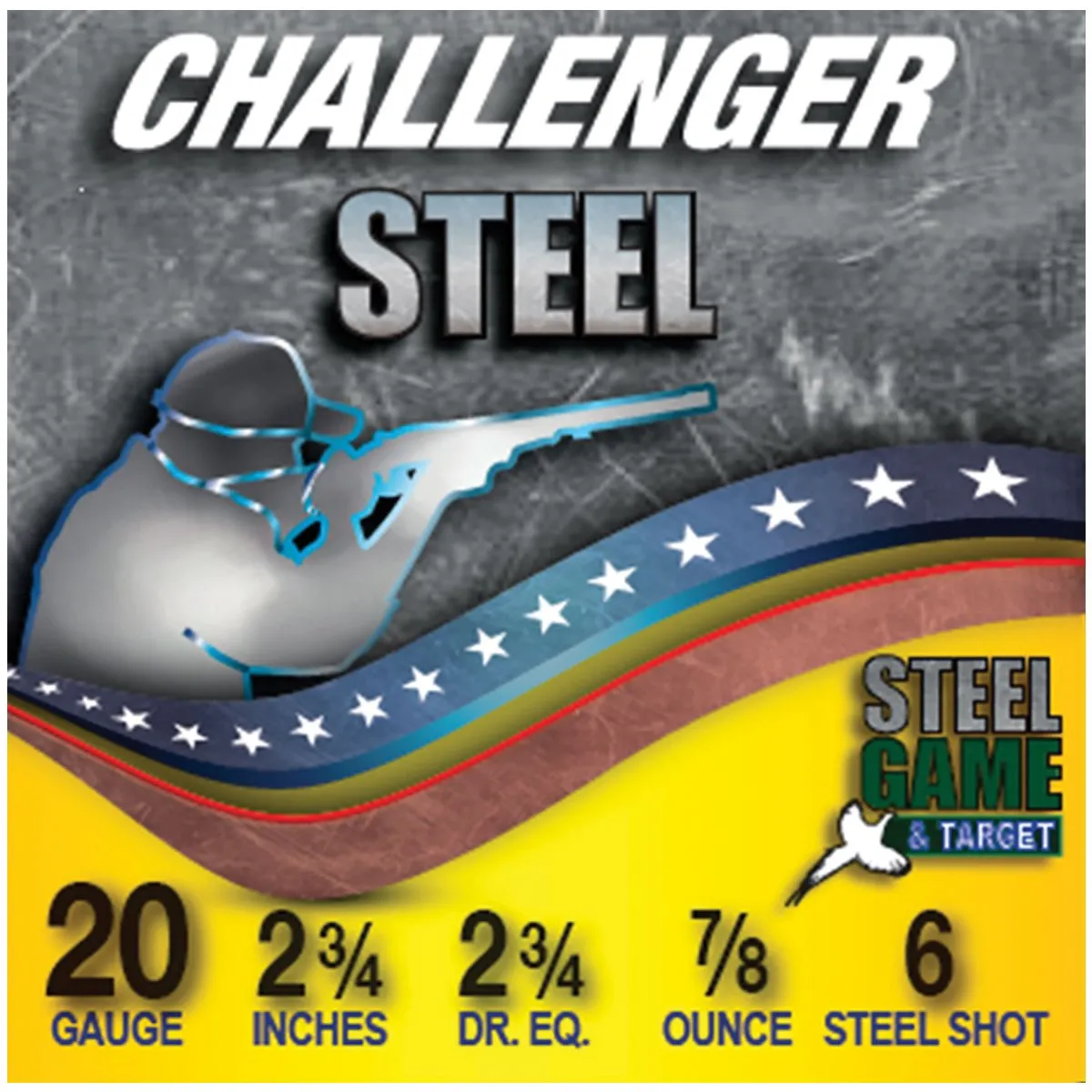
Challenger Steel Game and Target 20 Gauge 2-3/4" #6 7/8 Ounce 250rds Case
20 Gauge · 250 rds
Both grids are live. Compare not just the prices but how far each one has to reach to fill six cards. If you shoot enough to buy by the case, that difference compounds every year — see how many rounds it takes to get good for what a realistic practice budget looks like. Supply pressure moves shotshell prices the same way it moves everything else; why ammo prices move covers the mechanics.
Does 20 gauge actually kick less?
Usually, and for a reason you can read off the shell.
Recoil comes from mass leaving the barrel. A standard 12 gauge target load throws 1 to 1-1/8 ounces of shot; a standard 20 gauge target load throws 7/8 of an ounce. You can see those figures printed in the listing titles in the blocks above — they are the manufacturers' own specifications, not our measurements. Less payload at similar velocity means less recoil impulse, all else equal.
All else is frequently not equal. Recoil that reaches your shoulder depends on the weight of the gun as much as the weight of the shell. A 6-pound 20 gauge youth pump and an 8-pound 12 gauge gas semi-auto are not a fair fight, and the 20 gauge can be the one that hurts. Gas-operated actions also bleed off part of the impulse, which is why heavy semi-autos are often recommended to recoil-sensitive shooters over light pumps in a smaller gauge.
Reduced-recoil loads exist in 12 gauge as a category of their own, which is another way the deeper catalog helps: the 12 gauge shooter who wants less recoil can buy it, while the 20 gauge shooter who wants more payload generally cannot.
Which should you buy?
- Clay target shooting: either. The prices are within a couple of cents, so pick the gun that fits you. 12 gauge gets you the flats and cases if you shoot a lot.
- Home defense: 12 gauge, mainly for practice cost and supply. Buckshot depth and case-quantity pricing exist there and do not exist in 20. Our home defense shotgun and buckshot guides cover the specifics.
- Upland and small game: 20 gauge is a genuinely good answer. Field loads are close in price, the guns are lighter to carry all day, and payload matters less on birds.
- Deer with slugs: check both. Slug pricing does not consistently favour either gauge, and 12 gauge carries far more choice.
- A smaller or younger shooter: fit the gun first. Then consider a light 12 gauge target load before you assume 20 gauge is the gentler path.
Buying a shotgun to go with the decision? How to buy a gun online covers the FFL transfer process. Ordering shells by the case is also where delivery rules bite — check ammo shipping restrictions for your address before you fill a cart.
Shotshell prices move seasonally as well as with supply, and cases sell out fastest before hunting season. Set an alert and we will email you when 12 gauge drops:
Get alerted when 12 Gauge price drops hit.
We watch every listing and email you the moment the cost per round drops.
Set Up a Free Price AlertBrowse every listing we track by cost per shell: 12 gauge and 20 gauge.
AmmoSpotter earns a commission when you buy through links on this page. It never changes what you pay, and it never decides what we recommend — our picks are ranked on live cost-per-round data pulled from every retailer we track. Full disclosure.
Frequently Asked Questions
Is 20 gauge ammo more expensive than 12 gauge?+
Does 20 gauge have less recoil than 12 gauge?+
Is 20 gauge enough for home defense?+
Should a beginner start with a 20 gauge?+
Can you shoot 20 gauge shells in a 12 gauge shotgun?+
What about .410 and 28 gauge?+
Shop the data

About the author
AmmoSpotter Research Desk
Price & Ballistics Research
The AmmoSpotter Research Desk analyzes live retail pricing across every ammunition, firearm and accessory listing we track. Recommendations here are ranked against real cost-per-round data pulled daily from the retailers we monitor - not against manufacturer marketing copy.
- ✓Tracks 180,000+ live product listings across 6 retailer feeds
- ✓Records price history on every listing, every day
- ✓Cost-per-round methodology applied to all ammunition rankings
- ✓No product is ranked without a verifiable in-stock retail price
- ✓Affiliate relationships never influence rankings
Related Guides

Birdshot vs Buckshot vs Slug: Shotgun Ammo Explained
A shotgun is the most versatile firearm most people own, and that versatility comes entirely from the ammunition. The gun does not change. What comes out of it changes completely. Three families, three jobs, and a pri...
Shotgun Shell Price Index: Target, Buckshot and Slug Cost Per Shell
A box of shotgun shells can hold 5, 10, 15, 25, 100 or 250 shells, and the load inside can be a practice target shell or a premium turkey load. So the price on the box tells you almost nothing. The only useful compari...

Best Home Defense Shotguns 2026: Every Tier, Priced Live
- The shotgun is the cheap part. Becoming competent with one costs more in shells than most entry-tier pumps cost outright. - 12 gauge is the widest-priced chambering we track — the catalog spans from roughly a third ...

Best 12 Gauge Buckshot for Home Defense: Pellet Size, Patterns and What It Costs
A shotgun kept for the house is usually loaded with whatever came in the box it was sold with, or with whatever was on the shelf the day it was bought. Nobody patterns it. Nobody checks what it costs per trigger pull,...
Best 12 Gauge Target Loads for Clays 2026: What a Flat Actually Saves You
Clays is the only shooting discipline where you know, before you leave the house, exactly how much ammunition you are going to spend. A round of trap is 25 targets. That is one box. A hundred-target day is four boxes,...
Shotgun Choke and Shot Size Chart: Constriction, Pellet Diameter and What Each Size Costs
Most choke charts are a table of constrictions someone copied off a Briley catalogue in 2009 and everyone has been reprinting since. They are usually correct and they are always incomplete, because they never answer t...