Birdshot vs Buckshot vs Slug
Three completely different projectiles sold in identical-looking boxes at wildly different prices. Here is what each one is for, and why cost per shell is the only honest way to compare them.

A shotgun is the most versatile firearm most people own, and that versatility comes entirely from the ammunition. The gun does not change. What comes out of it changes completely.
Three families, three jobs, and a price spread between them that almost nobody looks at correctly — because shotgun ammunition is packaged in a way that makes the comparison nearly impossible on a shelf.
Birdshot: many small pellets, and the cheapest thing you can shoot
Dozens to hundreds of small pellets, sized by number — larger numbers mean smaller pellets. #8 and #9 for clays, #6 and #7.5 for upland birds, #4 through BB and T for waterfowl and larger birds.
What it does: delivers a wide, dense pattern of small projectiles that lose energy fast. That is exactly right for a clay target or a bird, and exactly wrong for anything requiring penetration.
What it costs: less than anything else you can put through a shotgun, because it is produced in enormous volume for the shooting sports. It is also the segment where bulk buying actually pays — target loads are the only shotgun ammunition regularly sold in 250-shell flats.
Cheapest 12 Gauge Shells Tracked Today
Prices updated Oct 10, 2026
Estate Super Sport Competition Target Load 12 GA #7.5-Shot 1oz 200-Rounds 2.75
12 Gauge · 200 rds

NORMA AMMO 12Ga Claystrike 2.75" #8 Shot 7/8oz 25rd
12 Gauge · 25 rds

NORMA AMMO 12Ga Claystrike 2.75" #7.5 Shot 7/8oz 25rd
12 Gauge · 25 rds

WINCHESTER AMMO 12Ga RE 2-3/4 LS 1-1/8 8 USA Valor 25rd
12 Gauge · 25 rds

NORMA AMMO 12Ga Claystrike 2.75" #8 Shot 1oz 25rd
12 Gauge · 25 rds

WINCHESTER AMMO 12Ga RE 2-3/4 LS 1-1/8 7-1/2 USA Valor 25rd
12 Gauge · 25 rds
The home defense question. Birdshot is a recurring recommendation among people who have not thought it through, usually on over-penetration grounds. The problem is that shallow penetration is not a safety feature when the projectile needs to reach something. Most serious instruction points at buckshot for defensive use.
Buckshot: a few large pellets, and the worst price illusion in the market
A small number of large pellets. Sizing runs backwards from birdshot: 000 is the largest, then 00, 0, 1, 2, 4.
00 buckshot is the default defensive load — roughly nine pellets of about .33 inch in a standard 2.75-inch 12 gauge shell. Each pellet carries meaningful energy on its own.
What matters when buying it:
- Pattern, not marketing. Buckshot patterns differently out of every barrel and choke combination. Pattern your specific gun at the distance you would actually use it.
- Reduced-recoil loads are worth considering. Less recoil means faster follow-up shots.
- Buffered and plated loads are designed to hold tighter patterns at distance, at a price premium.
What it costs: several times birdshot per shell — and here is the trap. Buckshot is usually sold in 5- or 10-shell boxes while target loads come in 25-shell boxes. A $9 box of buckshot and a $9 box of target loads sit on the same shelf at the same price and differ by a factor of five per trigger pull. The full breakdown, including which loads are worth the premium, is in best 12 gauge buckshot for home defense.
12 Gauge Price Index
Live · Oct 10, 2026That market average sits well above the floor precisely because defensive and specialty loads pull it upward while bulk target loads anchor the bottom. A single average price is far less useful than knowing which segment you are shopping in.
Slugs: one projectile, and a category that is not what the name suggests
One solid projectile. This is a shotgun behaving like a low-velocity, very large-bore rifle.
Foster (rifled) slugs are designed for smoothbore barrels. Common, inexpensive, effective inside about 75 yards.
Sabot slugs are designed for rifled shotgun barrels. Substantially more accurate at range, substantially more expensive per shell. Only worth buying if you have a rifled barrel.
Slugs are the smallest of the three segments in our catalog by a wide margin — we track fewer than fifty distinct 12 gauge slug listings against many hundreds of birdshot loads. Worth knowing before you plan around finding them locally.
Something else the data shows that a spec sheet will not: the expensive end of the slug segment is not premium hunting ammunition. It is breaching rounds, rubber baton less-lethal loads and frangible law-enforcement training slugs. If you sort slugs by price and buy from the top expecting a better deer load, you will get something built for an entirely different job.
What they are for: deer in shotgun-only jurisdictions, large or dangerous game at short range, and any situation demanding penetration a pellet cannot deliver. How slugs stack up against the rifle cartridges people use for the same animal is covered in best deer hunting ammo by caliber.
The comparison
| Birdshot | Buckshot | Slug | |
|---|---|---|---|
| Projectiles | Dozens to hundreds | 8–27 typically | One |
| Effective range | ~40 yds | ~40 yds (patterned) | 75–150 yds |
| Penetration | Shallow | Deep | Deepest |
| Primary use | Clays, birds | Defense, large game | Deer, bear, range |
| Typical pack size | 25–250 | 5–25 | 5–25 |
| Cost per shell | Lowest | High | High |
Why cost per shell matters more here than anywhere else
Shotgun ammunition is the worst-labelled category in the market.
Of the 12 gauge listings we track, roughly five in six are 25-shell boxes. The rest are scattered across 5-, 10-, 15-, 100-, 200- and 250-shell packs, and only about thirty of them are full 250-shell flats. So the shelf gives you one dominant format that looks like a standard unit and is not one, plus a long tail of packages that cannot be compared to it by eye.
Four different quantities, four price points, no way to compare them by looking. Convert everything to cost per shell and the picture inverts constantly — the cheap-looking 25-round box is frequently worse value than the flat.
Cost Per Round Calculator
The only number that matters when comparing ammo. Shipping included.
This is the same discipline we apply to every cartridge on the site, and it is the whole reason our rankings look different from everyone else's. See cost per round explained for the method, and how AmmoSpotter ranks ammunition for what we will and will not claim.
Does 20 gauge actually cost more than 12 gauge?
This is repeated everywhere as settled fact. Our data says it is mostly wrong.
20 Gauge Price Index
Live · Oct 10, 2026Compare that index against the 12 gauge one above. The target-load floors sit within a fraction of a cent of each other, and the 20 gauge market average is currently the lower of the two — not because 20 gauge is cheap, but because the 12 gauge catalog carries far more premium waterfowl and specialty ammunition dragging its average upward.
The real 20 gauge penalty is selection, not price. We track more than three times as many 12 gauge listings as 20 gauge ones, and the gap is worst exactly where it hurts: defensive buckshot and slugs are both thin in 20 gauge, while target loads are plentiful. For a recoil-sensitive shooter that is still a trade worth making — recoil that makes you flinch costs more accuracy than payload buys — but plan on ordering rather than finding what you want on a shelf.
Non-toxic shot is where the money actually goes
The single largest price driver in shotgun ammunition is not brand, shell length or pellet count. It is whether the payload is lead.
Waterfowl regulations require non-toxic shot in many areas, and steel, bismuth and tungsten-blend loads cost far more to produce than lead. We track several hundred non-toxic 12 gauge listings, and they own the entire top of the price range: the most expensive 12 gauge shells in our catalog are ten-shell boxes of tungsten predator loads running over $170 — more than $17 per trigger pull, roughly fifty times the market floor.
Steel sits far below tungsten and bismuth in the middle. If you hunt waterfowl, this is the line item worth watching over a season, and the forces that move it — component costs, import policy, demand spikes — are laid out in why ammo prices move.
What to actually buy
For clays: whatever #8 or #7.5 target load is cheapest per shell in a flat. There is no meaningful performance difference between the major brands at clay distances, and this is the one shotgun purchase where buying purely on price is correct. It is also the ammunition you should be shooting the most of — the case for volume over gear is in how many rounds does it take to get good.
For home defense: 00 buckshot, patterned in your gun, ideally reduced recoil. Buy two boxes — one to pattern, one to keep.
For deer: slugs matched to your barrel. Rifled barrel means sabots; smoothbore means Fosters. Skip the top of the price list unless you have read the box.
For birds: shot size matched to the bird and the regulations. Many waterfowl areas require non-toxic shot, which changes both the product and the price by a large multiple.
Bulk Shotgun Shells - 100 Rounds and Up
Prices updated Oct 10, 2026Estate Super Sport Competition Target Load 12 GA #7.5-Shot 1oz 200-Rounds 2.75
12 Gauge · 200 rds
Fiocchi Target Load 12 GA-2.75 #8 Shot 1 oz 250-Rounds
12 Gauge · 250 rds

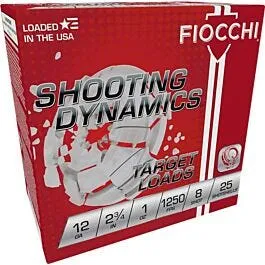
Fiocchi Shooting Dynamics 12 GA-2.75 #8 Shot 1 oz 250-Rounds
12 Gauge · 250 rds
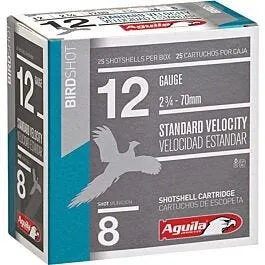
Aguila Shotshell 12 GA-2.75 #8 Shot 1-1/8 oz 250-Rounds
12 Gauge · 250 rds
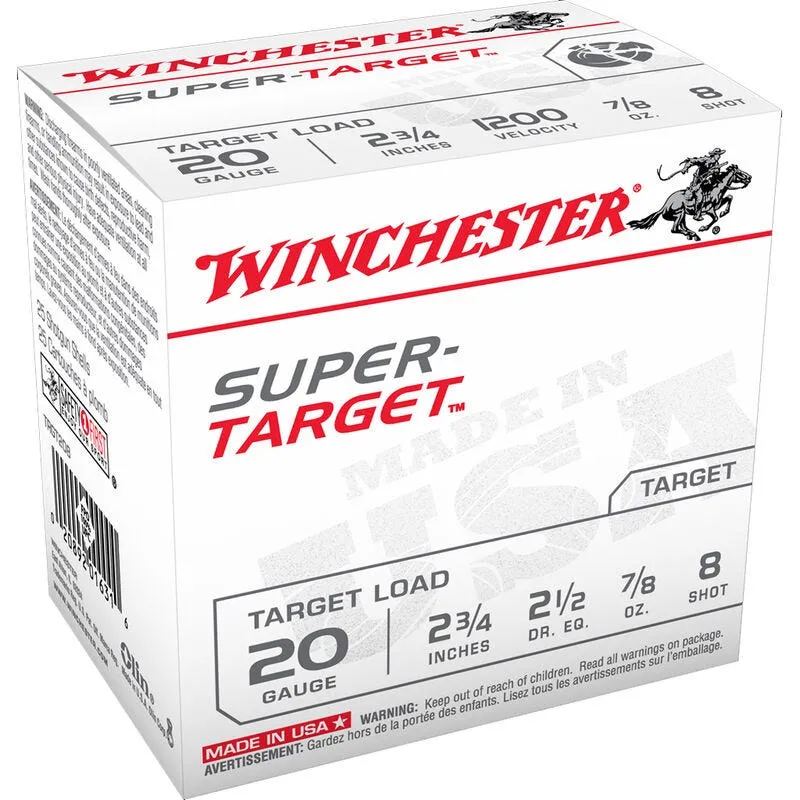
Winchester Super-Target 20 Gauge Ammunition 100 Round Value Pack 2-3/4 Chamber
20 Gauge · 100 rds
WINCHESTER AMMO 20Ga 2-3/4" #8 Super-Target 7/8 oz 100rd
20 Gauge · 100 rds
The one habit that fixes all of this
Stop reading box prices. A shotgun shelf is four incompatible package sizes pretending to be a price comparison, and the only way through it is to divide by the number of shells every single time.
Do that consistently and the decisions get simple: buy target loads by the flat, buy buckshot two boxes at a time and pattern it, buy slugs that match your barrel, and treat non-toxic shot as its own budget line.
Get alerted when 12 Gauge price drops hit.
We watch every listing and email you the moment the cost per round drops.
Set Up a Free Price Alert- All 12 gauge shells by cost per shell
- All 20 gauge shells by cost per shell
- Best 12 gauge buckshot for home defense
- How AmmoSpotter ranks ammunition
- How to buy ammo online
AmmoSpotter earns a commission when you buy through links on this page. It never changes what you pay, and it never decides what we recommend — our picks are ranked on live cost-per-round data pulled from every retailer we track. Full disclosure.
Frequently Asked Questions
What is the difference between birdshot, buckshot and slugs?+
Is birdshot good for home defense?+
What do shot size numbers actually mean?+
Do I need a rifled barrel to shoot slugs?+
Is 20 gauge more expensive than 12 gauge?+
Why are some shotgun shells over ten dollars each?+
Shop the data

About the author
AmmoSpotter Research Desk
Price & Ballistics Research
The AmmoSpotter Research Desk analyzes live retail pricing across every ammunition, firearm and accessory listing we track. Recommendations here are ranked against real cost-per-round data pulled daily from the retailers we monitor - not against manufacturer marketing copy.
- ✓Tracks 180,000+ live product listings across 6 retailer feeds
- ✓Records price history on every listing, every day
- ✓Cost-per-round methodology applied to all ammunition rankings
- ✓No product is ranked without a verifiable in-stock retail price
- ✓Affiliate relationships never influence rankings
Related Guides

Best 12 Gauge Buckshot for Home Defense: Pellet Size, Patterns and What It Costs
A shotgun kept for the house is usually loaded with whatever came in the box it was sold with, or with whatever was on the shelf the day it was bought. Nobody patterns it. Nobody checks what it costs per trigger pull,...

How AmmoSpotter Ranks Ammunition (And What We Refuse to Claim)
Most ammunition rankings on the internet are one of two things: a static list assembled once and never revisited, or an affiliate page ordered by commission rate. Neither tells you what to buy today. This page is our ...

Why Ammo Prices Move: The Five Forces Behind Every Spike
From the outside, ammunition pricing looks arbitrary. One cartridge climbs while another does not. A caliber that was plentiful in spring is thin by autumn. Prices rise fast and fall slowly. It is not arbitrary. Five ...

Best Deer Hunting Ammo by Caliber (2026): What Each Cartridge Costs to Feed
- The mainstream deer cartridges — .308 Winchester, 6.5 Creedmoor, .30-06 Springfield — cost close enough per round that price should not pick your rifle. - Cost per round is misleading on hunting ammo: you buy it in ...
12 Gauge vs 20 Gauge: Recoil, Payload and What Each Actually Costs
The usual advice is that 12 gauge is cheap and universal, 20 gauge is light and costs more. Half of that is right. We track live prices on the shotgun catalog, and the ammunition side of this argument does not break t...
Shotgun Shell Price Index: Target, Buckshot and Slug Cost Per Shell
A box of shotgun shells can hold 5, 10, 15, 25, 100 or 250 shells, and the load inside can be a practice target shell or a premium turkey load. So the price on the box tells you almost nothing. The only useful compari...