Is Steel-Cased 9mm Worth It?
In 7.62x39 the steel-case discount is more than half the price of the round. In 9mm it is about two cents. Here is the live spread, and why the cartridge decides the answer.
What steel-cased 9mm actually saves you right now
Take every live, in-stock 9mm Luger FMJ listing of 20 rounds or more and split it by case material. This is our own catalog, queried today:
| 9mm FMJ practice ammo | Listings | Cheapest per round | Average per round |
|---|---|---|---|
| Steel case | 14 | $0.220 | $0.358 |
| Brass case | 105 | $0.240 | $0.406 |
| Aluminum case | 1 | $0.248 | $0.248 |
Two cents at the floor. Just under five cents on the average. On a 1,000-round year of practice that is twenty dollars at the floor — real money, but not the structural advantage the internet implies.
The cleanest comparison available is same-brand, same-pack-size, and it exists on the board right now. Magtech sells a 50-round steel-case 124-grain box at $10.99 ($0.220/rd) and a 50-round brass 115-grain box at $11.99 ($0.240/rd). One dollar a box. At the 1,000-round case level the spread widens slightly: Winchester's steel-cased USA Forged case runs $239.99 ($0.240/rd) while brass 1,000-round cases from Winchester and PMC both sit at $269.99 ($0.270/rd) — exactly $30, or 11.1%.
9mm Luger Price Index
Live · Oct 16, 2026Set against the whole 9mm board — 747 live listings averaging $0.744 per round — a two-cent case-material gap is a rounding error. Our ranking method and the claims we refuse to make are in How AmmoSpotter Ranks Ammunition.
Why the discount is tiny in 9mm and enormous in 7.62x39
Same query, same filters, three cartridges:
| Cartridge | Steel floor | Brass floor | Steel discount | Saving per 1,000 rds |
|---|---|---|---|---|
| 9mm Luger | $0.220 | $0.240 | 8.3% | $20 |
| .223 Rem / 5.56 NATO | $0.350 | $0.476 | 26.5% | $126 |
| 7.62x39mm | $0.302 | $0.694 | 56.5% | $392 |
That is the finding this article exists for. The steel-case discount is not a property of steel, it is a property of the cartridge.
Two reasons, both structural. First, brass content scales with case capacity: a 9mm case is a small amount of metal, so swapping it for steel removes a small amount of cost, while a rifle case is several times the volume and the substitution removes proportionally more. Second, supply differs by cartridge. Commodity brass 9mm is made by everyone, everywhere, and competes on price to the point that the floor is already scraped flat. Brass 7.62x39 is a thin, largely imported niche where steel is the native format and brass is the specialty product — which is why the discount there is more than half the price of the round.
If you shoot an AR, this is the calculation that actually pays. The loads worth feeding it are covered in Best 5.56 & .223 Ammo; the live rifle floors sit on our .223/5.56 deals page and 7.62x39 deals page. For general price direction across all of them, Why Ammo Prices Move covers the forces behind the swings.
Steel-cased 9mm is one listing in nine, so you may not find it
Fourteen steel listings against 105 brass. That is roughly 11% of the live 9mm practice shelf, concentrated in a handful of product lines, and it moves in and out of stock.
This matters more than the two cents. If you plan a purchase around steel-cased 9mm, you are planning around a thin shelf, and the substitute you end up buying is usually brass at a price you did not shop for. The practical approach is to compare on cost per round and ignore the case material entirely when you are buying pistol ammo — which is what sorting by price per round does:
Cheapest 9mm at 500+ Rounds Right Now
Prices updated Oct 16, 2026
Winchester USA Forged 9mm 115 Grain 1000-Rounds Bulk FMJ
9mm · 115gr · 1,000 rds

CCI Ammunition Blazer Aluminum 9mm 115-Grain 1000-Rounds Bulk FMJ
9mm · 115gr · 1,000 rds
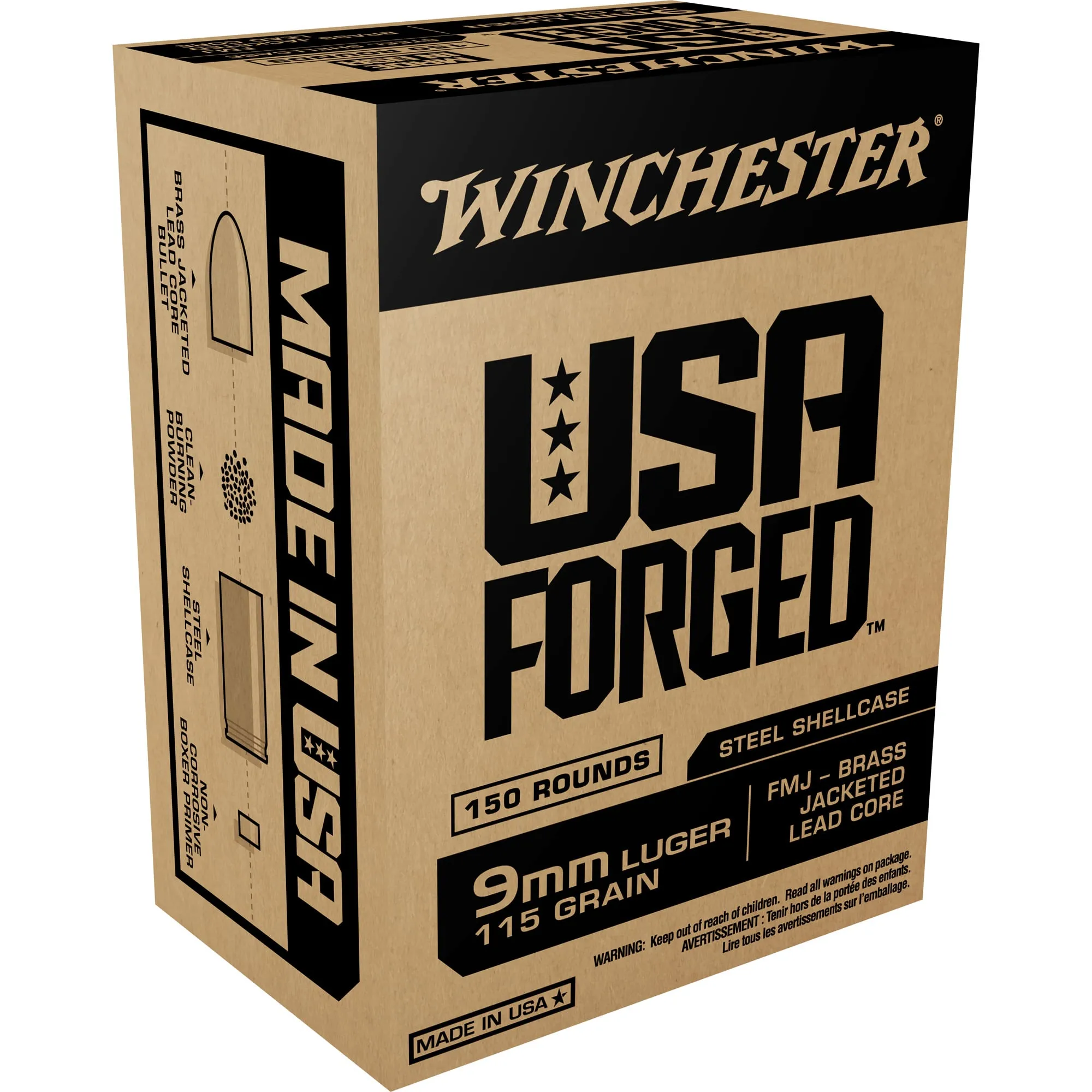
Winchester USA 9mm Ammunition, 1000 Rounds FMJ 115Gr - WIN9SK
9mm · 115gr · 1,000 rds

PMC Ammunition Bronze Brass 9mm 124 Grain 1000-Rounds Bulk FMJ
9mm · 124gr · 1,000 rds

Winchester Centerfire Handgun Brass 9mm 115-Grain 1000-Rounds FMJ Bulk
9mm · 115gr · 1,000 rds

PMC Ammunition Bronze Brass 9mm 115-Grain 1000-Rounds Bulk FMJ
9mm · 115gr · 1,000 rds
Notice what wins that sort. It is almost never decided by case material; it is decided by pack size, which is the same conclusion we reached in Is Bulk Ammo Actually Cheaper?. Mechanics of the per-round number itself are in Cost Per Round Explained.
Cost Per Round Calculator
The only number that matters when comparing ammo. Shipping included.
Aluminum is the other non-brass 9mm case, and it is cheaper than brass
Steel gets the attention; aluminum is the one actually sitting on the budget shelf in 9mm. CCI's aluminum-cased 1,000-round 9mm case prices at $247.99 ($0.248/rd) right now — above the steel case at $239.99, below every brass 1,000-round case at $269.99.
Aluminum shares steel's one hard limitation, which is that it is not a reloading proposition, and it is also a one-and-done case. What it avoids is the bimetal-jacket question below, because aluminum-cased ammunition from major makers is generally loaded with conventional jacketed bullets. If your objection to steel is range rules rather than metallurgy, aluminum is the option worth knowing about.
What you actually give up for two cents a round
The honest list, with no test results attached, because we do not run our own endurance or ballistics testing and will not pretend otherwise:
- No brass to keep. Steel does not size, anneal or stretch like brass, so it is not reloadable in practice. If your fired brass has reloading or scrap value to you, a two-cent gap is inside the noise and brass may be the cheaper decision outright.
- Extraction margin. Steel is harder and springs back less than brass after firing. The mechanical consequence is a tighter grip on a dirty or tight chamber, which is why chamber cleanliness matters more on a high-volume steel-case diet.
- Range access. Many indoor ranges prohibit it — usually over the bullet jacket rather than the case. More on that next.
- Dirtier shooting, generally. Inexpensive import loads often use harder primers and different powders, and shoot dirtier than premium brass practice ammo. That is a cleaning-interval cost, not a damage cost.
- It is practice ammo only. Nothing here applies to a defensive load. Carry selection is a separate decision made on terminal performance, not price — see Best 9mm Ammo.
What you do not give up, in a modern service pistol shooting commercial steel-cased ammunition at ordinary volumes, is reliability as a category. Treat it as a maintenance variable.
Steel case is not steel core, and the magnet test confuses them
Worth stating plainly because it causes real trouble at the range counter. The case is the tube holding the powder. The core is the metal inside the bullet. Most inexpensive import ammunition pairs a steel case with an ordinary lead-core bullet wearing a bimetal — part copper, part steel — jacket. A magnet sticks to that jacket. That tells you the jacket is bimetal; it tells you nothing about the core, and it does not make the ammunition armor-piercing.
The reason ranges care is commercial, not ballistic: steel-jacketed bullets are harder on steel traps and complicate lead reclamation, so facilities with reclamation contracts ban anything magnetic. Rules differ by facility and by jurisdiction, and they change. Check the posted policy at your range, and verify local restrictions yourself rather than relying on any summary, including this one. The general explainer across all calibers is Steel Case vs Brass Ammo.
So should you buy steel-cased 9mm?
Buy it if the cheapest in-stock listing at your pack size happens to be steel, you are not reloading, and your range allows it. That is the whole test. Do not go looking for it, do not pay a shipping charge to chase it, and do not wait for it to come back in stock — two cents a round does not justify any of that.
Buy brass if you reload or sell your brass, if your range is magnet-restricted, or if the brass listing is within a couple of cents, which on current prices it very often is.
And if you shoot a rifle, reverse the whole conclusion. At 26.5% in .223/5.56 and 56.5% in 7.62x39, steel is where high-volume rifle practice gets affordable — and volume is the thing that actually builds skill, which we worked through in How Many Rounds Does It Take to Get Good?. Budget for the magazines to feed it too: How Many Magazines Do You Actually Need?.
Browse current cost per round on the 9mm deals page, see what Magtech has live on both sides of this comparison, or start from the full ammo catalog.
Get alerted when 9mm price drops hit.
We watch every listing and email you the moment the cost per round drops.
Set Up a Free Price AlertAmmoSpotter earns a commission when you buy through links on this page. It never changes what you pay, and it never decides what we recommend — our picks are ranked on live cost-per-round data pulled from every retailer we track. Full disclosure.
Frequently Asked Questions
Is steel-cased 9mm cheaper than brass?+
Why is steel-cased ammo so much cheaper in 7.62x39 than in 9mm?+
Will steel-cased ammo damage my pistol?+
Is steel-cased 9mm the same as steel-core ammo?+
Why do some ranges ban steel-cased ammo?+
Can you reload steel-cased 9mm?+
Shop the data

About the author
AmmoSpotter Research Desk
Price & Ballistics Research
The AmmoSpotter Research Desk analyzes live retail pricing across every ammunition, firearm and accessory listing we track. Recommendations here are ranked against real cost-per-round data pulled daily from the retailers we monitor - not against manufacturer marketing copy.
- ✓Tracks 180,000+ live product listings across 6 retailer feeds
- ✓Records price history on every listing, every day
- ✓Cost-per-round methodology applied to all ammunition rankings
- ✓No product is ranked without a verifiable in-stock retail price
- ✓Affiliate relationships never influence rankings
Related Guides

Steel Case vs Brass Case Ammo: What You Actually Give Up
Steel-cased ammunition occupies a strange place in shooting culture: universally used, frequently condemned, rarely analyzed. The honest position is narrower than either camp claims. Steel is cheaper. It is cheaper fo...

Best 9mm Ammo 2026: Range, Carry and Duty Loads Ranked
9mm Luger is the most-produced, most-competitive cartridge in the American market. That is good news and bad news: prices are low, and the sheer number of listings makes it easy to pay 30% more than you needed to for ...

Bulk vs Box: How Much You Actually Save Buying a Case
The standard advice is to buy by the case because bulk is cheaper. We track every live ammunition listing we can get, normalized to cost per round, so we tested that advice against the data instead of assuming it. The...

Cost Per Round: The Only Ammo Price Metric That Matters
There is exactly one reason ammunition is hard to price-compare: it is advertised in boxes and consumed in rounds. Box counts are not standardized. A "box" of 9mm might be 50 rounds. A "value pack" might be 100, or 11...
Best Subsonic 9mm Ammo for Suppressed Shooting, on Live Prices
A suppressor on a 9mm pistol or carbine solves only part of the noise problem. It traps and slows the gas behind the bullet, which is where the muzzle report comes from. It does nothing about the bullet itself. If tha...
Best 9mm Ammo for a Subcompact or Micro Pistol: Short-Barrel Loads on Live Prices
A micro-compact 9mm solves the carry problem. It fits inside the waistband, holds enough rounds, and disappears under a T-shirt. What it gives up is barrel length, and in a handgun cartridge barrel length is velocity....