Reloaded vs Remanufactured vs Factory New Ammo
Remanufactured ammo is sold on one promise: it is cheaper. The only way to test that promise is against what factory new costs today, and that number is live on this page.
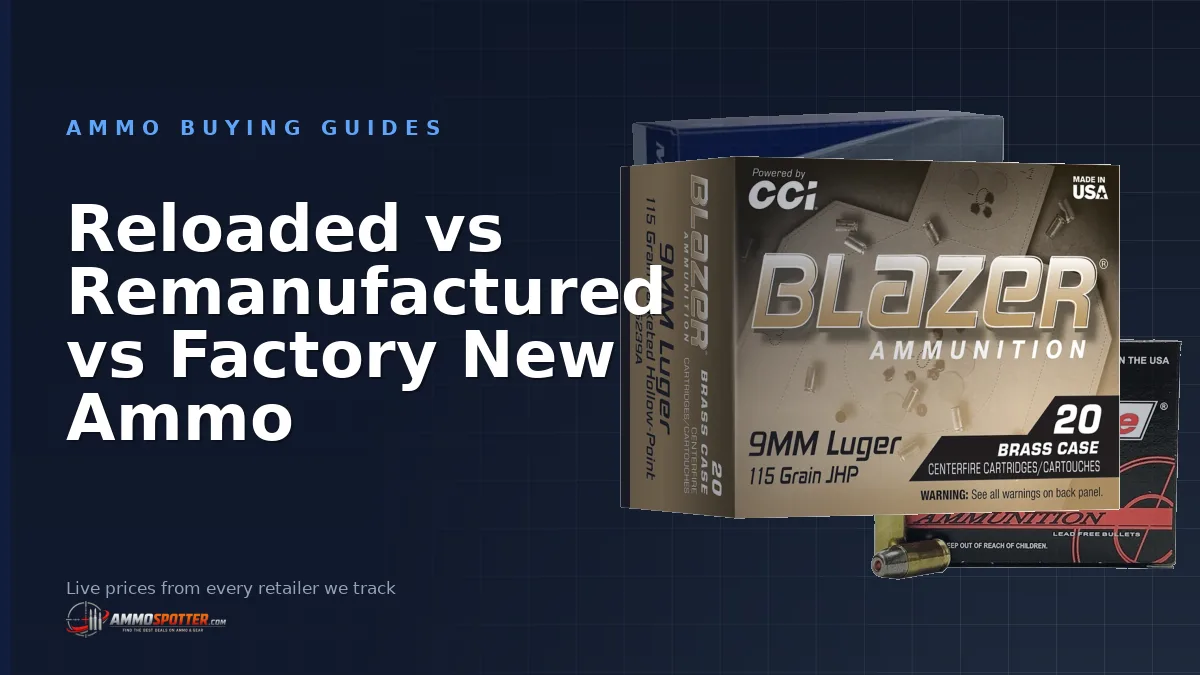
What is the difference between reloaded, remanufactured and factory new ammo?
All three are the same four parts: a case, a primer, a powder charge and a bullet. What separates them is where the case came from and who assembled the cartridge.
Factory new ammunition uses a newly made case. Every component is fresh, the lot is produced on a controlled line, and the maker stands behind it. This is essentially everything sold through the major retailers we track.
Reloaded ammunition, usually called handloads, is assembled by an individual from fired cases and new bullets, powder and primers. The handloader controls every variable, which is why precision shooters do it, and carries all the responsibility for getting it right. Whether that saves money is its own question, answered with our component data in Is Reloading Still Cheaper Than Buying Ammo?.
Remanufactured ammunition is reloading done as a business. A company buys fired brass in bulk, often range pickup, then sorts, cleans, inspects, resizes, reprimes, charges and seats bullets on production equipment. Commercially loading ammunition for sale generally requires a federal manufacturer's license and carries excise tax obligations, which is the legal line between a remanufacturer and someone selling their handloads. The rules have detail and exceptions, so verify them before you rely on a seller's status.
The consequence for a buyer: reman has new bullets, powder and primers, but a case of unknown history. Some of that brass has been fired once. Some of it has been fired several times. Headstamps are usually mixed.
Why remanufactured ammo barely shows up in retail price data
Here is something our own catalog tells you that a generic explainer cannot. Across the more than 16,000 ammunition listings we track from mainstream retailers, we could not find a single listing sold as remanufactured. Searching titles and product descriptions for remanufactured and reloaded ammunition returned only reloading presses, dies, bullets and brass.
That is not an oversight in the feeds. It reflects how reman is sold: mostly direct from the remanufacturer's own site or at gun shows, rarely through the large online retailers whose inventory feeds a price comparison site. Two practical consequences follow.
- You cannot comparison-shop reman the way you can factory new. There is no cross-retailer floor for it. You get one seller's price.
- Your only benchmark is the factory-new market. So the useful question is never "is this reman cheap?" It is "is this reman cheaper than the cheapest factory new I could buy today, and by enough to justify the trade-offs?"
That benchmark is what the rest of this page is built around. How we pick the number, and why the floor is the third-cheapest qualifying listing rather than the absolute minimum, is laid out in How AmmoSpotter Ranks Ammunition.
What does factory new ammo cost right now?
These are the three calibers where remanufactured ammo is most commonly offered: 9mm, .223/5.56 and .45 ACP. Each block is live. The market floor is the number a reman quote has to beat; the market average is what a buyer who does not shop around tends to pay.
9mm Luger Price Index
Live · Oct 10, 2026.223 / 5.56 Price Index
Live · Oct 10, 2026.45 ACP Price Index
Live · Oct 10, 2026Read them this way. A reman price that only beats the market average is not a discount on the market; it is a discount on not shopping. The honest comparison is against the floor, and ideally against the floor at a similar quantity.
Cost Per Round Calculator
The only number that matters when comparing ammo. Shipping included.
Is remanufactured 9mm cheaper than factory new?
9mm is where reman has the hardest time. It is the highest-volume centerfire cartridge in the country, and the factory-new floor is set by bulk loads built specifically to be cheap. These are the cheapest factory-new 9mm listings we track at 500 rounds or more, sorted by cost per round.
Cheapest Factory New 9mm, 500+ Rounds
Prices updated Oct 10, 2026
Winchester USA Forged 9mm 115 Grain 1000-Rounds Bulk FMJ
9mm · 115gr · 1,000 rds

CCI Ammunition Blazer Aluminum 9mm 115-Grain 1000-Rounds Bulk FMJ
9mm · 115gr · 1,000 rds
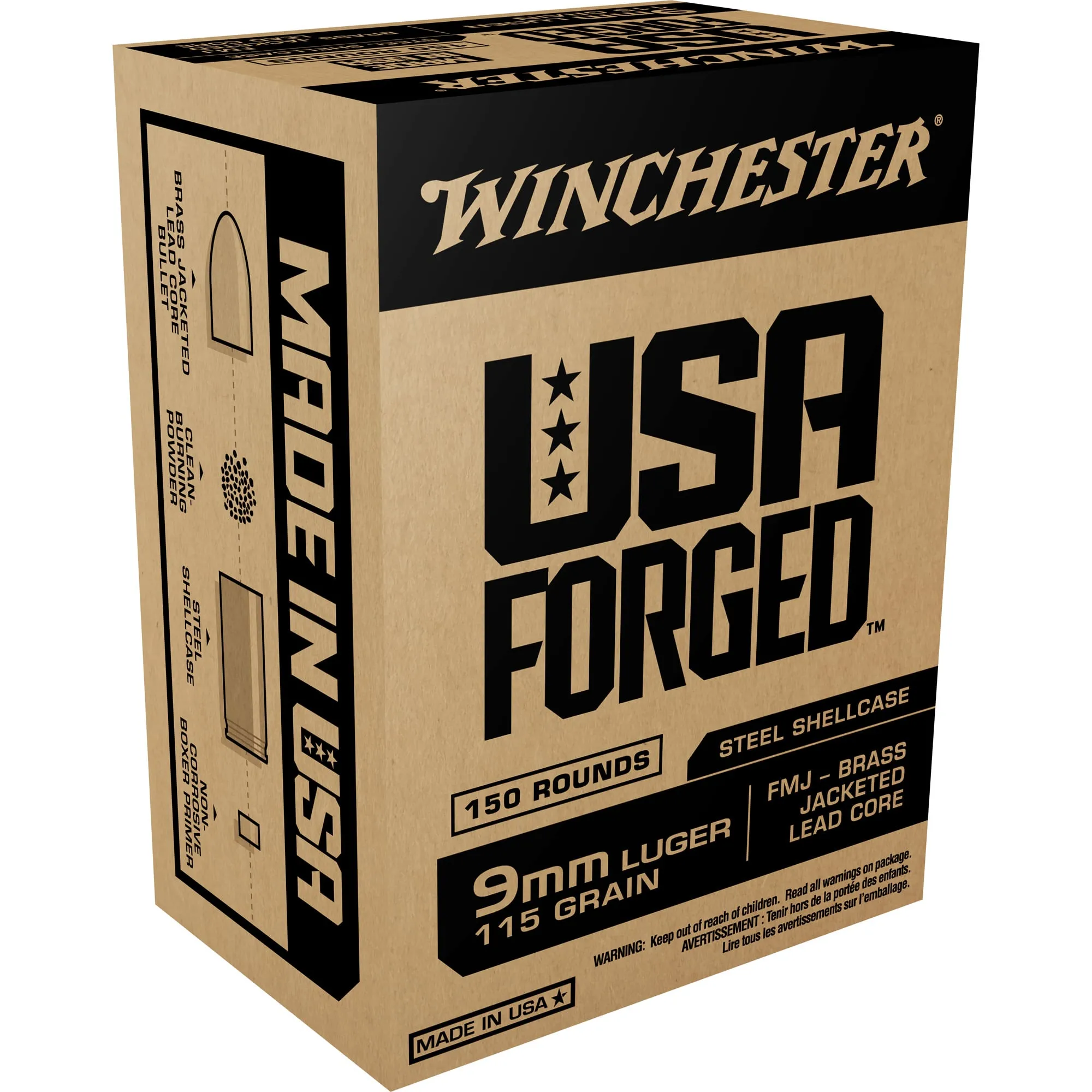
Winchester USA 9mm Ammunition, 1000 Rounds FMJ 115Gr - WIN9SK
9mm · 115gr · 1,000 rds

PMC Ammunition Bronze Brass 9mm 124 Grain 1000-Rounds Bulk FMJ
9mm · 124gr · 1,000 rds

PMC Ammunition Bronze Brass 9mm 115-Grain 1000-Rounds Bulk FMJ
9mm · 115gr · 1,000 rds

Winchester Centerfire Handgun Brass 9mm 115-Grain 1000-Rounds FMJ Bulk
9mm · 115gr · 1,000 rds
Look at what those listings are made of. Some are brass. Some are aluminum-cased, which is not designed to be reloaded at all. Those cases never re-enter the reman supply, and the manufacturer did not pay for a reusable case in the first place. That is the structural problem for reman in 9mm: it competes against new ammunition that was engineered around being disposable and cheap.
The practical rule: if a reman 9mm quote does not land clearly below the grid above once shipping is in, buy factory new. You get new brass, a single headstamp, one lot and a manufacturer warranty for the same money or close to it. More on which of those bulk loads we would actually run is in Best 9mm Ammo, and the full live list is on the 9mm caliber page.
Where remanufactured ammo can still make sense
Reman's cost advantage lives in the components it reuses. The case is the most expensive part of a cartridge to make, so the discount is largest where new cases are expensive relative to the rest of the round, and where factory-new competition is thin.
Heavier and lower-volume pistol calibers. .45 ACP and .40 S&W use more lead and more brass per round than 9mm and sell in lower volume, which is what gives a reman seller room underneath the factory-new floor. Compare the .45 ACP and 9mm index blocks above rather than assuming the gap exists.
Cheapest Factory New .45 ACP Right Now
Prices updated Oct 10, 2026
WINCHESTER AMMO 45 Auto FMJ 230Gr 100rd
.45 ACP · 230gr · 100 rds

ARMSCOR 45ACP 230gr Full Metal Jacket Ammunition | 100 Rounds
.45 ACP · 230gr · 100 rds

1776 USA Lead Free Sporting Brass .45 ACP 140-Grain 50-Rounds LFB
.45 ACP · 140gr · 50 rds

BARNAUL AMMO 45 Auto 230Gr FMJ Polycoated Steel Case 50rd
.45 ACP · 230gr · 50 rds

CCI Ammunition Independence Loose Bulk .45 ACP 230-Grain 500-Rounds FMJ
.45 ACP · 230gr · 500 rds

WINCHESTER AMMO 45 Auto 185 STHP 100rd
.45 ACP · 100 rds
Rifle practice ammo in brass. In .223/5.56 the cheapest factory-new loads are frequently steel-cased. If your rifle or range does not accept steel, the relevant floor is factory-new brass, which sits higher. Why steel and brass price differently, and when steel is a false economy, is covered in Steel Case vs Brass Ammo. For which brass practice loads we rate, see Best 5.56 & .223 Ammo.
Cheapest Factory New .223 / 5.56, 500+ Rounds
Prices updated Oct 10, 2026
Wolf Military Classic Steel .223 Rem 55 Grain 500-Rounds Bulk FMJ
.223 Remington · 55gr · 500 rds

PMC Ammunition Bronze .223 Rem 55 Grain 1000-Rounds FMJ Bulk
.223 Remington · 55gr · 1,000 rds

Winchester M855 5.56 Bulk Ammo 62 Grain FMJ 1000rds (Unpainted Tip) - WM8551000
5.56x45mm NATO · 62gr · 1,000 rds

Red Army Standard Centerfire Rifle Steel .223 Rem 55-Grain 500-Rounds Bulk FMJ
.223 Remington · 55gr · 500 rds

PMC Ammunition X-Tac Rifle Brass 5.56 55 Grain 1000-Rounds FMJBT Bulk
5.56x45mm NATO · 55gr · 1,000 rds

Wolf Performance Ammo PolyFormanc Steel Bulk .223 Rem 55 Grain 500-Rounds
.223 Remington · 55gr · 500 rds
Where it does not apply at all. Rimfire cannot be reloaded, so there is no reman .22 LR, and if your practice goal is round count on a budget, rimfire already beats anything centerfire reman can offer. See Best .22 LR Ammo. Volume matters too: how much practice you actually need to buy, and therefore whether a small per-round saving adds up to anything, is worked through in How Many Rounds Does It Take to Get Good?
Is remanufactured ammo safe to shoot?
For practice, from an established remanufacturer, generally yes. But the risk profile is different from factory new, and you should know exactly where it differs.
The case has a history you cannot see. Brass work-hardens and thins every time it is fired and resized. Pistol brass tolerates many cycles. Bottleneck rifle brass is less forgiving, and the failure that matters is a case-head separation, where the case pulls apart in the chamber. A reputable remanufacturer inspects and gauges cases, but inspection is statistical, not absolute.
Mixed headstamps mean mixed internal capacity. Different makers' cases hold slightly different volumes, so the same charge produces slightly different pressure and velocity. For plinking this rarely matters. For precision work it shows up on paper.
The failure modes are charge errors. A round with no powder can push a bullet partway into the barrel. A double charge produces dangerous pressure. Production lines guard against both, which is the single biggest reason commercial reman is a different proposition from a stranger's handloads.
Before you shoot a new batch:
- Inspect every round for split or crushed case mouths, bulged cases, high or crooked primers and bullets seated visibly deep or shallow.
- Chamber-check with a case gauge if you have one, especially rifle ammo.
- Fire the first magazine slowly. If any round sounds noticeably quiet or recoils weak, stop, unload and check the bore before firing again. Do not fire a follow-up shot into a possible obstruction.
- Read your firearm's manual. Many manufacturers warn against reloaded or remanufactured ammunition, and some exclude damage it causes from warranty coverage. Indoor ranges sometimes restrict it as well, so ask before you bring it.
Should you carry or defend with reman or handloads?
No. Defensive ammunition should be factory new, from a lot you have run through your own gun. Two reasons, neither of them about price.
The first is reliability. The entire value of a defensive load is that it works the one time it matters, and that is the case where brass of unknown history is least defensible.
The second is scrutiny after the fact. If you ever have to use it, a load you can identify by manufacturer and product line is simpler to explain than ammunition assembled by someone you cannot name. How that plays out varies by jurisdiction, so treat this as a reason for caution rather than a legal conclusion.
Defensive boxes are small. The per-round saving from reman on a 20- or 50-round carry load would be pocket change, and it buys a problem you do not need.
How to decide between reman and factory new in one minute
- Pick the caliber and quantity you actually want.
- Get the reman quote delivered. Add shipping, then divide by the round count. Some states restrict how ammunition ships or who can receive it, so confirm a direct seller can legally ship to you. Ammo Shipping Restrictions explains how to check.
- Compare against the live floor in the price index above, at a similar quantity, not against the average.
- Decide whether the gap pays for the trade-offs: mixed brass, a possible warranty question and a seller with no cross-retailer competition.
If the gap is small or negative, buy factory new. If reman is clearly underneath the floor in a caliber you shoot a lot, it is a legitimate way to shoot more for the same money. Floors move, sometimes quickly, for reasons laid out in Why Ammo Prices Move, so rerun the comparison each time rather than relying on what it said last quarter. Everything else we track is on the ammo deals page.
Get alerted when 9mm price drops hit.
We watch every listing and email you the moment the cost per round drops.
Set Up a Free Price AlertAmmoSpotter earns a commission when you buy through links on this page. It never changes what you pay, and it never decides what we recommend — our picks are ranked on live cost-per-round data pulled from every retailer we track. Full disclosure.
Frequently Asked Questions
What is the difference between reloaded and remanufactured ammo?+
Is remanufactured ammo safe to shoot?+
Is remanufactured ammo actually cheaper than new?+
Does shooting reloaded or remanufactured ammo void my gun's warranty?+
Can you buy remanufactured .22 LR?+
Should I carry remanufactured ammo for self-defense?+
Shop the data

About the author
AmmoSpotter Research Desk
Price & Ballistics Research
The AmmoSpotter Research Desk analyzes live retail pricing across every ammunition, firearm and accessory listing we track. Recommendations here are ranked against real cost-per-round data pulled daily from the retailers we monitor - not against manufacturer marketing copy.
- ✓Tracks 180,000+ live product listings across 6 retailer feeds
- ✓Records price history on every listing, every day
- ✓Cost-per-round methodology applied to all ammunition rankings
- ✓No product is ranked without a verifiable in-stock retail price
- ✓Affiliate relationships never influence rankings
Related Guides

Is Reloading Still Cheaper Than Buying Ammo? (2026 Break-Even Math)
Reloading used to be a single-sentence decision. Components cost less than loaded ammunition, so if you shot enough, you loaded your own. That arithmetic held for decades. It does not hold uniformly anymore, and the r...

Steel Case vs Brass Case Ammo: What You Actually Give Up
Steel-cased ammunition occupies a strange place in shooting culture: universally used, frequently condemned, rarely analyzed. The honest position is narrower than either camp claims. Steel is cheaper. It is cheaper fo...

Cost Per Round: The Only Ammo Price Metric That Matters
There is exactly one reason ammunition is hard to price-compare: it is advertised in boxes and consumed in rounds. Box counts are not standardized. A "box" of 9mm might be 50 rounds. A "value pack" might be 100, or 11...

Best 9mm Ammo 2026: Range, Carry and Duty Loads Ranked
9mm Luger is the most-produced, most-competitive cartridge in the American market. That is good news and bad news: prices are low, and the sheer number of listings makes it easy to pay 30% more than you needed to for ...

Best .22 LR Ammo 2026: Bulk, Match and Hunting on Live Prices
- .22 LR is the cheapest trigger time available, and it is not close. The live floor below is roughly what a single centerfire rifle round costs in loose change. - Bulk barely helps. Across our catalog the 50-round bo...

How to Buy Ammo Online Without Overpaying (2026 Guide)
Most ammunition buying advice stops at "shop around." That is not a process, and it is not why people overpay. People overpay because ammunition is priced in a unit nobody compares — the box — while the thing being bo...