What Is Driving Ammo Prices Right Now
A standing readout of what ammunition actually costs today, which cartridges are moving against the market, and how to tell a supply problem from a demand spike before you buy.

What does ammo actually cost right now?
Start with the numbers, not the narrative.
We track roughly 180,000 live retail listings, about 16,200 of which are loaded ammunition, across every retailer in our network. The blocks below query that catalog at the moment you load this page. Each one shows the market floor — the cheapest cost per round available anywhere we track — alongside the market average, the cheapest single box, and which way the cartridge has moved over the last 30 days.
9mm Luger Price Index
Live · Oct 21, 20265.56 NATO / .223 Remington Price Index
Live · Oct 21, 2026.308 Winchester Price Index
Live · Oct 21, 202612 Gauge Price Index
Live · Oct 21, 2026.22 LR Price Index
Live · Oct 21, 2026The gap between the floor and the average in each block is the more interesting number. When it is wide, the market is disorganized — a handful of retailers are clearing inventory well below everyone else, and there is real money in shopping around. When it is narrow, pricing has converged and your effort is better spent on shipping thresholds than on hunting for a lower sticker.
Which of the five forces is loading right now?
Ammunition prices move for a small number of reasons, and they are always all present — what changes is which one is dominant.
Component cost sets the long-run floor. Copper and lead feed directly into bullet and case cost, and a sustained move in either shows up in loaded ammunition eventually, across every cartridge at once. Manufacturing capacity sets how fast supply can answer demand, and it is slow to change in both directions. Import policy can remove a whole tier of budget product from the market in a single administrative decision. Demand shocks — political, seasonal, or event-driven — arrive fast and fade slower than people expect. Retailer margin absorbs some of all of it and is the only one that can move overnight.
The diagnostic that matters: if everything moved, it is a cost or a demand story. If one cartridge moved, it is a supply story. Broad, shallow movement across the whole catalog points at inputs or a demand wave. A single cartridge climbing while its neighbors sit still means someone's production line, import channel, or distribution allocation changed.
We laid out each of those forces in detail, and how to recognize them individually, in why ammo prices move. This page is the current readout; that one is the mechanism.
Why did your caliber move when the market didn't?
Because dispersion between cartridges is usually larger than the movement of the market as a whole.
A cartridge loaded by a dozen manufacturers and stocked by every retailer has no pricing power anywhere in the chain. Everyone is watching everyone else, and margin gets ground down continuously. That is why the common cartridges are cheap, why they get cheaper on promotion, and why their floors move in small increments.
A cartridge with two manufacturers behaves completely differently. The retailer holding stock has no competitive pressure to cut, and a supply interruption anywhere in a two-source chain is a fifty percent capacity loss. These cartridges sit flat for months and then step, and they do not step back down quickly.
New chamberings are the sharpest version of this. Interest arrives before capacity does, and the price behaves accordingly — we tracked how that plays out in what actually happens when a new cartridge launches.
Compare your cartridge against a neighbor before concluding the market did something. If .308 moved and 6.5 Creedmoor did not, that is not a market event.
Cheapest 9mm Per Round Today
Prices updated Oct 21, 2026
MAGTECH 9mm Luger Steel Case 124 FMJ 50rd
9mm · 50 rds

SELLIER BELLOT 9mm 115gr FMJ Brass Ammunition | 50 Rounds
9mm · 115gr · 50 rds
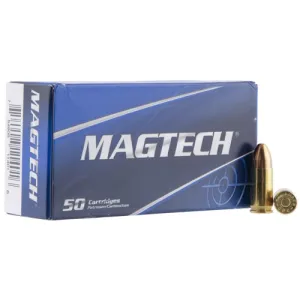
MAGTECH 9mm 115gr Full Metal Jacket Brass Ammunition | 50 Rounds
9mm · 115gr · 50 rds

SELLIER BELLOT 9mm 124Gr 1200 FPS FMJ 50rd
9mm · 124gr · 50 rds
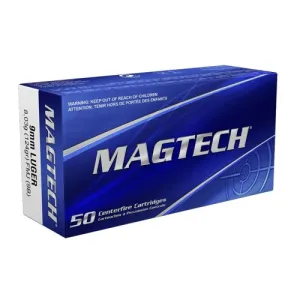
MAGTECH 9mm 124gr FMJ 50rd
9mm · 124gr · 50 rds

MILI CUSTOM DEFENSE AMMUNITION 9mm 155gr Subsonic FMJ 50rd
9mm · 155gr · 50 rds
Cheapest 5.56 / .223 Per Round Today
Prices updated Oct 21, 2026
RED ARMY STANDARD 223 Remington 56Gr FMJ Steel Case 20rd
.223 Remington · 56gr · 20 rds

BARNES AMMO 223 Cal Varmint Grenade FB 50Gr 100rd
.223 Remington · 50gr · 100 rds

BARNAUL AMMO 223 Rem 62Gr SPBT Polycoated Steel Case 20rd
.223 Remington · 62gr · 20 rds

BARNAUL AMMO 223 Rem 55Gr HPBT Polycoated Steel Case 20rd
.223 Remington · 55gr · 20 rds

BARNAUL AMMO 223/5.56 62Gr FMJBT Steel Case 20rd
.223 Remington · 62gr · 20 rds

PMC Ammunition Bronze .223 Rem 55 Grain 1000-Rounds FMJ Bulk
.223 Remington · 55gr · 1,000 rds
Is it the ammo that's expensive, or the volume you shoot?
Worth asking honestly, because the answer changes what you should do about it.
Cost per round is a rate. Your actual exposure is that rate multiplied by round count, and most shooters have never written down their round count. A few cents per round is invisible on a box and substantial across a year of serious practice. Run your own number:
Cost Per Round Calculator
The only number that matters when comparing ammo. Shipping included.
If the total surprises you, the lever is usually volume allocation rather than price hunting. Skill-building work does not require premium ammunition, and the realistic round counts for actual competence are higher than most people budget for — we worked through them in how many rounds it takes to get good. Shooting cheap ammunition deliberately, in volume, beats shooting expensive ammunition occasionally.
At high enough volume the calculation changes character entirely and component pricing starts to matter more than loaded pricing. That break-even is real but further out than most people assume, and it moves with the market — is reloading still cheaper runs the fixed-cost recovery math.
Choosing within a cartridge is its own problem. The tiering — practice, duty, precision — matters more than the sticker, and we cover it per cartridge in best 9mm ammo, best 5.56 and .223 ammo and best .22 LR ammo.
What should you do when prices are climbing?
Set a floor in advance and buy against it, not against a headline.
Deciding "I will buy 9mm when it crosses a specific cost per round" is a rule you can execute calmly. Deciding "prices are going up, I should stock up" is a reaction, and reactions are what produce panic buying — which is itself one of the forces that pushes the price you are reacting to.
Two practical constraints that catch people mid-panic:
- Landed cost, not cart cost. Ammunition ships as hazardous material and the surcharge does not scale down on small orders. A slightly higher per-round price above a free-shipping threshold frequently beats the cheaper listing below it.
- Delivery is not universal. Some states and municipalities restrict ammunition shipments, require licensing, or block them outright, and the rules change. Check ammo shipping restrictions and confirm the current rule for your own address before you build a large order — treat any general summary, ours included, as a starting point rather than settled law where you live.
Rather than watching manually, set the threshold and let it notify you:
Get alerted when 9mm price drops hit.
We watch every listing and email you the moment the cost per round drops.
Set Up a Free Price AlertWhat we will not tell you about this market
We will not forecast. We have price history, not a crystal ball, and anyone publishing a confident call on where a cartridge lands next quarter is selling something.
We will not publish ballistic test results as our own. We aggregate prices and track availability; we do not run gel tests, and we do not restate someone else's protocol as if we had. Our full position on what we rank, how, and what we refuse to claim is in how AmmoSpotter ranks ammunition.
And we will not tell you today's number in prose, because prose goes stale and this page does not. Every figure above is queried live. The durable version of this skill is not reading a market update — it is knowing the floor for your own cartridge well enough to recognize a good price without checking. Start from the full price index, or go straight to the 9mm and 5.56 / .223 pages and sort by cost per round.
AmmoSpotter earns a commission when you buy through links on this page. It never changes what you pay, and it never decides what we recommend — our picks are ranked on live cost-per-round data pulled from every retailer we track. Full disclosure.
Frequently Asked Questions
Are ammo prices going up or down right now?+
Why is ammo so expensive compared to a few years ago?+
Why did my caliber get more expensive when the market didn't?+
Is the cheapest cost per round always the best buy?+
Should I stockpile when prices are climbing?+
How current are the prices on this page?+
Shop the data

About the author
AmmoSpotter Research Desk
Price & Ballistics Research
The AmmoSpotter Research Desk analyzes live retail pricing across every ammunition, firearm and accessory listing we track. Recommendations here are ranked against real cost-per-round data pulled daily from the retailers we monitor - not against manufacturer marketing copy.
- ✓Tracks 180,000+ live product listings across 6 retailer feeds
- ✓Records price history on every listing, every day
- ✓Cost-per-round methodology applied to all ammunition rankings
- ✓No product is ranked without a verifiable in-stock retail price
- ✓Affiliate relationships never influence rankings
Related Guides

Why Ammo Prices Move: The Five Forces Behind Every Spike
From the outside, ammunition pricing looks arbitrary. One cartridge climbs while another does not. A caliber that was plentiful in spring is thin by autumn. Prices rise fast and fall slowly. It is not arbitrary. Five ...

AmmoSpotter Ammo Price Index: What Ammunition Costs Right Now
Most published ammunition pricing is one of two things: manufacturer MSRP, which nobody pays, or a hand-updated article that was accurate the week it was written. This page is neither. Every figure below is computed a...

Ammo Prices Going Up? Which Calibers Got More Expensive This Year
"Are ammo prices going up" is a question about direction, and almost every answer you will find online answers a different question — level. Someone remembers paying less, quotes the number they remember, and calls th...

9mm Price History: What a Round Has Cost Since We Started Tracking
Most "ammo price history" pages are a memory exercise. Someone recalls paying nineteen cents a round before 2020, quotes it as fact, and builds an argument on top of it. We took a different approach: log every price c...

Best .22 LR Ammo 2026: Bulk, Match and Hunting on Live Prices
- .22 LR is the cheapest trigger time available, and it is not close. The live floor below is roughly what a single centerfire rifle round costs in loose change. - Bulk barely helps. Across our catalog the 50-round bo...

How to Buy Ammo Online Without Overpaying (2026 Guide)
Most ammunition buying advice stops at "shop around." That is not a process, and it is not why people overpay. People overpay because ammunition is priced in a unit nobody compares — the box — while the thing being bo...