Ammo Grain Weight Explained
Heavier bullets do not cost more. We priced every bullet weight in ten calibers to show what you are really paying for — and it is not lead.
What a grain actually is
A grain is an old unit of mass, and a small one: 7,000 grains make one pound. A 115-grain 9mm bullet weighs roughly a quarter of an ounce. A 230-grain .45 ACP bullet weighs about half.
Two clarifications that head off most of the confusion:
- The number on the box is the weight of the projectile alone — not the loaded cartridge, not the powder charge. Powder charges are also measured in grains, which is where people get tangled, but the box number is always the bullet.
- It is a specification, not a grade. 147 is not "better" than 115 any more than a 32-inch inseam is better than a 30. It describes the object.
Across our live catalog, 8,375 of 11,683 in-stock ammunition listings carry a grain value. The roughly 3,300 that do not are almost entirely shotshells — 1,872 in 12 Gauge alone, plus 20 Gauge, .410 bore, 28, 16 and 10 — because shotgun loads are specified by ounces of shot and shot size, not one projectile weight.
Do heavier bullets cost more? The data says no
Here is the test that settles it. If bullet weight drove price through material cost, then cost per grain of bullet would be roughly constant within a single cartridge. Every weight would be a different-sized scoop of the same stuff at the same rate.
It is not close. Median cost per round, and that figure divided by bullet weight, across live 9mm listings:
| 9mm bullet weight | Live listings | Median cost/round | Cost per grain |
|---|---|---|---|
| 80 gr | 9 | $1.350 | $0.01688 |
| 90 gr | 12 | $1.260 | $0.01400 |
| 100 gr | 17 | $0.760 | $0.00760 |
| 115 gr | 242 | $0.360 | $0.00313 |
| 124 gr | 200 | $0.535 | $0.00431 |
| 135 gr | 12 | $1.216 | $0.00901 |
| 147 gr | 114 | $0.622 | $0.00423 |
| 158 gr | 8 | $0.500 | $0.00316 |
The spread in cost per grain is over five to one inside one cartridge. An 80-grain 9mm bullet costs more than five times as much per grain of bullet as a 115-grain one — while containing less metal. Whatever you are buying, it is not the lead.
Note the shape of that table: the two heaviest weights listed, 147 and 158 grain, are cheaper per round than the 80, 90 and 100 grain loads above them. The lightest 9mm bullets on the market are among the most expensive rounds in the caliber.
The relationship reverses depending on the caliber
If weight drove price in any consistent direction, it would point the same way in every cartridge. It does not. Median cost per round by weight, live:
| Caliber | Cheapest common weight | Median | A pricier weight | Median |
|---|---|---|---|---|
| 9mm | 115 gr (lightest common) | $0.360 | 147 gr | $0.622 |
| .223 / 5.56 | 55 gr (lightest common) | $0.630 | 77 gr | $1.440 |
| .45 ACP | 230 gr (heaviest common) | $0.610 | 185 gr | $1.186 |
| .38 Special | 158 gr (heaviest common) | $0.620 | 110 gr | $1.228 |
| .357 Magnum | 158 gr (heaviest common) | $0.743 | 125 gr | $1.305 |
| 10mm Auto | 180 gr | $0.660 | 200 gr | $1.600 |
| .40 S&W | 165–180 gr | $0.492–$0.544 | 200 gr | $1.575 |
In 9mm and .223, light is cheap and heavy is dear. In .45 ACP, .38 Special and .357 Magnum, heavy is cheap and light is dear — the exact opposite, in the same market, on the same day. A rule that reverses sign between cartridges is not a rule.
What you are actually paying for is how ordinary the load is
Look at the listing counts, not the weights. In 9mm, 115 grain has 242 live listings and 124 grain has 200 — and those two weights sit at the bottom of the price table. The 80-grain loads have nine listings and cost nearly four times as much per round.
The same shape repeats everywhere. In .223 and 5.56, 55 grain has 241 live listings at a $0.630 median, while 77 grain has 35 listings at $1.440. In .45 ACP, 230 grain has 191 listings at $0.610 — three times the next-most-listed weight, and the cheapest in the caliber.
The causal story is unglamorous and complete: the weight a cartridge was standardized around gets mass-produced, and mass production sets the floor price. Everything else is a specialty run — lighter defensive loads, heavy match bullets, frangible and lead-free projectiles — priced like a specialty run. Bullet weight is a label on that distinction, not the cause of it.
You can see it in a live grid. Sorted by cost per round, .45 ACP is almost entirely 230-grain:
Cheapest .45 ACP by Cost Per Round
Prices updated Sep 17, 2026
WINCHESTER AMMO 45 Auto FMJ 230Gr 100rd
.45 ACP · 230gr · 100 rds

ARMSCOR 45ACP 230gr Full Metal Jacket Ammunition | 100 Rounds
.45 ACP · 230gr · 100 rds

1776 USA Lead Free Sporting Brass .45 ACP 140-Grain 50-Rounds LFB
.45 ACP · 140gr · 50 rds

BARNAUL AMMO 45 Auto 230Gr FMJ Polycoated Steel Case 50rd
.45 ACP · 230gr · 50 rds

CCI Ammunition Independence Loose Bulk .45 ACP 230-Grain 500-Rounds FMJ
.45 ACP · 230gr · 500 rds
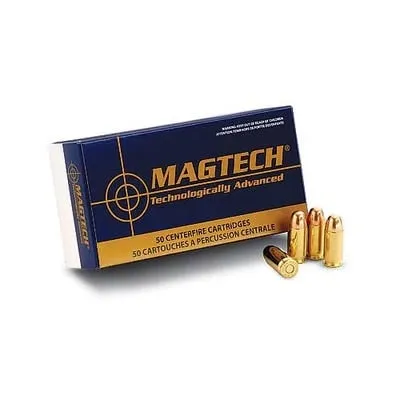
MagTech Range/Training Brass .45 ACP 230-Grain 50-Rounds FMJ
.45 ACP · 230gr · 50 rds
And 9mm is almost entirely 115 and 124:
9mm Luger Price Index
Live · Sep 17, 2026Cheapest 9mm by Cost Per Round
Prices updated Sep 17, 2026
MAGTECH 9mm Luger Steel Case 124 FMJ 50rd
9mm · 50 rds

SELLIER BELLOT 9mm 115gr FMJ Brass Ammunition | 50 Rounds
9mm · 115gr · 50 rds

SELLIER BELLOT 9mm 124Gr 1200 FPS FMJ 50rd
9mm · 124gr · 50 rds

MILI CUSTOM DEFENSE AMMUNITION 9mm 155gr Subsonic FMJ 50rd
9mm · 155gr · 50 rds

Winchester USA Forged 9mm 115 Grain 1000-Rounds Bulk FMJ
9mm · 115gr · 1,000 rds

Venom 9mm 115 Gr FMJ Ammo, 50rds - 9MM115FMJ-V50
9mm · 115gr · 50 rds
The rifle exception worth knowing
.308 Winchester bends the pattern, and the reason is instructive. Its most-listed weight, 150 grain, has 102 live listings at a $1.800 median — but the cheapest weight in the caliber is 147 grain at $1.100, with only ten listings. That 147-grain bulk FMJ is the commodity loading; it is just barely stocked. The same scarcity shows up in pack size: .308 currently has exactly one listing at 500 rounds or more across our whole catalog.
.30-06 Springfield behaves similarly, sitting between $1.645 and $2.243 across its common weights with no cheap commodity tier at all. In hunting-dominated cartridges the mass-market practice loading barely exists, so the price floor never drops.
What bullet weight actually changes when you shoot it
Price aside, weight is not cosmetic. What it genuinely affects:
- Recoil character. For a given cartridge, heavier bullets typically produce a slower, more rolling push and lighter ones a sharper snap. Which you shoot better is personal and worth testing with your own gun rather than reasoning about.
- Point of impact. Different weights usually print to different places at distance, sometimes noticeably. If you change practice weight, re-confirm your zero.
- Twist-rate stabilization. Longer, heavier bullets need a faster rifling twist to stabilize. This is the one that can genuinely fail rather than merely disappoint — heavy .223 match bullets in a slow-twist barrel can key-hole. Check the twist marked on your barrel before buying heavy match ammunition. The 55-versus-62-grain version of this argument is covered in M193 vs M855.
- Whether the load is subsonic. A round stays subsonic by keeping the bullet under roughly the speed of sound, and the usual way to do that is a heavy bullet with a reduced charge. This is why subsonic loads are always at the heavy end of a cartridge's range.
- How a bullet behaves on impact depends on construction and velocity together, not weight alone. Published gel-standard protocols exist and manufacturers publish results against them; we do not conduct our own testing and will not pretend otherwise.
For the 9mm-specific version of this trade-off — which weight to carry, which to practice with, and whether the difference is worth anything — see 115gr vs 124gr vs 147gr 9mm.
Subsonic costs extra in .300 Blackout and nothing in 9mm
If you shoot suppressed, this is the weight decision that costs real money — and the answer differs by cartridge.
Across live listings, subsonic 9mm and standard 9mm are priced the same: medians of $0.500 and $0.518 respectively, a difference smaller than the day-to-day move in the caliber. 9mm is heavy and slow enough at standard pressure that subsonic loadings are not exotic.
.300 Blackout is different. Subsonic listings run a median of $1.450 against $1.350 for everything else, and the weight table shows why the caliber is expensive in both directions: 220 grain sits at $1.440 and 110 grain at $1.720, while the cheap middle — 147 grain at $0.775 and 200 grain at $0.900 — carries only 8 and 17 listings respectively.
Cheapest .300 Blackout Right Now
Prices updated Sep 17, 2026
Wolf Performance Ammo Polyformance Steel Case .300 AAC Blackout 145 Grain 20-Rounds
.300 Blackout · 145gr · 20 rds

NOSLER Custom Brass 300 AAC Blackout Bulk Brass 250rd
.300 Blackout · 250 rds

ARMSCOR Precision 300 AAC Blackout 147gr Full Metal Jacket Ammunition | 100 Rounds
.300 Blackout · 147gr · 100 rds

MAGTECH 300 AAC Blackout HPFB 115Gr 50rd
.300 Blackout · 115gr · 50 rds

SELLIER BELLOT 300 AAC Blackout 124gr FMJ Brass Rifle Ammunition | 20 Rounds
.300 Blackout · 124gr · 20 rds

SELLIER BELLOT SB300BLKSUBA 300 AAC Blackout 200gr Full Metal Jacket Subsonic Ammunition | 20 Rounds
.300 Blackout · 200gr · 20 rds
Suppressor ownership has its own costs and timelines before ammunition enters the picture — start with the Suppressor Buying Guide.
How to choose a weight without overpaying
- For practice, buy the standard weight. 115 grain in 9mm, 55 grain in .223 and 5.56, 230 grain in .45 ACP, 158 grain in .38 Special and .357 Magnum, 180 grain in 10mm. It is the cheapest and it is cheapest for a structural reason that is not going to change.
- Match your carry and practice weights only if the difference bothers you. Recoil impulse and point of impact do shift. If you can't tell, do not pay the premium for consistency you cannot perceive.
- Check twist rate before buying heavy rifle bullets — this one can actually fail.
- Price the specific cartridge, not the category. Subsonic costs nothing extra in one caliber and real money in another.
- Watch the per-round number, not the box price. A cheap-looking box in an unusual weight is frequently the most expensive ammunition you own. Run the math with the calculator below.
Cost Per Round Calculator
The only number that matters when comparing ammo. Shipping included.
The weight you choose for range days is one of the biggest levers on what a year of shooting costs — bigger than most people realize when they're deciding how many rounds it takes to get good. If you want a shortlist rather than a table, our ranked picks live in Best 9mm Ammo and Best 5.56 & .223 Ammo, with the rimfire equivalent in Best .22 LR Ammo.
Or compare every weight yourself on live cost per round: 9mm, .45 ACP, .223/5.56, or the full ammo catalog.
Get alerted when 9mm price drops hit.
We watch every listing and email you the moment the cost per round drops.
Set Up a Free Price AlertAmmoSpotter earns a commission when you buy through links on this page. It never changes what you pay, and it never decides what we recommend — our picks are ranked on live cost-per-round data pulled from every retailer we track. Full disclosure.
Frequently Asked Questions
What does grain mean in ammunition?+
Do heavier bullets cost more?+
What grain weight should I buy for practice?+
Does bullet weight need to match my barrel's twist rate?+
Is subsonic ammunition more expensive?+
Why do some ammunition listings have no grain weight?+
Shop the data

About the author
AmmoSpotter Research Desk
Price & Ballistics Research
The AmmoSpotter Research Desk analyzes live retail pricing across every ammunition, firearm and accessory listing we track. Recommendations here are ranked against real cost-per-round data pulled daily from the retailers we monitor - not against manufacturer marketing copy.
- ✓Tracks 180,000+ live product listings across 6 retailer feeds
- ✓Records price history on every listing, every day
- ✓Cost-per-round methodology applied to all ammunition rankings
- ✓No product is ranked without a verifiable in-stock retail price
- ✓Affiliate relationships never influence rankings
Related Guides

115gr vs 124gr vs 147gr 9mm: Which Bullet Weight Should You Buy?
Grain weight is the first spec on a 9mm box and the one people overthink most. Three loadings dominate the market — 115, 124 and 147 grain — and the actual differences between them are smaller than the internet sugges...

M193 vs M855: Which 5.56 Should You Actually Buy?
The green tip looks like a premium tier. It is not. M855 is a specialized barrier round that trades close-range fragmentation and range access for the ability to punch through light steel — and it usually costs more t...

Best 9mm Ammo 2026: Range, Carry and Duty Loads Ranked
9mm Luger is the most-produced, most-competitive cartridge in the American market. That is good news and bad news: prices are low, and the sheer number of listings makes it easy to pay 30% more than you needed to for ...

How AmmoSpotter Ranks Ammunition (And What We Refuse to Claim)
Most ammunition rankings on the internet are one of two things: a static list assembled once and never revisited, or an affiliate page ordered by commission rate. Neither tells you what to buy today. This page is our ...

Best .22 LR Ammo 2026: Bulk, Match and Hunting on Live Prices
- .22 LR is the cheapest trigger time available, and it is not close. The live floor below is roughly what a single centerfire rifle round costs in loose change. - Bulk barely helps. Across our catalog the 50-round bo...

How to Buy Ammo Online Without Overpaying (2026 Guide)
Most ammunition buying advice stops at "shop around." That is not a process, and it is not why people overpay. People overpay because ammunition is priced in a unit nobody compares — the box — while the thing being bo...