How Long Does Ammo Last?
Ammunition does not expire on a date; it fails on conditions. Here is what actually degrades it, what moisture control costs, and what our own price data says about whether buying deep is worth it.

Ammunition does not expire on a date, it fails on conditions
There is no shelf-life stamp on a box of factory ammunition, and that is not an oversight. Manufacturers specify how to store the product — cool, dry, stable — rather than how long it lasts, because the second answer depends entirely on the first.
That is the whole of the honest answer to "how long does ammo last." A sealed case kept in a climate-stable interior space stays serviceable for a very long time; sealed military surplus loaded decades ago is still being shot today. The same ammunition left in a garage through a few summers of condensation can become unreliable far sooner. The variable is not the calendar.
What actually ruins stored ammunition, in order
1. Water, in all its forms. This is the one that matters. Humidity, and especially condensation from temperature swings, corrodes case mouths and primer pockets and can reach the priming compound. Corrosion at the case mouth breaks the seal between case and bullet; corrosion in the primer pocket is how you get a click instead of a bang. Ammunition stored against cold masonry or on a concrete slab collects condensation from the floor, which is why "off the ground, off the wall" is the oldest piece of advice in this subject and still the best.
2. Heat, mostly through cycling. A stable warm room is far less damaging than a space that goes from freezing to baking and back. Cycling drives the condensation described above, and sustained high temperature accelerates propellant breakdown. Attics, vehicle trunks and uninsulated sheds are the worst places in a typical property; an interior closet is the best, and it is free.
3. Contamination. Solvents, penetrating oils and aerosols reach primers and kill them. Do not store ammunition in the same sealed container as cleaning chemicals, and do not spray anything into a loaded magazine.
4. Age, last. Kept dry and stable, age on its own is the slowest of these processes by a wide margin.
Buying deep is about price risk, not a bulk discount
Here is where our data disagrees with the usual advice, and it changes what storage is actually for.
The obvious way to compare pack sizes is to take every live listing in a caliber and look at cost per round by quantity. Do that for 9mm and the case looks like an enormous saving — the median single box works out several times dearer per round than the median case. But that comparison is mostly measuring product mix, not pack size: small boxes are where premium defensive loads live, and nobody sells bonded hollow points by the thousand.
So restrict it to practice-grade loads only — FMJ, plated and lead round nose, with match and defensive bullet types excluded — and compare like with like. These are current medians across our live catalog:
| Caliber | Single box (≤60 rd) | 100–250 rd | 500+ rd | Listings compared |
|---|---|---|---|---|
| 9mm | $0.340 | $0.301 | $0.294 | 293 |
| .223 / 5.56 | $0.618 | $0.593 | $0.600 | 186 |
| .45 ACP | $0.558 | $0.511 | $0.500 | 112 |
| .22 LR | $0.120 | $0.119 | $0.074 | 46 |
Read the .223/5.56 row twice. The median case costs marginally more per round than the median 100–250 round pack, and the whole spread from single box to case is under three cents. 9mm gives up about 13% for going deep, .45 ACP about 10%, and only .22 LR shows the big bulk break people expect — roughly 38% between a box and a bulk brick.
Cost Per Round Calculator
The only number that matters when comparing ammo. Shipping included.
That leaves two real reasons to buy more than you will shoot this month, and neither of them is a discount:
- Price protection. Ammunition prices move, and they move far more than firearm prices do. The forces behind that are set out in why ammo prices move, and the practical version is that the round you buy today at today's floor is immune to the next spike.
- Availability. When a caliber tightens, the problem is not that it costs more. It is that it is not there.
9mm Luger Price Index
Live · Nov 18, 2026Cheapest Bulk 9mm Per Round Right Now
Prices updated Nov 18, 2026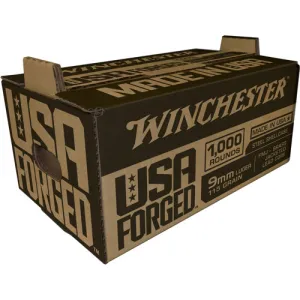
Winchester USA Forged 9mm 115 Grain 1000-Rounds Bulk FMJ
9mm · 115gr · 1,000 rds
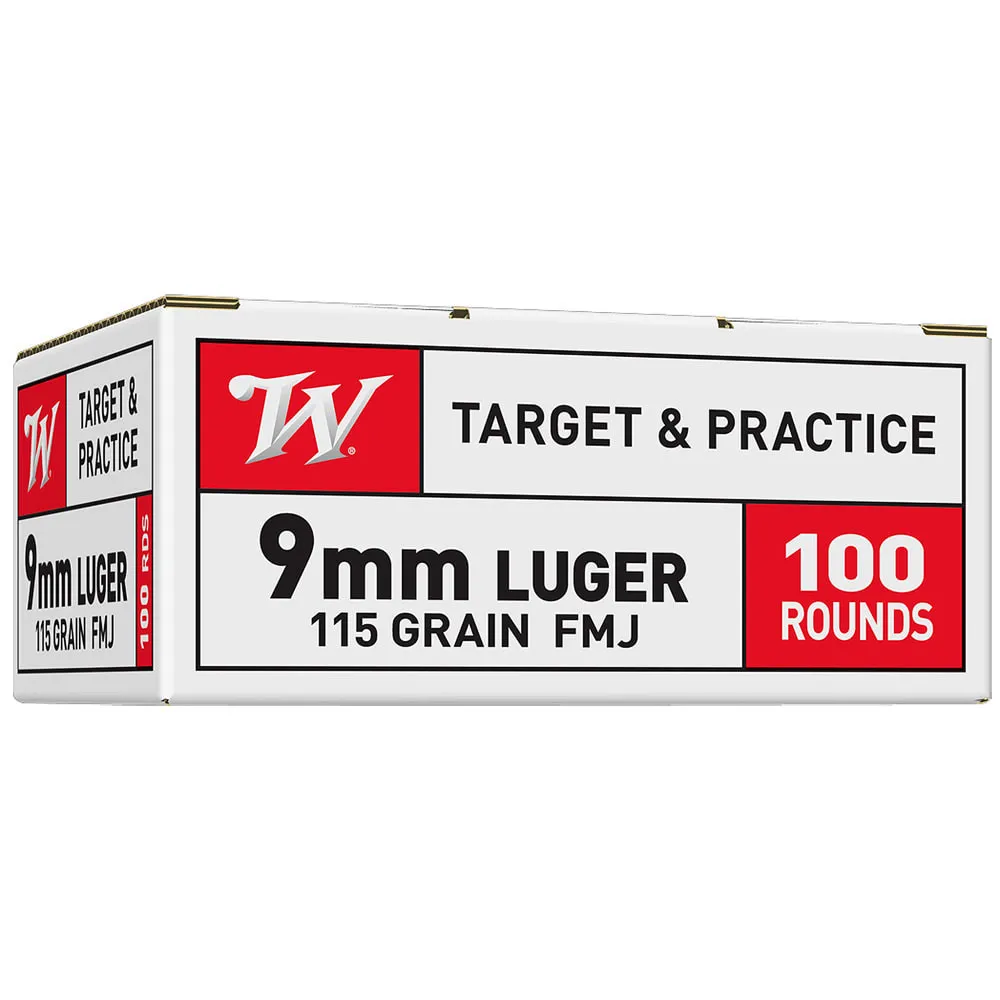
Winchester 9mm Target & Practice FMJ 115gr Case of 1000rds USA9MMVP
9mm · 115gr · 1,000 rds

CCI Ammunition Blazer Aluminum 9mm 115-Grain 1000-Rounds Bulk FMJ
9mm · 115gr · 1,000 rds

PMC Ammunition Bronze Brass 9mm 124 Grain 1000-Rounds Bulk FMJ
9mm · 124gr · 1,000 rds

Winchester Centerfire Handgun Brass 9mm 115-Grain 1000-Rounds FMJ Bulk
9mm · 115gr · 1,000 rds

PMC Ammunition Bronze Brass 9mm 115-Grain 1000-Rounds Bulk FMJ
9mm · 115gr · 1,000 rds
The deep option often does not exist
There is a second, quieter finding in the same data. Across the live ammunition listings we track, sorted by how many rounds are in the package:
| Package size | Live listings |
|---|---|
| 60 rounds or fewer | 10,791 |
| 61–250 rounds | 625 |
| 251–499 rounds | 74 |
| 500–999 rounds | 110 |
| 1,000 rounds or more | 85 |
Fewer than two percent of listings are 500 rounds or more. And the availability is wildly uneven by caliber: 9mm, .223/5.56 and .22 LR all have case-quantity listings today, while .308 Winchester currently shows one listing at 500–999 rounds and none at 1,000+, and 12 Gauge has none above 250. For those, "buying deep" means stacking boxes, which is fine — it just means the storage problem arrives without any packaging help.
.223 Rem / 5.56 NATO Price Index
Live · Nov 18, 2026Cheapest Bulk .223 / 5.56 Per Round
Prices updated Nov 18, 2026
Patriot Sports Rifle Ammunition .223 Rem 55 Grain 1000-Rounds FMJ
.223 Remington · 55gr · 1,000 rds

PMC Ammunition Bronze .223 Rem 55 Grain 1000-Rounds FMJ Bulk
.223 Remington · 55gr · 1,000 rds

Wolf Military Classic Steel .223 Rem 55 Grain 500-Rounds Bulk FMJ
.223 Remington · 55gr · 500 rds

Wolf Performance Ammo PolyFormanc Steel Bulk .223 Rem 55 Grain 500-Rounds
.223 Remington · 55gr · 500 rds

PMC Ammunition X-Tac Brass 5.56 NATO 62-Grain 1000-Rounds GT Bulk
5.56x45mm NATO · 62gr · 1,000 rds

PMC Ammunition X-Tac Rifle Brass 5.56 55 Grain 1000-Rounds FMJBT Bulk
5.56x45mm NATO · 55gr · 1,000 rds
Those blocks price themselves on every page view, so they will not match the medians above once the market moves. The picks and grids are live; the tables are a snapshot.
What moisture control actually costs
This is the part that makes the buy-deep decision safe, and it is cheap relative to what it protects. A sealed box plus a desiccant insert typically costs less than a single case of centerfire ammunition — often a small percentage of it.
A Storage Ladder, Priced Live

Berry s Manufacturing Plastic Ammo Can for .30 cal .223 9mm .38 Spl
A plastic can with a lid and a handle. It keeps dust, light and handling damage off a few hundred rounds. Treat it as organisation, not as a moisture barrier.

MTM S107211 Survivor DRY-BOX Small Green
Gasketed utility box sized for a few hundred rounds of handgun ammo. The smallest unit worth putting desiccant inside.

Pelican Dessicant for Use w/All Cases 1500D
A rechargeable desiccant insert. A sealed container without one traps whatever humidity was in the room when you closed it, which is the failure mode this whole article is about.
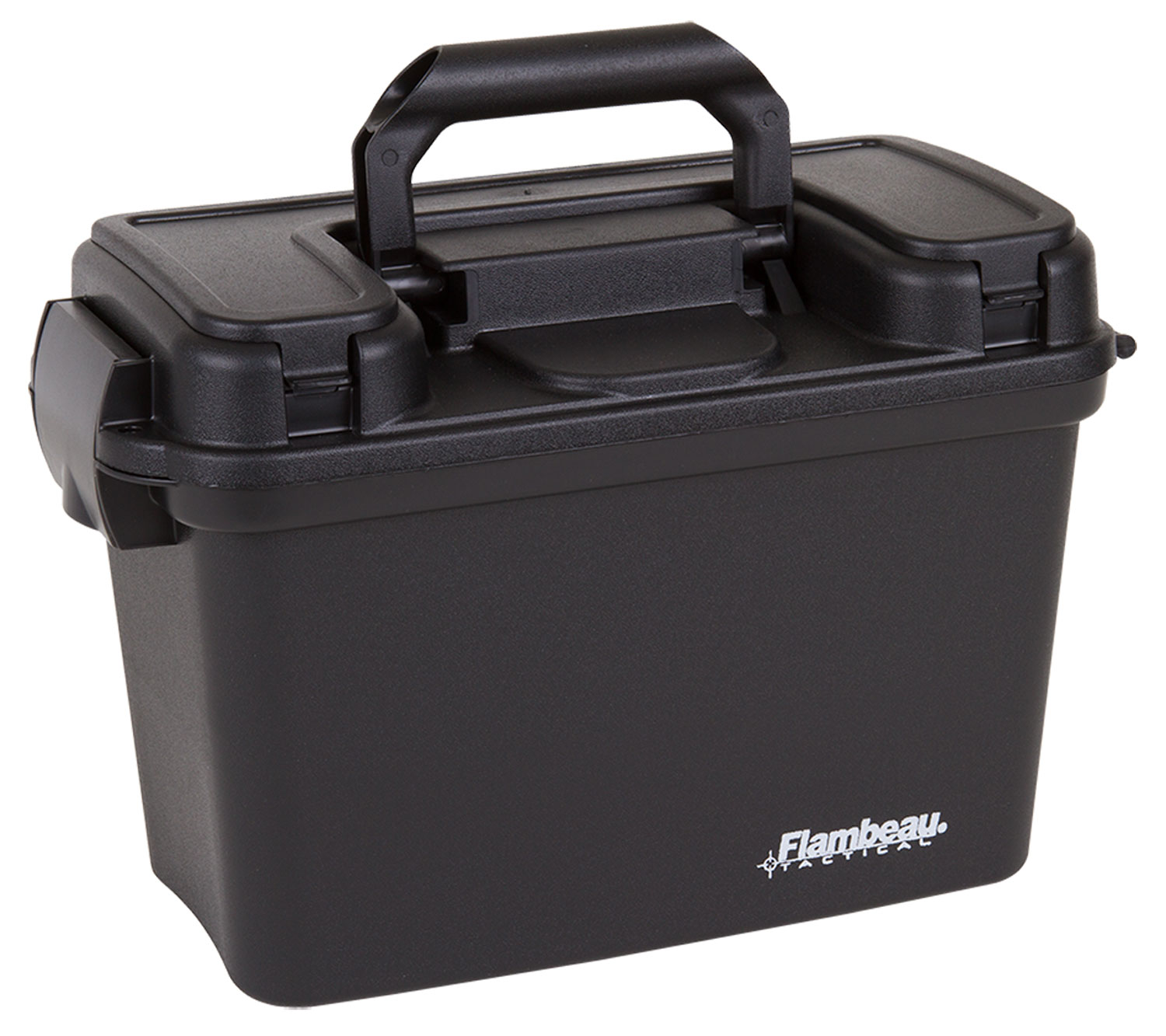
FLM LARGE BLACK AMMO DRY BOX
Large sealed box for case quantities. One of these plus desiccant is the practical answer for most people storing more than they shoot in a season.

MTM SDB-0-35 Sportsman s Dry Box
Same idea in MTM's field-box line. Stackable, and the lid latches hard enough to compress a gasket properly.

Pelican Protector 1120 WL/WF Black Case 1120-000-110
A hard watertight case with a pressure-equalising valve. Overkill for a closet; the right answer for a damp outbuilding or anything that travels.
Two notes on that ladder. First, the cheap plastic cans at the bottom are organisation, not protection: a lid that keeps dust off is not a gasket. Second, the desiccant is not optional. Sealing a container on a humid afternoon traps that humidity inside with the ammunition, which is precisely the failure mode described above — a sealed box without desiccant can be worse than an open shelf in a dry room.
A storage setup that works, in order of what matters
- Pick an interior space at living-space temperature. A closet in the house beats a $50 case in a shed. This is the single highest-value decision and it costs nothing.
- Get it off the floor and off exterior walls. Concrete sweats. A shelf or a pallet solves it.
- Seal it, with desiccant inside. Gasketed box, rechargeable desiccant, closed on a dry day rather than a muggy one. Recharge the desiccant on whatever schedule its maker specifies.
- Leave the factory packaging on. The manufacturer's box and any sealed sleeve are a second barrier and keep rounds from rubbing.
- Label and rotate. Date each container when you seal it and shoot the oldest first. Rotation is what turns a stack into a supply rather than an archive.
- Keep chemicals out. No solvents or oils in the same sealed container.
Get alerted when 9mm price drops hit.
We watch every listing and email you the moment the cost per round drops.
Set Up a Free Price AlertWhat to buy, and how much of it
Work out your real annual consumption before deciding how deep to go — how many rounds it takes to get good is the honest version of that number, and it is usually larger than people guess. Then buy against it rather than against a container size.
For the loads themselves: the 9mm guide separates range fodder from carry ammunition, the 5.56 and .223 guide does the same for rifles, and the .22 LR guide covers the one caliber where the bulk break is genuinely large. Live floors sit on the 9mm caliber page, the .223/5.56 page and across the full ammo catalog.
Our standing rule on what we will and will not claim is in how we rank ammunition: tracked prices and published specifications, nothing inferred, nothing tested in-house. That applies here more than anywhere — we can tell you exactly what a thousand rounds and a sealed box cost today, and we are not going to tell you how many years it will keep.
AmmoSpotter earns a commission when you buy through links on this page. It never changes what you pay, and it never decides what we recommend — our picks are ranked on live cost-per-round data pulled from every retailer we track. Full disclosure.
Frequently Asked Questions
Does ammunition actually expire?+
What actually ruins stored ammo?+
Is it worth buying a case instead of boxes?+
Which ammunition is most vulnerable in storage?+
Where should I not store ammunition?+
Do I need desiccant if the container is sealed?+
Shop the data

About the author
AmmoSpotter Research Desk
Price & Ballistics Research
The AmmoSpotter Research Desk analyzes live retail pricing across every ammunition, firearm and accessory listing we track. Recommendations here are ranked against real cost-per-round data pulled daily from the retailers we monitor - not against manufacturer marketing copy.
- ✓Tracks 180,000+ live product listings across 6 retailer feeds
- ✓Records price history on every listing, every day
- ✓Cost-per-round methodology applied to all ammunition rankings
- ✓No product is ranked without a verifiable in-stock retail price
- ✓Affiliate relationships never influence rankings
Related Guides

Bulk vs Box: How Much You Actually Save Buying a Case
The standard advice is to buy by the case because bulk is cheaper. We track every live ammunition listing we can get, normalized to cost per round, so we tested that advice against the data instead of assuming it. The...

Cost Per Round: The Only Ammo Price Metric That Matters
There is exactly one reason ammunition is hard to price-compare: it is advertised in boxes and consumed in rounds. Box counts are not standardized. A "box" of 9mm might be 50 rounds. A "value pack" might be 100, or 11...

Why Ammo Prices Move: The Five Forces Behind Every Spike
From the outside, ammunition pricing looks arbitrary. One cartridge climbs while another does not. A caliber that was plentiful in spring is thin by autumn. Prices rise fast and fall slowly. It is not arbitrary. Five ...

When Is the Cheapest Time of Year to Buy Ammo? (2026)
The question assumes ammunition behaves like patio furniture — that there is a predictable end-of-season dip, and that a patient buyer beats an impatient one by waiting for it. It does not work that way. The forces th...
Storing Guns and Ammo: Humidity, Safes and Rust
- A safe does not control humidity. It is an insulated steel box that slows air exchange, which can make the problem worse rather than better. - Measure before you buy anything. A hygrometer inside the safe costs less...

How Much Ammo Should You Actually Keep On Hand? A Round-Count Plan Priced Live
- Your on-hand number has three separate parts: practice stock , a defensive reserve , and a price-spike buffer . Size each one separately. - Practice stock is monthly rounds fired multiplied by the months you want to...