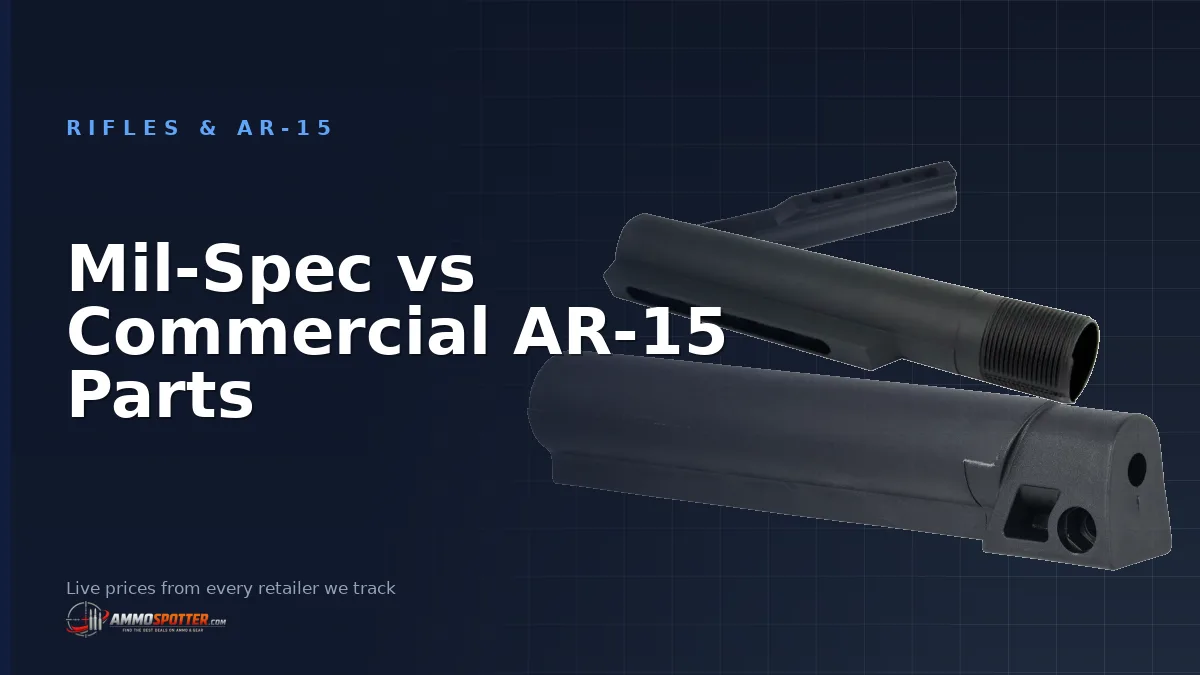
Mil-Spec vs Commercial AR-15 Parts: What the Label Actually Decides
Mil-spec means a tube size on the buffer tube and a steel and testing standard on the bolt carrier. Here's what fits, what it costs, and what to check.
37 results
Mil-spec means a tube size on the buffer tube and a steel and testing standard on the bolt carrier. Here's what fits, what it costs, and what to check.
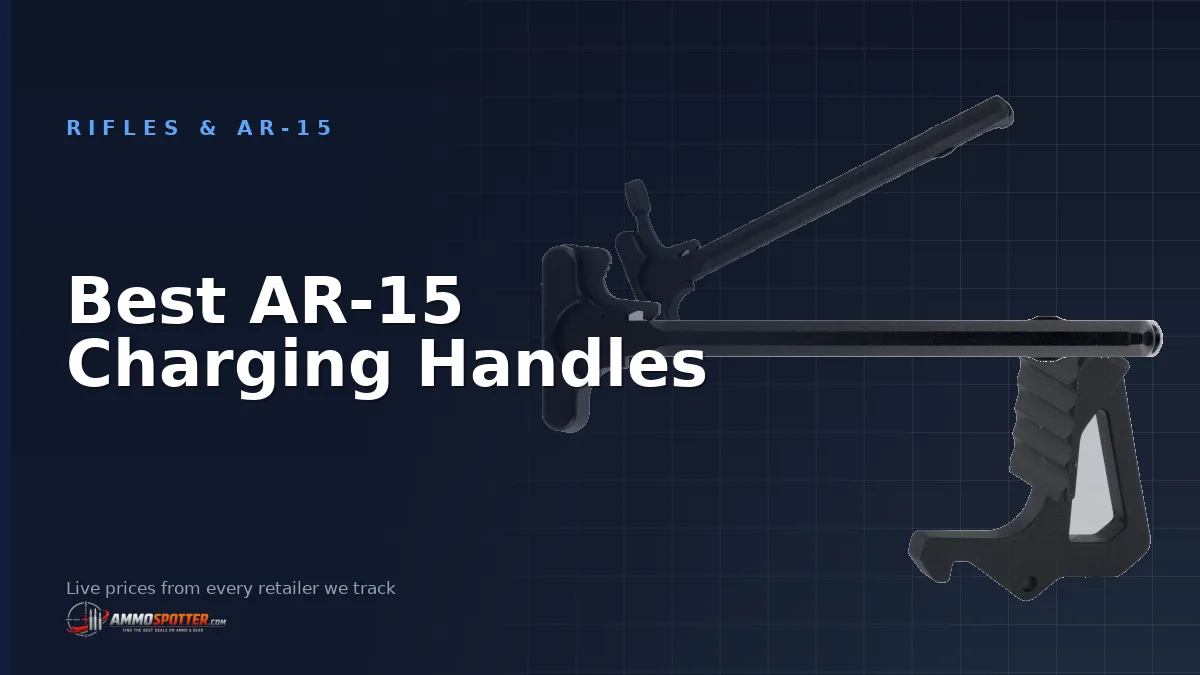
Most people want a bigger latch, and that costs $14.95 on its own. A typical handle is about $70, and ambidextrous costs about double. Read titles closely.
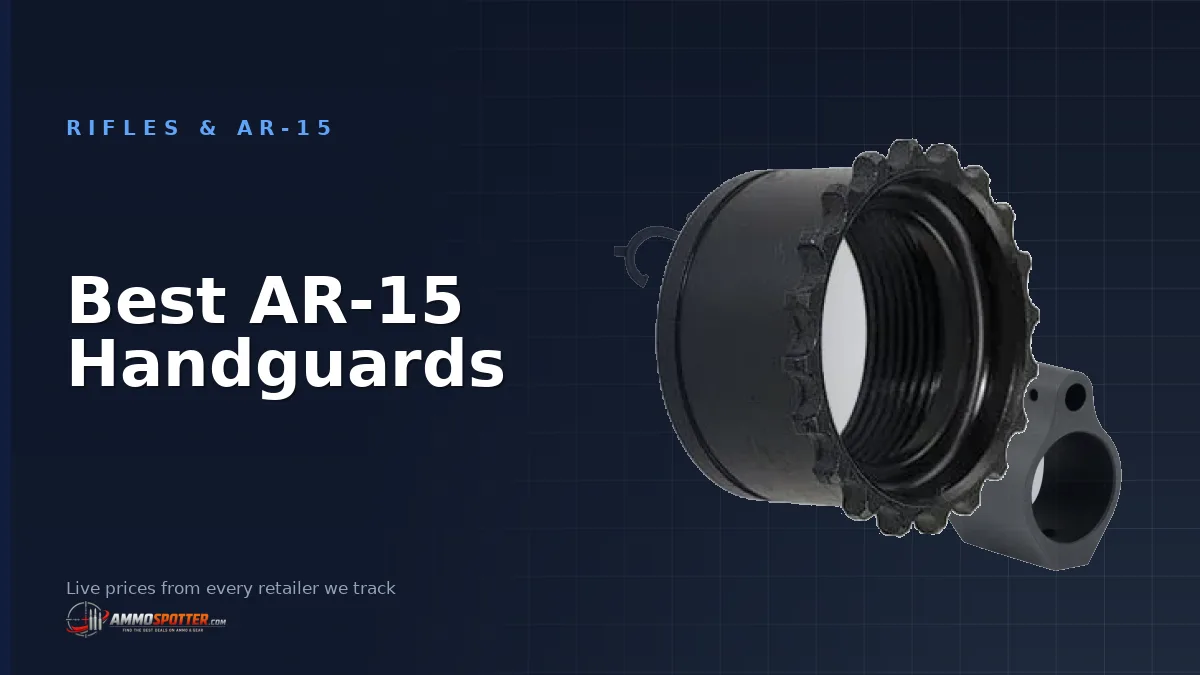
A typical AR-15 handguard costs about $165. Here's how to check fit, which install parts the listing leaves out, and why you should compare two stores and buy now.
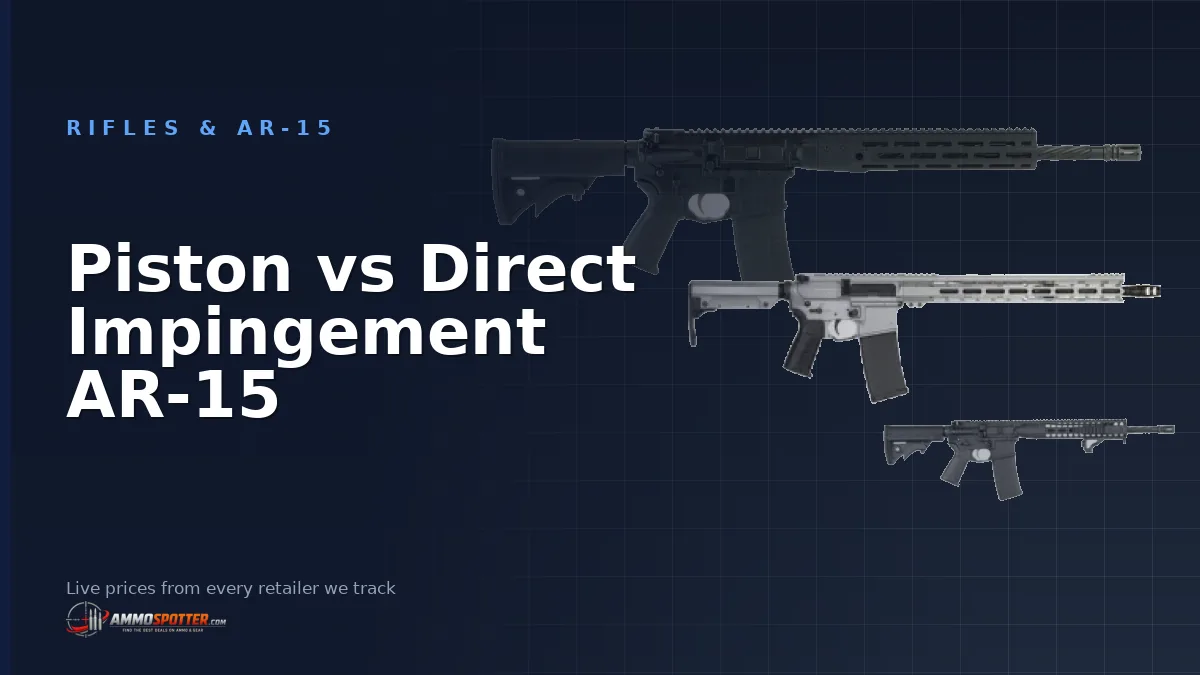
Piston ARs run cleaner but cost about $400 to $650 more from the same maker, and spare parts are hard to find. Here's why DI makes sense for most buyers.
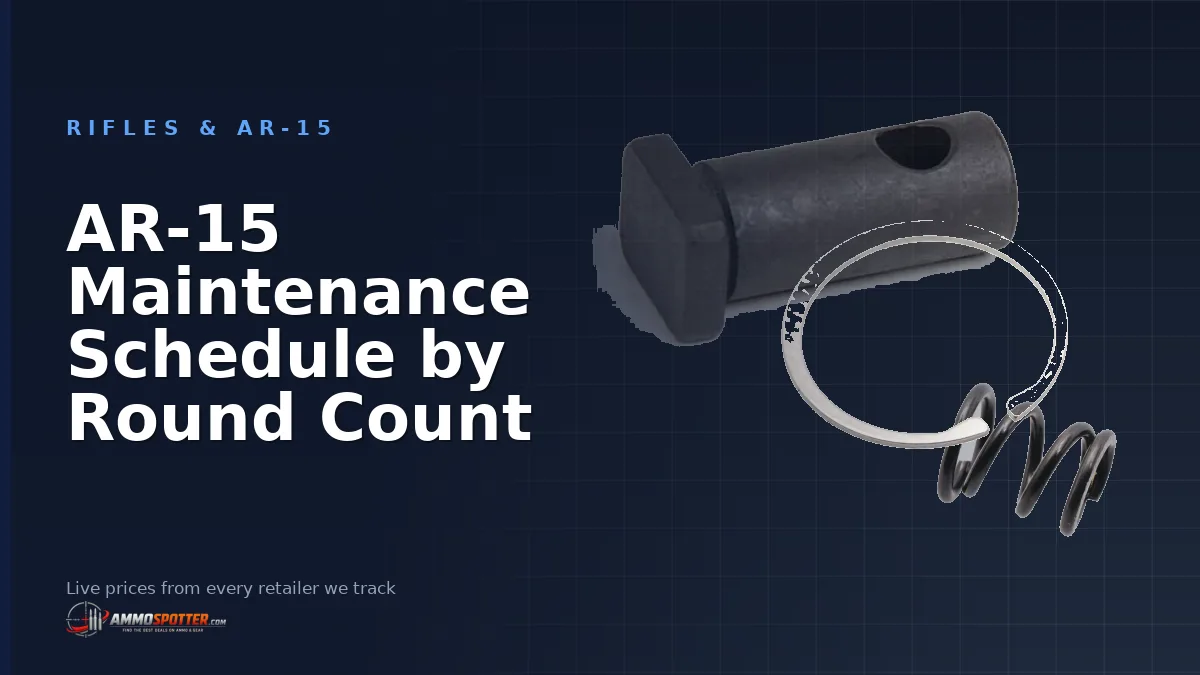
AR-15 parts don't come with a round-count lifespan. Here's what to inspect, what to replace, and why the bolt-side wear parts cost about $21 in total.
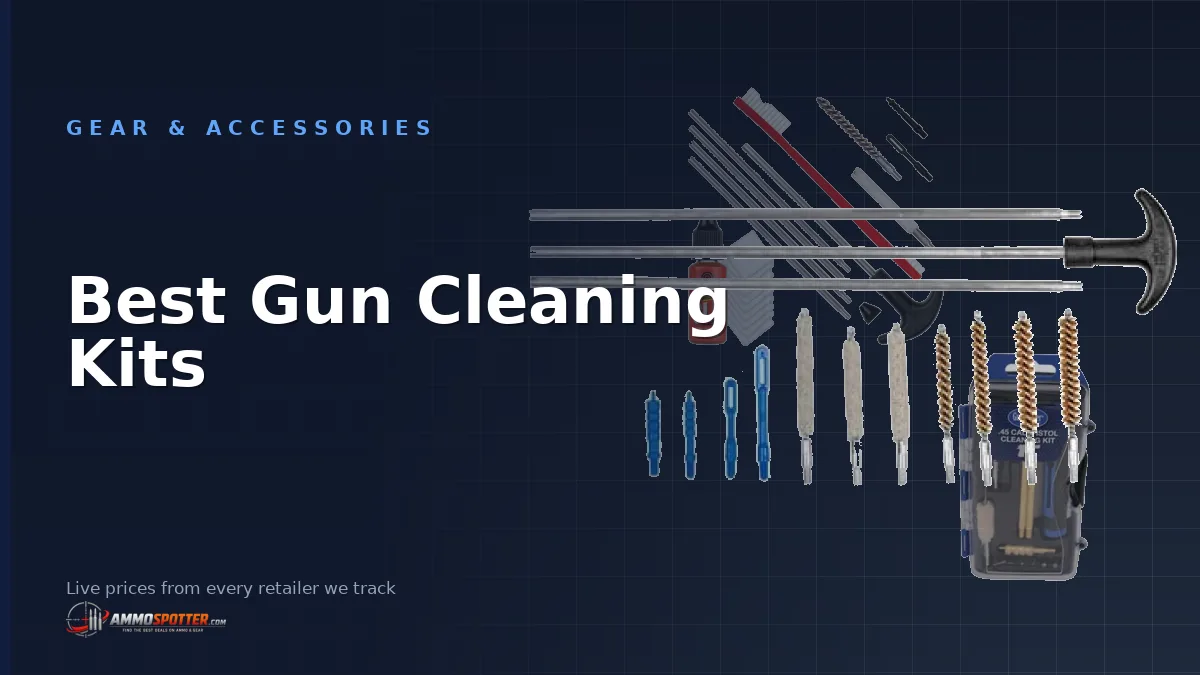
A typical cleaning kit costs about $30, and spending more buys little. Here's how to pick one for your gun and when to buy it.
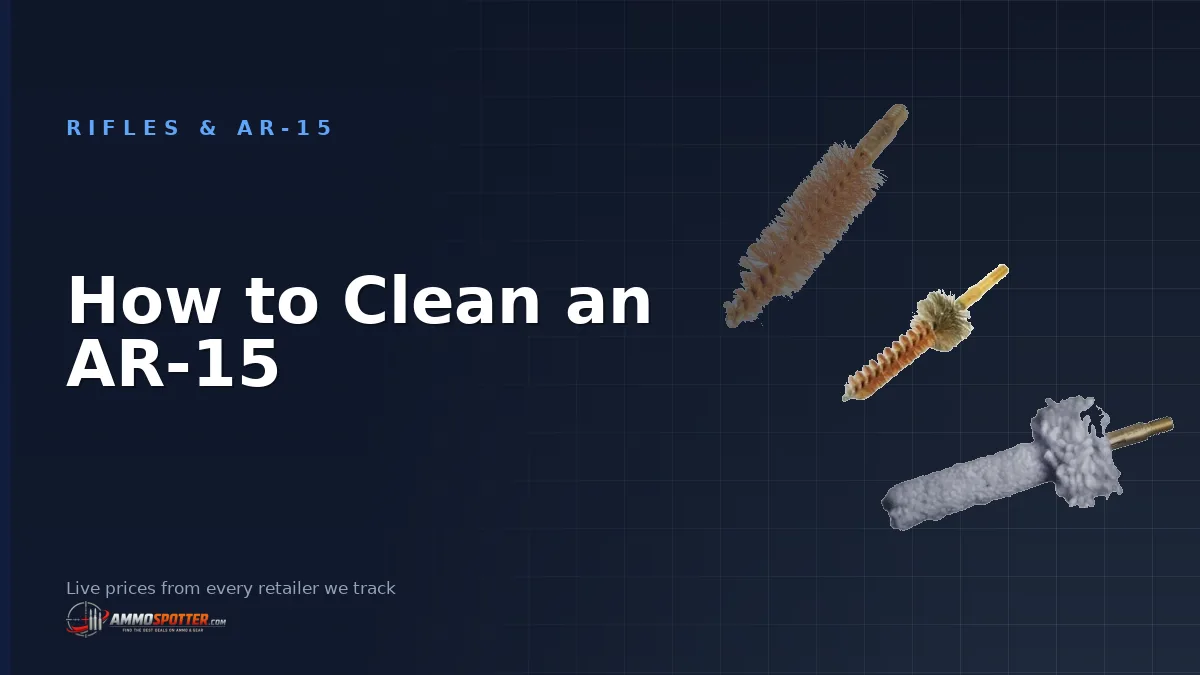
One cleaning session costs less than a round of .223. Here's how to field strip your AR, which parts need attention, and where to spend your money.
For most buyers a 16-inch barrel wins: cheapest of the common lengths and no paperwork. Here's what 14.5, 10.5 and 20-inch barrels really cost once you add parts and ammo.
Most good AR-15 drop-in triggers cost $140 to $199. Here's how prices break down, why the cheapest results are trigger guards, and what to check first.
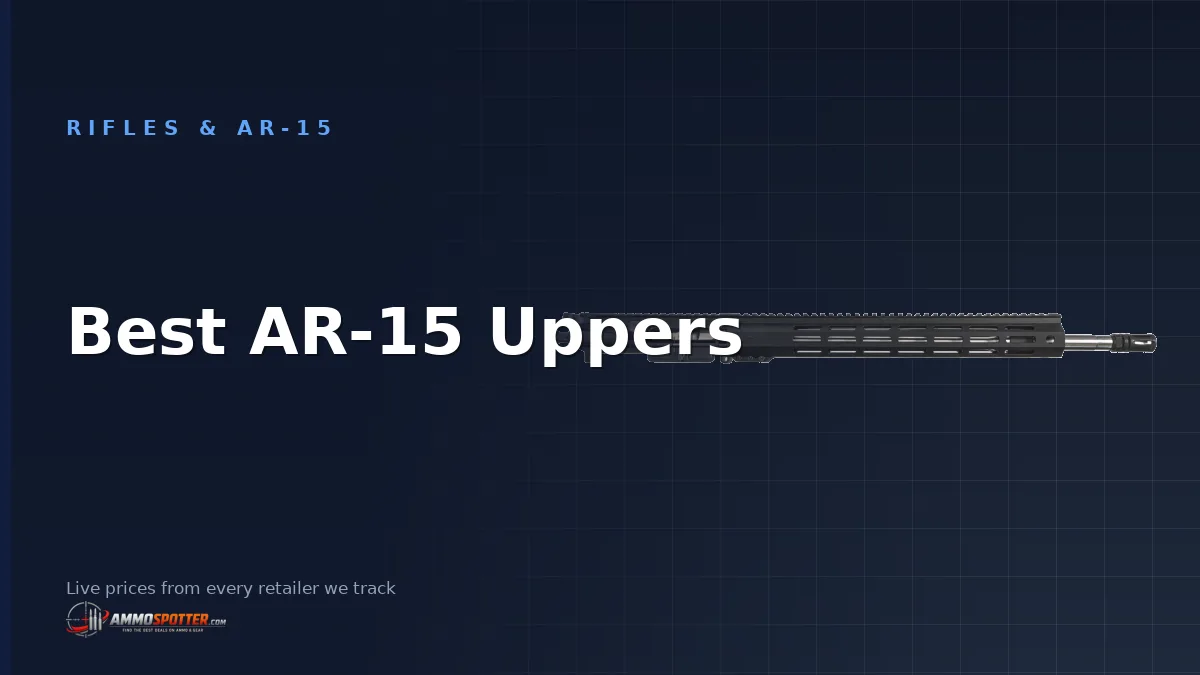
Complete AR-15 uppers come almost entirely from one company, so you can't shop around. Here's what to check, when to wait, and what the caliber costs you later.
The AK isn't the cheap rifle anymore. Here's how the AR-15 and AK-47 compare on price, magazines, optic mounts, parts and ammo.
Buy known-brand AR-15 mags in the $10 to $20 range, buy more than you think you need, and spend the rest on ammo. Here's what each price tier gets you.
A usable rifle red dot starts around $40, and most people should stop at $90 to $150. Here's what each tier gets you, and what to check on a pistol dot.
A red dot is faster and lighter. An LPVO lets you see and shoot farther. Once you count the mount they cost about the same, so pick by how and where you shoot.
Shorter barrels lose velocity, and the speed on the box came from a test barrel that isn't yours. Here's which calibers care most and how to buy ammo for a short barrel.
.300 Blackout costs more than 5.56, but not where you'd expect. Plain subsonic costs the same as supersonic. Expanding bullets and small boxes are the premium.
7.62x39 has the cheapest rounds, but 5.56 is cheaper and easier to find once you leave steel case. Here's how they compare on ammo, rifles and hunting.
Most AR owners never hit a twist rate limit, since cheap 55 and 62-grain ammo works in any barrel. Here's when twist matters and how to check yours.
Check your barrel's twist rate before you buy .223 match ammo. Here's which bullet weights it can handle and what each tier of match ammo costs.
Most guns never change price, and half of recent cuts just return to an old price. Here's how to spot a new low, and the saving you can get any day.
Gun prices moved under 1% from March to August 2026. Here's why picking the right store beats waiting for the right month, and what to do instead.
An online gun ships to a local dealer, not your door. Here's how the FFL transfer works step by step, how to compare the full cost, and what to ask first.
Building an AR-15 doesn't save money. Here's the live part-by-part math, the bolt carrier trap in cheap uppers, and why your ammo bill matters more.
You can get a complete 5.56 AR-15 under $700. Here's what each price band gets you, which cheap listings to skip, and why ammo matters more than the rifle.