Best .300 Blackout Ammo: Supersonic and Subsonic
The subsonic premium most buyers expect does not exist at the FMJ level. The premium that does exist is in expanding bullets and in packaging, and both show up clearly in the live price data.
.300 Blackout exists to solve one problem: fitting a heavy, slow bullet into an AR-15 that cycles reliably with nothing changed but the barrel. It does that well. What it does not do is cost the same as feeding the rifle 5.56, and the gap is larger and more structural than most buyers expect.
This guide covers what the cartridge actually costs per round across the retailers we track, where the money goes when you move from practice ammo to subsonic to hunting loads, and the one comparison that surprises almost everyone: subsonic FMJ is not the expensive part.
What does .300 Blackout cost per round right now?
Start with the whole market. This block is live and updates as retailers move prices:
.300 Blackout Price Index
Live · Sep 26, 2026When this guide was written, the floor was $0.700 per round and the lowest complete box on the board was $12.89. The market average sat at roughly double the floor, which tells you something important about this cartridge: the cheap end is thin, and most of what is actually on shelves costs considerably more than the headline number.
That shape is different from a high-volume cartridge. In 9mm or 5.56, the floor and the average are close together because the bulk tier is deep. In .300 Blackout, the floor is a handful of listings and the rest of the catalog sits above it.
Here is the value end, filtered to listings under ninety cents a round and ordered by how many retailers carry each one:
Sub-90-Cent .300 Blackout, Most Widely Stocked First
Prices updated Sep 26, 2026
Wolf Performance Ammo Polyformance Steel Case .300 AAC Blackout 145 Grain 20-Rounds
.300 Blackout · 145gr · 20 rds
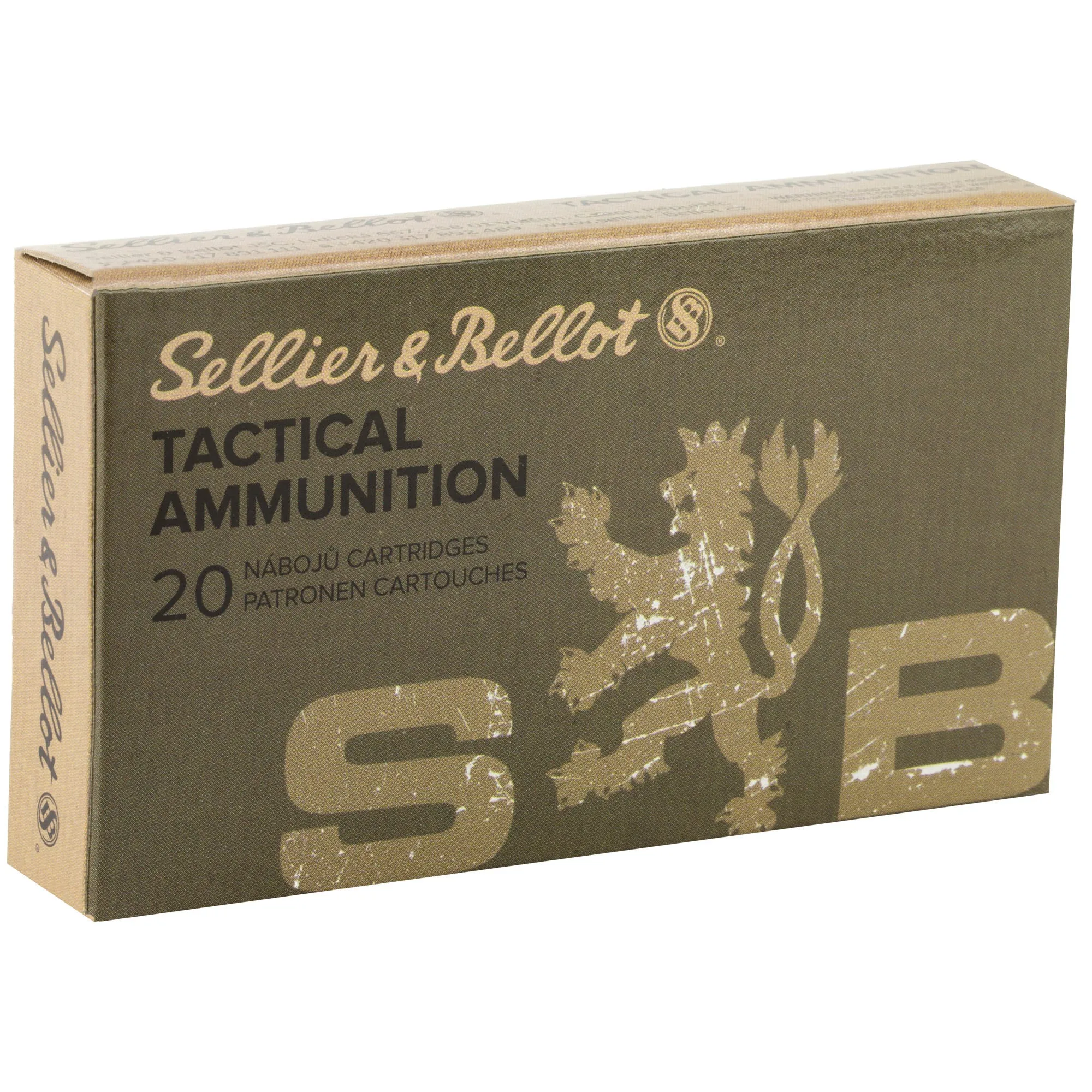
Sellier and Bellot Tactical Ammunition Brass .300 AAC Blackout 200 Grain 20-Rounds FMJ Subsonic
.300 Blackout · 200gr · 20 rds
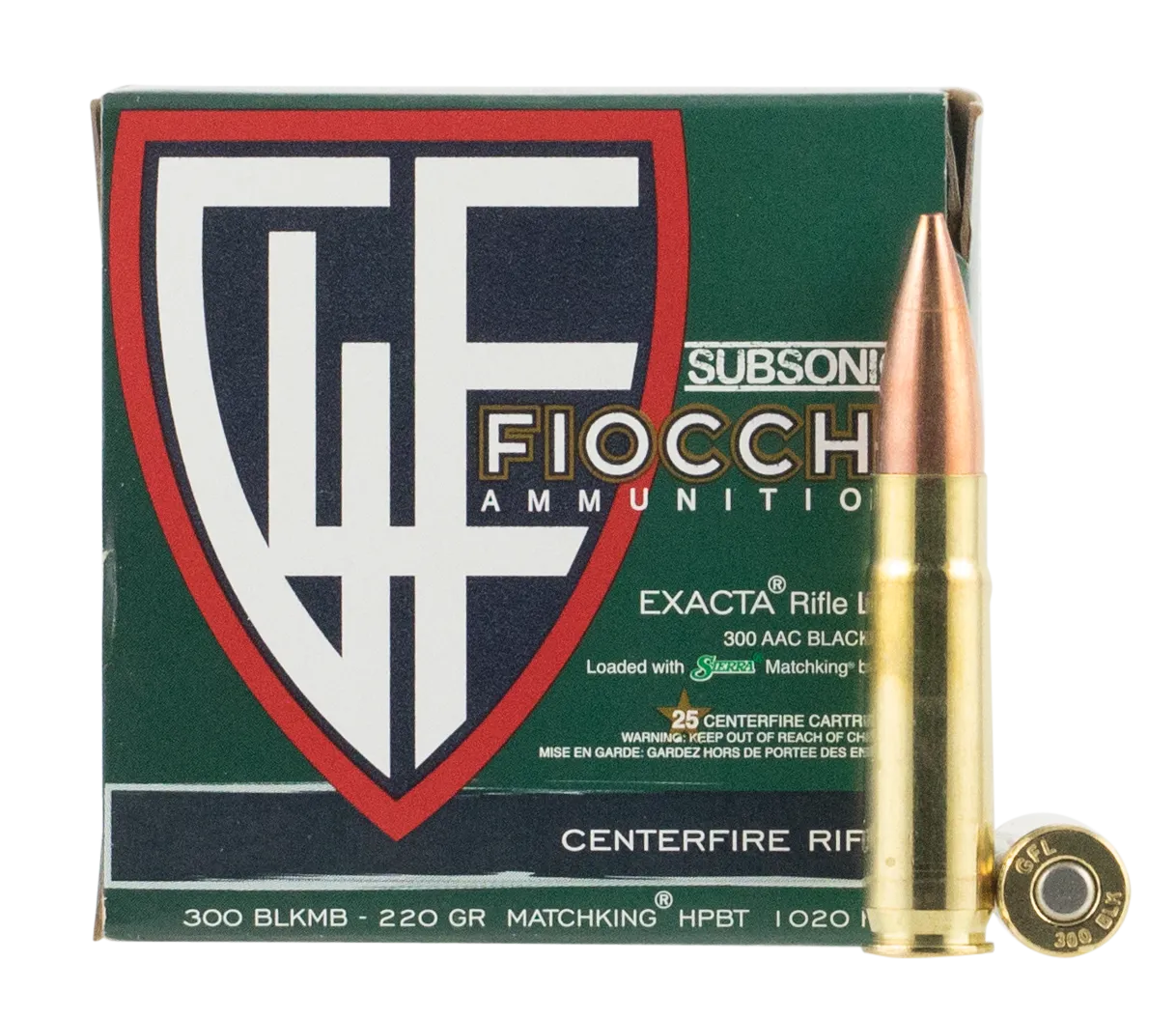
Fiocchi Extrema Subsonic Rifle Ammo Brass .300 AAC Blackout 220 Grain 25-Rounds BTHP
.300 Blackout · 220gr · 25 rds

MagTech Tactical/Training Brass .300 AAC Blackout 123-Grain 50-Rounds Full Metal Jacket
.300 Blackout · 123gr · 50 rds

MagTech First Defense Tactical .300 AAC Blackout 200-Grain 50-Rounds FMJS
.300 Blackout · 200gr · 50 rds

SELLIER BELLOT SB300BLKB 300 AAC Blackout 147gr Full Metal Jacket Ammunition | 20 Rounds
.300 Blackout · 147gr · 20 rds
Why does .300 Blackout cost more than 5.56?
Two reasons, and only one of them is about the cartridge itself.
The first is packaging. Look at how the two cartridges are sold. In .300 Blackout, the largest pack any retailer we track offers is 250 rounds, reached by a handful of listings, and the overwhelming majority of the catalog is 20-round boxes. In 5.56, 1,000-round cases are ordinary and 500-round packs are common. Bulk packaging is where per-round prices fall, and .300 Blackout barely has a bulk tier to fall into.
The second is volume. Fewer factories run it, fewer rounds are produced, and the cartridge has no military contract driving production the way 5.56 does. Our piece on why ammo prices move covers how production volume and component demand set the floor for any cartridge.
Here is 5.56 for direct comparison, live:
5.56x45mm NATO Price Index
Live · Sep 26, 2026Put the two blocks side by side and the decision gets concrete. If you shoot a few hundred rounds a year, the difference is a rounding error. If you train seriously, it is not — see how many rounds it takes to get good for what realistic round counts look like. We break down the ballistic side of the same choice in 5.56 vs .300 Blackout, and the 5.56 loads themselves in our 5.56 and .223 guide.
What is the best supersonic .300 Blackout for practice?
Supersonic .300 Blackout is the cartridge doing its least interesting job. A 110- to 125-grain bullet leaves the muzzle fast, and you are paying a premium over 5.56 for ballistics that, past a hundred yards or so, 5.56 does better. Most people shooting supersonic .300 Blackout are doing it because that is what the rifle is chambered in, and they want the cheapest thing that runs.
These are the practice loads worth knowing, on live prices:
Supersonic Practice Loads

SELLIER BELLOT 300 AAC Blackout 124gr FMJ Brass Rifle Ammunition | 20 Rounds
Sellier & Bellot's 124-grain brass-cased FMJ. A conventional supersonic practice load sitting at the .300 Blackout floor per round, in the 20-round box that dominates this cartridge.
MagTech Tactical/Training Brass .300 AAC Blackout 123-Grain 50-Rounds Full Metal Jacket
Magtech's Tactical/Training 123-grain FMJ in a 50-round box, listed by more than one retailer. More vendors on a listing means a better chance the price holds when one of them sells out.

ARMSCOR Precision 300 AAC Blackout 147gr Full Metal Jacket Ammunition | 100 Rounds
Armscor Precision 147-grain FMJ in a 100-round pack. One of the few .300 Blackout listings above 60 rounds that is priced at the cartridge's floor rather than carrying a bulk-packaging markup.

PSA Guardsman .300 Blackout 125 Grain FMJ Bulk Ammo, 250Rds with Can
PSA Guardsman 125-grain FMJ, 250 rounds in a can. Two hundred and fifty is the largest .300 Blackout pack any retailer we track sells, so this is as close to a bulk case as the cartridge gets.
Wolf Performance Ammo Polyformance Steel Case .300 AAC Blackout 145 Grain 20-Rounds
Wolf Polyformance 145-grain in a steel case. It carries the lowest box price in our .300 Blackout index. Steel cases are not reloadable and some ranges ban them, so check both before buying in quantity.
Two things to weigh. Steel-cased ammunition carries the lowest box price in this cartridge, but steel cases are not reloadable and a fair number of indoor ranges refuse them — worth confirming before you buy a stack. And the 250-round cans are convenient rather than cheap: in this cartridge, buying the biggest pack does not reliably buy you the lowest cost per round, which is the opposite of how 5.56 and 9mm behave.
Cost Per Round Calculator
The only number that matters when comparing ammo. Shipping included.
Does subsonic .300 Blackout actually cost more?
This is where the cartridge defies expectation.
The received wisdom is that subsonic ammunition is specialty ammunition and priced like it. In .300 Blackout, at the plain FMJ level, that is simply not true. When this guide's data was pulled, Sellier & Bellot's 200-grain subsonic FMJ and the same company's 124-grain supersonic FMJ were both listed at $13.99 for 20 rounds — identical box price, identical cost per round. The subsonic load uses more lead and less powder. Those roughly cancel.
Subsonic FMJ and Suppressor-Marketed Loads

SELLIER BELLOT SB300BLKSUBA 300 AAC Blackout 200gr Full Metal Jacket Subsonic Ammunition | 20 Rounds
Sellier & Bellot's 200-grain FMJ, sold explicitly as subsonic, at the same box price and same cost per round as the company's 124-grain supersonic load. This is the single clearest proof that subsonic FMJ carries no inherent premium.
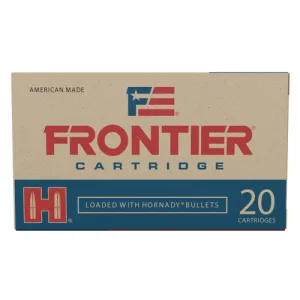
HORNADY 300 Blackout 208Gr FMJ Subsonic Frontier Ammo 20rd
Hornady Frontier 208-grain FMJ subsonic. A heavier bullet buys more margin under the sound barrier from a short barrel, and this one is priced with the plain practice ammo rather than the specialty loads.

MAGTECH 300 AAC Blackout Subsonic 200Gr FMJ 50rd
Magtech's 200-grain subsonic FMJ in a 50-round box. Useful if you are testing a suppressed host and want more than 20 rounds of one load to judge cycling.

PSA Mixtape .300 Blackout 220 Grain TMJ Bulk Ammo, 250Rds with Can
PSA Mixtape 220-grain TMJ, 250 rounds. A total metal jacket encloses the bullet base, which means less vaporised lead blown back through a sealed suppressor.

Winchester Super Suppressed Bulk .300 AAC Blackout 200 Grain 125-Rounds OT
Winchester Super Suppressed 200-grain, in a 125-round pack carried by more than one retailer. A suppressor-specific line at a price much closer to plain subsonic FMJ than to the expanding loads below.
Even the lines named explicitly for suppressor use sit much closer to plain practice ammo than to the specialty tier below. If your goal is quiet plinking through a can, the cost objection mostly evaporates.
What you are not getting at this price is terminal performance. A 200-grain FMJ travelling under the sound barrier is a slow, heavy full metal jacket. It punches holes. That is the correct load for practice and for keeping a suppressed rifle fed, and the wrong one for anything you need a bullet to do on arrival.
Which subsonic loads are built to expand?
A hollow point that opens reliably at 2,700 FPS often will not open at all at 1,000 FPS. There is simply not enough energy to drive the expansion. This is the engineering problem that separates the cheap subsonic FMJ above from the loads below, and it is what you are paying for:
Expanding and Purpose-Built Subsonic Loads
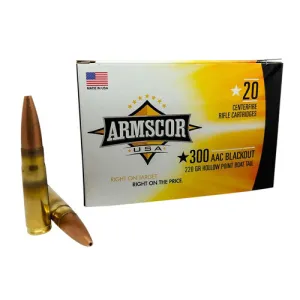
ARMSCOR 300 AAC Blackout 220gr Hollow Point Boat Tail Ammunition | 20 Rounds
Armscor's 220-grain hollow point boat tail. The least expensive way into an expanding subsonic bullet in our .300 Blackout listings, though it is a conventional HPBT rather than a purpose-built low-velocity design.

Sig Sauer Subsonic .300 AAC Blackout 220 Grain 20-Rounds OTM
Sig Sauer's 220-grain subsonic OTM, stocked by more than one retailer. Open tip match bullets are built for accuracy, not for expansion — do not assume a hollow-looking tip means terminal performance.
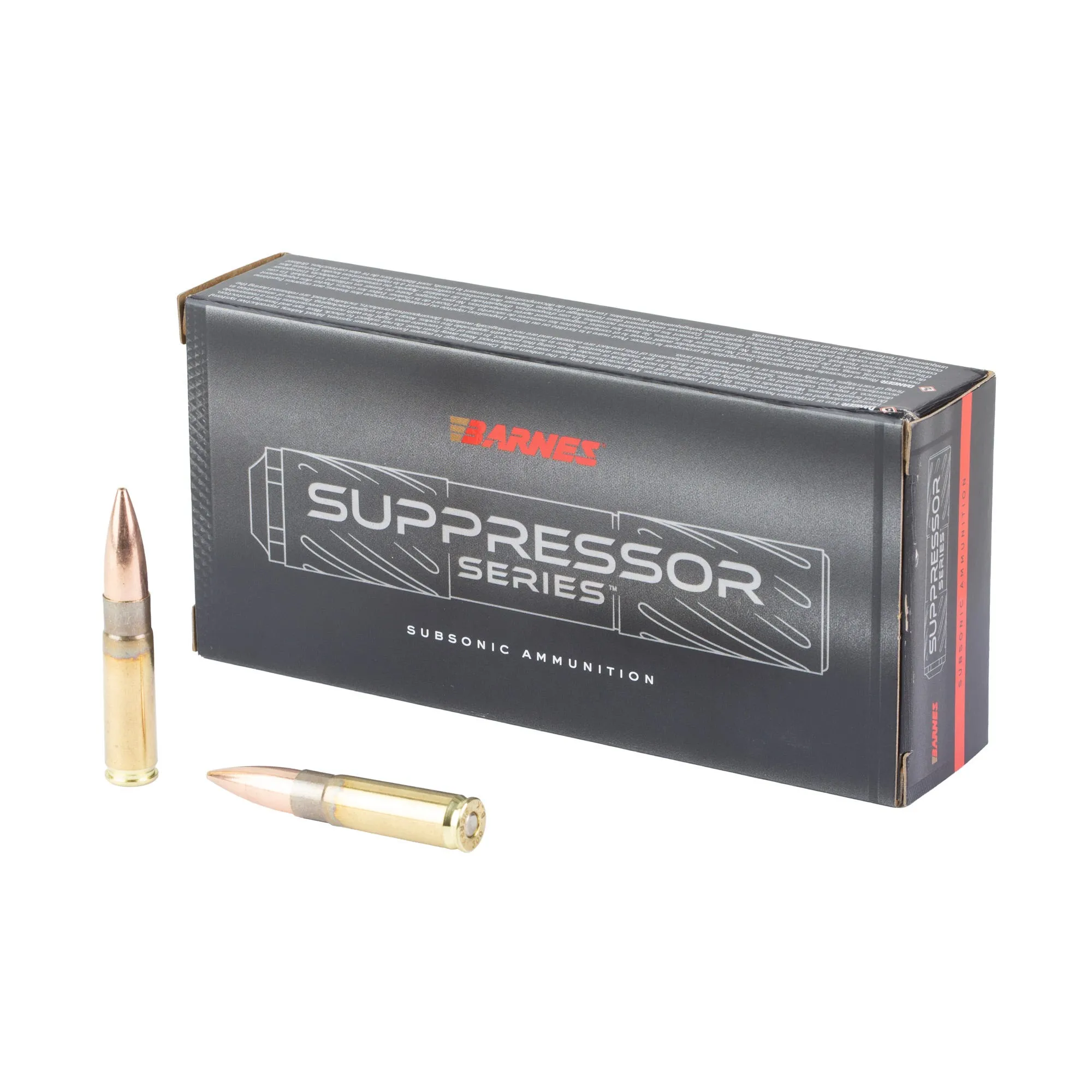
Barnes Bullets Suppressor Optimized Brass .300 AAC Blackout 220 Grain 20-Rounds SMK
Barnes Suppressor Optimized 220-grain on a Sierra MatchKing. Sold as a load tuned for suppressed use, which in practice means consistent velocity well under the barrier.
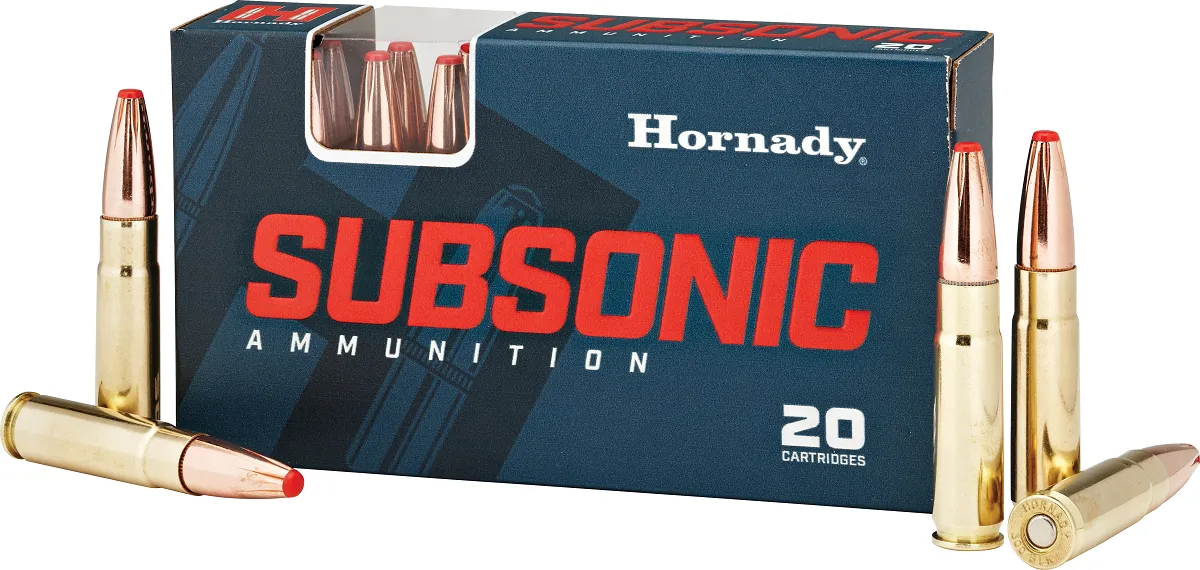
Hornady Subsonic Brass .300 AAC Blackout 190 Grain 20-Rounds SubX
Hornady Subsonic 190-grain SubX. The bullet uses a polymer tip driven into the cavity to force expansion at velocities where a conventional hollow point often will not open. Priced accordingly.
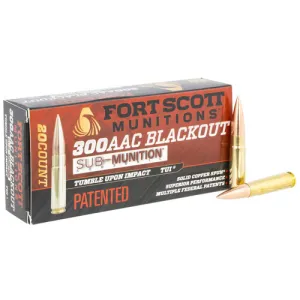
FORT SCOTT MUNITIONS 300 Blackout 190Gr Subsonic TUI Rifle Ammo 20rd
Fort Scott's 190-grain subsonic TUI, a machined solid rather than a jacketed lead bullet. A different terminal approach at the top of the subsonic price range.
Note the trap in the middle of this group. Open tip match bullets look like hollow points and are not. The opening is a by-product of how a match bullet is made, and those loads are designed for accuracy, not expansion. Loads like Hornady's SubX use a mechanism — in that case a polymer tip driven back into the cavity — specifically to force expansion at low velocity. Solid-copper designs take a different route to the same goal.
We do not run gel tests or chronograph work, and we will not publish numbers we did not generate. How we rank ammunition sets out exactly what we will and will not claim. For terminal performance evidence, go to published testing from independent testers and the manufacturers themselves — and note that most of it is conducted at supersonic velocities, so subsonic-specific data is thinner than you would like.
What should you hunt with?
For hunting inside the ranges .300 Blackout is realistically good for, most people are better served by a supersonic expanding bullet than by a subsonic one. A 110- to 125-grain bullet at full velocity has energy to work with; a subsonic bullet has to do everything with mass and bullet design alone.
Supersonic Expanding and Hunting Loads
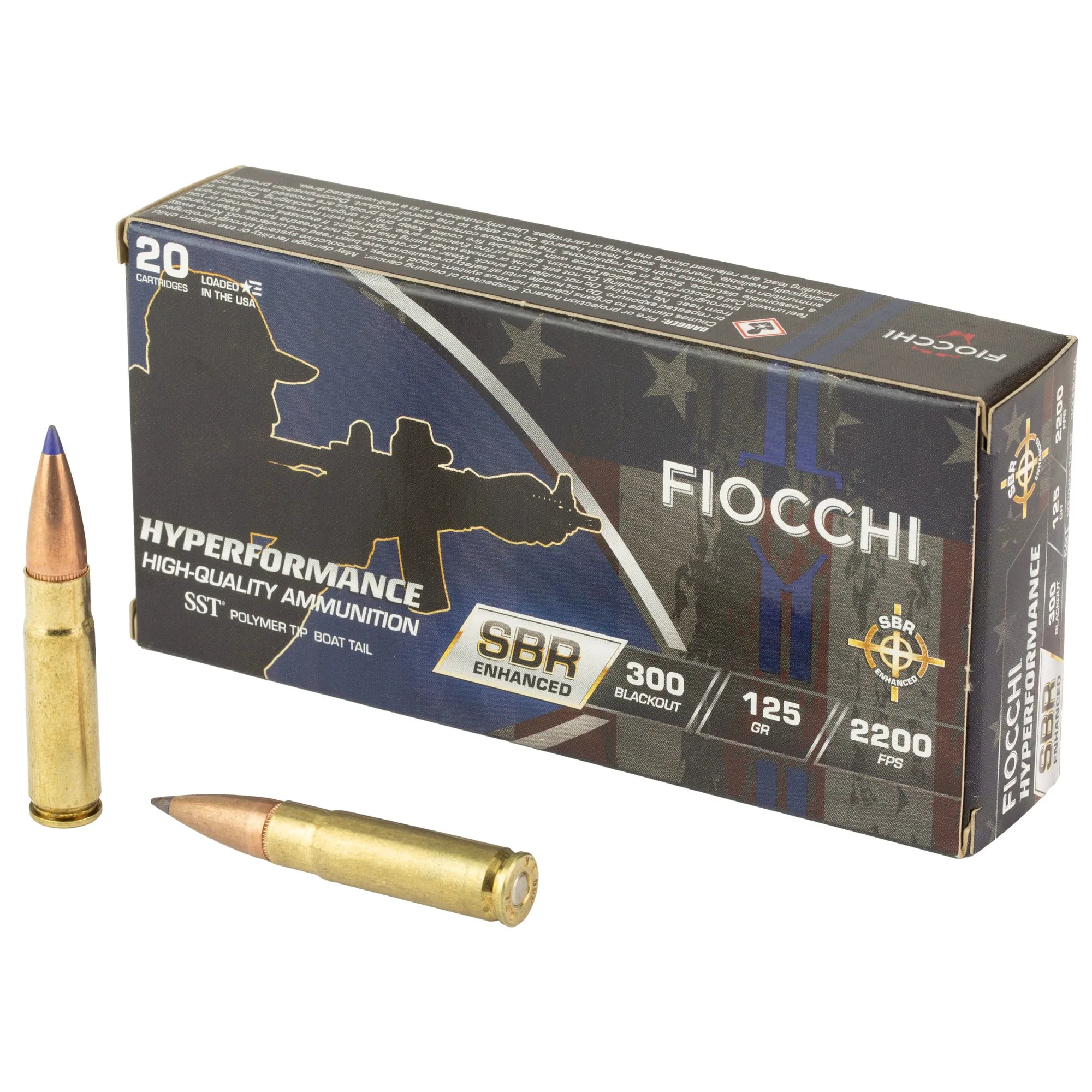
Fiocchi Hyperformance SBR Enhanced Brass .300 AAC Blackout 125 Grain 20-Rounds SST
Fiocchi Hyperformance SBR 125-grain SST. A conventional polymer-tipped hunting bullet loaded supersonic, aimed at short-barrelled hosts.
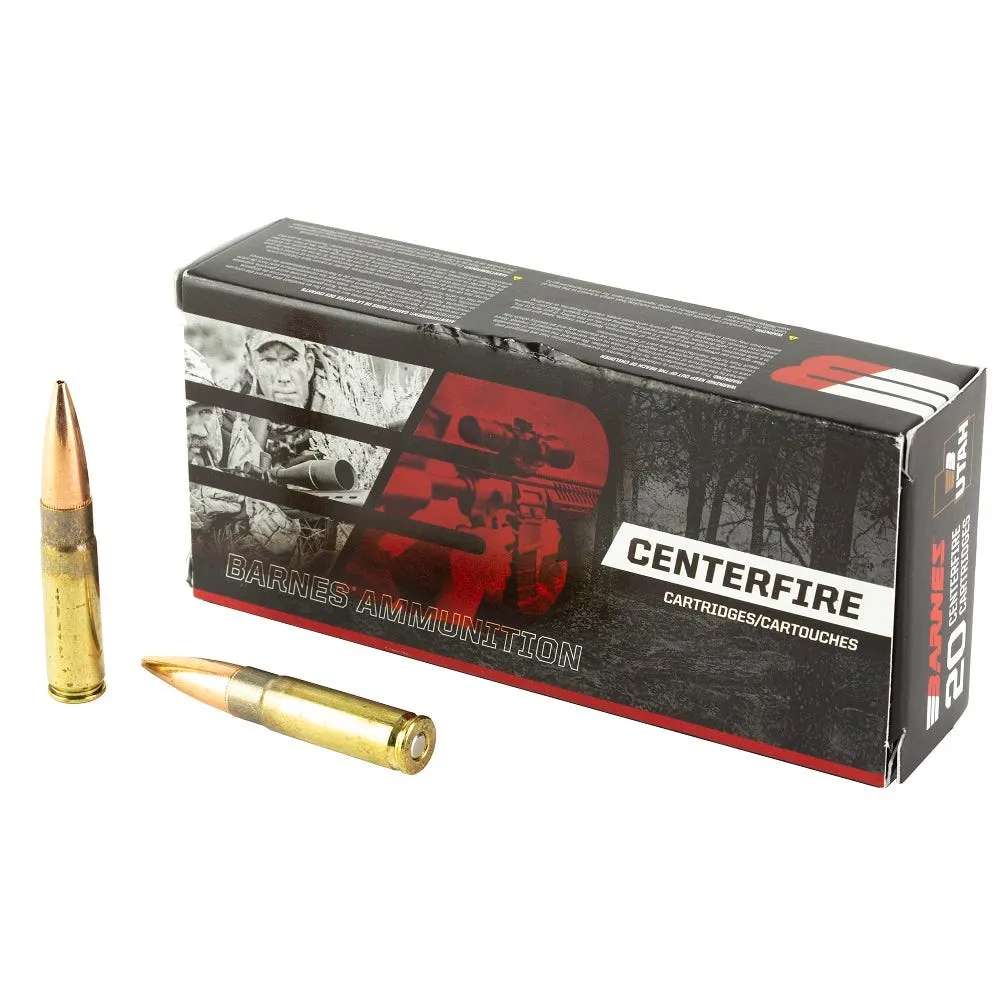
Barnes Ammunition Brass .300 AAC Blackout 120-Grains 20-Rounds JHPFB
Barnes 120-grain JHP flat base, listed by more than one retailer. Monolithic copper bullets are the usual answer where lead-free hunting ammunition is required.

Nosler Ballistic Tip .300 AAC Blackout 125 Grain 20-Rounds Ballistic Tip
Nosler's 125-grain Ballistic Tip load. Nosler's cheapest .300 Blackout row in our index is a bag of unprimed brass, not ammunition — this is the company's actual loaded supersonic hunting offering.
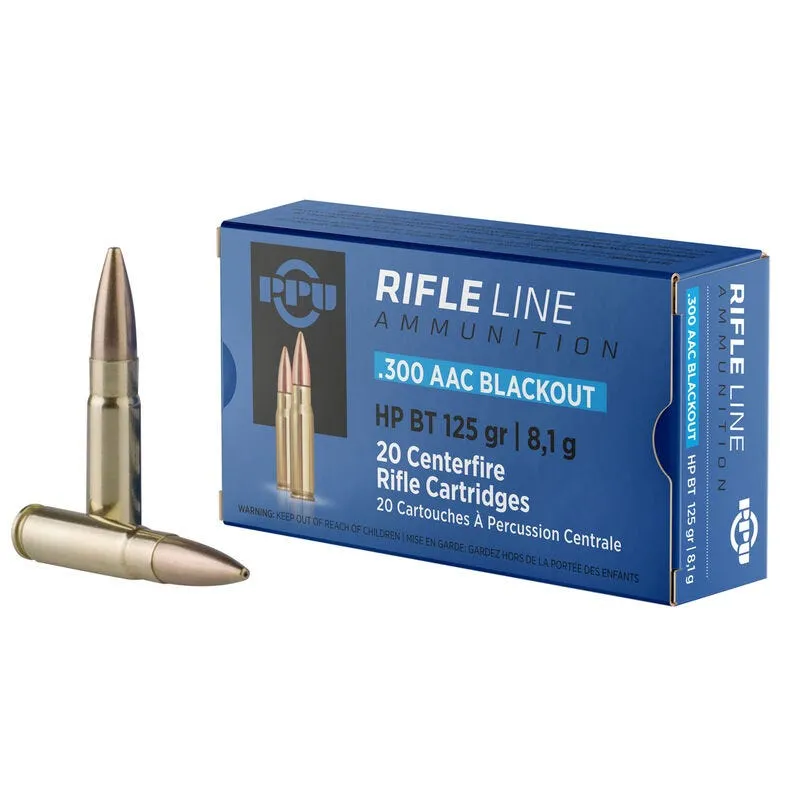
PPU Standard Rifle Ammunition Brass .300 Blackout 125-Grain 20-Rounds HPBT
PPU 125-grain HPBT, carried by more than one retailer. The cheapest supersonic expanding bullet on this page, which makes it a reasonable load for testing zero before you spend on premium hunting ammo.
Hunting regulations are the genuinely variable part here. Minimum calibers, minimum energy, lead-free requirements and whether you may hunt with a suppressor at all are all set at state level, and they change. Check your current state rules before buying — nothing on this page is a substitute for that.
Does .300 Blackout make sense without a suppressor?
Honestly, less than its popularity suggests. The cartridge's defining trick is cycling heavy subsonic bullets in an unmodified AR-15, and a subsonic bullet without a suppressor is just a slow bullet with a loud muzzle blast. Supersonic .300 Blackout, meanwhile, costs more per round than 5.56 and gives up performance at distance.
If you are heading toward a can, our suppressor buying guide walks through the decision before you spend the money, and best ammo for suppressed rifles covers the ammunition side across cartridges. You can browse the suppressors we track alongside the ammo. Suppressors are regulated federally under the National Firearms Act — paperwork, a tax stamp, a wait, and a dealer transfer — and separately by state law, which varies and changes. Verify your own state's current position before you commit. If a rifle is part of the plan too, how to buy a gun online explains how FFL transfers work.
If quiet is the actual goal and cost is the constraint, do not overlook rimfire. Subsonic .22 LR is quieter than anything in this article and costs a fraction as much; our .22 LR guide covers it.
How should you choose?
- Practice, supersonic host: buy on cost per round alone and accept 20-round boxes as normal. Confirm your range allows steel cases before chasing the lowest box price.
- Suppressed plinking: subsonic FMJ, 200 to 220 grain. It costs no more than supersonic practice ammo, so there is no reason to compromise.
- Defense or hunting, subsonic: a bullet engineered to expand at low velocity. Skip open tip match unless you want accuracy rather than terminal effect.
- Hunting, supersonic: a polymer-tipped or monolithic copper bullet in the 110 to 125 grain range, inside realistic distances.
- Any of the above: buy one box, confirm it cycles and holds zero in your host, and only then buy the 250-round can.
Ordering by the can? Check ammo shipping restrictions for your address first — several states and municipalities limit what ships directly.
Prices in this cartridge move on thin supply, so a good listing does not always last. Set an alert and we will email you when .300 Blackout drops:
Get alerted when .300 Blackout price drops hit.
We watch every listing and email you the moment the cost per round drops.
Set Up a Free Price AlertEvery .300 Blackout listing we track, sorted by cost per round, is on the .300 Blackout ammo page.
AmmoSpotter earns a commission when you buy through links on this page. It never changes what you pay, and it never decides what we recommend — our picks are ranked on live cost-per-round data pulled from every retailer we track. Full disclosure.
Frequently Asked Questions
Is subsonic .300 Blackout more expensive than supersonic?+
Can you buy .300 Blackout in bulk?+
Do you need a suppressor for .300 Blackout to be worth it?+
What grain .300 Blackout should I buy?+
Will a .300 Blackout round chamber in a 5.56 rifle?+
Is subsonic .300 Blackout good for hunting?+

About the author
AmmoSpotter Research Desk
Price & Ballistics Research
The AmmoSpotter Research Desk analyzes live retail pricing across every ammunition, firearm and accessory listing we track. Recommendations here are ranked against real cost-per-round data pulled daily from the retailers we monitor - not against manufacturer marketing copy.
- ✓Tracks 180,000+ live product listings across 6 retailer feeds
- ✓Records price history on every listing, every day
- ✓Cost-per-round methodology applied to all ammunition rankings
- ✓No product is ranked without a verifiable in-stock retail price
- ✓Affiliate relationships never influence rankings
Related Guides

5.56 vs .300 Blackout: Which One Is Actually Worth Feeding?
- .300 Blackout costs materially more per round than 5.56, every day, in every brand we track. That gap is structural, not a temporary spike. - Both cartridges run in the same lower, the same bolt carrier group and th...

Best Ammo for Suppressed Rifles 2026: Subsonic Loads Ranked on Live Prices
- A suppressor silences muzzle blast. It does nothing about a supersonic bullet's crack. The ammunition, not the can, decides how quiet the rifle actually is. - .300 Blackout in 200–220 grain is the only mainstream ce...

Suppressor Buying Guide: What You Actually Need to Know First
- The suppressor is one of four costs. The others are the federal transfer and its tax, the dealer's transfer fee, and the mount. - Buy for the host you actually shoot most, not the host you imagine shooting. A rimfir...

Best 5.56 & .223 Ammo 2026: Practice, Defense and Precision
5.56x45mm NATO and .223 Remington are the most-purchased rifle cartridges in America, and the most confusing to buy. The same rifle will accept ammunition ranging from bulk steel-cased plinking loads to match ammuniti...
5.56 vs 7.62x39: Which Costs Less to Shoot, and Where That Flips
The usual version of this argument is about ballistics. The useful version is about what you will actually spend, and on that question both cartridges have a claim — depending entirely on which shelf you buy from. 7.6...
AR-15 Twist Rate and Ammo Selection: What Your Barrel Rules Out
Twist rate is the one barrel spec that decides what you are allowed to buy. Not what you should buy, or what shoots best — what will physically fly straight out of your rifle. A bullet your barrel cannot spin fast eno...