Lead-Free Hunting Ammo: What Is Required Where
Non-lead requirements are a patchwork of federal, state and property-level rules — and lead-free ammunition is under one percent of the live catalog we track. Here is how to find it and what you pay.
Where Lead-Free Ammunition Is Actually Required
There is no single national lead ammunition ban, and anyone who tells you otherwise is describing one jurisdiction as though it were the country. What exists is four overlapping layers:
Migratory waterfowl, federally. Non-toxic shot has been required for waterfowl hunting nationwide for decades. The list of approved non-toxic materials is published at the federal level and gets updated as new alloys are certified — steel, bismuth and various tungsten compounds are the commercially common ones.
Federal property rules. National Wildlife Refuges and other federal units frequently carry conditions beyond the state regulation for the surrounding area, and those conditions can apply to species that have no non-toxic requirement elsewhere.
State programs and geographic zones. Several states regulate non-lead use for specific species, specific seasons, or defined geographic areas — scavenger-protection zones being the best known category. These are the rules most likely to have changed since you last checked.
Individual management areas and ranges. A single wildlife management area can require non-toxic shot for upland birds while the rest of the state does not. Separately, plenty of indoor ranges require lead-free or frangible ammunition as a facility policy — that is ventilation and cleanup economics, not law.
Lead-Free Is Under 1% of the Live Catalog — and That Number Is Misleading
Here is what our catalog actually looks like. Of more than 15,000 live, in-stock ammunition listings we track, roughly 130 carry "lead-free" or "lead free" in the product title. That is under one percent.
If you stopped there you would conclude the market barely exists. It does exist — it is just not labeled the way you would search for it.
Search the same catalog for bullet names instead and the picture changes:
| What you search | Live listings |
|---|---|
| "lead free" / "lead-free" | ~130 |
| Barnes TSX / TTSX | ~280 |
| Nosler E-Tip | ~60 |
| Federal Copper Impact | ~30 |
Those are snapshots of a catalog that updates daily, and they overlap only partially with the labeled set. The practical lesson is that lead-free hunting ammunition is marketed as a bullet, not as a compliance product. Manufacturers sell you the terminal performance story; the regulatory benefit is a footnote on the box.
What a Lead-Free Big-Game Load Costs Right Now
6.5 Creedmoor Price Index
Live · Oct 10, 2026That block is the whole 6.5 Creedmoor market — lead and non-lead together, because retail feeds do not carry a bullet-material field we could filter on. Use it as the baseline and compare.
Against that baseline, the lead-free listings we track in mainstream hunting calibers land in the premium band:
- 6.5 Creedmoor, 120-grain lead-free boat tail: $2.490 per round
- 6.5 PRC, 120-grain monolithic copper: $3.300 per round
- 7mm Remington Magnum, 150-grain monolithic copper: $3.625 per round
- .280 Remington, 140-grain monolithic copper: $3.420 per round
Those are live per-round figures from listings currently in stock. Set them next to the index above and the conclusion is uncomfortable but simple: going non-lead in a big-game rifle generally means shopping at or above your caliber's market average, not near its floor.
For most hunters that matters less than it sounds like it should. A big-game season is a handful of rounds fired at game and a box or two of confirmation shooting — not the volume where per-round price dominates. Our deer hunting ammo guide and the 6.5 Creedmoor guide both run the same arithmetic. Where non-lead cost genuinely bites is high-volume varmint shooting, which is also exactly where some of the strictest non-lead rules apply.
Lead-Free Loads Worth Knowing About

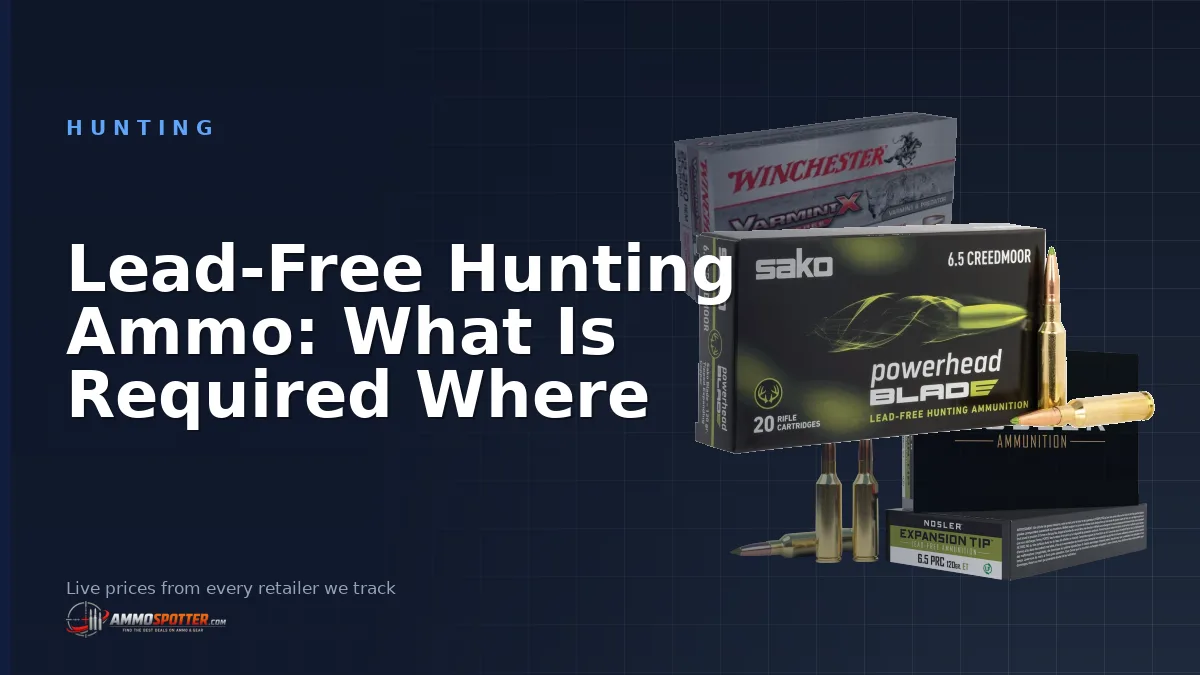
Sako Powerhead Blade 6.5 Creedmoor 120 gr LFBT 20rds Rifle Ammo for Precision Lead-Free and Target Shooting - JASPHB65CM120B
A 120-grain lead-free boat tail in 6.5 Creedmoor at $2.490 per round. This is the realistic entry point for a non-lead big-game load in a caliber with deep retail support: light for the caliber, monolithic construction, 20-round box. Treat it as a new load and re-zero — a copper bullet of the same nominal weight will not print where your lead load printed.
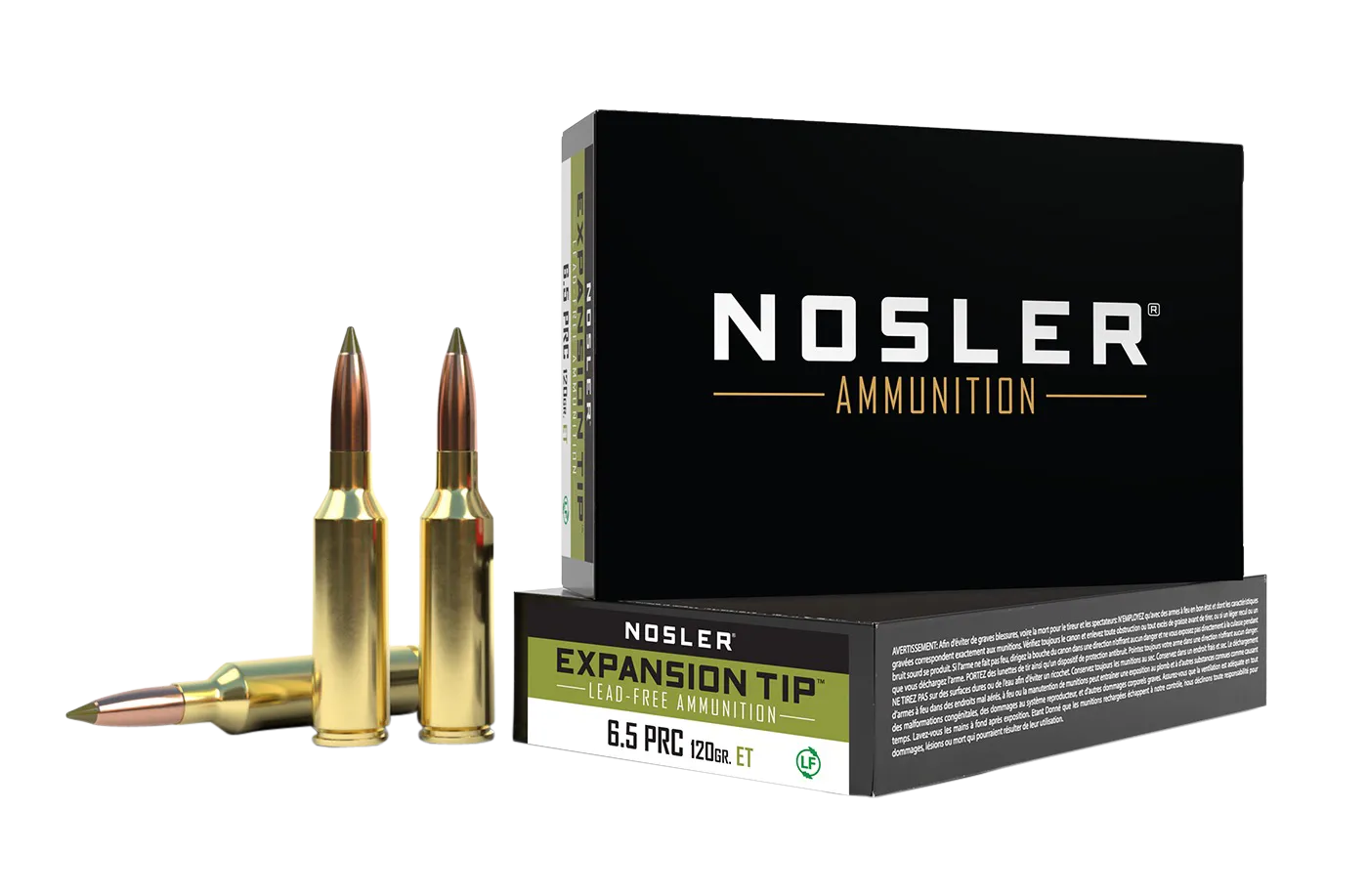
Nosler E-Tip Brass 6.5 PRC 120 Grain 20-Rounds Spitzer E-Tip Lead-Free
Nosler's E-Tip in 6.5 PRC, 120 grain, $3.300 per round. E-Tip is one of the handful of bullet lines that make up most of the lead-free rifle ammunition we track, and this is what the price band looks like for it: well into the premium half of any magnum caliber's index. Nosler lists E-Tip across a wide spread of cartridges, which matters if your rifle is not chambered in something common.

WINCHESTER AMMO 22-250 Varmint X 38Gr Lead-Free Polymer Tip 20rd
38-grain lead-free polymer tip in .22-250 at $1.550 per round. Varmint shooting is where non-lead rules bite first in several jurisdictions, because ground squirrel and prairie dog carcasses are exactly the scavenger-exposure pathway the regulations target. Light, fast, frangible-by-design projectiles are the normal answer here.
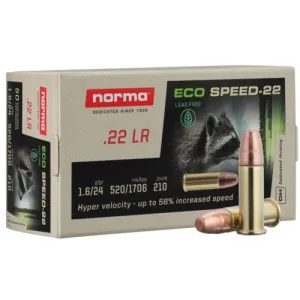
NORMA AMMO 22 LR 24Gr Lead Free Eco Speed 50rd
A 24-grain lead-free .22 LR at $0.140 per round. That lands below the .22 LR catalog average, which no other lead-free product in our index manages — though it is still more than twice the rimfire floor, because bulk lead .22 LR is the cheapest centerfire-or-rimfire ammunition that exists. It is also one of only two lead-free .22 LR listings we currently track, so availability is the real constraint, not price.
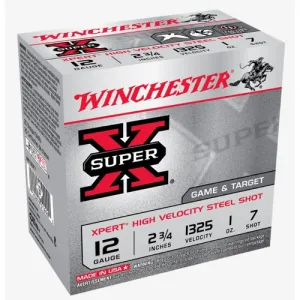
WINCHESTER AMMO 12Ga SuperX HV Steel Shot 2-3/4" 7 Shot 25rd
Plain steel shot in 12 gauge, 25 shells to the box. Steel is the oldest and by a wide margin the cheapest approved non-toxic shot material, and it is what most waterfowl hunters actually shoot. The trade-off is density: steel is lighter than lead for the same pellet size, which is why pattern and range expectations have to change with it.
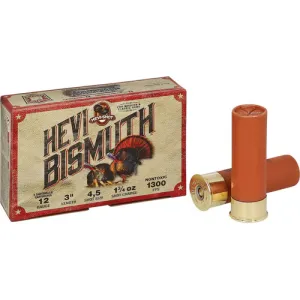
HEVI-SHOT 12Ga Hevi-Bismuth Turkey 3" 1-3/4oz #4 & #5 5rd
A bismuth turkey load in a five-shell box. Bismuth is denser than steel and safe in older barrels that manufacturers do not warrant for steel — which is the specific reason it exists. Check the per-shell price on the card rather than the box price before you commit: the dense non-toxic materials are sold in small boxes and the per-shell gap against steel is far wider than the sticker suggests.
Live 6.5 Creedmoor Prices (Lead and Non-Lead)
Prices updated Oct 10, 2026
Sellier and Bellot Rifle Ammo 6.5 Creedmoor 140 Grain 20 Rounds
6.5 Creedmoor · 140gr · 20 rds

SELLIER BELLOT SB65A Rifle 6.5 Creedmoor 140 gr Full Metal Jacket Boat Tail Ammunition | 20 Rounds
6.5 Creedmoor · 140gr · 20 rds

SELLIER BELLOT SB65C 6.5 Creedmoor 140gr Soft Point Ammunition | 20 Rounds
6.5 Creedmoor · 140gr · 20 rds

SELLIER BELLOT SB65B 6.5 Creedmoor 131gr Soft Point Ammunition | 20 Rounds
6.5 Creedmoor · 131gr · 20 rds

Sellier and Bellot Centerfire Rifle Brass 6.5 Creedmoor 131-Grain 20-Rounds SP
6.5 Creedmoor · 131gr · 20 rds

Sellier and Bellot Rifle Brass 6.5 Creedmoor 156 Grain 20-Rounds SP
6.5 Creedmoor · 156gr · 20 rds
Steel, Bismuth, Tungsten and TSS Are Not the Same Purchase
12 Gauge Price Index
Live · Oct 10, 2026Non-toxic shot is where the cost of compliance is most visible, because you shoot volume at birds. Here is what 12 gauge looks like in our catalog right now, by material:
| Material | 12 ga listings | Cheapest box |
|---|---|---|
| Steel | ~445 | $9.99 |
| Bismuth | ~68 | $18.99 |
| Tungsten | ~18 | $39.99 |
| TSS | ~58 | $42.49 |
Two things to take from that table. First, steel is not merely cheaper, it is the only non-toxic material with real catalog depth — hundreds of listings against dozens. Second, the box prices understate the gap badly, because steel is typically sold 25 shells to the box while dense non-toxic turkey and waterfowl loads commonly come in boxes of five or ten. On a per-shell basis the cheapest steel load we track sits at $0.400 per shell, while a bismuth turkey load in a five-shell box works out to $3.798 per shell — roughly nine times as much.
That is the real decision, and it is not purely financial:
- Steel is the volume answer. It is less dense than lead, so pattern and effective range expectations change, and manufacturers of older barrels frequently do not warrant them for steel.
- Bismuth is denser than steel and generally considered safe in barrels not rated for it, which is the specific reason it exists and the specific reason people pay for it.
- Tungsten alloys and TSS are denser than lead, which is why they command the top of the price band and why they dominate premium turkey loads.
If you want the general framework for shot size, payload and choke before you spend $40 a box, shotgun shot size and choke and birdshot vs buckshot vs slug cover it, and our shotgun shell price index tracks where the whole category sits.
Live 12 Gauge Prices (All Shot Materials)
Prices updated Oct 10, 2026
Estate Super Sport Competition Target Load 12 GA #7.5-Shot 1oz 200-Rounds 2.75
12 Gauge · 200 rds

WINCHESTER AMMO 12Ga RE 2-3/4 LS 1-1/8 7-1/2 USA Valor 25rd
12 Gauge · 25 rds

NORMA AMMO 12Ga Claystrike 2.75" #8 Shot 7/8oz 25rd
12 Gauge · 25 rds

NORMA AMMO 12Ga Claystrike 2.75" #8 Shot 1oz 25rd
12 Gauge · 25 rds

NORMA AMMO 12Ga Claystrike 2.75" #7.5 Shot 7/8oz 25rd
12 Gauge · 25 rds

WINCHESTER AMMO 12Ga RE 2-3/4 LS 1-1/8 8 USA Valor 25rd
12 Gauge · 25 rds
Lead-Free Small Game and Rimfire Is the Thinnest Shelf in the Catalog
If your non-lead requirement covers small game, this is the problem you will actually hit — not price, but stock.
We currently track exactly two lead-free .22 LR listings in the entire catalog. Both are the same 24-grain load in two power levels, at $0.140 and $0.200 per round.
.22 LR Price Index
Live · Oct 10, 2026Read that index carefully before you celebrate. The $0.140 load sits below the .22 LR average — the only lead-free product in our catalog that manages that — but it is still more than twice the rimfire floor, because bulk lead .22 LR is the cheapest ammunition on earth and nothing non-lead competes with it. The honest summary is that lead-free rimfire costs you ordinary-ammunition money rather than premium money, which is as good as it gets.
The real constraint is that two listings is the entire selection. If they are out of stock there is no substitute to fall back on, and that is a different kind of expensive. Our .22 LR guide covers what normal rimfire pricing looks like for comparison.
Elsewhere in small game and pest control the options are specialized rather than cheap. A lead-free .17 WSM varmint load sits at $0.420 per round, and a bismuth pest-control revolver shotshell in .38 Special runs $1.952 per round in a ten-round box. Those are niche products priced like niche products.
Does a Copper Bullet Shoot Differently?
Yes, and you should plan for it rather than hope it doesn't.
We do not run terminal ballistics or accuracy testing and we will not publish results we did not generate — treat expansion and penetration claims from any source, including manufacturers, as something to check against published test protocols. Our terminal ballistics explainer is the honest version of what gel testing does and does not tell you.
What is structurally true and not a test claim: copper is less dense than lead. A monolithic copper bullet of a given weight is therefore longer than its lead equivalent, which can interact with your barrel's twist rate and your magazine's length. Manufacturers often compensate by offering non-lead loads lighter for the caliber than the lead loads you are used to — which is why several of the listings above are 120 or 140 grains in cartridges people usually shoot heavier. Muzzle energy vs muzzle velocity explains why a lighter, faster bullet is not automatically a downgrade, and why the headline number on the box is not the thing to optimize.
The practical consequence is simple. A non-lead load is a new load: confirm it feeds from your magazine, confirm it cycles if your rifle is semi-automatic, and re-zero. Do not assume a same-weight copper load prints where your lead load printed.
Before You Order
Buy early. Non-lead inventory is thin by definition, and hunting ammunition follows a seasonal price and availability curve — the general mechanics are in why ammo prices move, and the seasonal pattern specifically is in when to buy hunting ammo. A two-box purchase of something that exists in thirty listings nationally is not a thing to attempt the week before opening day.
Check what ships where. Ammunition shipping is restricted in more places than people expect, and some states add their own purchase requirements. Start with ammo shipping restrictions and state purchase restrictions.
If the rifle is also new, how FFL transfers work covers the part that delays first-time online buyers past their season.
Everything we track is sorted by cost per round on our ammo pages, including 6.5 Creedmoor, 12 gauge and .22 LR. Or set a target price and let it come to you:
Get alerted when 6.5 Creedmoor price drops hit.
We watch every listing and email you the moment the cost per round drops.
Set Up a Free Price AlertAmmoSpotter earns a commission when you buy through links on this page. It never changes what you pay, and it never decides what we recommend — our picks are ranked on live cost-per-round data pulled from every retailer we track. Full disclosure.
Frequently Asked Questions
Is lead hunting ammunition banned?+
Do I need non-toxic shot for waterfowl?+
Why is lead-free ammunition so much more expensive?+
Is copper ammunition as accurate as lead?+
What is the cheapest non-toxic shotgun load?+
How do I find lead-free ammo in retail listings?+

About the author
AmmoSpotter Research Desk
Price & Ballistics Research
The AmmoSpotter Research Desk analyzes live retail pricing across every ammunition, firearm and accessory listing we track. Recommendations here are ranked against real cost-per-round data pulled daily from the retailers we monitor - not against manufacturer marketing copy.
- ✓Tracks 180,000+ live product listings across 6 retailer feeds
- ✓Records price history on every listing, every day
- ✓Cost-per-round methodology applied to all ammunition rankings
- ✓No product is ranked without a verifiable in-stock retail price
- ✓Affiliate relationships never influence rankings
Related Guides

Best Deer Hunting Ammo by Caliber (2026): What Each Cartridge Costs to Feed
- The mainstream deer cartridges — .308 Winchester, 6.5 Creedmoor, .30-06 Springfield — cost close enough per round that price should not pick your rifle. - Cost per round is misleading on hunting ammo: you buy it in ...

Best 6.5 Creedmoor Ammo 2026: Match, Hunting and the Thin Budget Tier
- 6.5 Creedmoor barely has a budget tier. Across the live listings we track, the catalog average is roughly double the market floor and the top of the range is close to five times it. - That spread is composition, not...
Terminal Ballistics: Expansion, Penetration and What Gel Tests Show
- Ballistic gelatin is a calibration medium , not a tissue substitute. It exists so two bullets can be compared fairly, not so a number can be quoted at you. - Expansion and penetration trade against each other. The p...

State Ammo Purchase Restrictions: What Ships Where, and What It Costs You
- There is no static state-by-state ammunition table that stays correct. Rules change by legislative session, by court ruling, and by city ordinance underneath the state line. - States restrict ammunition through six ...

Best .22 LR Ammo 2026: Bulk, Match and Hunting on Live Prices
- .22 LR is the cheapest trigger time available, and it is not close. The live floor below is roughly what a single centerfire rifle round costs in loose change. - Bulk barely helps. Across our catalog the 50-round bo...

How to Buy Ammo Online Without Overpaying (2026 Guide)
Most ammunition buying advice stops at "shop around." That is not a process, and it is not why people overpay. People overpay because ammunition is priced in a unit nobody compares — the box — while the thing being bo...