State Ammo Purchase Restrictions: What Ships Where
The six mechanisms a state can use to restrict an ammunition purchase, how to verify your own address in five minutes, and what the restriction actually costs you measured against the live per-round market.

Why there is no reliable state-by-state ammo table
Every site in this space wants to publish the map. We are not going to, and the reason is not caution for its own sake.
Ammunition purchase rules move on three independent clocks. State legislatures amend them in session. Courts enjoin and reinstate them, sometimes within the same year. And city and county ordinances layer on top, so two buyers in the same state with the same driver's licence can face different requirements. A table published in January is a liability by June, and the reader who trusts it is the one carrying the consequence.
What does not change nearly as fast is the structure. There are a small number of mechanisms a jurisdiction can use, they behave in predictable ways, and once you can name the one that applies to you, the question stops being "is my state on a list" and becomes "which of these six things do I need to do." That is a reference you can actually use, and it is what the rest of this page is.
For the logistics half of the problem — carriers, hazmat handling, adult signature, why a case costs what it does to move — read our companion piece on ammo shipping restrictions. This page is about the purchase itself.
The six ways a state can restrict an ammunition purchase
Almost every restriction you will encounter is one of these, or a combination.
1. Eligibility verification at the point of sale. The buyer passes a check — instant, database-driven, or against a permit already on file — before the transaction completes. The practical effect is that the sale must happen somewhere that can run the check, which is what breaks direct-to-door delivery.
2. A permit, licence or eligibility card held in advance. The state issues a credential, and the credential is what unlocks purchases. This one is the least disruptive once you have it and the most disruptive before you do, because it converts an afternoon purchase into a multi-week onboarding.
3. Delivery to a licensed dealer or registered vendor only. The order still comes from whichever retailer you chose; it just lands at a counter instead of a porch. You pay a transfer fee and you make a trip. This is the mechanism most often mistaken for "you cannot buy ammo online here" — usually you still can, and only the last mile changed.
4. Restrictions on specific ammunition types. Not all cartridges, but a defined class: certain projectile constructions, tracers, armor-piercing designations, or lead content in defined hunting areas. Type restrictions are the reason a blocked product does not imply a blocked caliber. Swap the load and the order goes through.
5. Quantity, frequency or record-keeping requirements. Caps per transaction or per window, or a logged sale. These rarely block a purchase outright but they wreck bulk-buying strategy, which is where most of the savings in ammunition live.
6. Age floors above the federal minimum, and residency proof. Straightforward, and worth naming because it catches out-of-state buyers and younger shooters who assumed the federal handgun/long-gun split was the whole rule.
Magazine capacity limits get filed with these in most people's heads and belong in a different drawer entirely — those govern the magazine, not the cartridge, and are written and enforced separately. If capacity rules are part of your planning, our guide on how many magazines you actually need frames the practical side.
What does an ammo restriction actually cost you per round?
This is the part that never gets written, because you need a live market to write it.
A restriction costs you in two ways. The first is lost market access. We track roughly 16,200 live ammunition listings across the retailers we cover. When a rule takes a chunk of that pool off the table for your address, you are not paying the market price any more — you are paying the best price among whoever is left. The floor moves up, quietly, and no product page tells you it happened.
The second is fixed cost per purchase. Transfer fees, check fees, the drive. Fixed costs do not care how many rounds you bought, which means they punish small orders brutally and bulk orders barely at all.
Here is the live floor and market average for the two cartridges most people are actually budgeting around. These update on their own; they are not typed into this article.
9mm Luger Price Index
Live · Nov 18, 2026.223 / 5.56 Price Index
Live · Nov 18, 2026Now put your own numbers against them. Take the market floor above, add your transfer or check fee, divide by the rounds in the order, and you have your real cost per round rather than the advertised one.
Cost Per Round Calculator
The only number that matters when comparing ammo. Shipping included.
The conclusion falls out of the arithmetic every time: if you buy under a restriction that adds a fixed fee, buy bigger and buy less often. A per-transaction cost spread across a case is noise. Spread across two boxes it is the single largest line item in the purchase. That is the same logic that drives every other bulk decision on this site, and it is why our .22 LR guide and our 5.56 work keep landing on case quantities.
Cheapest Bulk 9mm Per Round Right Now
Prices updated Nov 18, 2026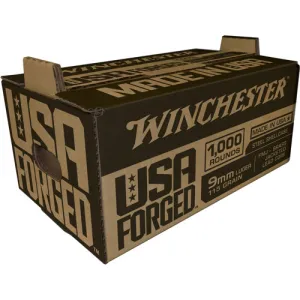
Winchester USA Forged 9mm 115 Grain 1000-Rounds Bulk FMJ
9mm · 115gr · 1,000 rds
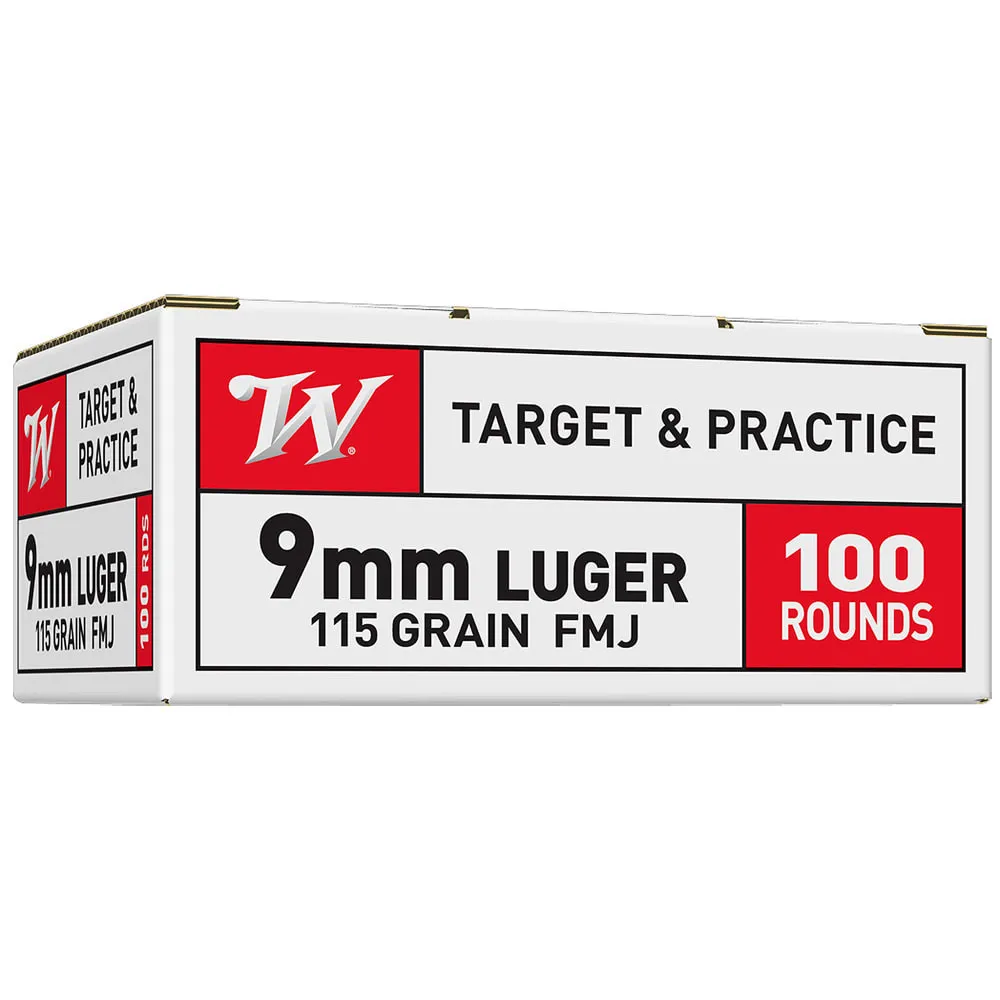
Winchester 9mm Target & Practice FMJ 115gr Case of 1000rds USA9MMVP
9mm · 115gr · 1,000 rds

CCI Ammunition Blazer Aluminum 9mm 115-Grain 1000-Rounds Bulk FMJ
9mm · 115gr · 1,000 rds

PMC Ammunition Bronze Brass 9mm 124 Grain 1000-Rounds Bulk FMJ
9mm · 124gr · 1,000 rds

Winchester Centerfire Handgun Brass 9mm 115-Grain 1000-Rounds FMJ Bulk
9mm · 115gr · 1,000 rds

PMC Ammunition Bronze Brass 9mm 115-Grain 1000-Rounds Bulk FMJ
9mm · 115gr · 1,000 rds
Can you still buy ammo online in a restricted state?
Usually, with a changed delivery path — and that distinction is worth being pedantic about, because the internet is full of people who gave up on a purchase that was legal.
The scenarios, in the order you should test them:
- The retailer's checkout accepts your ZIP. Nothing further to do. Retailers screen by address because refused ammunition freight is expensive for them too, and their screening is generally conservative.
- Checkout blocks the address but the retailer offers a dealer transfer. You are in mechanism 3. Price the transfer fee into the order and compare the landed cost against buying locally.
- Checkout blocks the address entirely. Try a different load first. If it is a type restriction — mechanism 4 — a different projectile construction in the same caliber may ship without issue.
- Everything is blocked. Now you are shopping local, and your leverage is knowing the national number before you walk in. Pull up the index above on your phone. A counter price that sits far above the live market average is a negotiating fact, not a feeling.
What follows the ammunition, and what follows the gun
A source of genuine confusion, worth separating cleanly.
Follows the ammunition: eligibility checks on cartridge purchases, ammunition type restrictions, quantity caps, and delivery rules. These attach to the box.
Follows the firearm or accessory: magazine capacity, feature-based rifle configuration rules, and registration schemes. A rifle can be legal to own and awkward to feed, or the reverse.
Follows a federal process with a state veto: suppressors and other NFA items. The federal process is uniform; whether a state permits civilian possession at all is a separate question layered on top. If that is your situation, our suppressor buying guide covers the sequence and the timelines.
Follows the components: reloading supplies. Primers and powder carry their own shipping and quantity handling as regulated materials, independent of whatever governs loaded cartridges. If a restriction has pushed you toward rolling your own, run the honest math first — our breakdown of whether reloading is still cheaper uses live component and factory pricing, and the answer is not automatically yes.
The five-minute check before you order
Do this every time you order to a new address, and once a year for your own.
- Search your state attorney general or state police site for ammunition purchase guidance. Prefer the .gov page over any forum summary, including this one.
- Check for a city or county ordinance at your delivery address. This is the step people skip, and it is where surprises live.
- Enter your real ZIP at the retailer's checkout before you build a cart. Screening happens at the address, not at the account.
- Read the product page restriction notice on the specific SKU. Type restrictions are per-product, not per-caliber.
- If a dealer transfer is required, call and get the fee before you commit. Then re-run the cost per round with that fee included.
None of this is interesting work. It takes less time than the return shipping conversation you avoid by doing it.
Buying strategy when your state is the constraint
If you are in a restricted jurisdiction, three adjustments do most of the work.
Consolidate purchases. Every fixed cost you pay is amortized across the order. Fewer, larger orders is not a preference here, it is arithmetic.
Buy on the market, not on the calendar. Restrictions make it harder to react quickly, so the cost of buying at a bad moment is higher for you than for an unrestricted buyer. Understanding why ammo prices move is worth more when your ability to move fast is limited. Set an alert and let the market come to you.
Standardize your calibers. Type restrictions and stock gaps hurt most when you feed four different guns. Common cartridges have the deepest retailer pools, which means the most surviving options after a restriction removes some of them.
Get alerted when 9mm price drops hit.
We watch every listing and email you the moment the cost per round drops.
Set Up a Free Price AlertYou can watch the whole market on our live ammo pricing pages, or go straight to the cartridge you shoot most at 9mm. Whatever your state requires of you at the counter, walking in knowing the national floor is the part nobody can restrict.
AmmoSpotter earns a commission when you buy through links on this page. It never changes what you pay, and it never decides what we recommend — our picks are ranked on live cost-per-round data pulled from every retailer we track. Full disclosure.
Frequently Asked Questions
Which states restrict buying ammunition?+
Can I still buy ammo online if my state restricts it?+
Does a state ammo restriction make ammunition more expensive?+
Are magazine capacity limits the same as ammunition restrictions?+
Do ammunition restrictions apply to reloading components?+
What happens if I order ammo to an address that does not allow it?+
Shop the data

About the author
AmmoSpotter Research Desk
Price & Ballistics Research
The AmmoSpotter Research Desk analyzes live retail pricing across every ammunition, firearm and accessory listing we track. Recommendations here are ranked against real cost-per-round data pulled daily from the retailers we monitor - not against manufacturer marketing copy.
- ✓Tracks 180,000+ live product listings across 6 retailer feeds
- ✓Records price history on every listing, every day
- ✓Cost-per-round methodology applied to all ammunition rankings
- ✓No product is ranked without a verifiable in-stock retail price
- ✓Affiliate relationships never influence rankings
Related Guides

Ammo Shipping Restrictions: How to Check Before You Order
Ammunition ships to most of the United States without ceremony. It does not ship everywhere, and the places it does not are not always the ones people expect - some restrictions are municipal rather than state-level. ...

How to Buy Ammo Online Without Overpaying (2026 Guide)
Most ammunition buying advice stops at "shop around." That is not a process, and it is not why people overpay. People overpay because ammunition is priced in a unit nobody compares — the box — while the thing being bo...

Why Ammo Prices Move: The Five Forces Behind Every Spike
From the outside, ammunition pricing looks arbitrary. One cartridge climbs while another does not. A caliber that was plentiful in spring is thin by autumn. Prices rise fast and fall slowly. It is not arbitrary. Five ...

Cost Per Round: The Only Ammo Price Metric That Matters
There is exactly one reason ammunition is hard to price-compare: it is advertised in boxes and consumed in rounds. Box counts are not standardized. A "box" of 9mm might be 50 rounds. A "value pack" might be 100, or 11...
Lead-Free Hunting Ammo: Where It's Required and What It Costs
- Non-lead requirements are a patchwork , not a national rule: a longstanding federal non-toxic shot requirement for migratory waterfowl, extra conditions on many federal properties, and state or zone-specific program...

Best .22 LR Ammo 2026: Bulk, Match and Hunting on Live Prices
- .22 LR is the cheapest trigger time available, and it is not close. The live floor below is roughly what a single centerfire rifle round costs in loose change. - Bulk barely helps. Across our catalog the 50-round bo...