Piston vs Direct Impingement AR-15
The operating system is the one AR-15 spec you cannot shop for — four of 2,580 rifle listings name it, and no complete upper names it at all.
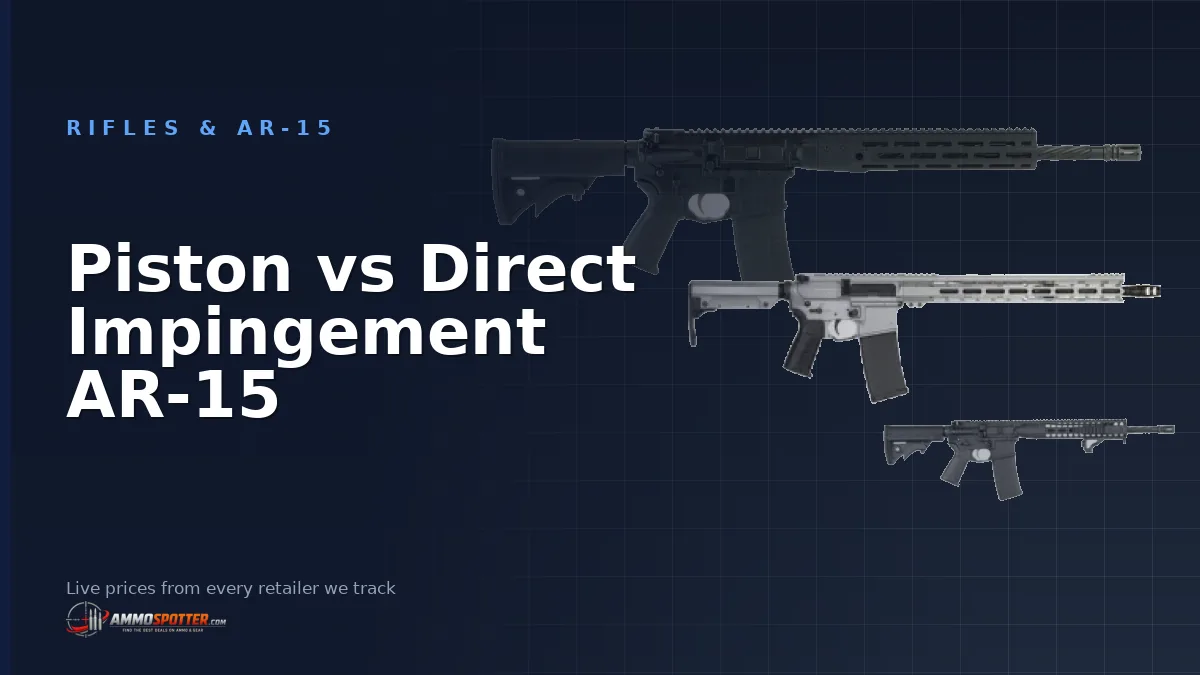
What actually moves differently in a piston AR-15?
Both systems do the same job — bleed a little propellant gas out of the barrel and use it to unlock and cycle the bolt. They differ in what travels.
In a direct-impingement AR-15, the gas itself travels. It leaves the barrel through a port, runs back down a thin steel gas tube, and strikes the gas key on top of the bolt carrier. The carrier is, in effect, its own piston. That is why a DI rifle deposits carbon inside the receiver and why the bolt-side parts run hot and dirty.
In a piston rifle, the gas travels perhaps an inch. It pushes a captive piston near the gas block, the piston shoves an operating rod rearward, and the rod strikes the carrier. Gas and fouling stay forward of the handguard. The carrier is heavier, the reciprocating mass is less symmetrical, and the rifle has more parts.
That is the whole mechanical story, and it is the part you can read anywhere. The part you cannot read anywhere is what either choice costs — which is where our index has something to say.
Can you tell which system a rifle uses from the listing?
Almost never. We hold 2,580 live, in-stock centerfire AR-pattern rifle listings across the modern sporting rifle, tactical semi-auto and NFA rifle categories. Searching every one of those titles for a gas-system word returns four rows: a single Colt carbine listed as a Quad Piston, and three LWRC rifles that say Direct Impingement. The other 2,576 say nothing.
It gets worse where it matters most. The operating system lives in the upper half of the rifle, so the honest place to shop for it is the upper receiver. Across 514 live complete upper listings, zero contain the word piston, zero contain direct impingement, and zero contain the word gas at all. Not one.
Every Rifle In Our Index That Names Its Gas System
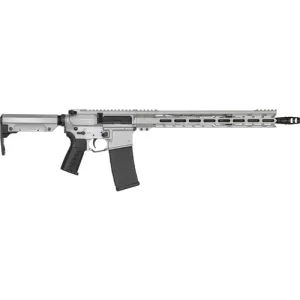
CMMG Resolute 300 Direct Impingement 5.56 NATO 16.1" 30rd Semi-Auto AR15 Rifle - M-LOK - Tungsten
A CMMG Resolute whose title spells out Direct Impingement. It is the least expensive rifle in our index that tells you its operating system in writing, which is a comment on the index rather than on the rifle. Single retailer, so there is no second price to compare it against.
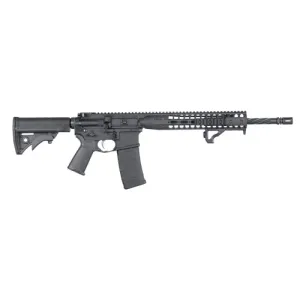
LWRC IC DI Direct Impingement 5.56 NATO 16" 30rd Semi-Auto AR15 Rifle w/ Spiral Barrel - Black
LWRC's IC-DI in 5.56, 16-inch barrel. This is the maker that gives us the only like-for-like comparison in the catalog: the same model family, the same cartridge, the same barrel length, with and without the DI suffix. This is the with.
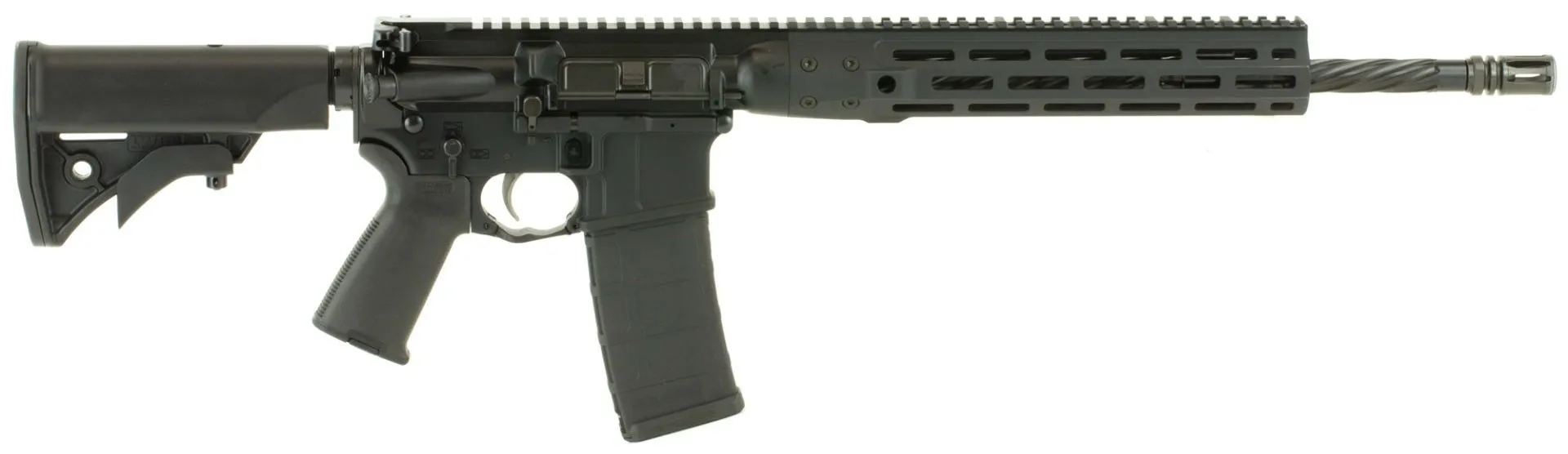
LWRC Individual Carbine 5.56 NATO 16.1 Barrel 30-Rounds
The Individual Carbine the DI version is derived from, also 5.56 and 16.1 inches, and listed by two retailers. Nothing in the title says piston — you are expected to know that the absence of DI is the spec. Compare the two cards and you have the premium.
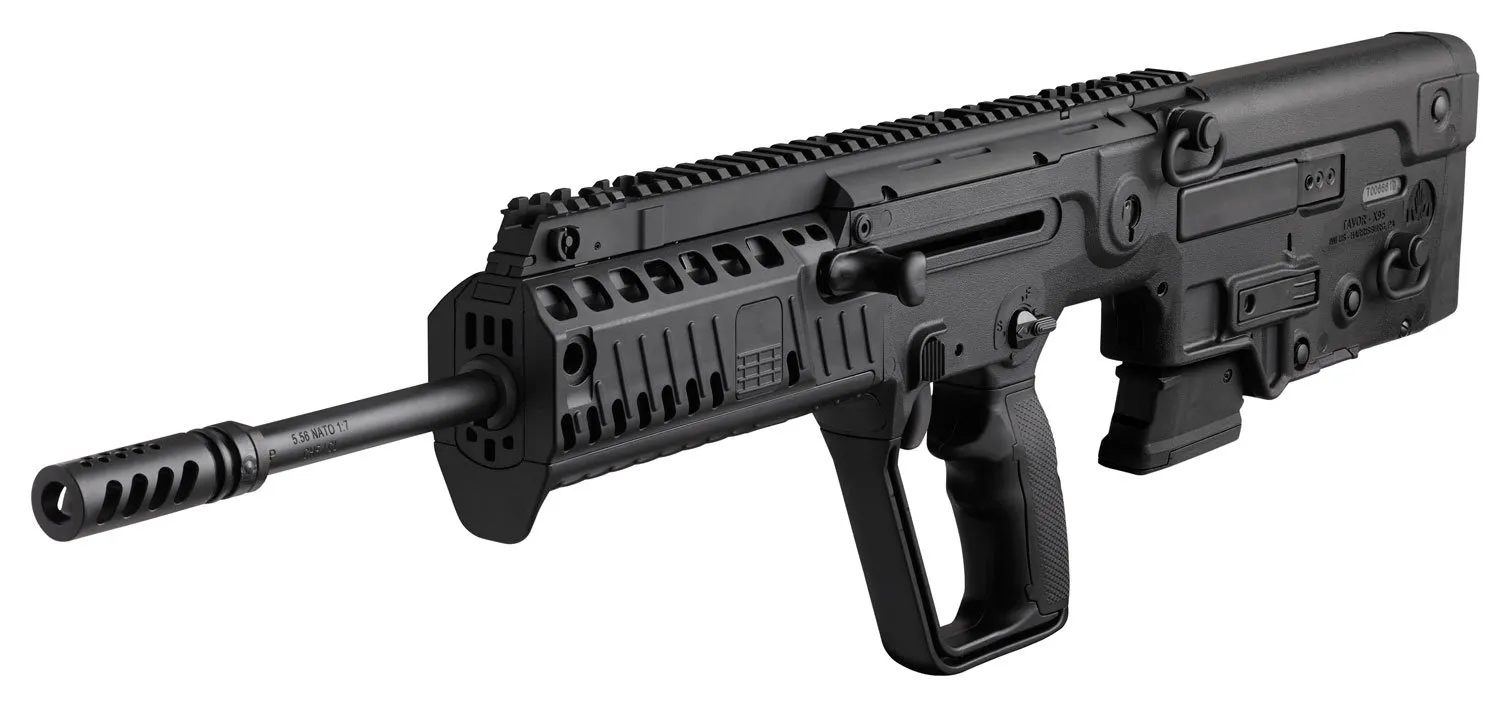
IWI Tavor X95 5.56 Semi-Automatic Gas Piston Action Rifle, Black - XB18RS
An IWI Tavor X95 whose title reads Gas Piston Action. Not an AR-pattern rifle, which is part of why it bothers to say so — bullpups and other non-AR designs describe their operating system far more often than AR listings do.
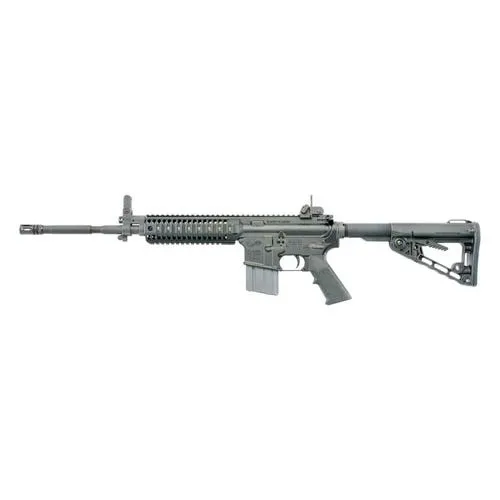
Colt Firearms M4 Carbine 5.56MM 16-inch Quad Piston
A Colt M4 carbine listed as Quad Piston. Across every modern sporting rifle, tactical semi-auto and NFA rifle listing we track, this is the single row that puts a piston in the title. One retailer, and it currently sits at its own recorded low.
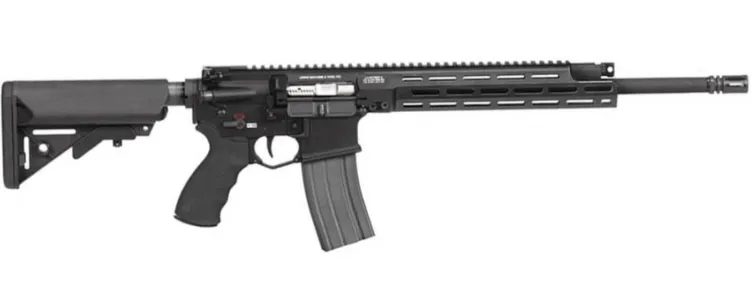
LMT Defense MARS-L 16" 5.56 NATO AR-15 Piston MLC Shovelnose Rifle
LMT's MARS-L, listed as a piston rifle. It is the most expensive listing in the group and a useful reminder that the makers who talk about their gas system are mostly the ones selling at the top of the market.
This is the same silent-omission pattern we keep running into on the AR shelf — barrel listings mostly do not state their gas-system length either, which we covered in our breakdown of AR-15 barrel lengths, and complete uppers mostly do not disclose whether a bolt carrier group is included, which we covered in our guide to AR-15 uppers. The gas system is the most extreme case we have measured. Four listings out of 2,580 is not a market you can shop; it is a market where you choose a brand and inherit whatever it builds.
What is the real price difference between piston and direct impingement?
One maker in our index sells both and labels the difference, which makes it the only place a clean comparison exists. LWRC's Individual Carbine line is built around a short-stroke piston; the IC-DI is the direct-impingement variant, and the DI suffix is how LWRC marks it.
Hold the cartridge and the barrel length constant and the gap is unmistakable. Across LWRC's 16-inch 5.56 listings:
| LWRC 16-inch 5.56 | Listings | Cheapest | Median |
|---|---|---|---|
| DI-labelled | 43 | $1,239.99 | $1,721.99 |
| Not DI-labelled | 49 | $1,639.99 | $2,380.99 |
Widen it to every LWRC 5.56 rifle regardless of barrel length and the shape holds: 57 DI-labelled rows from $1,239.99 at a $1,744.52 median, against 107 unlabelled rows from $1,639.99 at a $2,556.99 median.
So the honest headline number is about $400 between the cheapest of each and about $659 between the medians, from one maker, on one cartridge, at one barrel length. Both grids below are live, so check them rather than trusting the table — the two systems sit side by side in the same brand listing, separated by a suffix.
LWRC AR-15s, Cheapest First - Read the Suffix
Prices updated Oct 22, 2026LWRC Individual Carbine 5.56 NATO 16.1 Barrel 30-Rounds
5.56x45mm
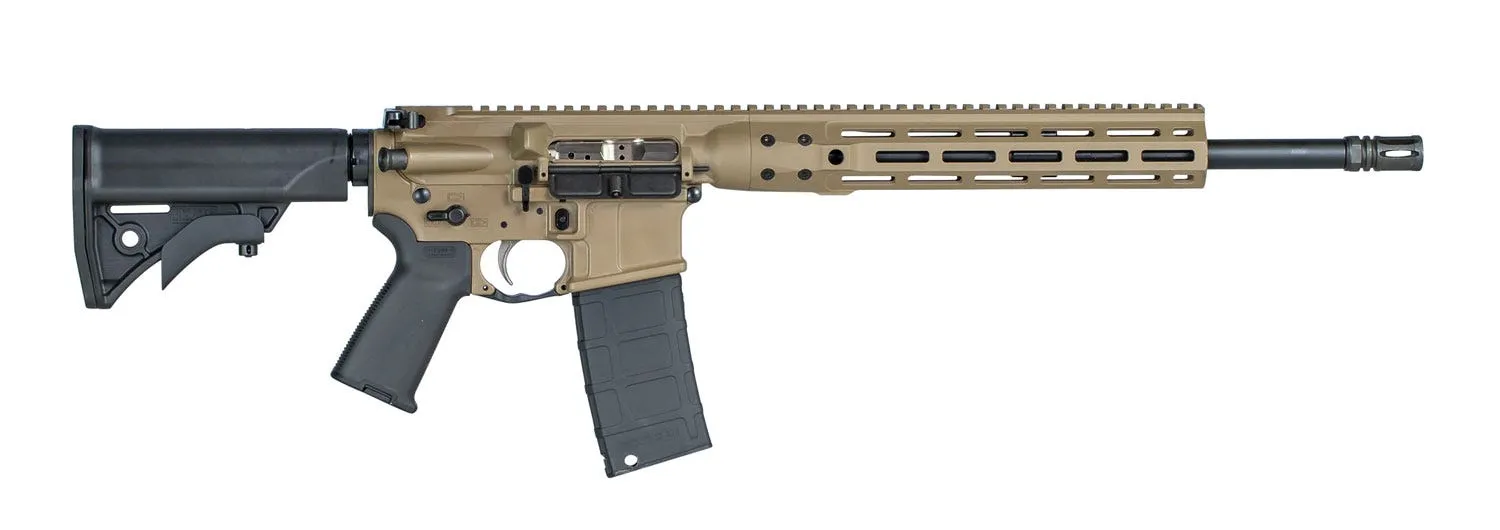
LWRC Individual Carbine DI Flat Dark Earth .300 AAC Blackout 16.1 Barrel 30-Rounds
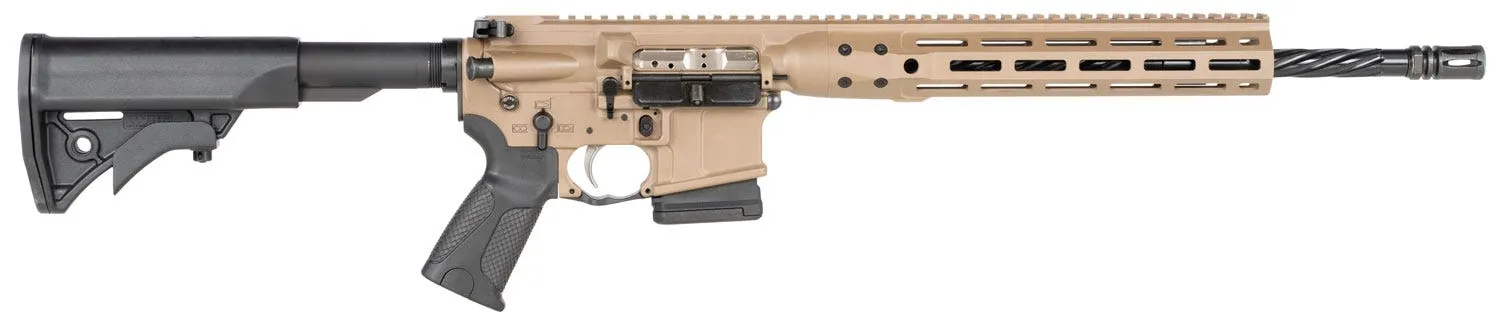
LWRC Individual Carbine Flat Dark Earth 5.56 NATO / .223 Rem 16.1 Barrel 10-Rounds
5.56x45mm
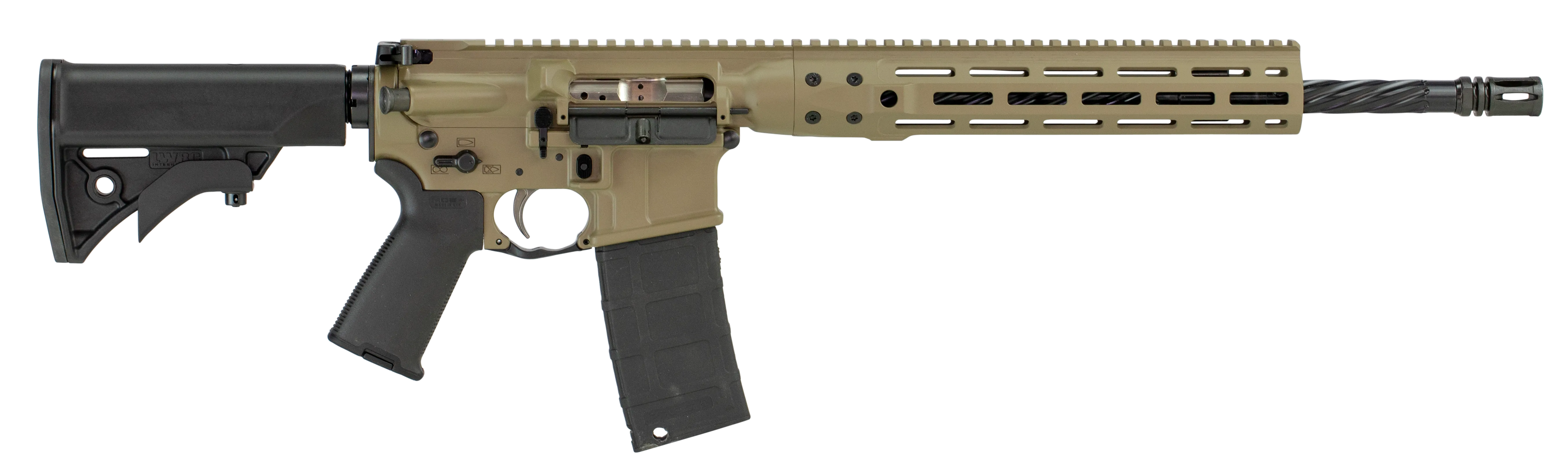
LWRC Individual Carbine Flat Dark Earth 5.56 NATO / .223 Rem 16.1 Barrel 30-Rounds Optics Ready
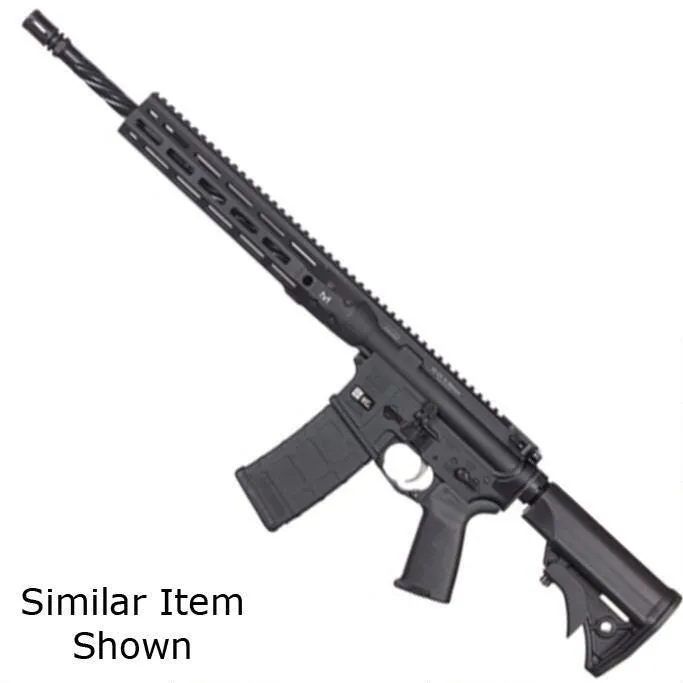
LWRC IC-DI Tungsten 5.56 16 Barrel 30-Rounds
.223 Remington,5.56x45mm
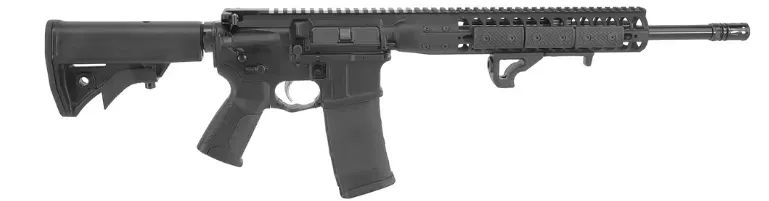
LWRC IC-DI .300 AAC Blackout 16.1 Threaded Barrel 30-Rounds
Does the piston premium hold up across makers?
No, and that is the finding that should change how you read the spec.
POF-USA also sells rifles with and without a DI label. On its Minuteman line, the three DI-labelled listings run a $1,474.99 median against $1,581.80 for the 23 unlabelled ones — a small gap, in the same direction as LWRC. But on its Rogue line the comparison inverts: 14 DI-labelled listings at a $2,109.99 median against seven unlabelled ones at $2,038.19. There, the rifle that advertises direct impingement is the more expensive one.
POF-USA Rifles, Cheapest First
Prices updated Oct 22, 2026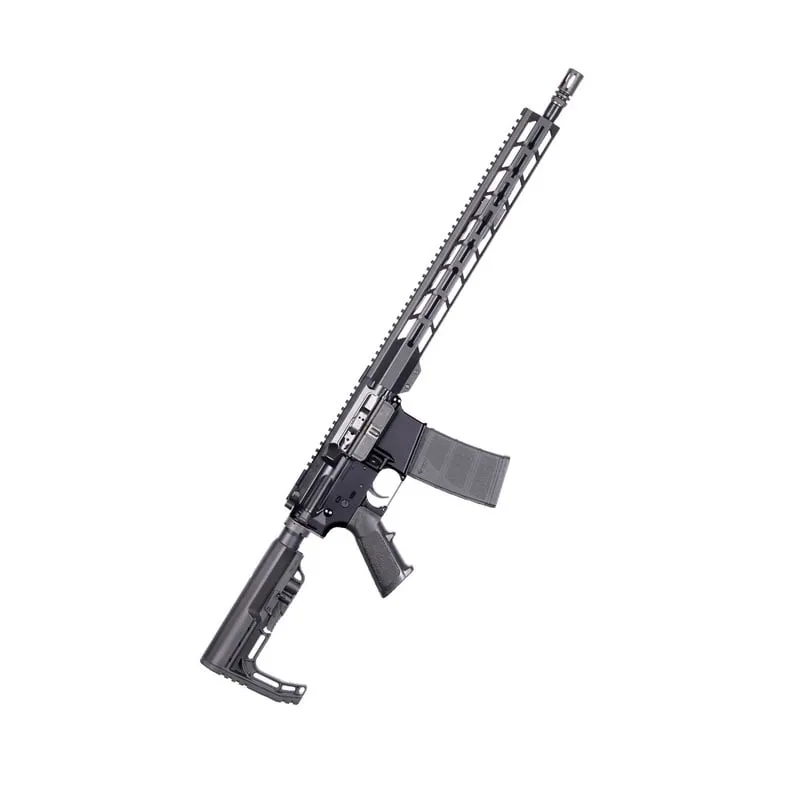
Patriot Ordnance Factory P-15 Base 5.56 16.5 Threaded Barrel 10-Rounds
5.56x45mm
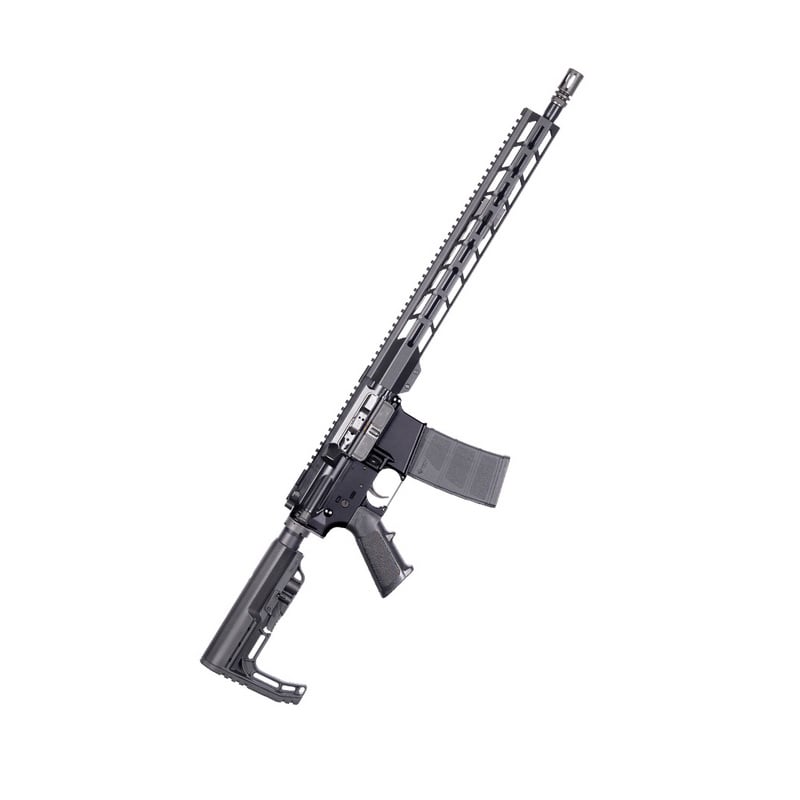
Patriot Ordnance Factory P-15 Base 5.56 16.5 Threaded Barrel 10-Rounds CA Compliant
5.56x45mm
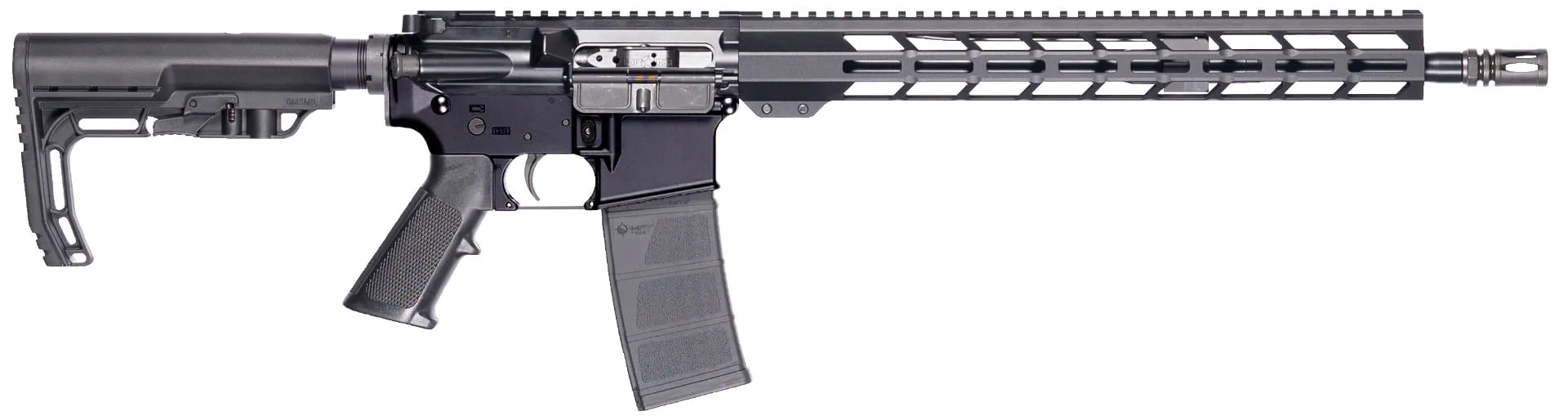
Patriot Ordnance Factory P-15 Base 5.56 / .223 Rem 16.5 Threaded Barrel 30-Rounds
5.56x45mm
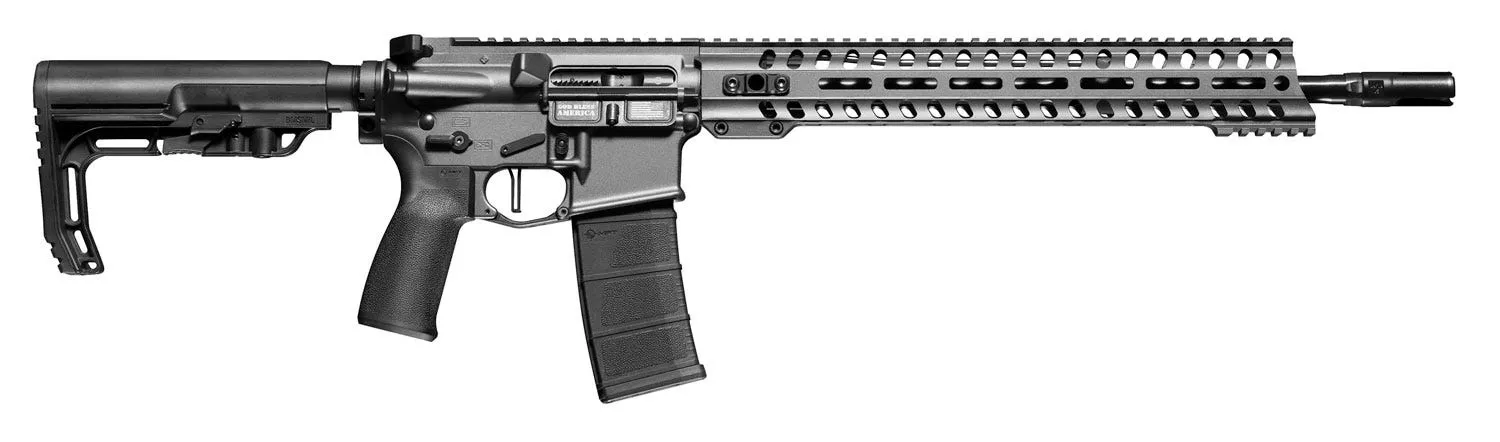
Patriot Ordnance Factory Minuteman Tungsten .350 Legend 16.5 Barrel 30-Rounds
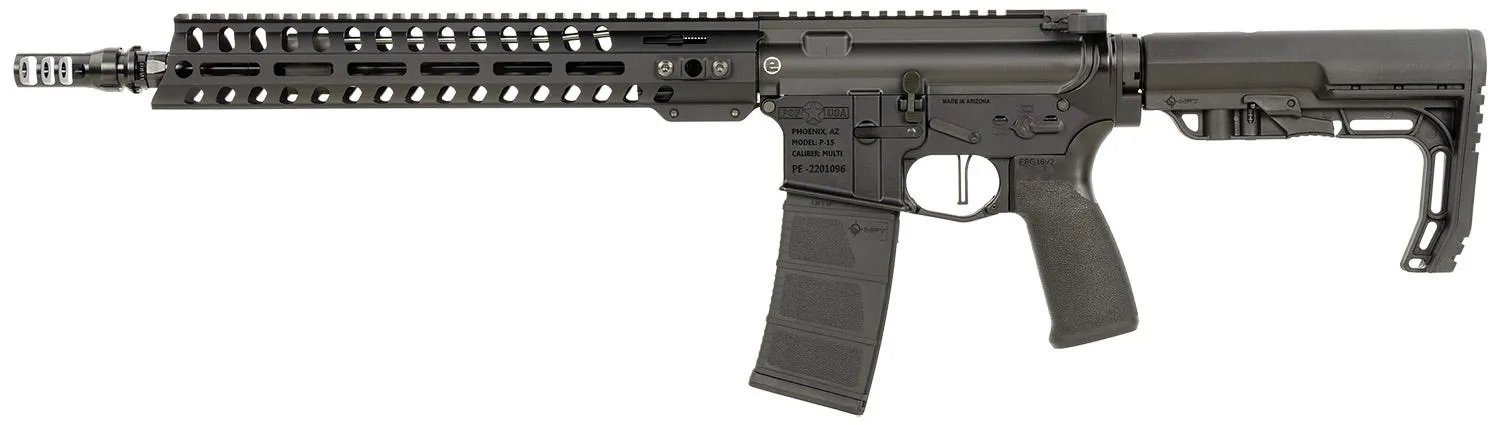
Patriot Ordnance Factory Minuteman Black 5.56 / .223 Rem 13.75 P&W vBarrel 30-Rounds
5.56x45mm
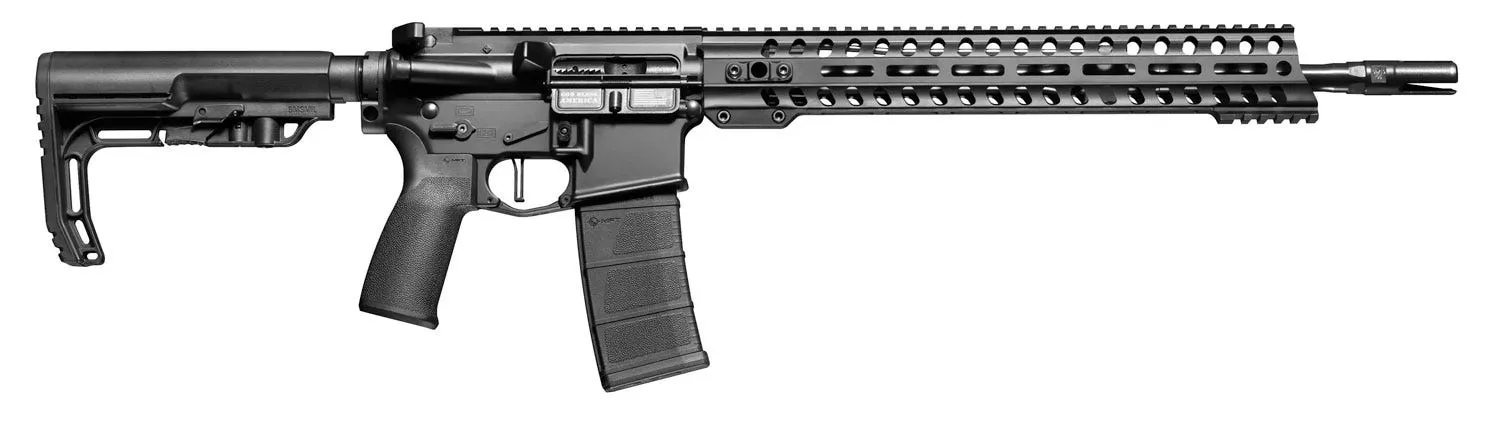
Patriot Ordnance Factory Minuteman .350 Legend 16.5 Barrel 10-Rounds
The straightforward reading is that the suffix is not pricing an operating system. It is pricing a model tier, a barrel, a trigger, a receiver set and a brand — and the gas system rides along.
You can see the same confound at the brand level. The whole centerfire AR-pattern shelf has a median of $1,499.99. The makers most associated with pistons sit above it: LWRC's 292 complete-gun listings run a $2,420.99 median, LMT's 22 run $2,622.60, IWI's 60 run $1,749.99. POF-USA's 112 listings run $1,949.00 with a $729.99 floor. Adams Arms, the house that built its name on piston conversions, is down to three listings in our entire index at $794.99, $1,375.00 and $2,999.00.
Those medians are real, but they do not isolate the gas system. These are premium houses with premium barrels and premium triggers. The piston is correlated with the price; it is not demonstrably the cause of it. We would rather say that plainly than hand you a number that looks more precise than it is — the same standard we apply to how we rank ammunition.
Which system is cheaper to keep running?
This one is not close, and it is the argument we would actually make to a buyer.
Direct impingement has a deep, cheap, competitive aftermarket. Our gas tube and gas block category holds 229 live listings from $1.49 to $179.99 at a $22.79 median, and 45.0% of them are stocked by two or more retailers — well above the 36.9% rate across all accessories. Broken out: 118 gas tube listings from $1.49 at a $16.29 median, 112 gas block listings from $7.69 at a $38.29 median. Gas rings, the bolt-side consumable, are eight listings from $2.29 at a $4.29 median.
What a Direct-Impingement Gas System Costs to Replace
Prices updated Oct 22, 2026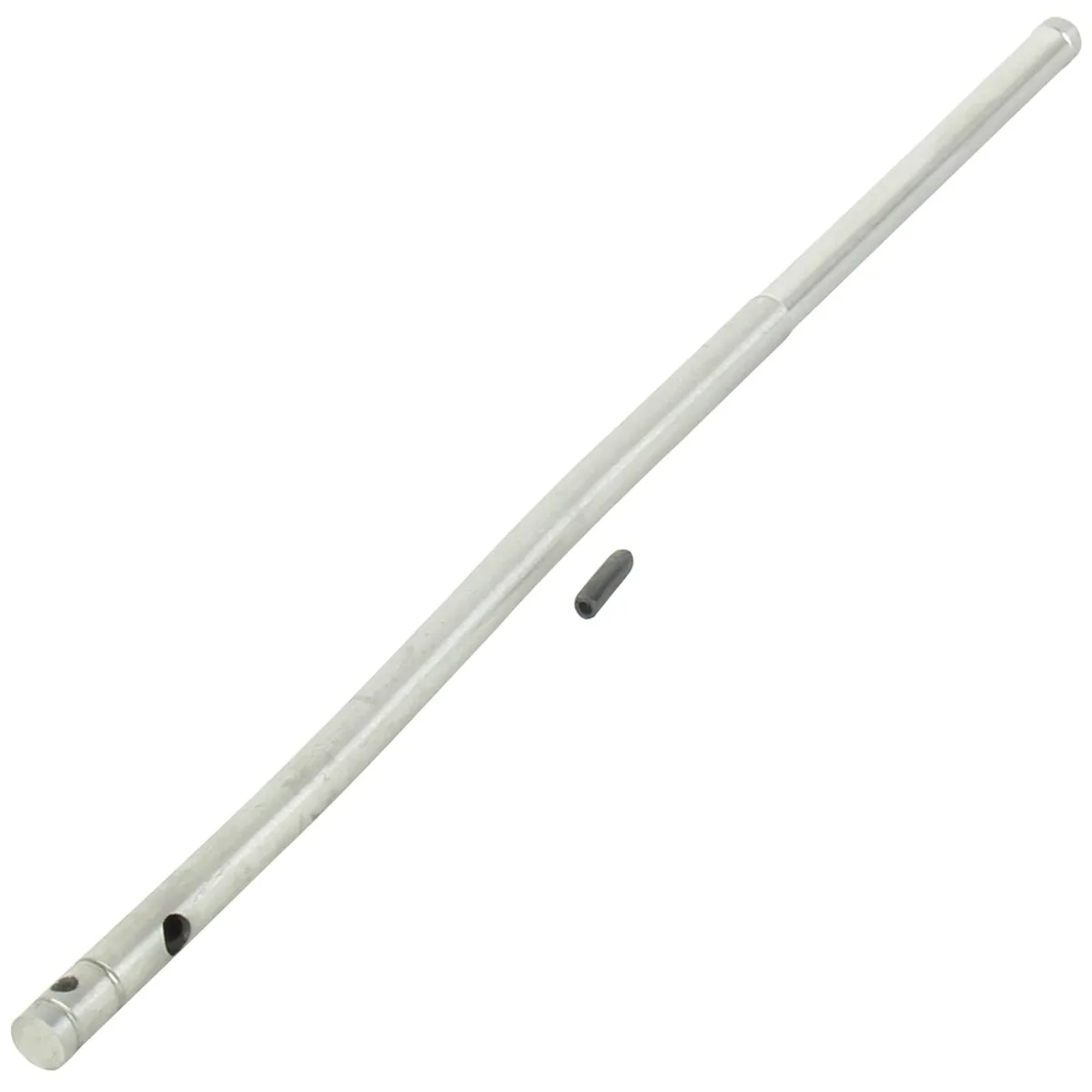
TacFire AR-15 Pistol Length Gas Tube/Pin Silver 5.25
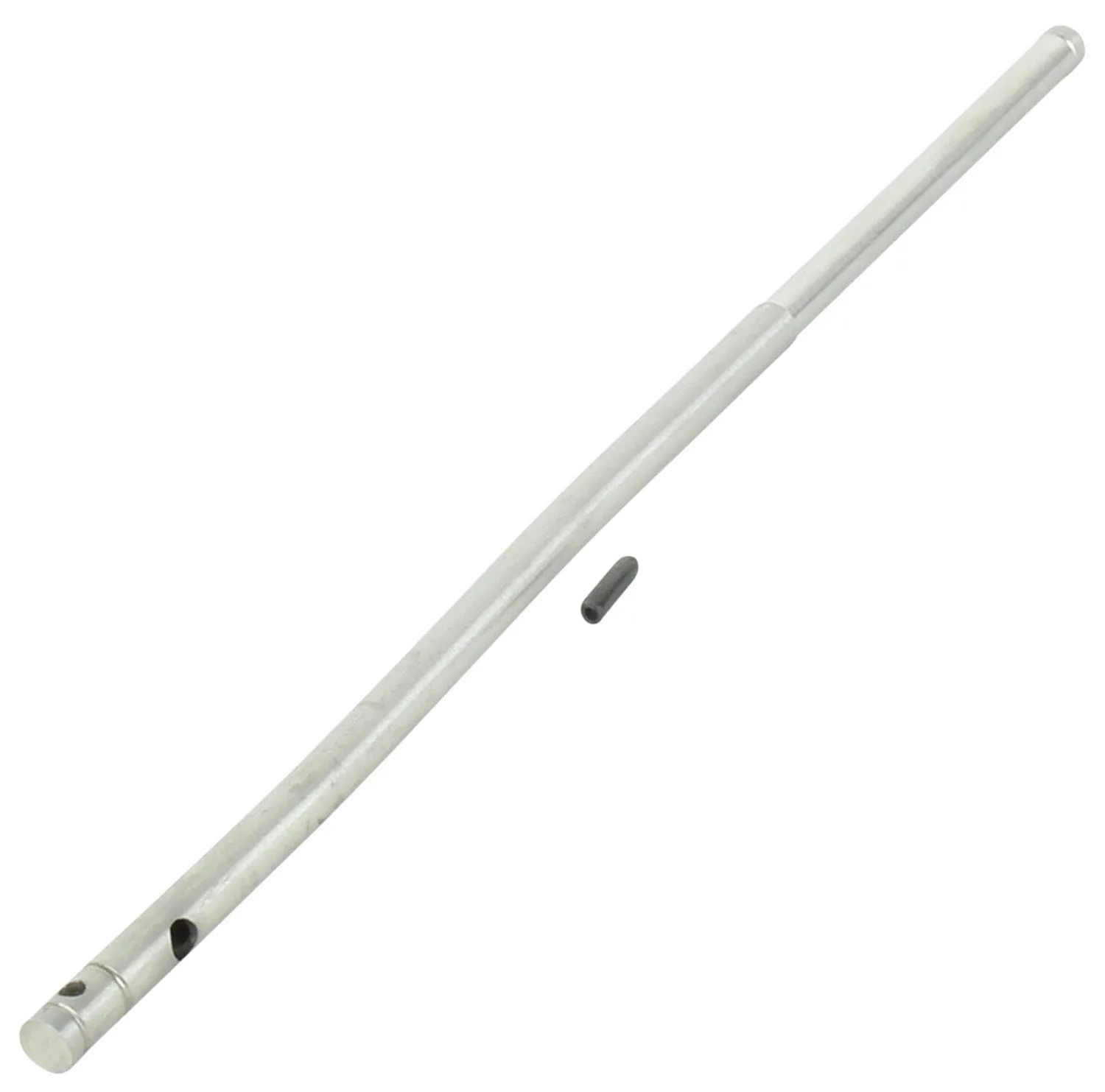
TacFire AR15 Pistol Length Gas Tube 6.75 Silver
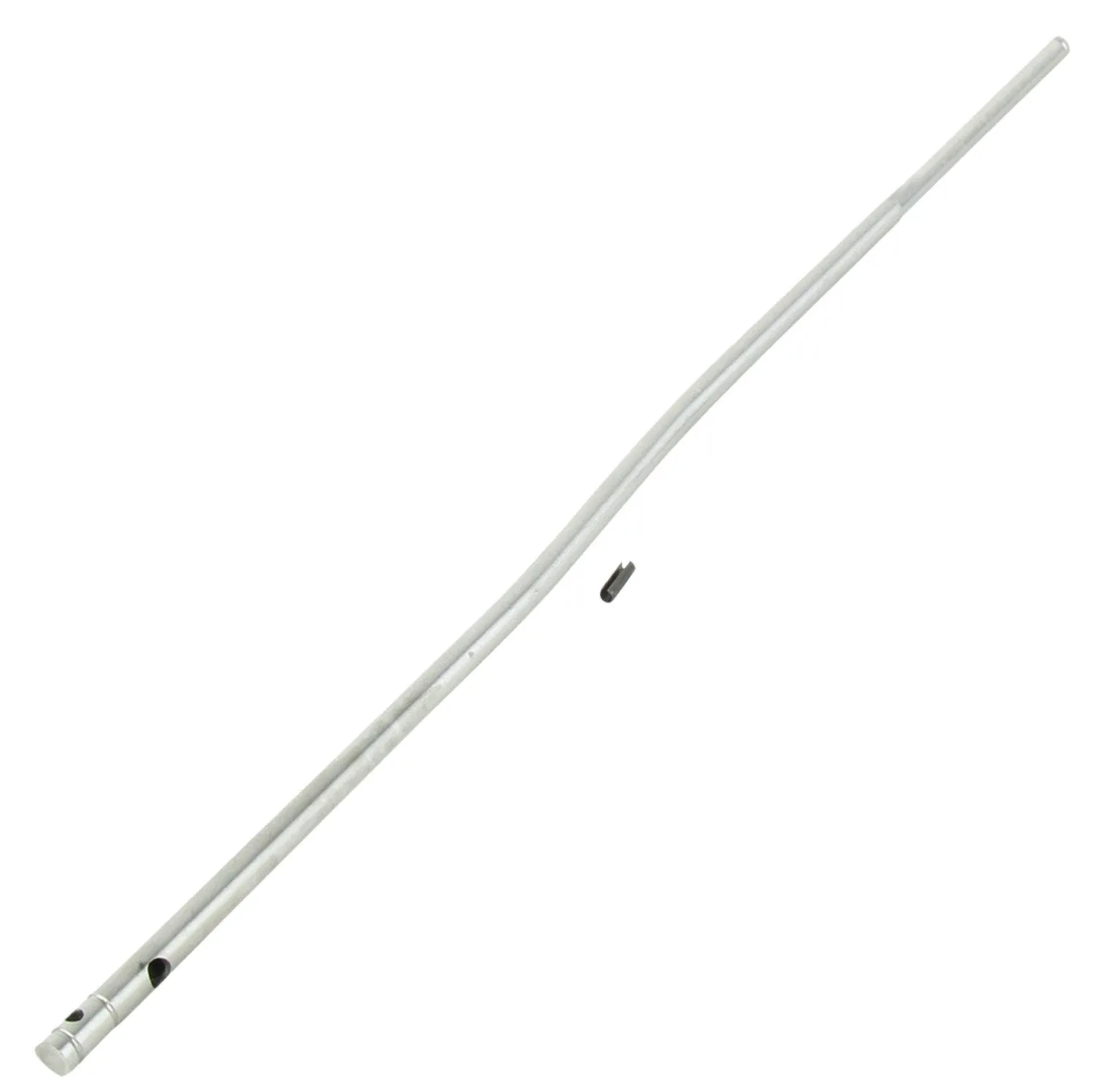
TacFire Gas Tube Stainless Carbine Length for AR-15
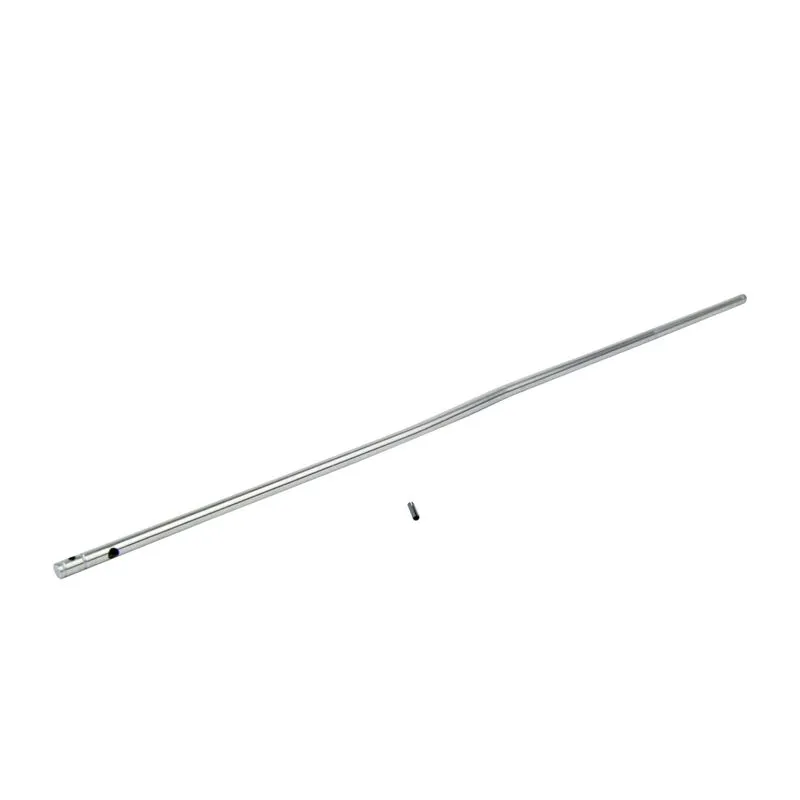
TacFire Gas Tube Stainless Mid-Length for AR-15
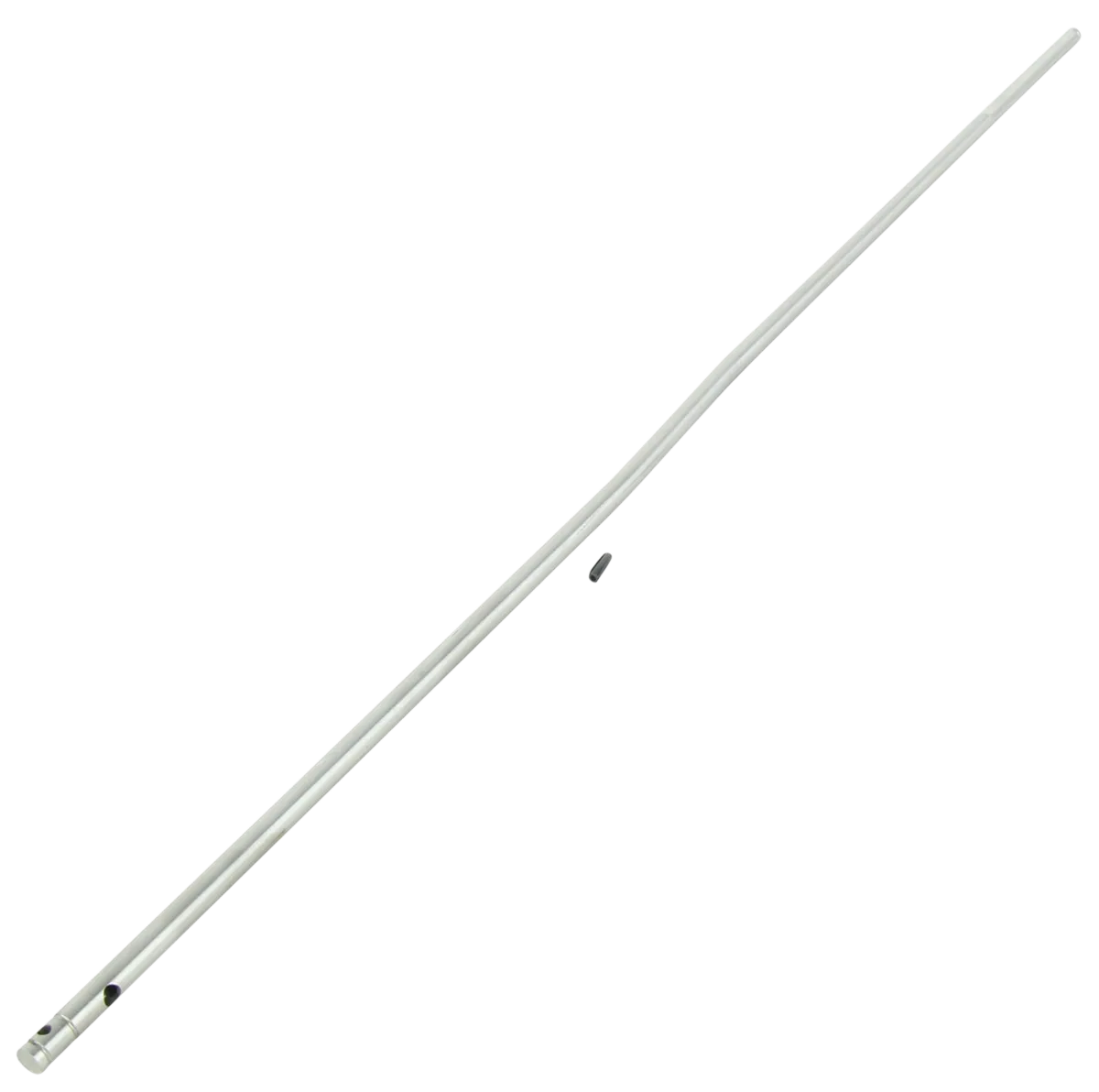
TacFire Rifle Length Gas Tube Silver AR 15 / M16
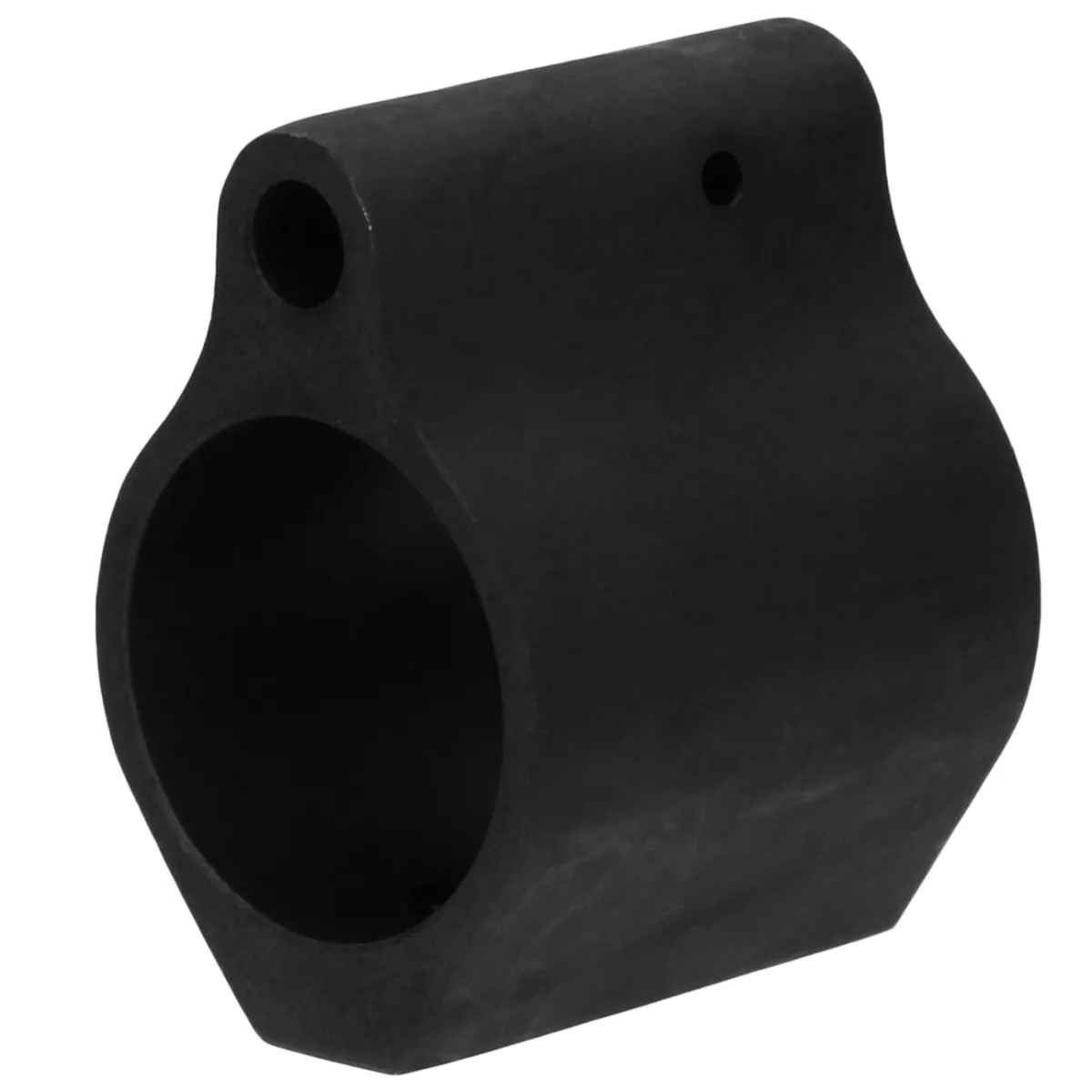
TacFire Low-Profile Micro Gas Block .750 for AR-15
Against that, the piston side has nothing. One title in 647,190 rows names an operating rod and it is out of stock. There are no piston kits for an AR in our index, no spare pistons, no op-rod springs. A piston owner who needs a part is calling the manufacturer; a DI owner is choosing between two retailers for a seven-dollar tube.
That asymmetry compounds with service intervals rather than cancelling them out, which is the practical case for DI on a rifle you intend to shoot a lot. We walk the full wear-part list and what each piece costs in our AR-15 maintenance schedule.
Does a suppressor or a short barrel change the answer?
It changes the problem, and direct impingement has a priced answer to it.
A can raises back pressure, and a short barrel raises port pressure, so both push more gas and more carbon back through a DI action. The piston pitch is that it keeps that forward of the handguard. But the DI fix is a tunable gas block: 27 live adjustable gas block listings from $24.89 to $188.99, median $84.99. Against a $400-to-$659 difference between a piston rifle and a DI rifle from the same maker, an $85 part that lets you dial the gas down is a much easier purchase to justify.
If you are going down the suppressed route, the can and its paperwork will dominate the budget long before the gas system does — start with our suppressor buying guide rather than with the rifle.
The line item that dwarfs the gas system
Whichever system you buy, it is a one-time cost. The ammunition is not.
5.56 NATO / .223 Remington Price Index
Live · Oct 22, 2026Run the arithmetic against the live market floor above. At today's floor, the roughly $659 median difference between a piston and a DI rifle from the same maker is about 1,460 rounds of practice ammunition — call it a long weekend of serious training, and barely a dent in what getting genuinely good takes. The $400 floor-to-floor difference is closer to 890 rounds.
Put differently: within two or three years of regular shooting, every buyer in this comparison will have spent more on cartridges than the entire gas-system premium. That is the number worth optimising, and it is the one you can actually shop. Our full breakdown of what to feed the rifle is in our 5.56 and .223 ammo guide, and you can browse the whole shelf by cost per round on our .223 and 5.56 caliber page or across every cartridge we track.
Bulk 5.56 and .223 by Cost Per Round
Prices updated Oct 22, 2026
Winchester M855 5.56 Bulk Ammo 62 Grain FMJ 1000rds (Unpainted Tip) - WM8551000
5.56x45mm NATO · 62gr · 1,000 rds

PMC Ammunition Bronze .223 Rem 55 Grain 1000-Rounds FMJ Bulk
.223 Remington · 55gr · 1,000 rds

Patriot Sports Rifle Ammunition .223 Rem 55 Grain 1000-Rounds FMJ
.223 Remington · 55gr · 1,000 rds

Red Army Standard Centerfire Rifle Steel .223 Rem 55-Grain 500-Rounds Bulk FMJ
.223 Remington · 55gr · 500 rds

Wolf Performance Ammo PolyFormanc Steel Bulk .223 Rem 55 Grain 500-Rounds
.223 Remington · 55gr · 500 rds

PMC Ammunition X-Tac Rifle Brass 5.56 55 Grain 1000-Rounds FMJBT Bulk
5.56x45mm NATO · 55gr · 1,000 rds
Cost Per Round Calculator
The only number that matters when comparing ammo. Shipping included.
Should you shop around, or wait for a price drop?
Both levers are weak on rifles and strong on ammunition, so plan accordingly.
Across the centerfire AR-pattern shelf, 28.2% of listings are carried by more than one retailer and 45.9% sit above their own recorded low since we began tracking in February 2026. On the brands in this comparison the shopping lever is weaker still: LWRC's complete guns are 15.8% multi-retailer, LMT's 22.7%. POF-USA is the exception at 29.5%, with 53.6% of its listings above their own low.
Compare that to ammunition, where 70.0% of live listings sit above their own recorded low. A price alert on a cartridge pays; a price alert on a premium AR mostly does not. If you are timing a gun purchase rather than a cartridge purchase, the seasonality we mapped in why ammo prices move is the wrong model — and the transfer itself is a cost most buyers forget, which we cover in how to buy a gun online.
Get alerted when .223 Remington price drops hit.
We watch every listing and email you the moment the cost per round drops.
Set Up a Free Price AlertWhat to check before you buy
- Do not shop for the gas system — shop for the brand, then verify. Four of 2,580 listings name it. Pick the rifle on chambering, barrel length and budget, then read the manufacturer's own spec page.
- If you want a piston, accept single-sourced spares. There is no aftermarket for the parts in our index. Confirm the maker sells the consumables directly before you commit.
- If you want DI and expect to run suppressed, budget an adjustable gas block, not a different rifle. Median $84.99 against a several-hundred-dollar rifle premium.
- Check whether the upper and lower are being sold together. No complete upper listing states its gas system, so an upper bought separately is a specification you are taking on trust.
- Prices shown anywhere on this page are item-only. Our feeds do not carry shipping, and a transfer fee is never in them either.
- Put the alert on the cartridge, not the carbine. That is where 70.0% of listings are above their own low.
Our prices update throughout the day, so every figure quoted here was accurate when written and the live blocks above are the authority.
AmmoSpotter earns a commission when you buy through links on this page. It never changes what you pay, and it never decides what we recommend — our picks are ranked on live cost-per-round data pulled from every retailer we track. Full disclosure.
Frequently Asked Questions
Is a piston AR-15 more reliable than a direct-impingement one?+
How much more does a piston AR-15 cost?+
Can I convert my direct-impingement AR-15 to a piston?+
Does a piston help with a suppressor?+
Which system is cheaper to maintain?+
Should I choose a rifle based on its gas system at all?+
Shop the data

About the author
AmmoSpotter Research Desk
Price & Ballistics Research
The AmmoSpotter Research Desk analyzes live retail pricing across every ammunition, firearm and accessory listing we track. Recommendations here are ranked against real cost-per-round data pulled daily from the retailers we monitor - not against manufacturer marketing copy.
- ✓Tracks 180,000+ live product listings across 6 retailer feeds
- ✓Records price history on every listing, every day
- ✓Cost-per-round methodology applied to all ammunition rankings
- ✓No product is ranked without a verifiable in-stock retail price
- ✓Affiliate relationships never influence rankings
Related Guides
AR-15 Barrel Length: 10.5 vs 14.5 vs 16 vs 20 on Live Shelf Prices
- 16 inches is the default for a reason that has nothing to do with ballistics: it is the deepest shelf we track and the cheapest of the four lengths at the median. - 14.5 inches is the most expensive of the four at t...
Best AR-15 Uppers 2026: What the Live Listings Actually Show
- 528 complete AR-15 uppers are live right now, from $119.99 to $6,599.99, median $499.99. - 505 of those 528 carry one of two brand names. The complete-upper aisle is effectively one company deep. - Not one of the 52...
AR-15 Maintenance Schedule by Round Count: What to Check, and What the Interval Costs
- Nobody publishes a round count for AR-15 parts life. Across 4,135 live listings in the four parts categories we track, exactly 4 mention a round count at all. - So the schedule is condition-based. Inspect on an inte...

Best AR-15 Rifles at Every Budget (2026): What Each Tier Actually Costs
- The AR-15 market has three real price tiers, and the jump between them buys different things: the first buys a working rifle, the second buys a good one, the third buys durability under high round counts. - The chea...

How to Buy a Gun Online: FFL Transfers Explained
- A firearm bought online ships to a licensed dealer near you, not to your door. You do the paperwork and the background check in person. - The transfer fee is set by that receiving dealer. It is invisible to every pr...
Best Youth and Compact Shotguns 2026: What the Shelf Actually Offers
- 177 of the 3,346 live shotgun listings we track are youth or compact. Floor $163.99 , median $499.99 , against $808.99 for everything else. - 20 gauge is what the market actually built — 93 of the 177, versus 42 in ...