Best .38 Special Ammo for Snub-Nose Revolvers
A snub .38 is a cheap gun to buy and a surprisingly expensive one to feed defensive ammo through — here is where the money actually goes, priced live.
What .38 Special Actually Costs Right Now
.38 Special Price Index
Live · Oct 4, 2026That block is live, so it will not match this sentence forever. What is worth understanding is the shape of it. Across the 211 .38 Special listings currently in our index, the average works out to roughly 91 cents per round — but the trimmed floor is $0.420 and the ceiling is $2.945. One cartridge, a seven-fold price range.
For most rifle cartridges a spread that wide would mean something interesting about the bullets. In .38 Special it mostly means something boring about cardboard.
Why Box Size Drives .38 Special Pricing More Than Brand Does
Here is the lowest per-round price we currently see from each major brand stocking .38 Special, with how many listings each one has in the index:
| Brand | Listings | Lowest per round |
|---|---|---|
| Winchester | 21 | $0.210 |
| Magtech | 29 | $0.400 |
| Sellier & Bellot | 6 | $0.460 |
| Federal | 19 | $0.498 |
| Fiocchi | 15 | $0.500 |
| CCI | 6 | $0.514 |
| Armscor | 5 | $0.520 |
| Remington | 19 | $0.560 |
| Doubletap | 7 | $0.560 |
| Norma | 5 | $0.644 |
| Hornady | 10 | $0.760 |
| Buffalo Bore | 16 | $1.563 |
Read that column again. The brands at the bottom are not charging four times as much for the same thing — they are selling a different thing, in a smaller box, loaded hotter. Buffalo Bore does not sell a 50-round range box of .38. Its floor is $1.563 because its cheapest listing is still a premium defensive load in a small box.
The Winchester figure is the outlier worth flagging: $0.210 per round, which is a 500-round 158-grain hollow point pack listed at $104.80. That is the single cheapest .38 Special per round anywhere in our index, well under the trimmed floor. It is also currently carried by one vendor, which is exactly the situation where you confirm the round count and stock status on the retailer's page before you celebrate.
The Cheapest .38 Special Is Always a 50-Round Box
Cheapest .38 Special Per Round
Prices updated Oct 4, 2026
WINCHESTER AMMO 38 Special / 357 Mag HP 158Gr 500rd
.38 Special · 158gr · 500 rds

MAGTECH 38 Special 158Gr 755 FPS LSWC 50rd
.38 Special · 158gr · 50 rds

MAGTECH 38 Special 125Gr 938 FPS FMJ Flat 50rd
.38 Special · 125gr · 50 rds

MAGTECH 38 Special 130Gr 800 FPS FMJ 50rd
.38 Special · 130gr · 50 rds

MAGTECH 38 Special 158gr Full Metal Jacket Ammunition | 50 Rounds
.38 Special · 158gr · 50 rds

MagTech Ammunition 38SPL 158GR LSWC 50rds
.38 Special · 158gr · 50 rds
Sorted by cost per round, with small boxes filtered out, the top of that grid is where your practice ammo comes from: 158-grain lead round nose, 158-grain lead semi-wadcutter, 130-grain FMJ, 148-grain wadcutter. Unglamorous, soft-shooting, and the only thing that makes a snub-nose affordable to actually get good with.
If you are coming from a semi-auto, the per-round numbers will sting. .38 Special practice ammo does not get as cheap as 9mm — compare the 9mm index in our 9mm ammo guide and you will see the gap immediately. There is no .38 Special equivalent of a 1,000-round 9mm case at commodity pricing, because the demand is not there. That cost difference is the strongest practical argument against a .38 snub as a first gun, and it is worth saying out loud rather than burying.
Why a 2-Inch Barrel Changes Which Load You Buy
A snub-nose does two things to ammunition, and both matter.
It takes velocity away. Published .38 Special velocity figures are typically generated in barrels longer than the one on your revolver, so the number on the box is not the number you are getting. This is not a .38-specific problem — we cover the general mechanism in how barrel length changes velocity — but .38 Special is where it bites hardest, because a lot of defensive bullet designs need a velocity threshold to work as intended and a 2-inch barrel is right at the edge. That is the entire reason manufacturers sell short-barrel-specific lines: they re-tune the powder charge and the bullet so the design still functions at the velocity a snub actually produces. If you want the underlying physics rather than the marketing, muzzle energy vs muzzle velocity is the right place to start.
It gives recoil back. A 15-ounce alloy J-frame firing a +P load is genuinely unpleasant, and unpleasant guns do not get practiced with. The honest trade-off is that the load which performs best on paper is often the load you will shoot worst, and hit placement is not a rounding error.
Wadcutters Are the Snub-Nose Load Most People Skip
A 148-grain full wadcutter is a flat-fronted lead cylinder seated flush with the case mouth. It exists for bullseye competition, which is why it is loaded soft and made to be accurate.
Two reasons it belongs in a snub-nose conversation. First, as practice ammo it is the softest-recoiling centerfire option in the cartridge and it punches clean round holes that are easy to score — ideal for diagnosing whether you are jerking a heavy double-action trigger. Second, it has a long history of actual carry use in snub revolvers, and that argument has never fully gone away among people who shoot them seriously.
What we will not do is tell you how it performs on a target that matters. We do not run ballistics testing, and we are deliberate about which claims we are willing to make — that policy is written up in how we rank ammunition. Treat wadcutter terminal claims, from anyone, as something to check against published gel-test protocols.
What a Defensive .38 Load Costs, and Why the Box Is So Small
Lowest Box Price on .38 Special
Prices updated Oct 4, 2026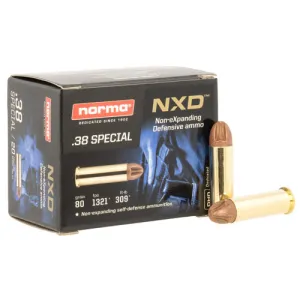
NORMA AMMO 38 Special NXD 38 Special 20rd
.38 Special · 20 rds

Scorpion 38 Special 125gr JHP Ammo, 20rds - 38125JHP-S20
.38 Special · 125gr · 20 rds
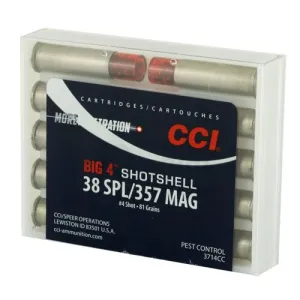
CCI Big 4 38 Special / 357 Magnum 84Gr #4 Handgun Shotshells | 10 Rounds
.38 Special · 84gr · 10 rds
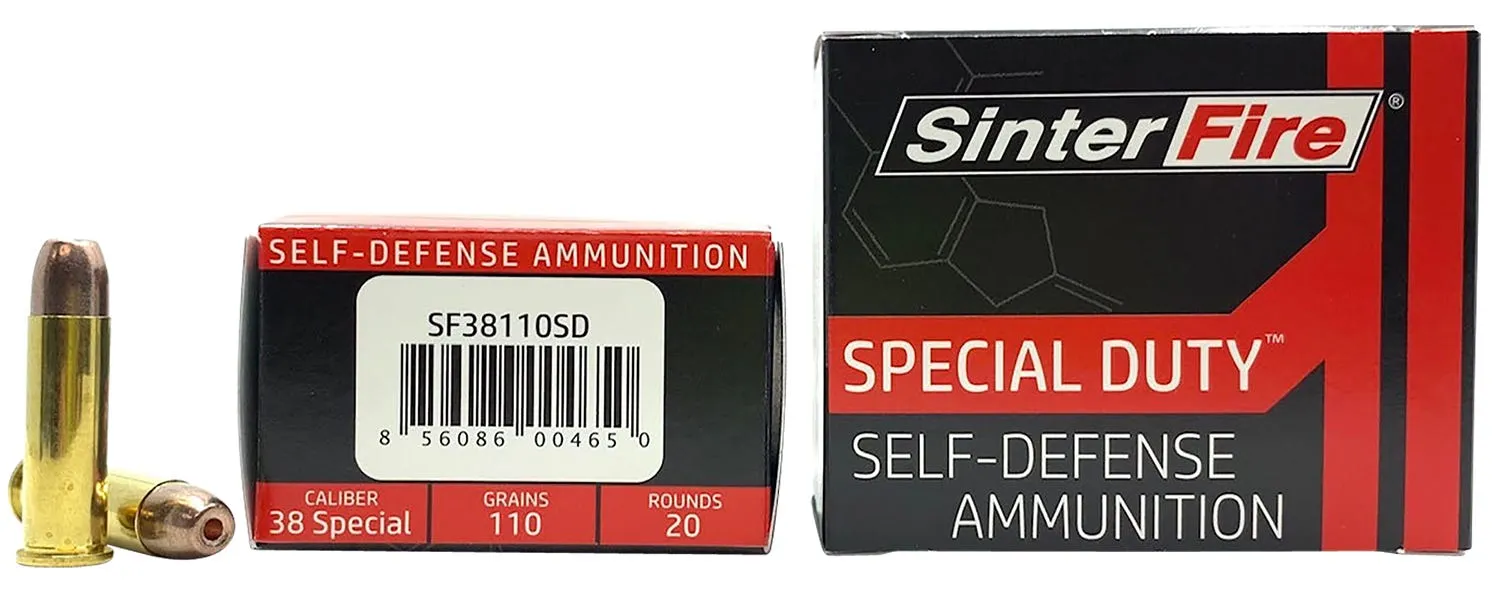
SinterFire Special Duty Brass .38 SPL 110-Grain 20-Rounds FHP Lead Free
.38 Special · 110gr · 20 rds
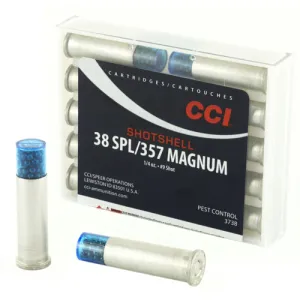
CCI Pest Control 38 Special / 357 Magnum 1/4 oz #9 Shotshell Ammunition | 10 Rounds
.38 Special · 10 rds
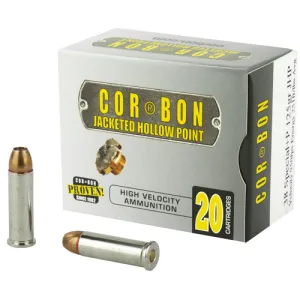
CORBON AMMO 38 Special 125Gr Self Defense JHP +P 20rd
.38 Special · 125gr · 20 rds
That grid is sorted by total box price rather than cost per round, which is the cheapest way to see the problem. The lowest box prices in .38 Special are mostly 20-round defensive boxes — the cheapest box in the whole index is $15.99 — because a 20-round box of expensive ammo and a 50-round box of cheap ammo land at a similar sticker price. Sort by sticker and you get the small boxes. Sort by cost per round and you get the big ones.
This is the single most useful thing to internalize about buying .38. The number on the shelf tag tells you almost nothing; you have to divide. If you want to run your own comparison against a box you are looking at:
Cost Per Round Calculator
The only number that matters when comparing ammo. Shipping included.
Our picks for the two jobs, priced live:
Four .38 Special Loads Worth Owning
MAGTECH 38 Special 158Gr 755 FPS LSWC 50rd
A 158-grain lead semi-wadcutter in a 50-round box. This is the load class that sits at the bottom of our .38 Special index, and it is what you should be burning through a snub on a range day. Lead loads foul a bit faster than jacketed, which matters more in a revolver you intend to leave loaded than in one you clean after shooting.
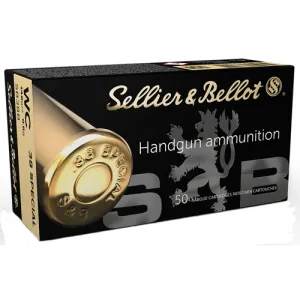
SELLIER BELLOT SB38B Handgun 38 Special 148 gr Wadcutter Ammunition | 50 Rounds
A 148-grain full wadcutter, seated flush, loaded soft. In a 15-ounce revolver with a 2-inch barrel the recoil difference between this and a +P defensive load is not subtle, and the flat meplat cuts clean holes you can actually score. If you are trying to learn a heavy double-action trigger, shoot this.

Speer Gold Dot Personal Protection Brass .38 Special+P 135-Grain 20-Rounds HP
Speer's 135-grain +P is the load the short-barrel category was built around — the manufacturer develops and advertises it specifically for 2-inch revolvers rather than for the longer test barrels most .38 load data comes from. Confirm your revolver is rated for +P before you carry it.
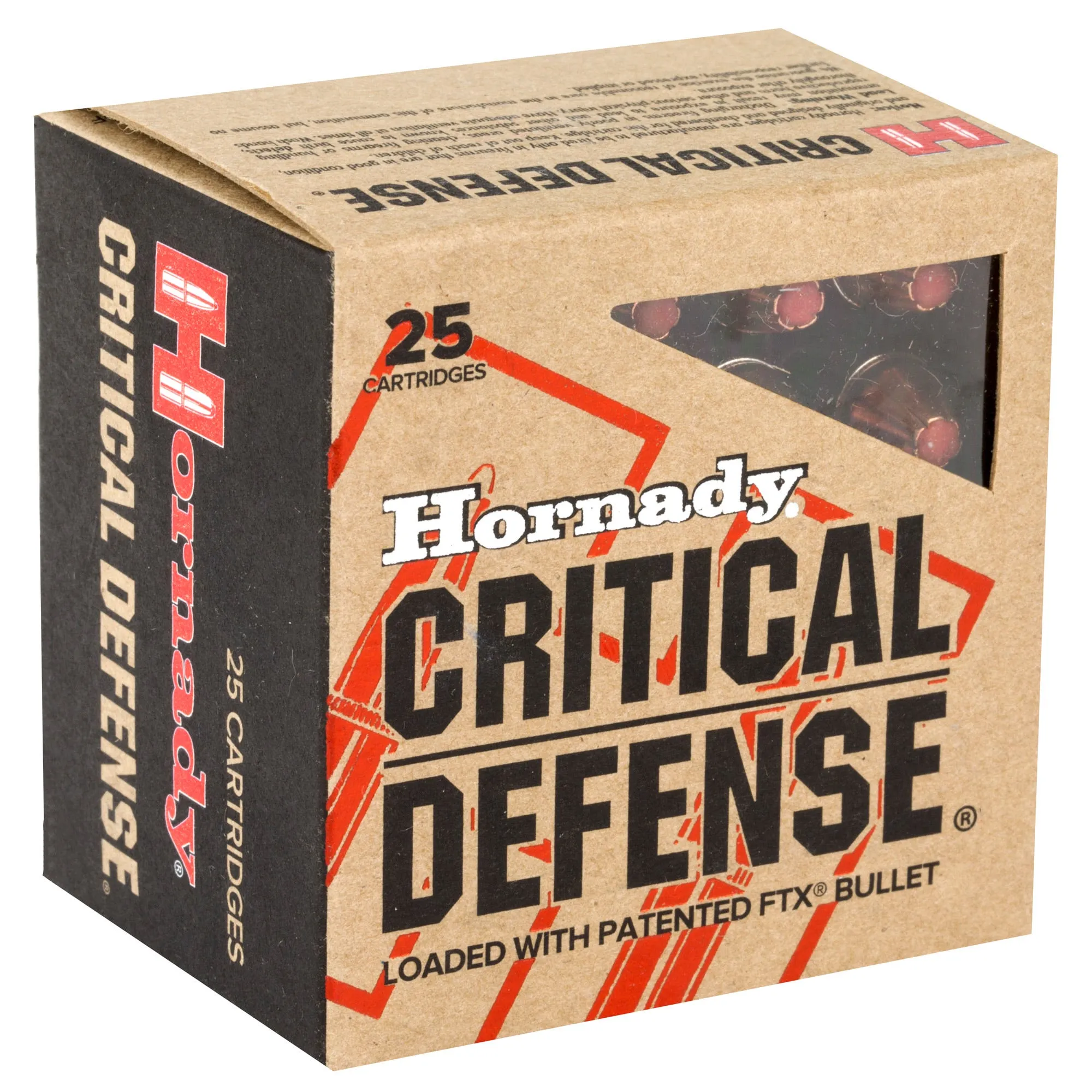
Hornady Critical Defense .38SPL 110 GR FTX 25rds
A 110-grain FTX in a 25-round box. Hornady's pitch for the lighter bullet is reduced recoil, which is a real consideration if arthritis, hand strength or flinch is the limiting factor on where your rounds land. You pay for it in per-round price, and the figure on this card shows how much.
Should You Buy a .357 Magnum Revolver Instead?
A .357 Magnum revolver chambers and fires .38 Special, so this question is really about whether the extra capability is worth the extra weight. Here is what the magnum cartridge costs in our index right now:
.357 Magnum Price Index
Live · Oct 4, 2026Compare that against the .38 Special block at the top of this page. The practical reading: a .357 snub gives you the cheaper cartridge for practice and the option of magnum loads, at the cost of a heavier gun — and most people who buy one end up shooting .38 Special through it almost exclusively, because full-power magnum loads in a 2-inch barrel are loud, bright and hard to control.
How Much .38 Special Should You Actually Buy?
A five-shot revolver turns a 50-round box into one unremarkable range session. If you are ordering 50 rounds at a time you are paying shipping over and over, and ammo shipping is not cheap — check what actually ships to your address before you build a plan around any particular retailer, because .38 Special is a handgun cartridge and some jurisdictions treat those differently.
For how much practice volume actually moves the needle on skill, how many rounds does it take to get good has the realistic numbers. For a snub specifically, budget for more than you would with a semi-auto: the trigger is harder, the sights are worse, and the gun is less forgiving.
And if you are still buying the revolver itself rather than the ammo for it, how FFL transfers work covers the part of the process that catches first-time online buyers out.
Browse everything currently in stock on our .38 Special ammo page, or set a target price and let it come to you:
Get alerted when .38 Special price drops hit.
We watch every listing and email you the moment the cost per round drops.
Set Up a Free Price AlertAmmoSpotter earns a commission when you buy through links on this page. It never changes what you pay, and it never decides what we recommend — our picks are ranked on live cost-per-round data pulled from every retailer we track. Full disclosure.
Frequently Asked Questions
What is the best .38 Special ammo for a 2-inch snub-nose?+
Why is .38 Special defensive ammo so expensive per round?+
Can I shoot +P .38 Special in my snub-nose revolver?+
Are wadcutters a serious choice for a snub-nose?+
Is it cheaper to buy a .357 Magnum revolver and shoot .38 Special in it?+
How much .38 Special should I buy at once?+
Shop the data

About the author
AmmoSpotter Research Desk
Price & Ballistics Research
The AmmoSpotter Research Desk analyzes live retail pricing across every ammunition, firearm and accessory listing we track. Recommendations here are ranked against real cost-per-round data pulled daily from the retailers we monitor - not against manufacturer marketing copy.
- ✓Tracks 180,000+ live product listings across 6 retailer feeds
- ✓Records price history on every listing, every day
- ✓Cost-per-round methodology applied to all ammunition rankings
- ✓No product is ranked without a verifiable in-stock retail price
- ✓Affiliate relationships never influence rankings
Related Guides

Best Concealed Carry Ammo by Caliber (2026): Live Prices for Every Carry Cartridge
- Pick the caliber you shoot well in a gun you will carry daily. Every mainstream carry cartridge works; none of them compensate for a miss. - Carry-load cost is nearly irrelevant — it is one magazine. Practice cost i...
FMJ vs JHP vs Soft Point: What the Bullet Actually Does for the Money
Three letters on a box decide what the bullet does when it stops being a bullet and starts being a hole. FMJ resists deforming. JHP is built to come apart in a controlled way. Soft point sits between them, expanding a...

How AmmoSpotter Ranks Ammunition (And What We Refuse to Claim)
Most ammunition rankings on the internet are one of two things: a static list assembled once and never revisited, or an affiliate page ordered by commission rate. Neither tells you what to buy today. This page is our ...
How Barrel Length Changes Velocity — And What It Should Change About Your Ammo
- Shorter barrel, same load, less velocity. That part is physics and it only runs one way. - The velocity printed on the box was measured in a test barrel. Unless yours matches that length, the number is not yours. - ...
Best 10mm Auto Ammo 2026: Hunting, Woods Carry and Bear Defense Loads
- 10mm Auto has a trimmed floor of about $0.440 per round in our index — but an average of roughly $1.235 across 213 live listings, and a ceiling of $2.990 . - That floor-to-average gap is the biggest in any mainstrea...

Best First Handgun for a New Shooter (2026): Pick the Gun, Then Fund the Round Count
- Buy the gun you can afford to shoot 500 rounds through, not the most gun you can afford to buy. - 9mm is the default first chambering for one unglamorous reason: it is the cheapest centerfire pistol round on the mar...