FMJ vs JHP vs Soft Point
Three jacket designs, three jobs, three different prices per round. Here is what each one is built to do and where the money actually goes.
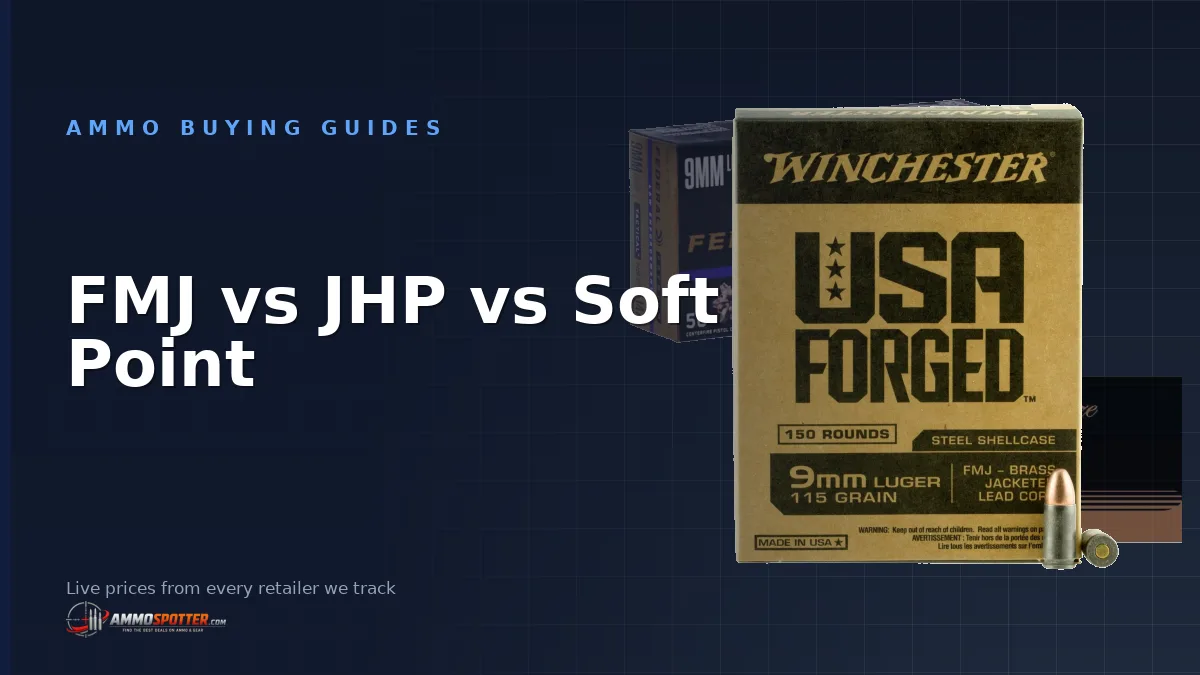
Three letters on a box decide what the bullet does when it stops being a bullet and starts being a hole. FMJ resists deforming. JHP is built to come apart in a controlled way. Soft point sits between them, expanding at rifle velocity without relying on a cavity to do it.
Everything else — the price gap, the range rules, whether it is legal for deer in your state — follows from that one design decision.
What each bullet is actually built from
FMJ — full metal jacket
A lead core enclosed in a harder jacket, typically a copper alloy, drawn over the nose and sides with the base left open. Nothing about the nose is designed to deform. Hit something and it tends to stay in one piece and keep going.
That has two consequences. First, it is simple and fast to manufacture, which is why it anchors the bottom of every centerfire price list we track. Second, the smooth profile feeds through magazines and ramps without drama, which is why military and duty training ammunition is built this way.
JHP — jacketed hollow point
Same basic construction with a cavity pressed into the nose. In soft tissue that cavity fills, hydraulic pressure peels the jacket and core outward, and the bullet widens and slows.
The design goal is not more damage in the abstract. It is energy transferred inside the target instead of downrange. A defensive handgun round that exits the target is still carrying enough velocity to be someone else's problem, and that is the specific failure mode hollow points exist to reduce.
The premium tiers add engineering on top of that: bonding the core to the jacket so it does not separate through heavy clothing or auto glass, mechanical locking rings, nickel-plated cases for corrosion resistance and visual inspection. Each addition is a manufacturing step, and each one shows up in the price.
Soft point — exposed lead nose
A jacket that covers the base and sides but leaves lead visible at the tip. No cavity. Expansion comes from the soft nose mushrooming back against the jacket.
Soft points open more gradually than hollow points and generally retain more weight. At rifle velocity, that matters — a fast-opening bullet driven at 2,800 feet per second can come apart before it has penetrated anything useful. That is why the hunting shelf is full of soft points and the carry shelf is not.
Why FMJ is the cheapest ammunition you can buy
Start with the market, because it makes the argument better than prose does:
9mm Luger Price Index
Live · Sep 17, 2026Now look at what actually occupies the bottom of that range:
Cheapest Bulk 9mm Right Now
Prices updated Sep 17, 2026
Winchester USA Forged 9mm 115 Grain 1000-Rounds Bulk FMJ
9mm · 115gr · 1,000 rds

CCI Ammunition Blazer Aluminum 9mm 115-Grain 1000-Rounds Bulk FMJ
9mm · 115gr · 1,000 rds

Aguila Centerfire Handgun Bulk 9mm 115 Grain 300-Rounds FMJ
9mm · 115gr · 300 rds

Aguila Centerfire Handgun Bulk 9mm 124-Grain 300-Rounds FMJ
9mm · 124gr · 300 rds

Winchester Centerfire Handgun Brass 9mm 115-Grain 1000-Rounds FMJ Bulk
9mm · 115gr · 1,000 rds

PMC Ammunition Bronze Brass 9mm 124 Grain 1000-Rounds Bulk FMJ
9mm · 124gr · 1,000 rds
Every listing in that grid is ball. That is not a coincidence or a filter — the block is sorted purely by cost per round, with no bullet-type filter applied at all, and full metal jacket wins on price without being asked to.
Two forces put it there. FMJ is the simplest centerfire projectile in production, and it ships in an order of magnitude more volume than anything else, which spreads fixed costs across far more units. The same two forces drive the rest of the market's pricing behavior, which we broke down in why ammo prices move.
What you actually pay for a hollow point
Here is the honest version of the trade: you are paying for engineering you cannot verify yourself, on a round you will fire very few of.
One of Each, at Live Prices
Winchester USA Forged 9mm 115 Grain 1000-Rounds Bulk FMJ
A thousand rounds of 115-grain ball in one carton is the cheapest realistic way to feed a 9mm. Winchester's Forged line uses a steel case rather than brass, which is where a chunk of the savings comes from - and which is also the reason to check your range rules and your reloading plans before buying a case of it.
Pros
- ✓Sold by the 1,000-round carton
- ✓Standard 115gr ball, feeds in essentially anything
- ✓Sits at the bottom of our tracked 9mm catalog
Cons
- ✗Steel case, so it is not reloadable
- ✗Some indoor ranges restrict steel-cased ammunition

PMC Ammunition Bronze Handgun Ammo Brass 9mm 50-Rounds 115 Grain JHP
PMC Bronze is a plain jacketed hollow point in a 50-round brass box, priced far closer to ball than to a premium duty load. It is not a bonded, engineered defensive projectile, but it is a hollow point you can actually put a few boxes of through the gun to confirm it feeds.
Pros
- ✓Brass case, 50-round box
- ✓Carried by more than one retailer we track, so the price is competed
- ✓Cheap enough to function-test in quantity
Cons
- ✗Conventional cup-and-core, not a bonded defensive design
- ✗Expansion is not marketed or engineered the way duty loads are
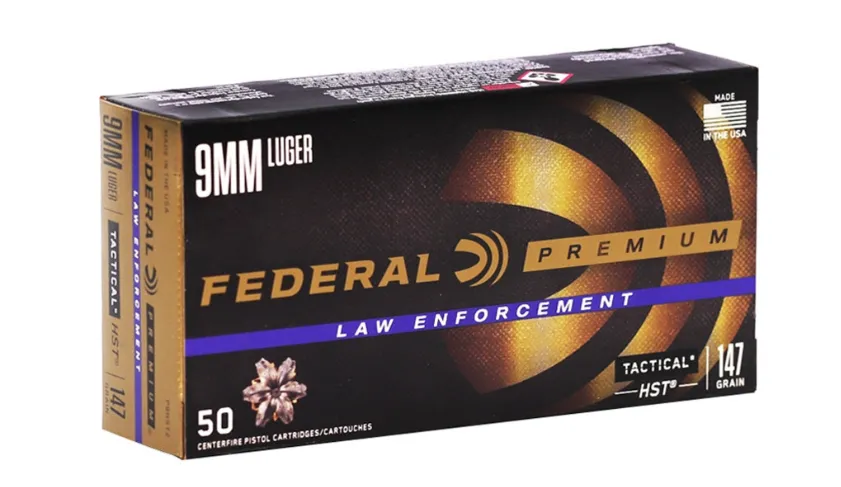
Federal HST 9mm 147 Grain 50-Rounds JHP
Federal HST in 147 grain is the load most defensive handgun instruction and most agency testing is built around. You are paying for a jacket and core engineered to open at handgun velocities through heavy clothing and stay together doing it. That engineering is the entire price gap between this and ball ammunition.
Pros
- ✓The common benchmark load in duty and defensive contexts
- ✓Multiple tracked retailers
- ✓Available in 115, 124 and 147 grain
Cons
- ✗Several times the cost per round of practice ball
- ✗Carry it, do not practice with it
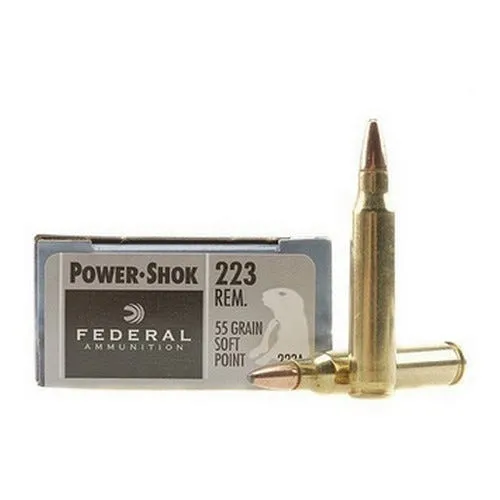
Federal Power-Shok .223Rem 55gr Soft Point 20rds
Federal Power-Shok is the plainest expanding rifle load there is: exposed lead nose, conventional jacket, 20 rounds to a box. In .223 it is what a soft point is for - a bullet that will open reliably at rifle velocity on game where full metal jacket would simply pass through.
Pros
- ✓Exposed lead tip expands without relying on a cavity
- ✓Stocked at multiple tracked retailers
- ✓Sold in small boxes, which suits hunting round counts
Cons
- ✗Costs multiples of bulk 55gr ball per round
- ✗Check your state's caliber rules for big game before buying

BARNAUL AMMO 30-06 140Gr Soft Point Steel 20rd
Barnaul's steel-cased .30-06 soft point shows that expanding construction and a premium price are not the same thing. It is a polymer-coated steel case with an exposed-lead 140-grain bullet, and it sits far below the brass-cased hunting loads in the same caliber in our catalog.
Pros
- ✓One of the least expensive expanding rifle loads we track
- ✓Exposed lead soft point construction
- ✓20-round box
Cons
- ✗Steel case, not reloadable, restricted at some ranges
- ✗Light for caliber at 140 grains - check it against what you are hunting
A plain cup-and-core JHP sits only modestly above ball. A bonded duty load sits several times above it. Both are hollow points. The gap between them is bonding, quality control and testing volume — not the presence of a cavity.
That matters for how you buy. Carry the engineered load. Function-test it, then stop shooting it. Two boxes through the gun confirms feeding and point of impact. After that, every additional round of premium defensive ammunition is money spent making holes that ball would have made for a fraction of the cost. If you are working out how much practice you actually need, how many rounds does it take to get good has the arithmetic.
If you want the specific defensive loads in this caliber ranked against live prices, that is best 9mm ammo.
Where soft point still wins
Rifle velocity changes the problem. A handgun hollow point is engineered to open at 1,100 feet per second; push a similar design to 2,800 and it can shed its jacket on impact instead of driving through.
Soft points solve that by opening slower. That is why they are the default construction across the hunting calibers — and why "hollow point" on a rifle box usually means a match bullet, where the tiny cavity is a manufacturing artifact of making the base concentric, not an expansion feature. A hollow point match bullet is not a hunting bullet.
Cheapest .308 Winchester by Cost per Round
Prices updated Sep 17, 2026
BARNAUL AMMO 308 WIN 145Gr FMJ Poly Coated Steel Case 20rd
.308 Winchester · 145gr · 20 rds

BARNAUL AMMO 308 Win 150Gr HPBT Polycoated Steel Case 20rd
.308 Winchester · 150gr · 20 rds

BARNAUL AMMO 308 Win 145Gr FMJ Zinc Steel Case 20rd
.308 Winchester · 145gr · 20 rds

BARNAUL AMMO 308 Win 140gr SP Polycoated Steel Case 20rd
.308 Winchester · 140gr · 20 rds

BARNAUL AMMO 308 Win 168Gr FMJBT Polycoated Steel Case 20rd
.308 Winchester · 168gr · 20 rds

BARNAUL AMMO 308 Win 168Gr SPBT Polycoated Steel Case 20rd
.308 Winchester · 168gr · 20 rds
Read the titles in that grid, not just the prices. Sorted by cost per round with no construction filter, the cheap end of .308 routinely mixes FMJ, hollow point boat tail and soft point loads within pennies of each other — usually because they come from the same steel-cased production line. Expanding construction does not automatically mean a premium price. What costs money is brand, case material and consistency, and those are separable from what the nose of the bullet does.
The 5.56 case: where the labels get confusing
Centerfire rifle is where bullet nomenclature does the most damage to buyers, because the military designations do not map onto the three categories cleanly.
Cheapest Bulk .223 / 5.56 Right Now
Prices updated Sep 17, 2026
Wolf Military Classic Steel .223 Rem 55 Grain 500-Rounds Bulk FMJ
.223 Remington · 55gr · 500 rds

PMC Ammunition Bronze .223 Rem 55 Grain 1000-Rounds FMJ Bulk
.223 Remington · 55gr · 1,000 rds

Red Army Standard Centerfire Rifle Steel .223 Rem 55-Grain 500-Rounds Bulk FMJ
.223 Remington · 55gr · 500 rds

Wolf Performance Ammo PolyFormanc Steel Bulk .223 Rem 55 Grain 500-Rounds
.223 Remington · 55gr · 500 rds

PMC Ammunition X-Tac Rifle Brass 5.56 55 Grain 1000-Rounds FMJBT Bulk
5.56x45mm NATO · 55gr · 1,000 rds

PMC Ammunition Battle Pack Bulk .223 Rem 55 Grain 200-Rounds FMJBT
.223 Remington · 55gr · 200 rds
Everything at the bottom of that list is ball. M193 and M855 are both full metal jacket — green tip adds a steel penetrator, not an expansion mechanism, and neither one is a defensive or hunting bullet despite how often both get sold as one. We took that comparison apart in M193 vs M855, and the broader caliber picture is in best 5.56 and .223 ammo.
If you want an expanding .223 — for hunting, or for a home-defense carbine where over-penetration matters — you are looking for a soft point or a bonded load specifically, and you will be paying several times the bulk ball rate for it.
What about .22 LR? None of these categories apply
Rimfire plays by different rules, and it is worth knowing why before you go looking for "FMJ .22":
Bulk .22 LR Value Packs Right Now
Prices updated Sep 17, 2026
FEDERAL AMMO Champion Value Pack 22LR 36gr Lead Hollow Point Ammunition | 325 Rounds
.22 LR · 36gr · 325 rds
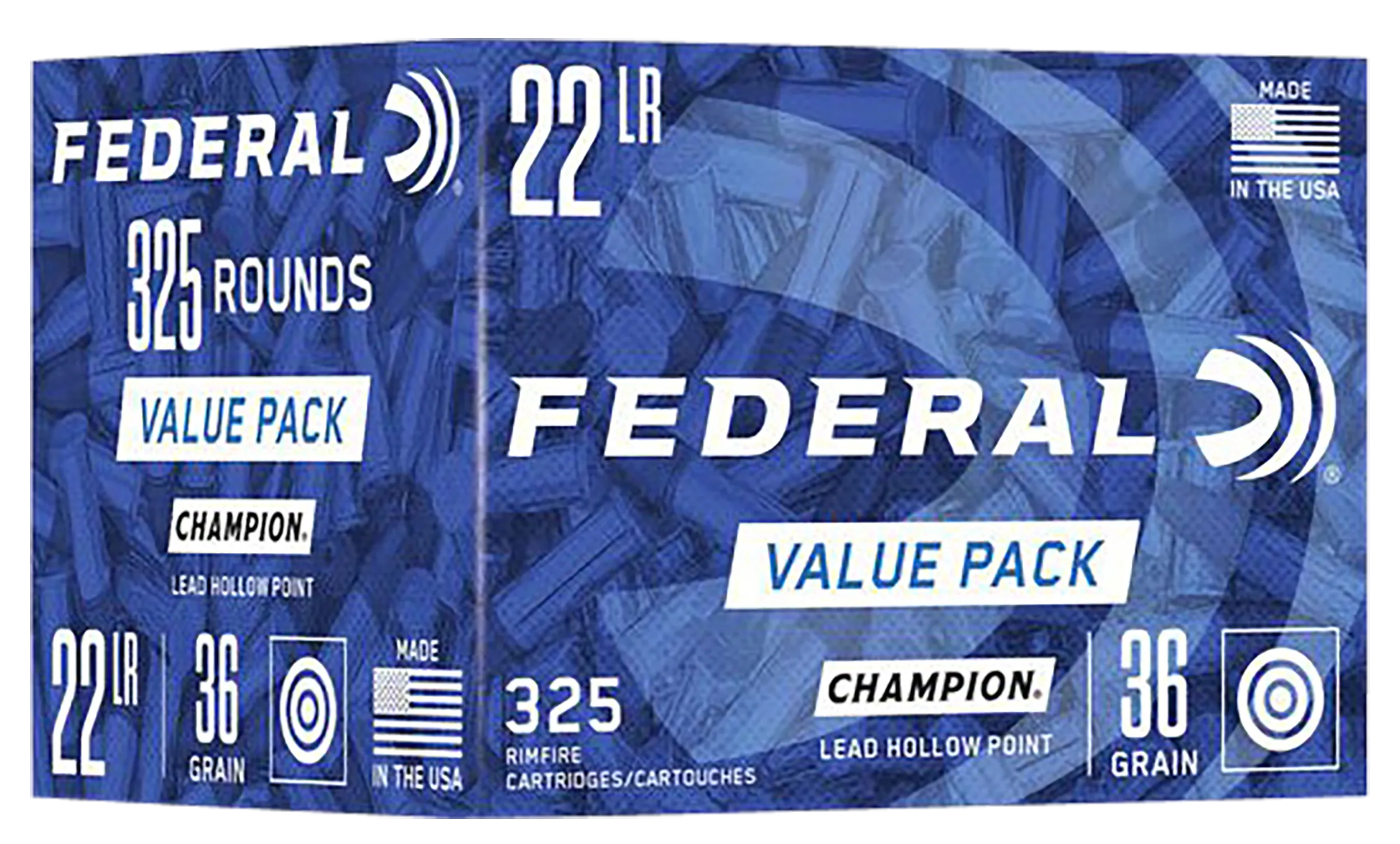
Federal Champion Training Value Pack Brass .22 LR 36 Grain 325-Rounds LHP
.22 LR · 36gr · 325 rds
FEDERAL AMMO AutoMatch 22LR 1200 FPS 40Gr 325rd
.22 LR · 40gr · 325 rds
WINCHESTER 22LR 36Gr Copper Plated Hollow Point Ammunition | 333 Rounds
.22 LR · 36gr · 333 rds
FEDERAL AMMO Value Pack 22LR 36gr Copper Plated Hollow Point Ammunition | 325 Rounds
.22 LR · 36gr · 325 rds
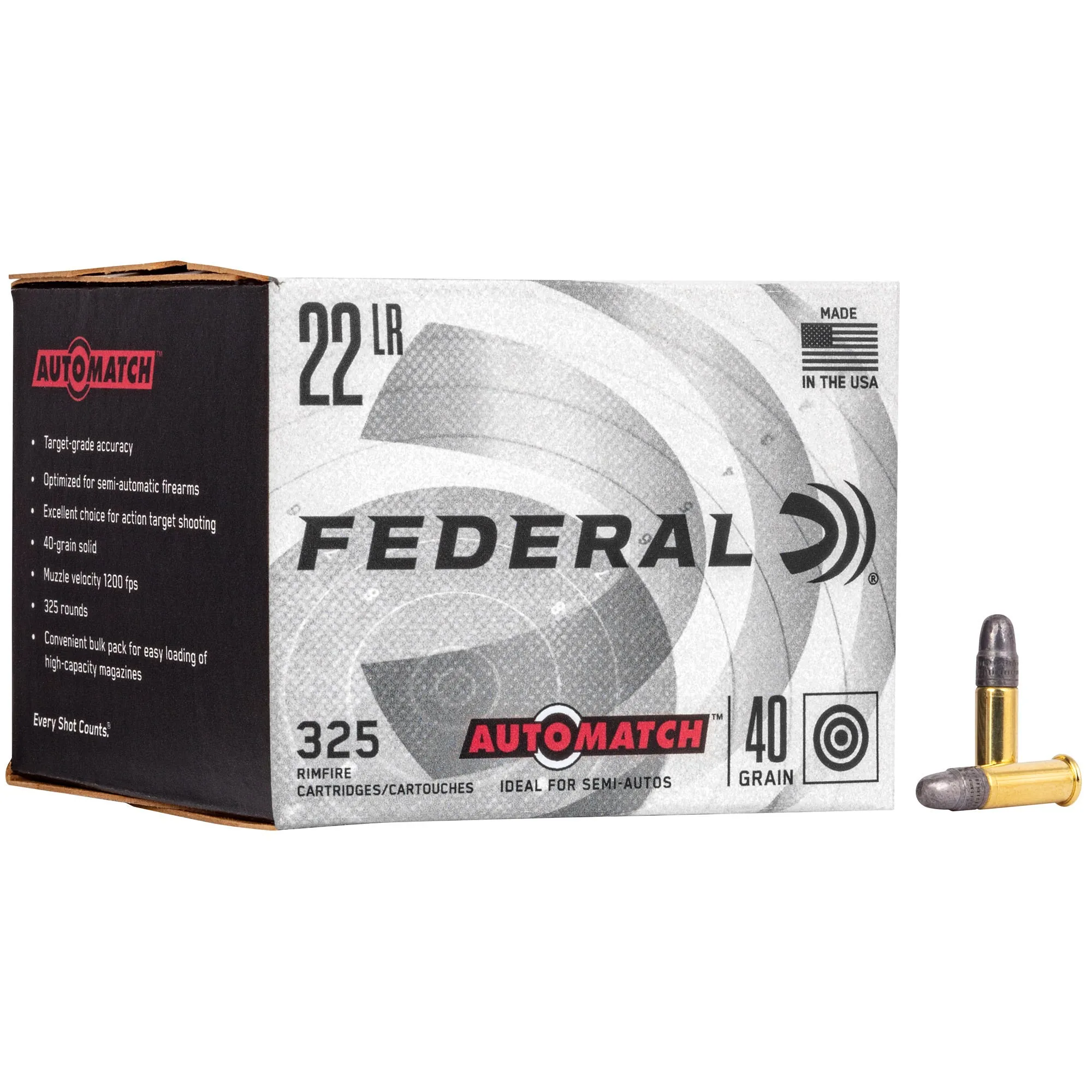
Federal Champion Training Bulk Ammo Brass .22 LR 40-Grain 325-Rounds LRN
.22 LR · 40gr · 325 rds
Most of that catalog is lead round nose, copper-plated hollow point or copper-plated solid — plating, not a true jacket. At rimfire velocity a heavy jacket is unnecessary, and the plating exists mainly to reduce bore leading and improve feeding. You will find genuine soft points and hollow points in .22 LR, but the price spread between constructions is a fraction of what it is in centerfire. The full rimfire breakdown is in best .22 LR ammo.
So what should you buy?
| FMJ | JHP | Soft point | |
|---|---|---|---|
| Nose | Fully jacketed | Cavity in jacketed nose | Exposed lead |
| Designed to | Hold together, penetrate | Expand and stop in target | Expand progressively at rifle speed |
| Primary use | Practice, training, volume | Defensive handgun | Hunting, expanding rifle |
| Typical relative cost | Lowest | Highest per round | Between, varies widely |
| Buy it by the | Case | Box, a few at a time | Box, per season |
| Legal for big game | Usually no — verify | Rarely appropriate | Usually yes — verify |
The practical rule is straightforward. Ball for volume, hollow point for carry, soft point for game. Most of what people spend on ammunition goes in the first category, so most of what you save comes from buying that category well — by the case, on cost per round, at the right time.
Cost Per Round Calculator
The only number that matters when comparing ammo. Shipping included.
Buy on the number, not the acronym
None of these three constructions is an upgrade over the others. They are three answers to three different questions, and the prices reflect manufacturing complexity and volume rather than a quality ranking.
The buying process is the same regardless of which one you need: convert every listing to landed cost per round, compare it against the current market floor for that caliber, and let an alert tell you when it moves rather than refreshing retailer pages.
Get alerted when 9mm price drops hit.
We watch every listing and email you the moment the cost per round drops.
Set Up a Free Price Alert- Every 9mm listing by cost per round
- Every .223 / 5.56 listing by cost per round
- Best 9mm ammo
- How AmmoSpotter ranks ammunition
- AmmoSpotter Ammo Price Index
AmmoSpotter earns a commission when you buy through links on this page. It never changes what you pay, and it never decides what we recommend — our picks are ranked on live cost-per-round data pulled from every retailer we track. Full disclosure.
Frequently Asked Questions
What does FMJ mean on a box of ammo?+
Is JHP better than FMJ for self defense?+
What is the difference between a hollow point and a soft point?+
Can you use FMJ for hunting?+
Why is hollow point ammo so much more expensive than FMJ?+
Should I practice with the same hollow point I carry?+
Shop the data

About the author
AmmoSpotter Research Desk
Price & Ballistics Research
The AmmoSpotter Research Desk analyzes live retail pricing across every ammunition, firearm and accessory listing we track. Recommendations here are ranked against real cost-per-round data pulled daily from the retailers we monitor - not against manufacturer marketing copy.
- ✓Tracks 180,000+ live product listings across 6 retailer feeds
- ✓Records price history on every listing, every day
- ✓Cost-per-round methodology applied to all ammunition rankings
- ✓No product is ranked without a verifiable in-stock retail price
- ✓Affiliate relationships never influence rankings
Related Guides

Best 9mm Ammo 2026: Range, Carry and Duty Loads Ranked
9mm Luger is the most-produced, most-competitive cartridge in the American market. That is good news and bad news: prices are low, and the sheer number of listings makes it easy to pay 30% more than you needed to for ...

Best 5.56 & .223 Ammo 2026: Practice, Defense and Precision
5.56x45mm NATO and .223 Remington are the most-purchased rifle cartridges in America, and the most confusing to buy. The same rifle will accept ammunition ranging from bulk steel-cased plinking loads to match ammuniti...

M193 vs M855: Which 5.56 Should You Actually Buy?
The green tip looks like a premium tier. It is not. M855 is a specialized barrier round that trades close-range fragmentation and range access for the ability to punch through light steel — and it usually costs more t...

Birdshot vs Buckshot vs Slug: Shotgun Ammo Explained
A shotgun is the most versatile firearm most people own, and that versatility comes entirely from the ammunition. The gun does not change. What comes out of it changes completely. Three families, three jobs, and a pri...

Best Concealed Carry Holsters 2026: What to Buy, Priced Live
- A carry holster has four jobs: cover the trigger completely, retain the pistol when inverted, hold its mouth open for one-handed reholstering, and index to the same spot on the belt every time. Everything else is pr...

Best Concealed Carry Ammo by Caliber (2026): Live Prices for Every Carry Cartridge
- Pick the caliber you shoot well in a gun you will carry daily. Every mainstream carry cartridge works; none of them compensate for a miss. - Carry-load cost is nearly irrelevant — it is one magazine. Practice cost i...