How Barrel Length Changes Velocity
Cutting the barrel costs you velocity in one direction only. The fix is picking a load built for the barrel you own, not paying more for one that isn't.
Why a shorter barrel gives up velocity
A cartridge is a brief, controlled pressure event. The primer lights the powder, the powder generates expanding gas, and that gas pushes on the base of the bullet for as long as the bullet is still in the bore. Cut the bore short and you cut the push short. The bullet exits while gas is still doing useful work, and that work leaves the muzzle as noise, flash and unburned powder instead of speed.
That is the whole mechanism, and it explains every second-order effect people argue about. A shorter barrel is louder because more of the pressure event happens outside the gun. It flashes more because powder that should have burned in the bore burns in the air. And it produces less velocity with the identical cartridge, every time, in every gun, without exception.
What is not fixed is the size of the penalty. Two cartridges can give up wildly different amounts of velocity over the same inches, because the variable that matters is how fast the powder finishes its job. If you want the downstream consequence — what a velocity change does to energy, drop and terminal performance — start with muzzle energy vs muzzle velocity, which is the pillar this guide hangs off.
The velocity on the box was measured in a barrel that isn't yours
Every published velocity figure comes with an asterisk: the barrel it was measured in. Ammunition makers test in a barrel of a stated length, under standardized conditions, and print the result. That is a legitimate, useful number. It is just not a promise about your rifle.
This is where most short-barrel disappointment comes from. Someone buys a load advertised at a velocity, shoots it out of a barrel several inches shorter than the test barrel, and concludes the ammunition is underloaded. It is not. The measurement was honest and the reader skipped the footnote.
So the practical move is not to hunt for a secret load that beats physics. It is to read the test barrel length, compare it to yours, and know which direction your real velocity sits. Then choose on the variables you can actually verify — bullet construction, powder burn rate suited to your barrel, and price.
Which cartridges care most about barrel length
Sort cartridges by how much of their design depends on a long bore, and the buying decision mostly makes itself.
5.56 NATO and .223 Remington were designed around a 20-inch barrel and rifle-speed powder. Chop that in half and a meaningful share of the powder charge never gets used. The cartridge still works — millions of short-barrel carbines exist — but you are paying for case capacity you cannot exploit, and the muzzle blast tells you so. Load selection matters more here than in almost any other chambering; our 5.56 and .223 buying guide breaks the load classes apart.
.300 Blackout exists specifically to solve this problem. It was designed to burn its charge completely in a short barrel, which is why it dominates 8- to 10-inch AR builds and why it is the default answer for suppressed carbines. It is not a magic cartridge — it trades range and cost per round for that efficiency — but on the specific question of "does this barrel length ruin it," it is the cartridge that says no.
.22 LR sits at the opposite end because its charge is tiny and finishes early. A rimfire rifle is not giving up much to a shorter tube, which is part of why it stays the cheapest way to shoot. The .22 LR buying guide covers where the bargains actually are.
Handgun cartridges face a compressed version of the same problem. A carry-length barrel and a full-size duty barrel are separated by only an inch or two, but on a fast-burning pistol powder those inches still move the number — enough that defensive loads are now routinely designed and marketed around short barrels. If that is your use case, the load lists in our 9mm guide are organized around it.
What the barrel-length decision actually costs per round
Here is the part no ballistics chart will tell you: the cartridge that survives a short barrel best is usually not the cheapest one to feed. That trade-off is a price question, and it changes weekly.
.300 Blackout Price Index
Live · Sep 28, 20265.56 NATO / .223 Rem Price Index
Live · Sep 28, 2026Those two blocks are live. Read the market floor line on each and you have the real terms of the deal: what you pay per round for a cartridge that works at 10 inches, versus one that wants 20. Neither answer is universally right. A gun that lives in a safe and gets shot 100 rounds a year can absorb the more expensive cartridge easily. A gun you are trying to actually get good with cannot — the round count required is the thing that bankrupts people, as how many rounds it takes to get good lays out.
Cheapest .300 Blackout Right Now
Prices updated Sep 28, 2026
Wolf Performance Ammo Polyformance Steel Case .300 AAC Blackout 145 Grain 20-Rounds
.300 Blackout · 145gr · 20 rds

NOSLER Custom Brass 300 AAC Blackout Bulk Brass 250rd
.300 Blackout · 250 rds

SELLIER BELLOT SB300BLKB 300 AAC Blackout 147gr Full Metal Jacket Ammunition | 20 Rounds
.300 Blackout · 147gr · 20 rds

ARMSCOR Precision 300 AAC Blackout 147gr Full Metal Jacket Ammunition | 100 Rounds
.300 Blackout · 147gr · 100 rds

SELLIER BELLOT SB300BLKSUBA 300 AAC Blackout 200gr Full Metal Jacket Subsonic Ammunition | 20 Rounds
.300 Blackout · 200gr · 20 rds

MAGTECH 300 AAC Blackout HPFB 115Gr 50rd
.300 Blackout · 115gr · 50 rds
If you want to run the arithmetic on a specific box you are looking at, including shipping, use the calculator rather than the sticker price:
Cost Per Round Calculator
The only number that matters when comparing ammo. Shipping included.
Shipping is the step most buyers skip, and it moves the answer more than a few cents of advertised discount. Our breakdown of why ammo prices move covers the rest of the forces behind the number you see today.
Short barrels, suppressors and the subsonic line
Short barrels and suppressors travel together, because the same people want both and for related reasons. Two things are worth getting straight.
First, direction. A shorter barrel lowers velocity, so it moves a load further below the speed of sound, never above it. The failure mode people actually hit is the reverse: a load sitting close to the transonic line fired from a longer barrel, which cracks when they expected quiet. Subsonic status is a property of the load and the gun together — verify it in your setup, not from the label. Our suppressed rifle ammo guide and the suppressor buying guide both start from that assumption.
Second, reliability. Subsonic loads in a gas gun are a tuning problem, not just an ammunition choice. A short barrel changes gas port timing along with velocity, which is why the same subsonic load can run perfectly in one carbine and short-stroke in another.
Does a longer barrel earn its cost?
A barrel is a one-time purchase. Ammunition is a subscription. That framing settles more arguments than ballistic tables do.
AR Barrels We're Tracking
Prices updated Sep 28, 2026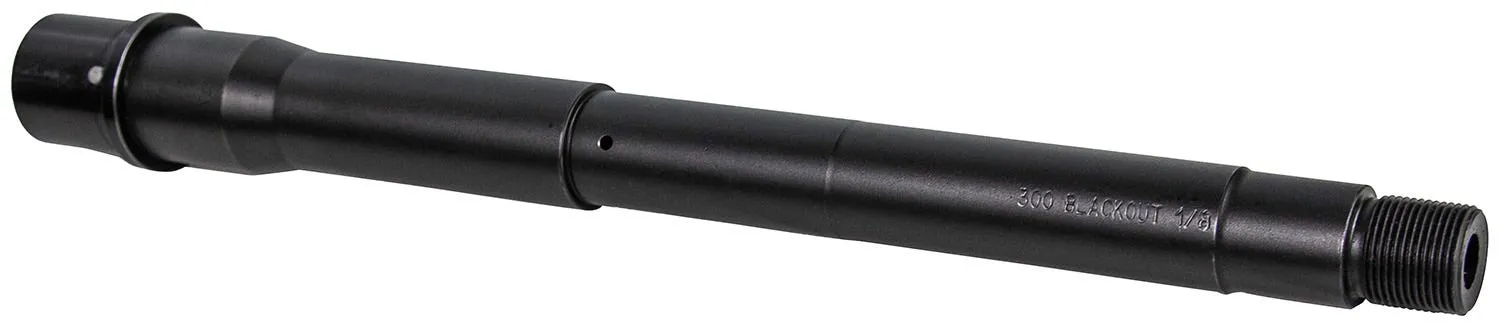
Diamondback DB Barrel .300 AAC Blackout 10 Barrel Pistol-Length
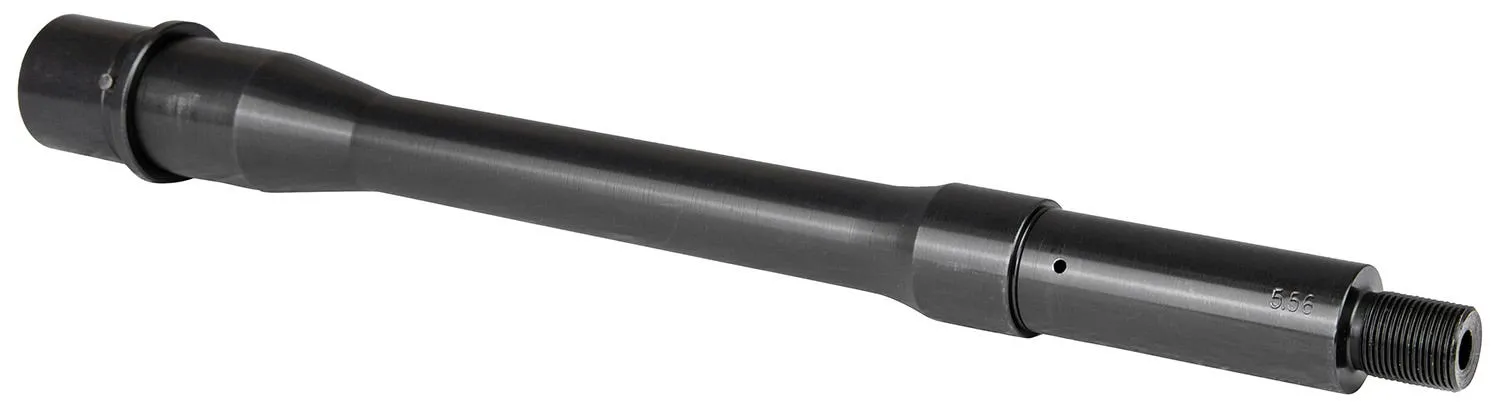
Diamondback DB Barrel 5.56 10 Barrel
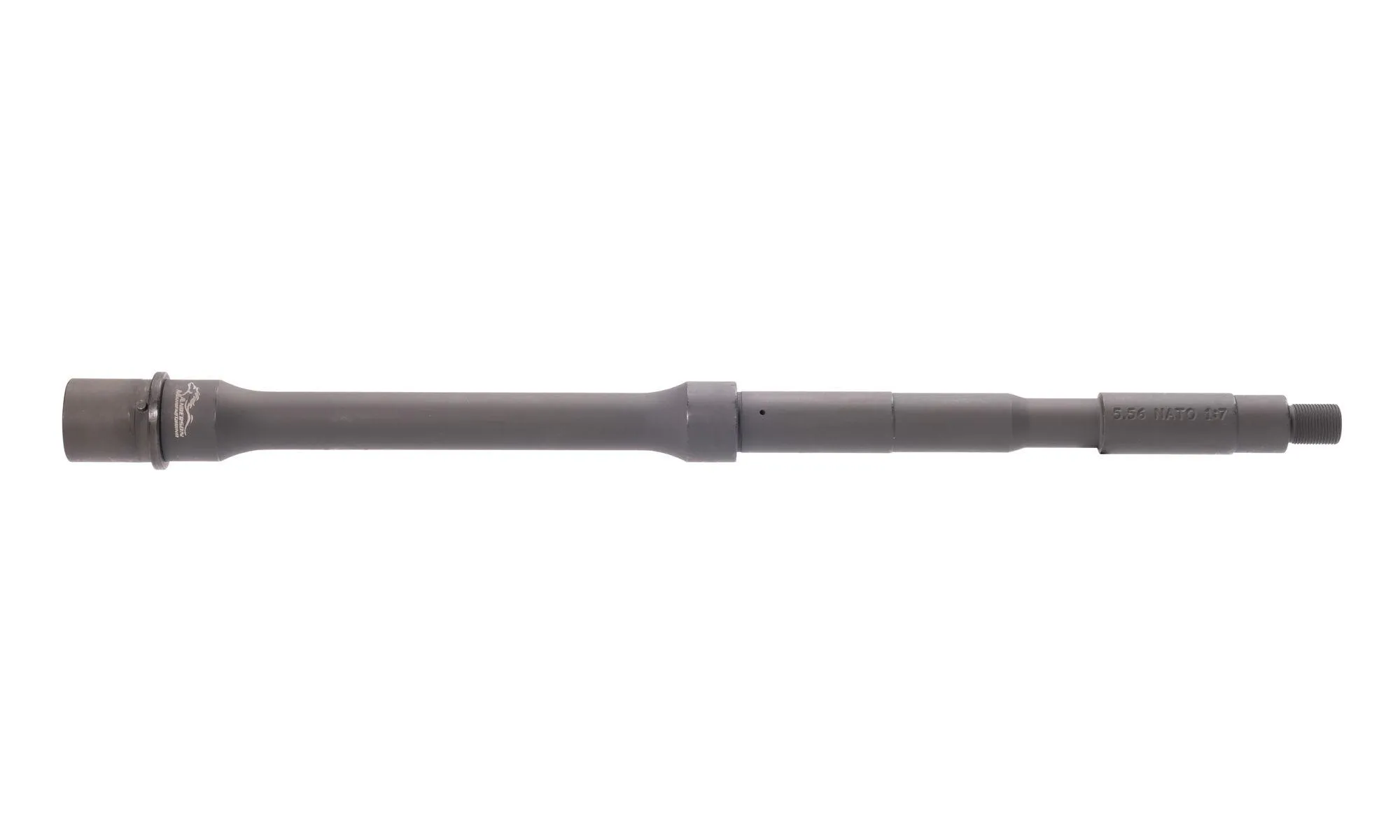
Anderson Manufacturing Contour Barrel 16 for AR-15 1/2-28
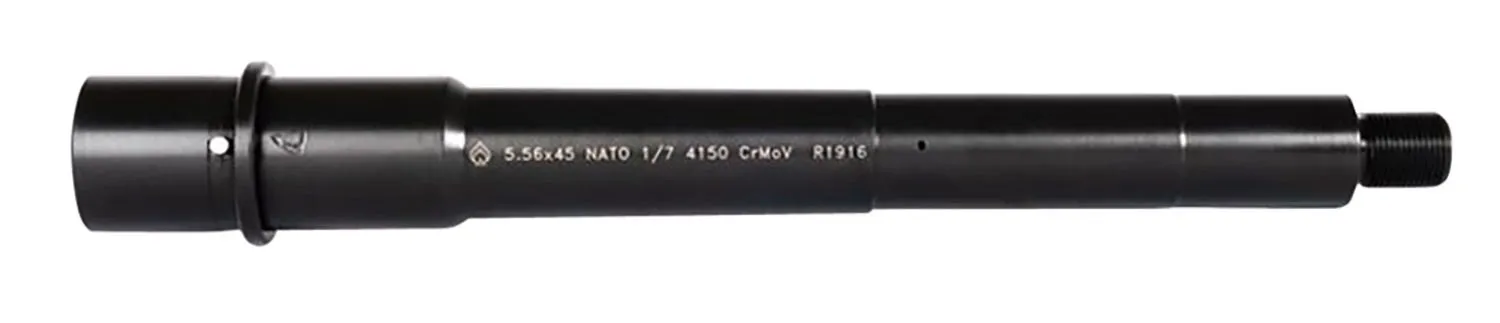
Ballistic Advantage Modern Series 5.56 NATO 8 Barrel
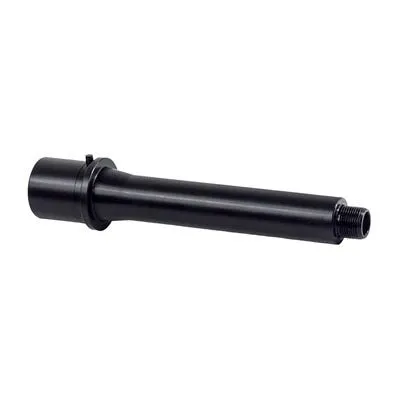
Ballistic Advantage AR Barrel 9mm 5.5

Diamondback DB Barrel 300 Blackout 16 Pistol-Length
Those are live prices on barrels we track. Compare any one of them against what a year of ammunition costs at the per-round figures in the indexes above, and the barrel stops looking like the expensive part of the decision. Which is the real argument for buying the length you want up front instead of the length you will replace: if you know the gun is going to be a suppressed short-barrel build, the ammunition cost of that choice will dwarf the hardware cost within a year or two of honest range time. And if you are buying a complete gun rather than parts, the transfer mechanics are covered in how to buy a gun online.
How to pick ammo for the barrel you already own
- Find the test barrel length behind any velocity claim you are relying on. If it is longer than yours, your real number is lower. If the seller cannot tell you, treat the claim as marketing.
- Match powder burn rate to barrel length, not price to ambition. A short barrel wants a cartridge and load designed to finish burning early. This is a selection decision, and it is free.
- Do not buy velocity you cannot use. Premium rifle ammunition earns its price on bullet construction and lot consistency. Neither of those is a cure for a barrel that is too short to burn the charge.
- Confirm subsonic status in your own gun if quiet matters. Load plus barrel plus suppressor is the unit that either stays under the line or does not.
- Buy on cost per round with shipping included, then set an alert and let the price come to you instead of paying whatever this week's number happens to be.
Get alerted when .300 Blackout price drops hit.
We watch every listing and email you the moment the cost per round drops.
Set Up a Free Price AlertYou can also browse the full live sets directly: .300 Blackout ammo and .223 / 5.56 ammo, both sorted by real cost per round.
AmmoSpotter earns a commission when you buy through links on this page. It never changes what you pay, and it never decides what we recommend — our picks are ranked on live cost-per-round data pulled from every retailer we track. Full disclosure.
Frequently Asked Questions
Does a shorter barrel always mean lower velocity?+
How do I find out how much velocity my barrel actually gives?+
Is .300 Blackout better than 5.56 in a short barrel?+
Will a short barrel make my subsonic ammo go supersonic?+
Do I need a more expensive load to make up for a short barrel?+
What barrel length is legal without NFA paperwork?+

About the author
AmmoSpotter Research Desk
Price & Ballistics Research
The AmmoSpotter Research Desk analyzes live retail pricing across every ammunition, firearm and accessory listing we track. Recommendations here are ranked against real cost-per-round data pulled daily from the retailers we monitor - not against manufacturer marketing copy.
- ✓Tracks 180,000+ live product listings across 6 retailer feeds
- ✓Records price history on every listing, every day
- ✓Cost-per-round methodology applied to all ammunition rankings
- ✓No product is ranked without a verifiable in-stock retail price
- ✓Affiliate relationships never influence rankings
Related Guides

Muzzle Energy vs Muzzle Velocity: What Actually Matters
Every ammunition box prints a velocity figure, and most print an energy figure next to it. Both are real. Both get used to argue things they cannot support — that one cartridge "hits harder," that a lighter bullet is ...
Best .300 Blackout Ammo 2026: Supersonic and Subsonic on Live Prices
.300 Blackout exists to solve one problem: fitting a heavy, slow bullet into an AR-15 that cycles reliably with nothing changed but the barrel. It does that well. What it does not do is cost the same as feeding the ri...
AR-15 Twist Rate and Ammo Selection: What Your Barrel Rules Out
Twist rate is the one barrel spec that decides what you are allowed to buy. Not what you should buy, or what shoots best — what will physically fly straight out of your rifle. A bullet your barrel cannot spin fast eno...

Best Ammo for Suppressed Rifles 2026: Subsonic Loads Ranked on Live Prices
- A suppressor silences muzzle blast. It does nothing about a supersonic bullet's crack. The ammunition, not the can, decides how quiet the rifle actually is. - .300 Blackout in 200–220 grain is the only mainstream ce...
Effective Range by Caliber: An Honest Table (2026)
- "Effective range" is not a property of a cartridge. It is the shortest of three limits: terminal energy, your practiced hit rate, and how much trigger time you can afford. - For almost every shooter, the binding lim...
Subsonic vs Supersonic Ammo Explained: What Actually Goes Quiet
- Subsonic means the bullet stays under the speed of sound, roughly 1,125 fps at sea level. That is the entire definition. - It removes the sonic crack. It does not remove the muzzle blast or the action noise, so subs...