Best Concealed Carry Pistols
MSRP is a number nobody pays. This ranks the carry-pistol market by what the guns actually cost across live retailer listings, and by what feeding one costs you per round afterward.

Why MSRP is the wrong number to shop a carry pistol on
Manufacturer suggested retail price on a handgun is, at this point, close to fiction. It exists to make a discount look like something. The number that decides what you actually pay is the street price across the retailers competing for the sale, and on popular carry models that spread is wide enough to buy a holster and a case of practice ammunition with the difference.
We track roughly 58,700 live firearm listings. That is the population this page ranks against — not a press release, not a spec sheet, not last year's review. When a model gets discounted, it moves in the blocks below on its own.
What actually separates carry pistols, and what does not
Start by throwing out the things that no longer differentiate anything.
Reliability, above the bargain basement, is largely solved. Modern striker-fired polymer pistols from established manufacturers run. That was not true in 1995 and it is why the older buying advice is still circulating; it is just no longer the discriminator it was.
What still separates guns:
Grip geometry and size. The single most important variable and the one nobody can pick for you. A gun that does not fit your hand will shoot worse in your hand regardless of what it did in someone else's review.
Concealed dimensions, especially width and grip length. Grip length prints; barrel length mostly does not. This is why single-stack and slim double-stack designs dominate carry and why the same shooter often carries a smaller gun in summer.
Trigger. Improvable on some platforms, not on others. If you are buying a budget gun, check whether an aftermarket trigger exists before you assume you can fix it.
Magazine and parts availability. The underrated one. A pistol with cheap, plentiful magazines costs meaningfully less to own over five years than an equivalent gun with $60 proprietary magazines, and you will want more of them than you think — our guide on how many magazines you actually need works through why.
Optics cut. An optics-ready slide costs little or nothing over the non-cut version and preserves an option you may want in three years.
The sub-$300 tier: what you give up
There is a real budget tier now, and it is better than it has any right to be. Optics-ready slides, 13-round magazines and usable sights show up under $300 in current listings — a configuration that cost twice this a decade ago.
What you give up is not usually reliability. It is trigger quality, aftermarket depth, holster selection and resale value. Holster availability in particular is worth checking before you buy: a gun nobody makes a good rigid holster for is a gun you will end up not carrying.
Budget-Tier Semi-Auto Handgun Prices, Live
Prices updated Oct 30, 2026
Taurus 1-GX2P931 GX2 T.O.R.O. Compact 9mm 13rd Pistol, OR, Frame w/Picatinny Rail, Black
9mm · 13 rds
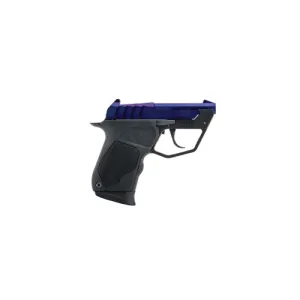
Taurus 22TUC Purple / Black .22 LR 2.5 Barrel 9-Rounds
.22 LR · 9 rds

Taurus GX2 TORO Flat Dark Earth / Black 9mm 3.38 Barrel 13-Rounds
9mm · 13 rds
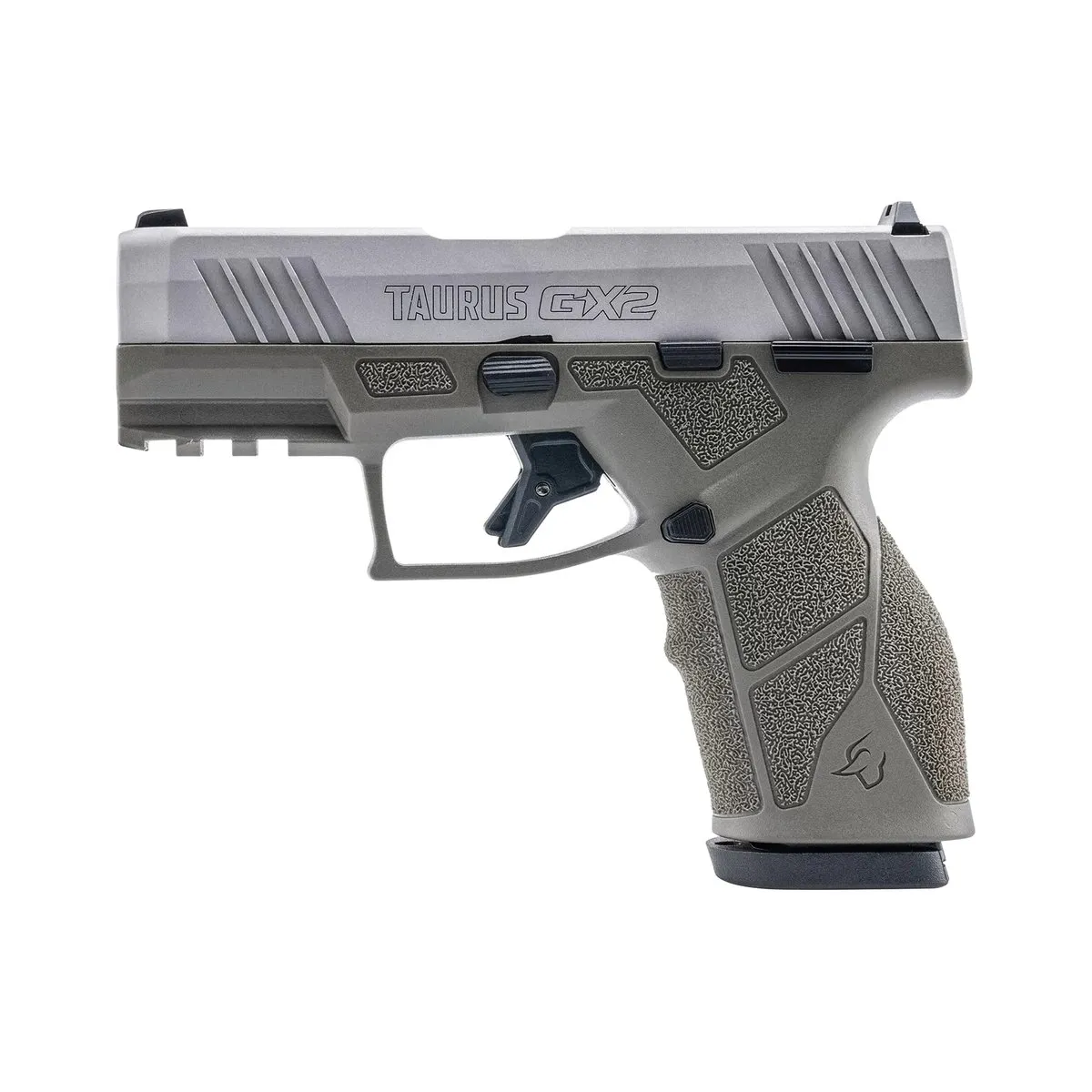
Taurus GX2 OD Green / Stainless Steel 9mm 3.38 Barrel 10-Rounds
9mm
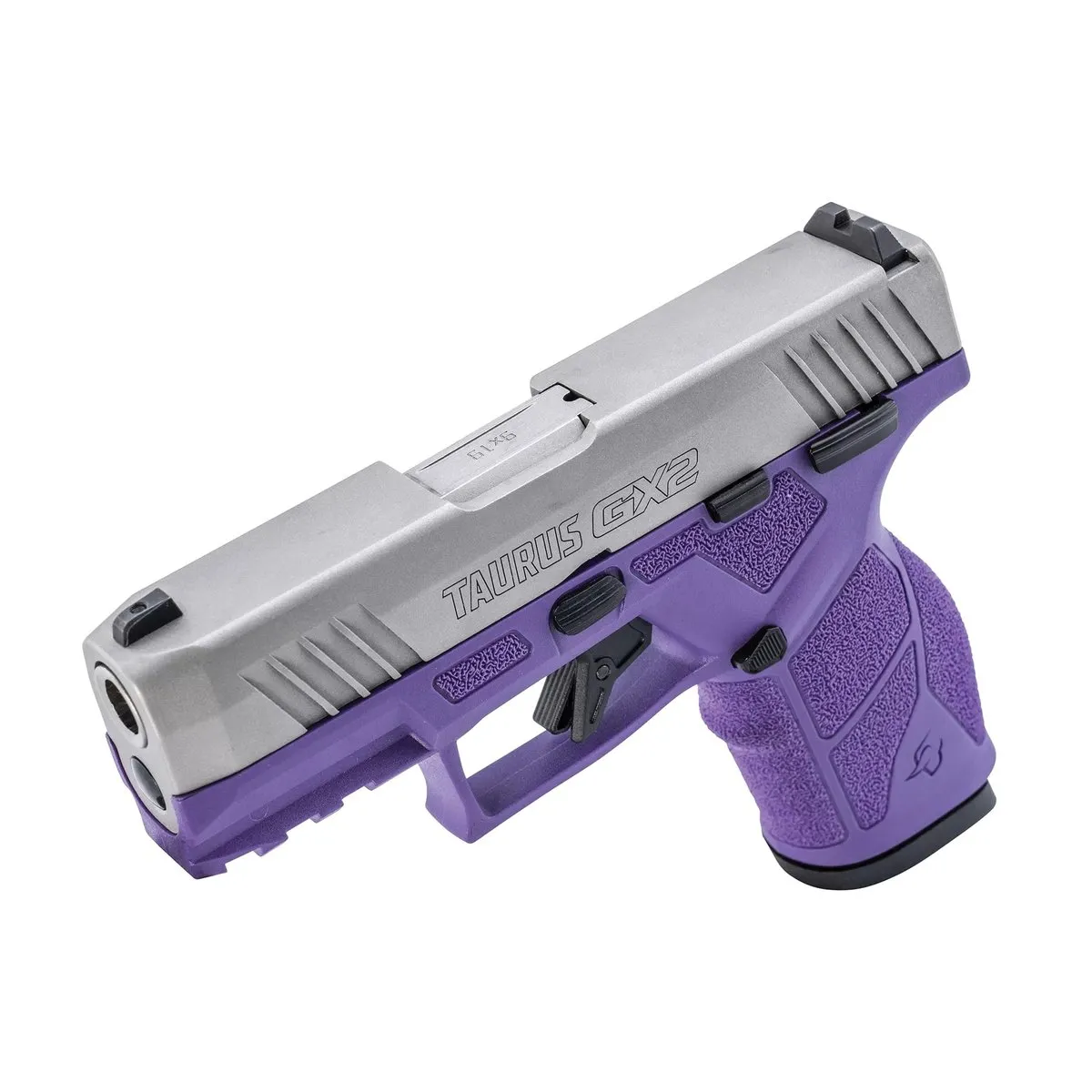
Taurus GX2 Dark Purple / Stainless 9mm 3.38 Barrel 10-Rounds
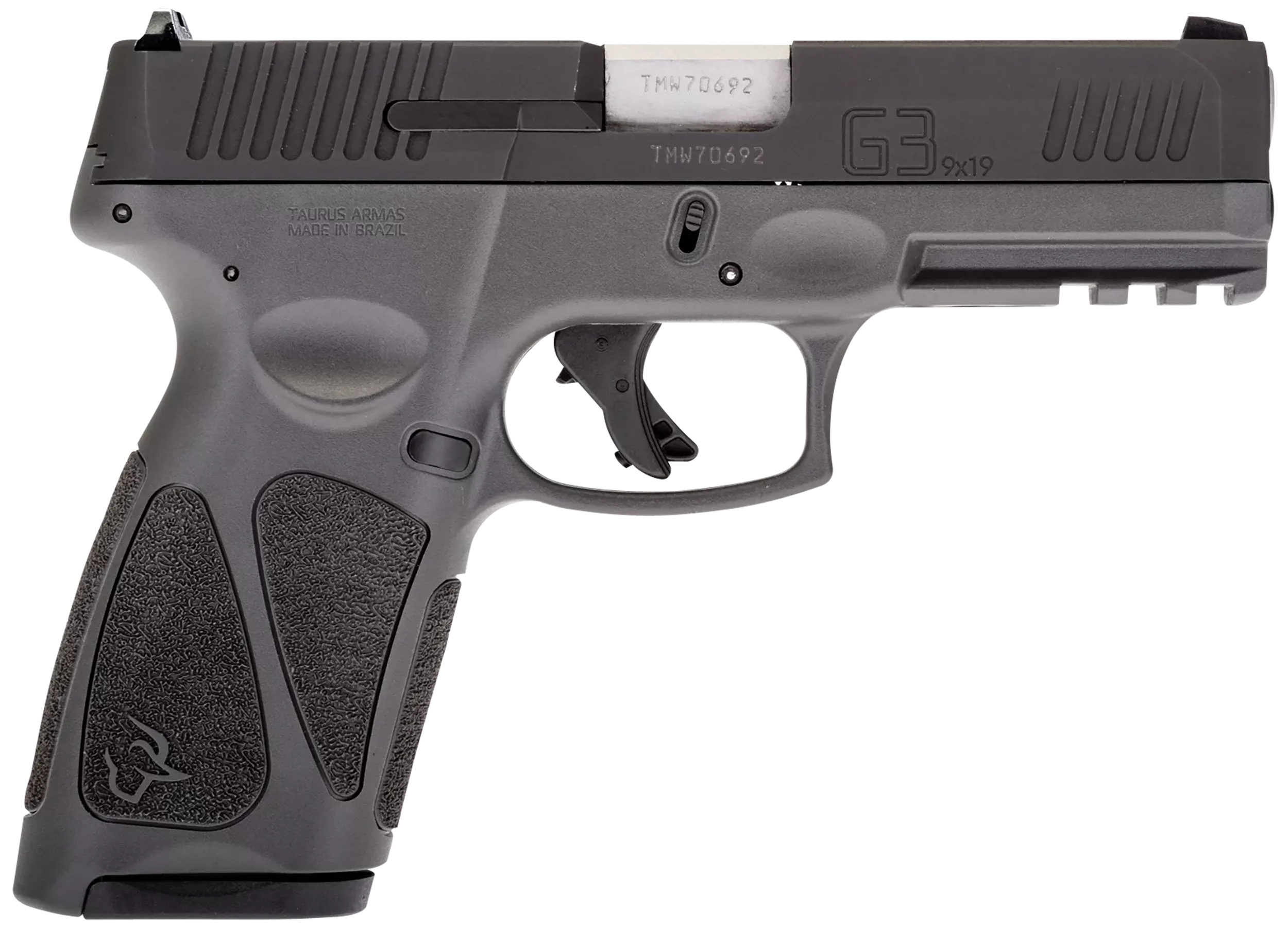
Taurus G3 Gray 9mm 4 Barrel 15-Rounds Adjustable Rear Sight
If your total budget is tight, the correct move is almost always to buy in this tier and spend the difference on ammunition and a class. A shooter who has fired two thousand rounds through a $250 pistol beats one who has fired two hundred through a $900 pistol, and it is not close.
The $300 to $500 tier: where most people should buy
This is the center of gravity of the carry market and where the well-known subcompacts live. Slim 9mms with 10 to 15 round magazines, optics cuts, deep holster support and a decade of accumulated aftermarket.
The reason to buy here rather than below is not that the guns are more reliable. It is that the ecosystem is deeper: holsters exist in every configuration, magazines are cheap and everywhere, gunsmiths know the platform, and the resale floor is high enough that changing your mind is inexpensive.
Live Smith & Wesson Handgun Prices
Prices updated Oct 30, 2026
Smith and Wesson SD9 2.0 Black / Stainless 9mm 4 Barrel 16-Rounds
9mm

Smith and Wesson SD40 2.0 Black / Stainless .40 SW 4 Barrel 10-Rounds
.40 S&W

Smith and Wesson SD9 2.0 Bundle 9mm 4 Barrel 16-Rounds w/ Savior Bag 3 Mags

Smith and Wesson SD40 2.0 Black / Stainless .40 SW 4 Barrel 14-Rounds
.40 S&W

Smith and Wesson SD9 2.0 Black / Stainless 9mm 4 Barrel 10-Rounds
9mm
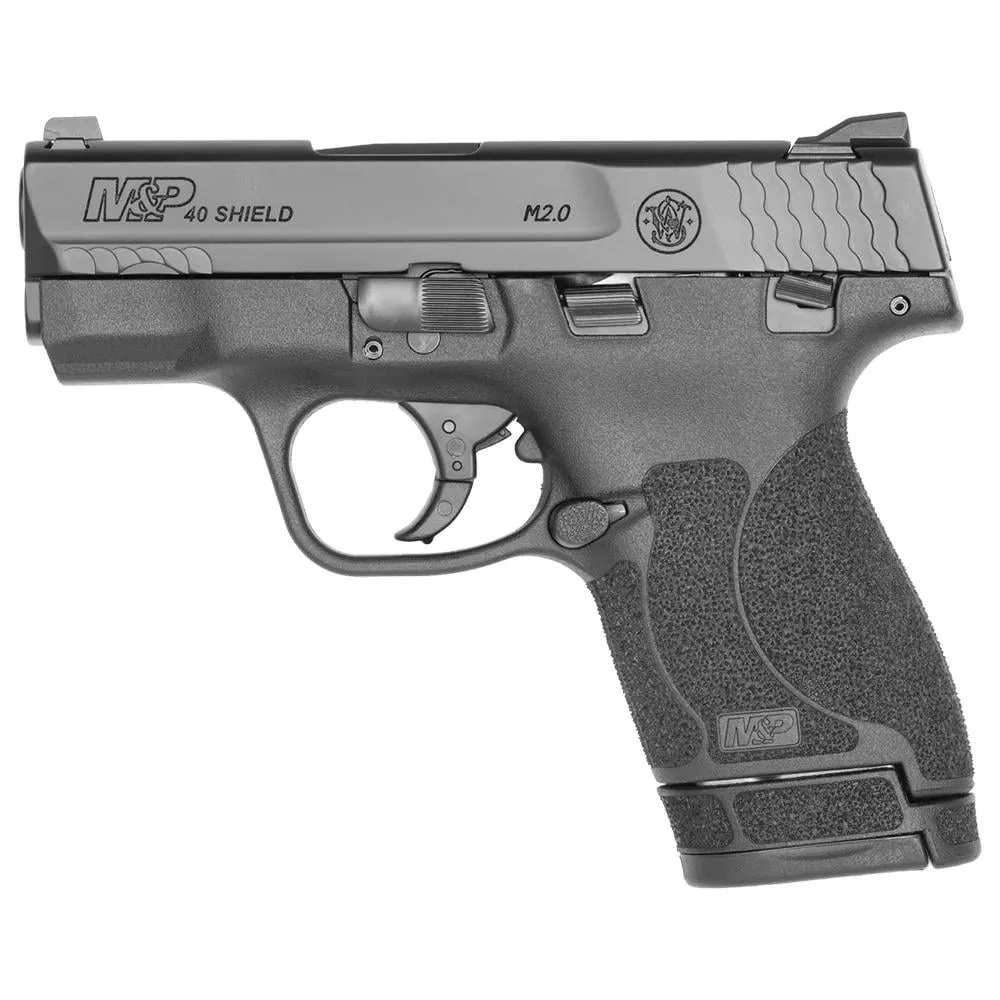
Smith and Wesson M&P40 Shield M2.0 .40 SW 3.1 Barrel 7-Rounds w/ Thumb Safety
Live Glock Pistol Prices
Prices updated Oct 30, 2026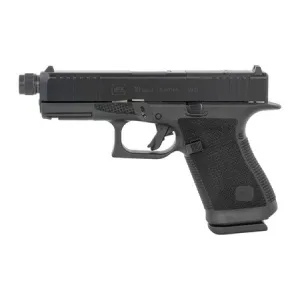
Glock 19 Gen 6 9mm (OR) 15rd Pistol, 4.02" Threaded Barrel, Black

Glock 44 V .22 LR 4.02 Barrel 10-Rounds

Glock 42 .380 ACP 3.25 Barrel 6-Rounds 2 Mags

Glock 42 Gray Frame .380 ACP 3.25-inch 6Rd Fixed Sights USA MADE

Glock 43 Gray / Black 9mm 3.39 Barrel 6-Rounds Fixed Sights
9mm

Glock 43X 9mm 3.39 Barrel 10-Rounds w/ Rail
9mm
Two market notes worth knowing. First, the older single-stack designs — the ones that defined carry a decade ago — routinely list below the slim double-stacks that replaced them, because capacity moved the market. If capacity is not your priority, that is a real discount on a proven gun. Second, .380 pocket pistols cluster at the bottom of this tier, which leads directly to the next section, because the gun being cheaper does not make the setup cheaper.
Does a .380 actually cost less to own than a 9mm?
This is the question the price data answers better than anything else on the page, and the answer surprises people.
The pistols overlap heavily in price. The ammunition does not. 9mm is the highest-volume centerfire handgun cartridge in the world; .380 ACP is produced in a fraction of that volume, and per-round pricing reflects it. Here are both, live:
9mm Luger Price Index
Live · Oct 30, 2026.380 ACP Price Index
Live · Oct 30, 2026Do the arithmetic on your own practice volume rather than taking our word for it. Multiply the gap between those two floors by the number of rounds you expect to fire in the next two years. For anyone who practices seriously, the ammunition difference swamps whatever you saved on the pistol.
Cost Per Round Calculator
The only number that matters when comparing ammo. Shipping included.
That does not make .380 wrong. Deep-concealment pockets exist, recoil tolerance is real, and a gun you will actually carry beats a gun you leave home. But choose it for those reasons, not because you think it is the cheap option. The same market forces that set these floors are covered in why ammo prices move, and they apply to your carry cartridge for as long as you own the gun.
The $500 and up tier: what the money actually buys
Above roughly $500 you are buying refinement and manufacturing tolerance rather than function: better triggers from the factory, better sights, tighter fitting, modular fire-control systems, factory-mounted optics, and duty-grade finishes.
It is a legitimate place to spend money if you shoot enough to perceive the difference. It is a poor place to spend money if you have not yet burned through the practice ammunition that would let you tell. The honest test is whether you can currently shoot to the limit of the cheaper gun. Most buyers cannot, and our piece on how many rounds it takes to get good puts a realistic number on the gap.
If you are mounting an optic in this tier, the reasoning that governs rifle optics applies in compressed form to pistols — a dot buys you speed and target focus at the cost of one more thing that needs batteries and confirmation. Our red dot versus LPVO breakdown covers that trade-off in its rifle form.
Budget the ammunition at the same time as the gun
This is where most carry-gun purchases go wrong, and it is entirely avoidable.
A carry setup is not a pistol. It is a pistol, a rigid holster and belt, two or more spare magazines, and the ammunition to verify and train with — several hundred rounds of practice ammo plus enough of your chosen defensive load to confirm it feeds and to know where it hits.
Practice ammunition is bought on cost per round. Defensive ammunition is not; you buy a small quantity, so a per-round premium on it barely moves your annual spend. Our best 9mm ammo guide splits those two jobs, and our carry ammo by caliber guide covers what changes when the barrel gets short.
Cheapest Bulk 9mm Practice Ammo Per Round
Prices updated Oct 30, 2026
Winchester USA Forged 9mm 115 Grain 1000-Rounds Bulk FMJ
9mm · 115gr · 1,000 rds

CCI Ammunition Blazer Aluminum 9mm 115-Grain 1000-Rounds Bulk FMJ
9mm · 115gr · 1,000 rds

Winchester Centerfire Handgun Brass 9mm 115-Grain 1000-Rounds FMJ Bulk
9mm · 115gr · 1,000 rds

PMC Ammunition Bronze Brass 9mm 124 Grain 1000-Rounds Bulk FMJ
9mm · 124gr · 1,000 rds

PMC Ammunition Bronze Brass 9mm 115-Grain 1000-Rounds Bulk FMJ
9mm · 115gr · 1,000 rds

CCI Ammunition Blazer Brass Loose Bulk 9mm 115 Grain 1000-Rounds FMJ
9mm · 115gr · 1,000 rds
How to actually buy one without overpaying
- Decide the tier, then the model. Budget first stops you from being talked up a tier at the counter.
- Handle it before you buy it, if you possibly can. Grip fit is the one variable no listing captures.
- Check magazine and holster availability for the exact model, not the family. Variants differ.
- Compare street price across retailers, not against MSRP. The blocks above do this continuously.
- Confirm transfer requirements and fees with your dealer before ordering online, and check what your address allows — the same verification discipline covered in our ammo shipping restrictions piece applies to firearms, with an additional dealer step.
- Buy the ammunition in the same session. See above.
Get alerted when 9mm price drops hit.
We watch every listing and email you the moment the cost per round drops.
Set Up a Free Price AlertWatch the whole handgun market on our Glock brand page and price your practice ammunition against the live floor at 9mm. The gun is a one-time decision. The cost per round is the one you make every month afterward.
AmmoSpotter earns a commission when you buy through links on this page. It never changes what you pay, and it never decides what we recommend — our picks are ranked on live cost-per-round data pulled from every retailer we track. Full disclosure.
Frequently Asked Questions
What is the best concealed carry pistol for the money?+
Is a .380 cheaper to own than a 9mm?+
How much should I spend on a concealed carry pistol?+
Do I need an optics-ready carry pistol?+
Should I buy a used carry pistol to save money?+
How many rounds do I need to shoot before I carry a new pistol?+
Shop the data

About the author
AmmoSpotter Research Desk
Price & Ballistics Research
The AmmoSpotter Research Desk analyzes live retail pricing across every ammunition, firearm and accessory listing we track. Recommendations here are ranked against real cost-per-round data pulled daily from the retailers we monitor - not against manufacturer marketing copy.
- ✓Tracks 180,000+ live product listings across 6 retailer feeds
- ✓Records price history on every listing, every day
- ✓Cost-per-round methodology applied to all ammunition rankings
- ✓No product is ranked without a verifiable in-stock retail price
- ✓Affiliate relationships never influence rankings
Related Guides

Best Concealed Carry Ammo by Caliber (2026): Live Prices for Every Carry Cartridge
- Pick the caliber you shoot well in a gun you will carry daily. Every mainstream carry cartridge works; none of them compensate for a miss. - Carry-load cost is nearly irrelevant — it is one magazine. Practice cost i...

Best 9mm Ammo 2026: Range, Carry and Duty Loads Ranked
9mm Luger is the most-produced, most-competitive cartridge in the American market. That is good news and bad news: prices are low, and the sheer number of listings makes it easy to pay 30% more than you needed to for ...

How Many Rounds Does It Take to Get Good?
Almost every shooter is round-count constrained and almost none of them have written the number down. Ammunition is the actual budget line that determines how much you improve, and it is the one people plan least. So ...

How Many Magazines Do You Actually Need?
Magazines are a rounding error next to what you spend on ammunition, and they cause a disproportionate share of malfunctions. That asymmetry is the whole argument: buying enough good magazines is the cheapest reliabil...

Best Concealed Carry Holsters 2026: What to Buy, Priced Live
- A carry holster has four jobs: cover the trigger completely, retain the pistol when inverted, hold its mouth open for one-handed reholstering, and index to the same spot on the belt every time. Everything else is pr...

Glock 19 vs Sig P365 vs S&W Shield Plus: Size, Capacity and Live Price
- These are not competitors so much as three points on one curve: carryability on one axis, shootability on the other. - The Glock 19 wins capacity and shootability. The P365 wins concealment. The Shield Plus splits t...