Best First Handgun for a New Shooter
The gun is the cheap part. This guide prices the pistol and the 500 rounds it takes to learn it, from live retailer listings.

What actually matters in a first handgun
Almost every recommendation you will read for a first handgun is a list of specific models. That is the least useful way to approach it, because the guns at this price point have converged. We track roughly 58,700 live firearm listings, and the striker-fired 9mm pistols in the $250–$500 band are more alike than different: polymer frame, similar trigger weight, similar accuracy, similar reliability once you feed them decent ammunition.
Four things genuinely separate a good first handgun from a bad one.
It fits your hand. You should be able to reach the trigger with the pad of your index finger without rotating your grip, and reach the magazine release without breaking it. This is not a spec you can read off a listing, which is why a rental counter or a friend's gun is worth more than any review.
It is big enough. New shooters routinely buy the smallest pistol on the counter because it is the easiest to carry, then never practice with it because it is unpleasant to shoot. A 4-inch-barrel compact or full-size gun recoils less, sights easier and holds more rounds. Carry considerations belong on gun number two — see our concealed carry pistol guide when you get there.
It has usable sights. Plain black notch-and-post sights are fine. Sights you cannot see against a dark target are not. Optics-ready models cost slightly more and let you add a red dot later without gunsmithing.
It ships with more than one magazine. Two magazines is the realistic minimum for a range session that is not mostly reloading. Check the listing title — magazine count is usually stated there, and it varies between otherwise identical SKUs.
Why 9mm is the default first-handgun chambering
The case for 9mm is not that it is the best cartridge. It is that it is the cheapest centerfire pistol cartridge you can practice with, by a wide margin, and practice is the entire point of a first gun.
9mm Luger Price Index
Live · Oct 30, 2026That floor number is the one to anchor on. Across the 689 approved 9mm listings in our catalog, the market floor sits near 24 cents per round, while the catalog average across all 9mm — including premium defensive and hunting loads that run past three dollars a round — is far higher. The spread between those two numbers is the single most important fact in this guide, because it means your practice ammunition and your defensive ammunition are different purchases with different budgets.
Every other common handgun chambering costs more to shoot. .380 ACP, .38 Special, .40 S&W and .45 ACP all sit above 9mm on cost per round in our data, and none of them buys a new shooter anything that offsets the difference. If you want the underlying market mechanics, why ammo prices move covers the forces that set these numbers.
Cheapest Bulk 9mm Practice Ammo Right Now
Prices updated Oct 30, 2026
Winchester USA Forged 9mm 115 Grain 1000-Rounds Bulk FMJ
9mm · 115gr · 1,000 rds

CCI Ammunition Blazer Aluminum 9mm 115-Grain 1000-Rounds Bulk FMJ
9mm · 115gr · 1,000 rds

Winchester Centerfire Handgun Brass 9mm 115-Grain 1000-Rounds FMJ Bulk
9mm · 115gr · 1,000 rds

PMC Ammunition Bronze Brass 9mm 124 Grain 1000-Rounds Bulk FMJ
9mm · 124gr · 1,000 rds

PMC Ammunition Bronze Brass 9mm 115-Grain 1000-Rounds Bulk FMJ
9mm · 115gr · 1,000 rds

CCI Ammunition Blazer Brass Loose Bulk 9mm 115 Grain 1000-Rounds FMJ
9mm · 115gr · 1,000 rds
A note on what to buy: brass-cased or aluminum-cased full metal jacket in 115 or 124 grain is the standard practice load, and it is what the grid above will show you. Save the hollow points for the box you actually carry. Our best 9mm ammo guide splits the range, carry and duty tiers properly.
Should your first handgun be a .22?
This is the most contested question in beginner gun advice, and the honest answer has a condition attached.
A .22 LR pistol is the most efficient training tool in handgunning. No recoil, no muzzle blast, no flinch to unlearn later, and rimfire ammunition costs a fraction per round of anything centerfire. Compare the two indexes directly:
.22 LR Price Index
Live · Oct 30, 2026Set that against the 9mm figures above and the training math writes itself. The same money buys you several times the trigger presses. For a new shooter whose problem is flinch and trigger control — which is every new shooter's problem — that is not a small advantage.
The condition: a .22 LR pistol is not a defensive handgun, and rimfire ammunition is inherently less reliable than centerfire. If your first gun has to do double duty as a home-defense gun, it cannot be a .22.
So the sequence that actually works is: buy the 9mm first if defense is on your list, then add a .22 as your practice gun when budget allows. If defense is not on your list and you are buying a handgun to learn to shoot, buy the .22 first and never regret it. Our .22 LR ammo guide covers which bulk loads actually cycle in semi-autos, which matters more in rimfire than in anything else.
Live .22 LR Pistol Prices
Prices updated Oct 30, 2026
Smith and Wesson M&P 22X .22 LR 4.1 Barrel 10-Rounds OR
.22 LR · 10 rds

Sig Sauer P322 RS .22 LR 4 Threaded Barrel 20-Rounds w/ ROMEO-RS Compact
.22 LR · 20 rds
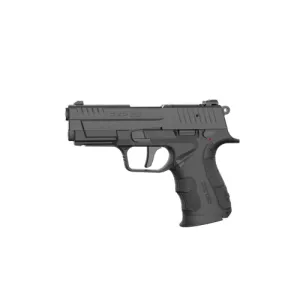
Retay Arms RXP22 .22 LR 4 Barrel 13-Rounds OR
.22 LR · 13 rds

American Tactical GSG FireFly OD Green .22 LR 4.9 Threaded Barrel 13-Rounds
.22 LR · 13 rds

American Tactical GSG Firefly Tan .22 LR 4.9 Threaded Barrel 13-Rounds
.22 LR · 13 rds
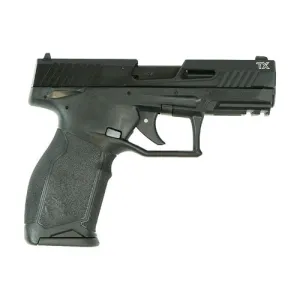
Taurus TX22 Gen 2 .22 LR 4.1 Barrel 15-Rounds
.22 LR · 15 rds
What does it cost to actually learn the gun you buy?
Here is the part most first-handgun guides skip entirely, and it is the reason this one exists.
A new shooter does not become competent with a pistol in one range trip. Basic safety and manipulation come quickly. Consistent hits, under time pressure, from a holster, do not — that takes repetition measured in the hundreds of rounds. We wrote how many rounds it takes to get good specifically because the honest number surprises people.
Run your own numbers rather than taking ours:
Cost Per Round Calculator
The only number that matters when comparing ammo. Shipping included.
Take the round count you think is realistic for your first year, multiply it by the current 9mm floor from the index above, and put that figure next to the pistol's price. For most new shooters, the first year of ammunition costs more than the gun did. That is not an argument against buying the gun. It is an argument for choosing the chambering on running cost, and for buying bulk when the price is low rather than a box at a time at the range counter.
First handguns worth shortlisting right now
These are live grids, not a fixed ranking — they re-sort themselves as prices move. Each of these makers sells a competent striker-fired 9mm in the beginner band, and the right one is whichever fits your hand.
Ruger is the safe default recommendation, and the Security-9 in particular is a full-size, simple, inexpensive 9mm that does nothing wrong. Note that the cheapest Ruger listings are usually LCP-series .380 ACP pocket pistols — those are carry guns, not learning guns, and they are much harder to shoot well.
Ruger Pistols, Live Prices
Prices updated Oct 30, 2026
Ruger LCP Black / Turquoise Cerakote .380 ACP 2.75 Barrel 6-Rounds

Ruger LCP MAX .380 ACP 2.8 Barrel 10-Rounds Manual Safety w/ Holster and Mag Loader

Ruger LCP MAX 250th Anniversary Red / White / Blue .380 ACP 2.8 Barrel 10-Rounds

Ruger Security-9 9mm 4 Barrel 15-Rounds Adjustable Sights
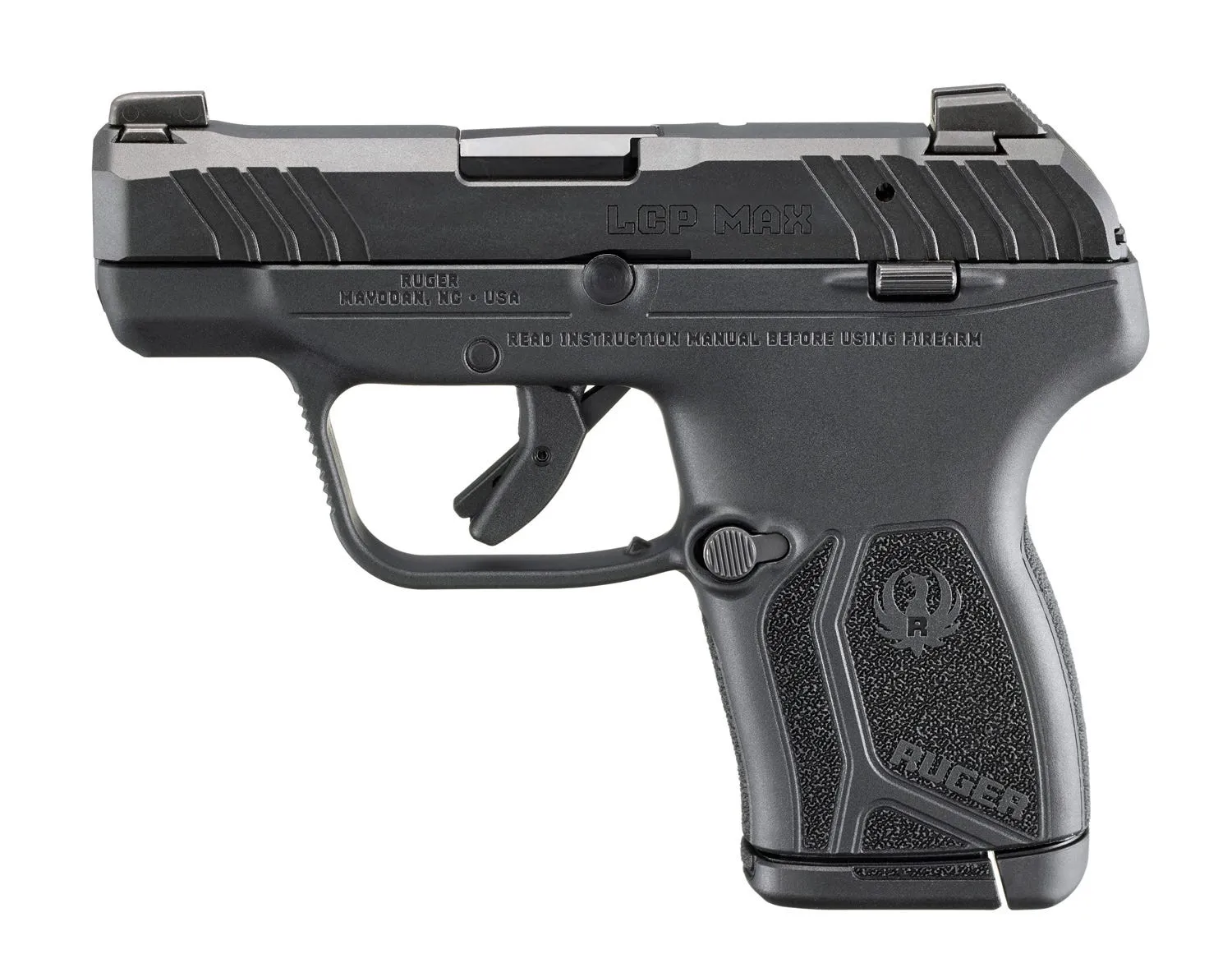
Ruger LCP Max Black Nitride .380 ACP 2.8 Barrel 10-Rounds
.380 ACP
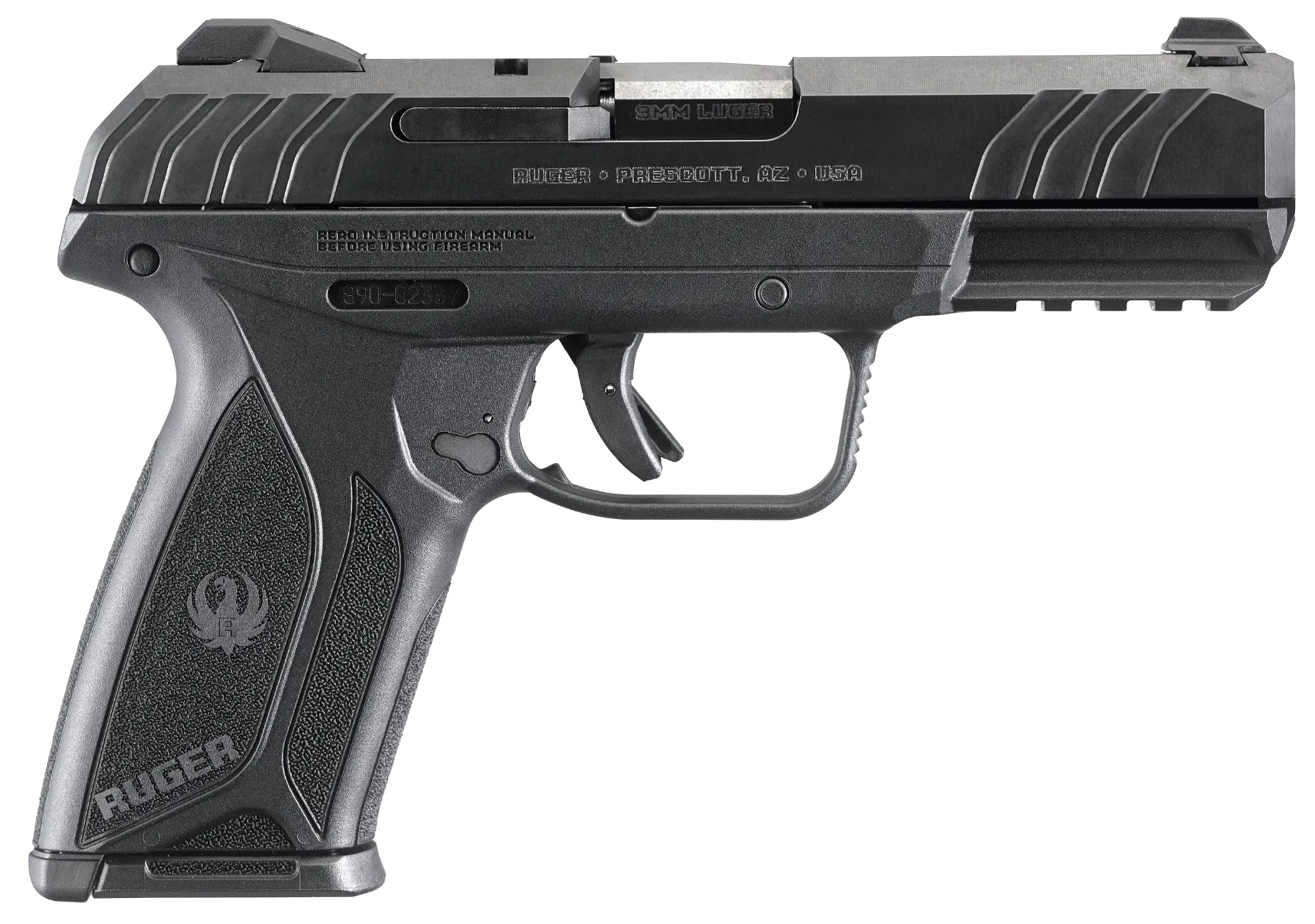
Ruger Security-9 9mm 4 Barrel 10-Rounds
9mm
Canik consistently delivers the best trigger in the price band, and its METE and TP9 lines ship as full-size or compact 9mm service pistols with two magazines.
Canik 9mm Pistols, Cheapest First
Prices updated Oct 30, 2026
Canik METE SFT ONE 9mm 4.46 Barrel 18-Rounds
9mm

Canik METE SF ONE 9mm 4.19 Barrel 15-Rounds
9mm

Canik TP9SF 9mm 4.46 Barrel 18-Rounds Warren Tactical Sights

Canik TP9SF Elite 9mm 4.19 Barrel 15-Rounds Includes 2 Magazines

Canik TP9 Elite SC Tungsten Grey/Black 9mm 3.6 Barrel 15-Rounds Holster Optic Ready
9mm
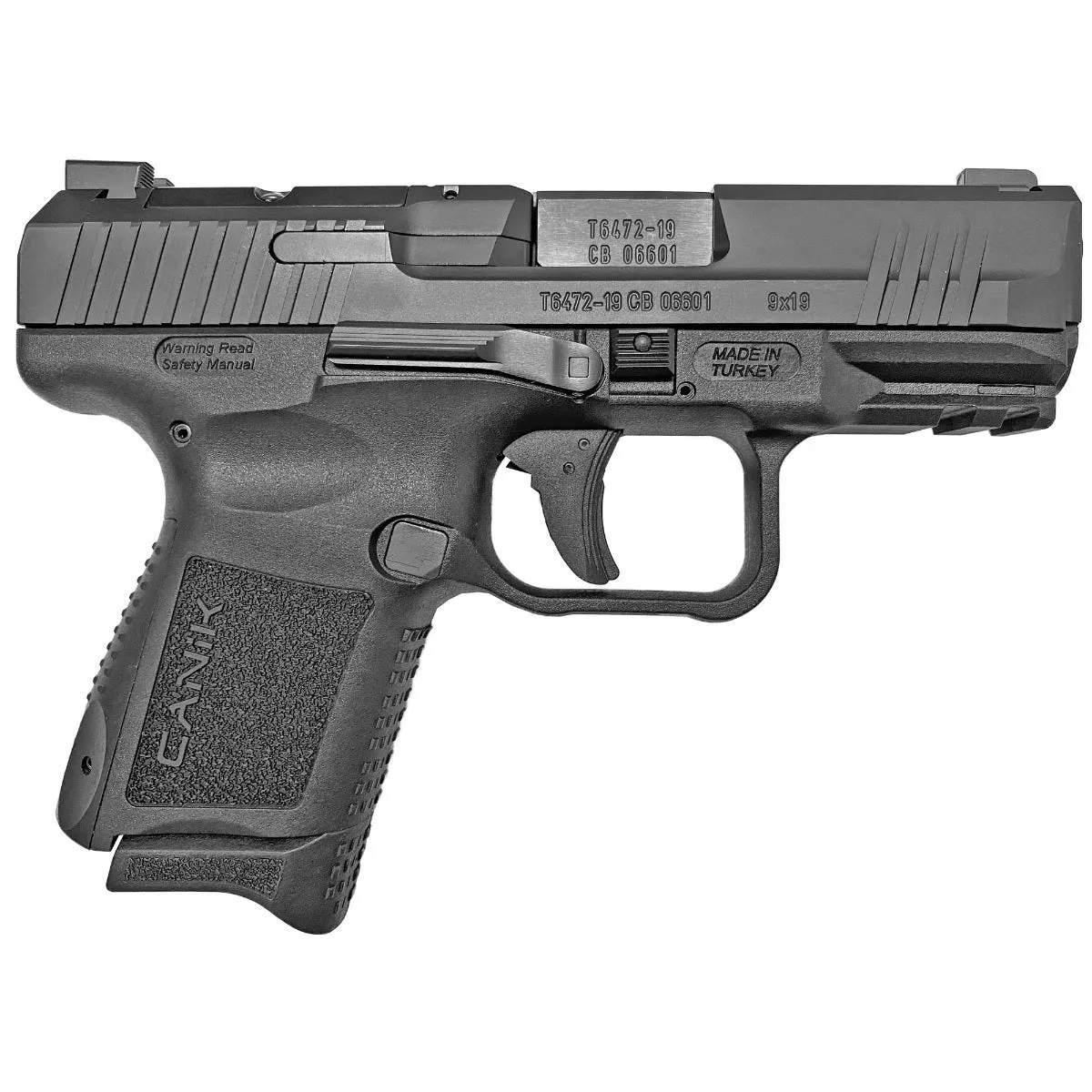
Canik TP9 Elite SC 9mm 3.6 Barrel 15-Rounds Optics Ready Includes 2 Magazines
9mm
Smith & Wesson and Springfield Armory both anchor the bottom of the band with full-size 9mm guns — the SD-series and the XD Mod series respectively — that regularly land near the price of far smaller pistols.
Smith & Wesson Pistols, Cheapest First
Prices updated Oct 30, 2026
Smith and Wesson Shield Plus Optics Ready 30 Super Carry 3.1 Barrel 13/16-Rounds 2 Mags

Smith and Wesson Shield Plus Optics Ready 30 Super Carry 3.1 Barrel 16-Round Thumb Safety

Smith and Wesson SD40 2.0 Black / Stainless .40 SW 4 Barrel 10-Rounds
.40 S&W

Smith and Wesson SD9 2.0 Black / Stainless 9mm 4 Barrel 16-Rounds
9mm

Smith and Wesson SD40 2.0 Black / Stainless .40 SW 4 Barrel 14-Rounds
.40 S&W

Smith and Wesson SD9 2.0 Black / Stainless 9mm 4 Barrel 10-Rounds
9mm
Springfield Armory Pistols, Cheapest First
Prices updated Oct 30, 2026
Springfield Armory XD Mod 3 9mm 4 Barrel 16-Rounds
9mm

Springfield Armory XD Mod.4 9mm 4 Barrel 16-Rounds

Springfield Armory XD-S Mod.2 OSP .45 ACP 3.3 Barrel 6-Rounds OR

Springfield Armory Hellcat OSP .380 ACP 3 Barrel 11/13-Rounds 2 Mags
.380 ACP

Springfield Armory XD40 Tactical .40 S&W 5 Barrel 10-Rounds

Springfield Armory XD Sub-Compact Stainless 9mm 3 Barrel 10-Rounds
9mm
If your budget is the binding constraint, best budget handguns under $400 goes deeper on that band specifically. If you have already decided on a carry-size gun, Glock 19 vs SIG P365 vs S&W Shield compares the three guns most new buyers end up choosing between.
The mistakes that cost new shooters the most money
Buying the smallest gun available. Subcompact and pocket pistols are harder to shoot, recoil more sharply and hold fewer rounds. They are guns for people who already know how to shoot. Starting on one is how people end up with a pistol they own but cannot use.
Sorting a retailer catalog by price. Stripped frames, receivers and polymer frame kits are serialized firearms and get filed under the same handgun categories as complete pistols. Sort low-to-high on any catalog and the cheapest results will include parts you cannot shoot. Read the title, not just the number.
Buying premium defensive ammunition for practice. The premium loads at the top of our 9mm range cost many times what bulk FMJ costs. Practice with cheap ammunition; verify your carry load with a box or two of the good stuff and keep the rest.
Skipping the magazines. Two magazines makes a range session tolerable; more makes it productive. How many magazines do you actually need runs the real numbers.
Assuming the ammunition will ship. Some states and localities restrict ammunition sales, shipping or online purchase entirely. Check before you order, not after — ammo shipping restrictions explains how to verify the rules that apply to your address, and those rules change, so confirm locally rather than trusting any guide including this one.
What else you have to buy before the first range trip
Budget these alongside the pistol:
| Item | Why it is not optional |
|---|---|
| FFL transfer fee | Required by federal law for any dealer handgun sale; charged on top of the listed price |
| 2–3 spare magazines | Determines whether a range session is practice or reloading |
| Eye and ear protection | Electronic muffs let you hear range commands; a one-time purchase |
| Lockable storage | Required in some jurisdictions, sensible everywhere |
| 500 rounds of practice ammunition | The actual cost of learning the gun |
| A box of defensive ammunition | Only if the gun has a defensive role; verify it feeds |
Add those up before you commit to a pistol price. A $300 gun with a full support package costs meaningfully more than $300, and knowing that before you walk into the shop is what keeps the gun from sitting in a safe unfired.
Get alerted when 9mm price drops hit.
We watch every listing and email you the moment the cost per round drops.
Set Up a Free Price AlertTrack the live 9mm market and Ruger's current listings if you want to buy on a dip rather than on a deadline. Bulk 9mm moves enough that waiting two weeks for a price drop is a real strategy, and it is the cheapest way to make your first year of shooting affordable.
AmmoSpotter earns a commission when you buy through links on this page. It never changes what you pay, and it never decides what we recommend — our picks are ranked on live cost-per-round data pulled from every retailer we track. Full disclosure.
Frequently Asked Questions
What is the best first handgun for a new shooter?+
Should my first handgun be a .22 or a 9mm?+
How much should I budget for my first handgun in total?+
How many rounds do I need to shoot before I trust myself with a handgun?+
Can I buy a handgun online and have it shipped to my house?+
Is a used handgun a reasonable first gun?+

About the author
AmmoSpotter Research Desk
Price & Ballistics Research
The AmmoSpotter Research Desk analyzes live retail pricing across every ammunition, firearm and accessory listing we track. Recommendations here are ranked against real cost-per-round data pulled daily from the retailers we monitor - not against manufacturer marketing copy.
- ✓Tracks 180,000+ live product listings across 6 retailer feeds
- ✓Records price history on every listing, every day
- ✓Cost-per-round methodology applied to all ammunition rankings
- ✓No product is ranked without a verifiable in-stock retail price
- ✓Affiliate relationships never influence rankings
Related Guides

Best Budget Handguns Under $400 (2026): What They Actually Cost Today
- The $400 line is real, not marketing. Several hundred complete handguns sit under it across our tracked retailers at any given moment. - Chambering matters more than the sticker. A 9mm budget gun is the cheapest thi...

Best Concealed Carry Pistols 2026: Ranked on Street Price, Not MSRP
- MSRP is a marketing number. Every ranking below is sorted by live street price pulled from retailer listings, and it re-sorts itself as those listings change. - The carry-pistol market has consolidated. Above roughl...

Glock 19 vs Sig P365 vs S&W Shield Plus: Size, Capacity and Live Price
- These are not competitors so much as three points on one curve: carryability on one axis, shootability on the other. - The Glock 19 wins capacity and shootability. The P365 wins concealment. The Shield Plus splits t...

How Many Rounds Does It Take to Get Good?
Almost every shooter is round-count constrained and almost none of them have written the number down. Ammunition is the actual budget line that determines how much you improve, and it is the one people plan least. So ...
Striker-Fired vs Hammer-Fired: What It Changes, and What It Costs
- The mechanism is real, but it is not a quality ladder. It changes trigger feel, decocking, second-strike capability and slide profile — not accuracy or reliability. - It is the least shoppable spec on the handgun sh...
Best 1911s at Every Price Tier (2026): 1,074 Live Listings, Tiered on Real Prices
- We track 1,074 live 1911 listings , from $249.99 to $8,614.99 , with a median of $1,049.99 . Over half the market — 566 listings — is priced at $1,000 or more. - The bottom of the category is not a bargain .45. The ...