Powder Selection for Beginners
How powder choice actually works, why availability beats every other criterion, and what our catalog shows about buying propellant online: 42 products tracked, none of them in stock.
Most powder guides open with a burn-rate chart. This one opens with a stock check, because our catalog turned up something that changes the advice entirely.
We track 42 canister powder products — Hodgdon, Winchester, Accurate, Alliant, Ramshot, Vihtavuori, Shooters World, in one- and eight-pound containers. Those rows were last refreshed on 14 October 2026, so they are actively tracked and current. Not one of them is in stock with any retailer in our feeds. Zero.
That is not a glitch and it is not a shortage story. It is what powder looks like in the online retail channel, and it means the single most useful thing we can tell a beginner is not which powder is best.
How do you actually choose a powder?
Strip away the brand loyalty and there are only a few real variables.
Burn rate is the big one. Fast powders suit small cases and light bullets — think pistol cartridges and light shotshell loads — because they produce their pressure quickly in a small space. Slow powders suit large cases pushing heavy bullets, where you want a sustained push down a long barrel. Most cartridges have a comfortable band of burn rates, and published load data for your cartridge and bullet weight tells you which powders sit in it.
Case fill matters more than beginners expect. A charge that fills the case well tends to ignite consistently and is hard to double-charge without noticing. A fast powder that occupies a quarter of a large case can produce wild velocity spread, and in the worst case a double charge fits invisibly. If two powders both appear in your data, the one that fills the case more is usually the friendlier choice.
Physical form decides how the powder behaves in your equipment. Spherical or "ball" powders meter smoothly through a mechanical measure. Flake powders and long extruded sticks can bridge and cut, so thrown charges vary more. This is a convenience and consistency issue, not a safety one — but it is the difference between enjoying a loading session and fighting it.
Temperature stability matters if you shoot across seasons or hunt in genuine cold, where some powders shift velocity noticeably and others are formulated not to.
Notice what is missing from that list: anyone's opinion. The powder choice is made for you by published load data for the exact bullet, case and primer you are using, and the only decision left to you is which of the listed powders you can get.
Can you even buy powder online? Our catalog says no
Here is the full picture from our data, because it is more useful than a shrug.
Of the 42 canister powder products we track, nineteen are one-pound smokeless containers and thirteen are eight-pound jugs. All of them sit at zero retailers in stock. The last prices we recorded on those rows ran from $44.39 to $66.99 for a pound and $333.99 to $499.99 for eight pounds, with medians of $56.69 and $416.99 — but read that as archaeology, not as a shopping guide. Those are the last prices observed before the listings went out of stock, and you cannot act on any of them.
Exactly one smokeless powder listing in the entire catalog is currently in stock: an eight-pound jug of a popular rifle powder, from a single retailer, at $513.99, whose product title begins with the letters "DISC" because the retailer has flagged it discontinued. That is the whole online smokeless powder market as our feeds see it.
The reason is regulatory, not commercial. Propellant is a hazardous material. It moves by ground only, attracts a hazmat fee per shipment, and comes with a stack of handling and signature requirements — the same family of rules that makes ammunition shipping restrictions such a patchwork. The practical consequence is that most retailers never put powder in the product datafeeds that aggregators like us read, and plenty sell it only across a physical counter. It is the same structural shortness our primer guide found on the primer shelf, except more complete.
Compare that with the other three handloading components. Our live catalog holds 1,473 projectile listings, 241 unprimed brass listings and 607 die listings. Three of the four things you need to make a cartridge are deeply shoppable. The fourth is not shoppable at all.
What the one in-stock propellant shelf tells you
There is propellant in stock in our catalog. All of it is for muzzleloaders.
Every Hodgdon Propellant Listing We Have In Stock
Prices updated Oct 22, 2026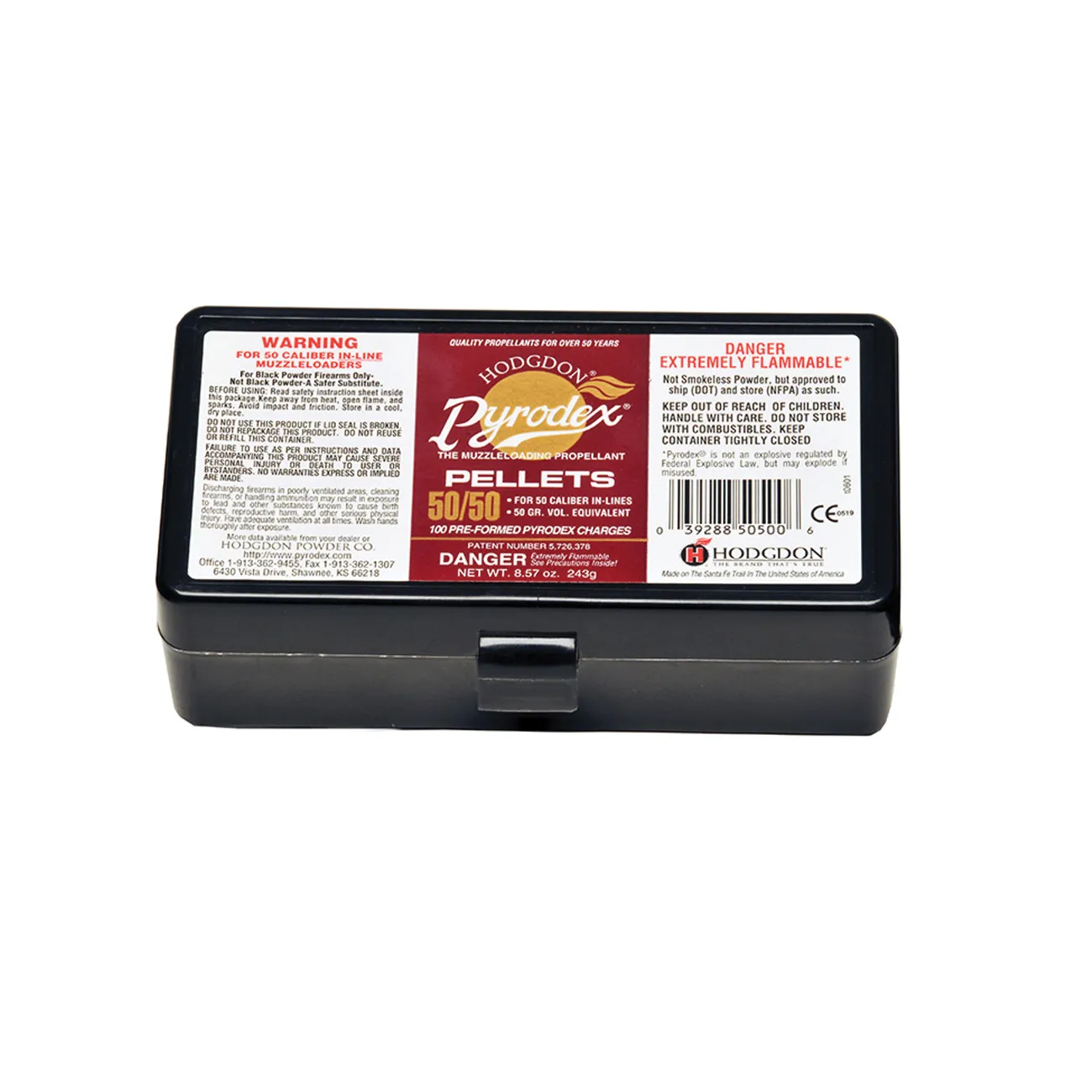
Hodgdon Pyrodex 50 gr Pellet - BP5050
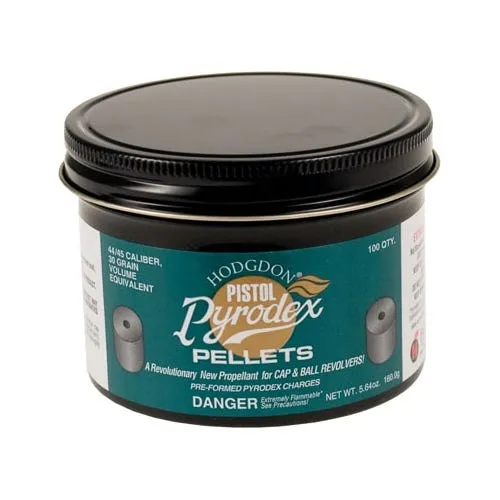
Hodgdon RP4430 PYRO PLTS 4430 100/12
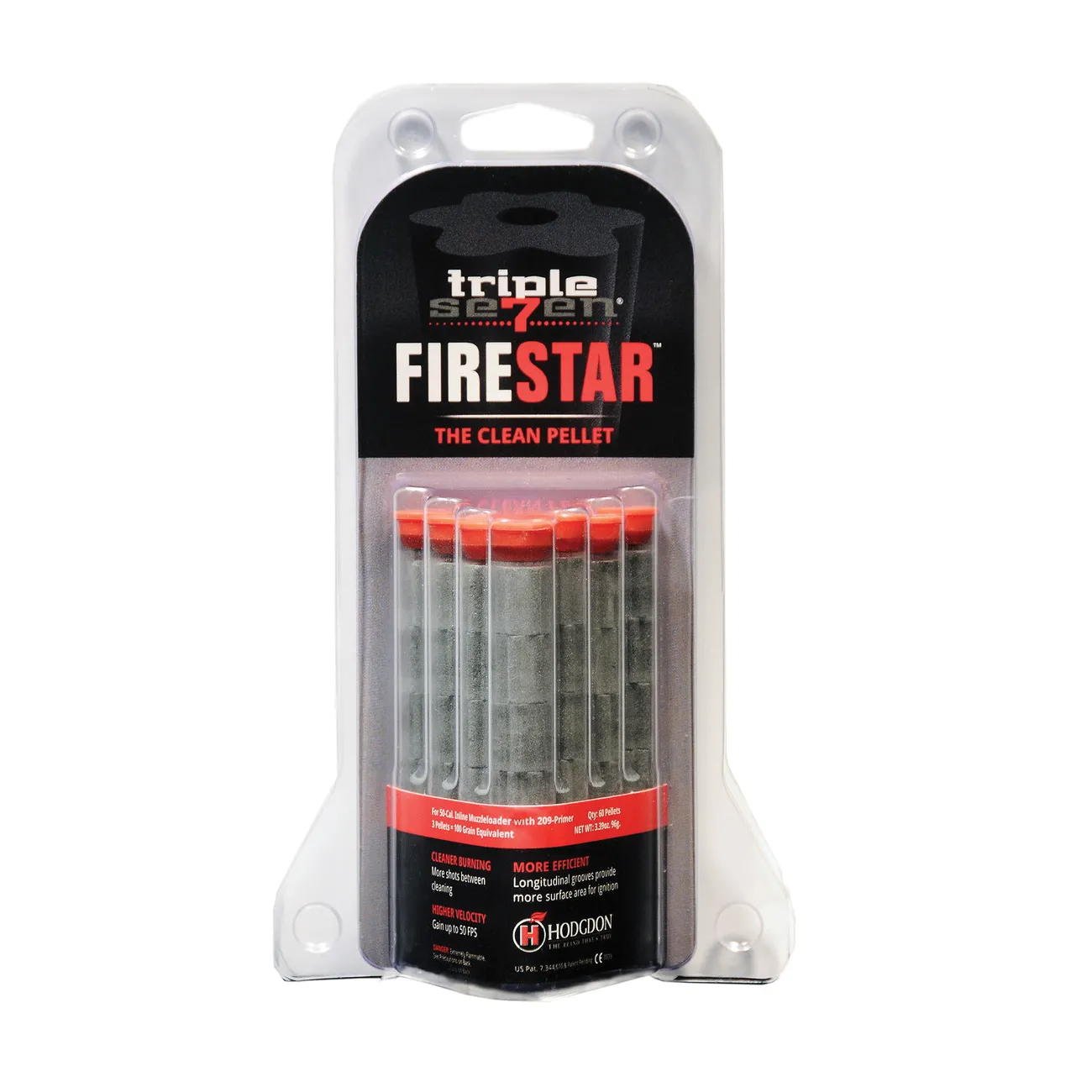
Hodgdon Triple Seven 3.39 oz Pellet - FIRESTAR
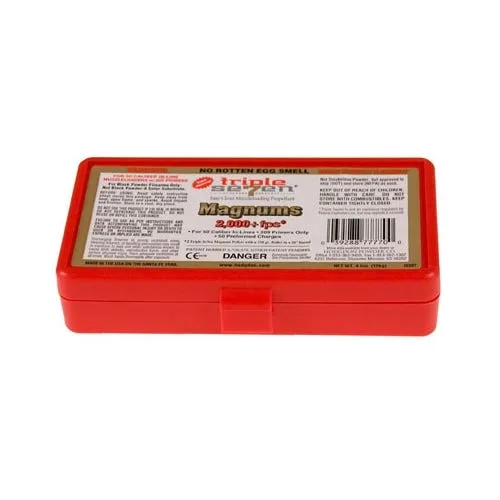
Hodgdon T7MAG TRPL 7MG Pellets 5050 50/12
Hodgdon Triple Seven 30 gr Pellet - T75030
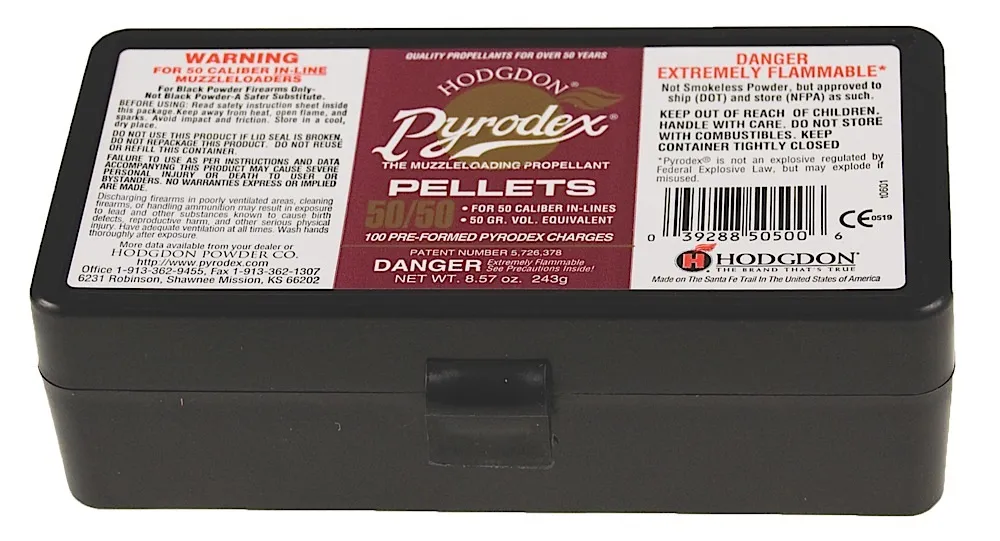
Hodgdon Pyrodex .50 50 gr Muzzle Loading Pellet, 100/box - P5050
That block is the article in one picture. Price-sorted, it is black-powder substitute pellets for muzzleloading — and the final row is that discontinued eight-pound jug. Pellets dodge the problem because they are a pre-formed charge sold into the muzzleloading market, and they are useless to you if you are loading brass cases.
Worth saying clearly: black powder, black-powder substitutes and smokeless powder are three different things and none of them substitute for another. Smokeless powder in a muzzleloader is a catastrophic mistake, and volume-for-volume equivalence between the black-powder family and smokeless does not exist.
Buy the manual before you buy the powder
If powder selection is really load selection, the manual is the purchase that decides your loads — and manuals we can price. Our live listings run from a $5.99 cartridge-specific load data booklet and an $8.49 single-cartridge manual up through maker's manuals at $12.89, $15.99, $26.55, $36.29 and $48.49.
Spending fifteen dollars before spending sixty on a pound of powder is the correct order of operations. A current manual tells you which powders exist for your cartridge and bullet weight, what the starting and maximum charges are, and which of them fill your case sensibly. It also protects you from the real hazard, which is not choosing a mediocre powder — it is loading a fine powder to a charge weight that was never published for it.
The hardware is the part you can actually price
Everything that handles powder is abundant, well stocked and spans a startling range. Mechanical measures, beam and digital scales, tricklers and electronic dispensers are all multi-retailer items you can shop and wait on, exactly the opposite of the propellant itself.
The Powder-Metering Ladder, Cheapest to Dearest
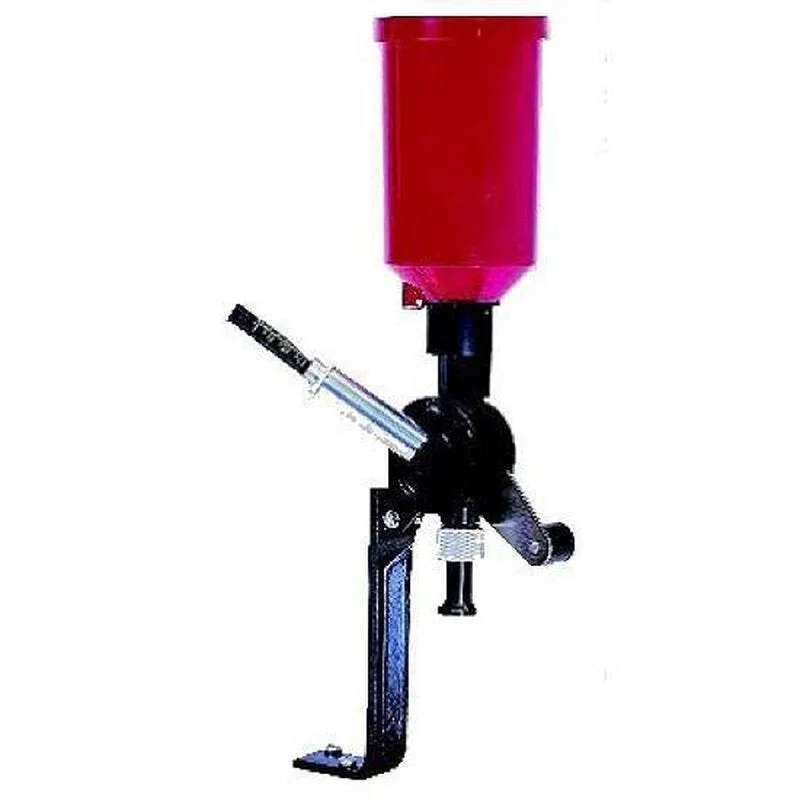
Lee Precision PERFECT Powder Perfect Powder Measure Two to 100 Grain with Steel Stand
Lee's Perfect Powder Measure, adjustable across a wide charge range. A thrown charge from any mechanical measure varies a little shot to shot depending on how the powder meters, which is why you verify it on a scale rather than trusting the dial. For pistol loads at modest pressure this class of tool is genuinely enough.
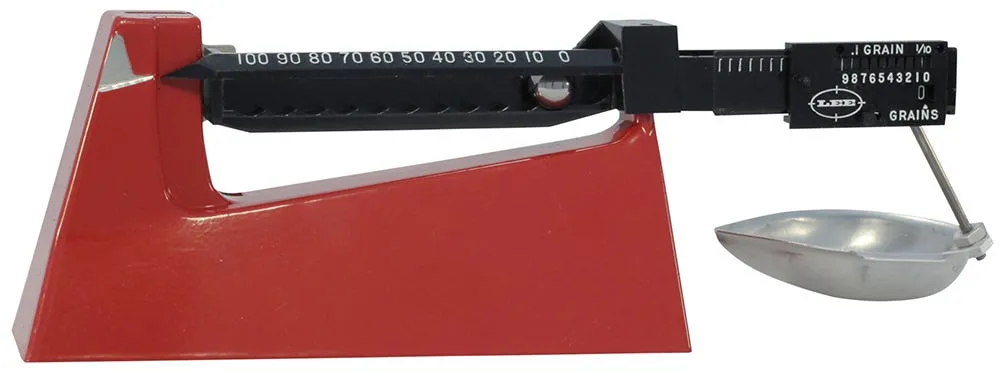
Lee Precision Safety Powder Scale Red Up To 100-Grain
A mechanical beam scale reading to 100 grains. Nothing on your bench matters more than knowing the charge actually weighs what the manual says, and a beam scale needs no batteries, no warm-up and no calibration drift. Buy a scale before you buy a better measure.
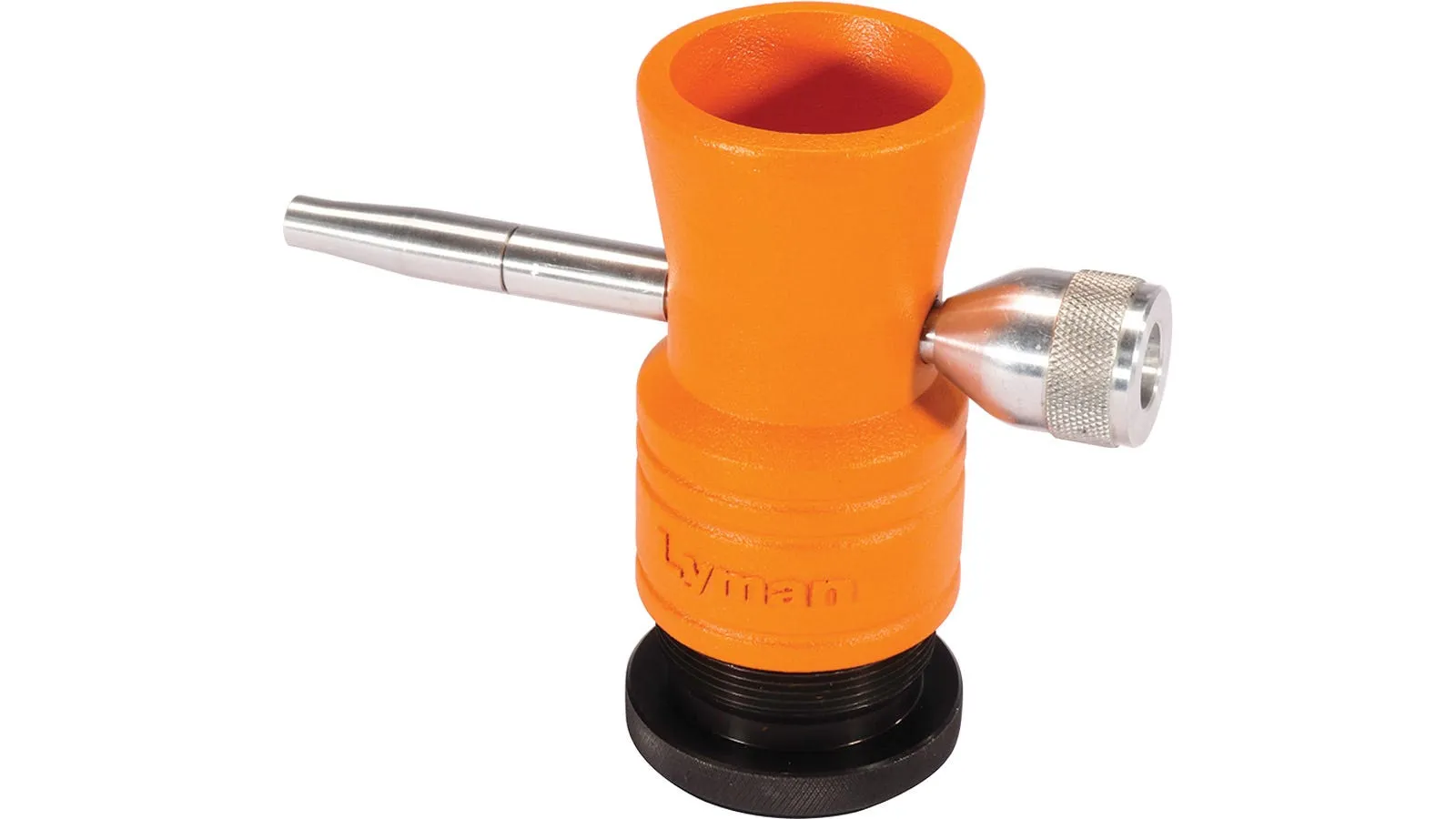
Lyman Brass Smith Powder Trickler Orange
A trickler feeds a few kernels at a time so you can bring a thrown charge up to an exact weight on the scale pan. This is the cheap half of precision: thrown-then-trickled charges are what most rifle handloaders actually do, and the tool costs less than a box of match ammunition.

RCBS Uniflow Powder Measure III Green 0.5-95 Grain Capacity
RCBS Uniflow-III. A larger, more consistent mechanical measure aimed at people throwing hundreds of charges in a session rather than dozens. Still mechanical, still verified against a scale — you are buying repeatability and comfort, not a different kind of accuracy.
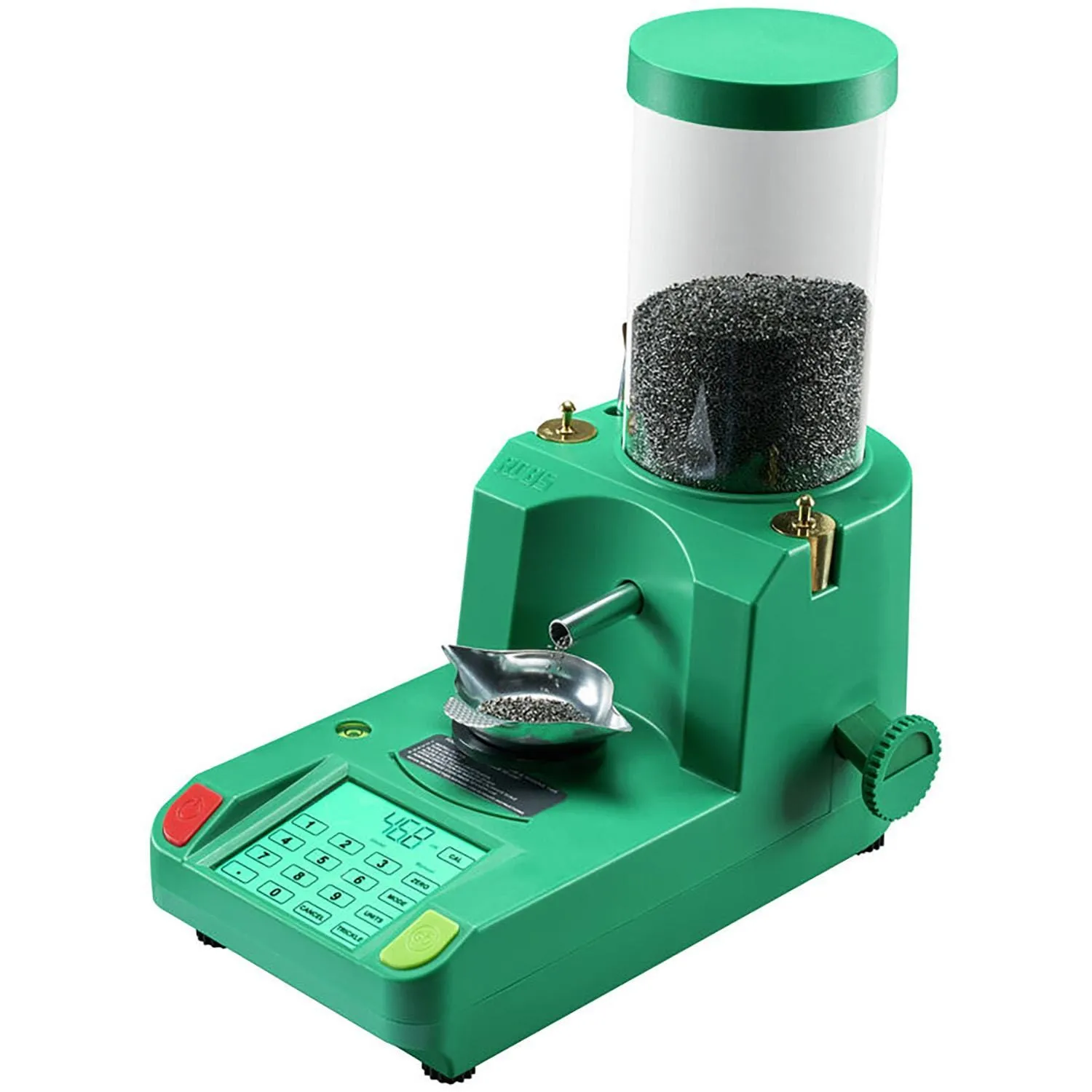
RCBS Chargemaster Link Powder Measurer Green Bluetooth Enabled
RCBS ChargeMaster Link, a combined electronic scale and dispenser. You enter a charge weight and it meters and weighs each one. This is the first tier where the machine replaces the measure-plus-scale-plus-trickler routine rather than assisting it, and it costs roughly nine times the Lee measure above.
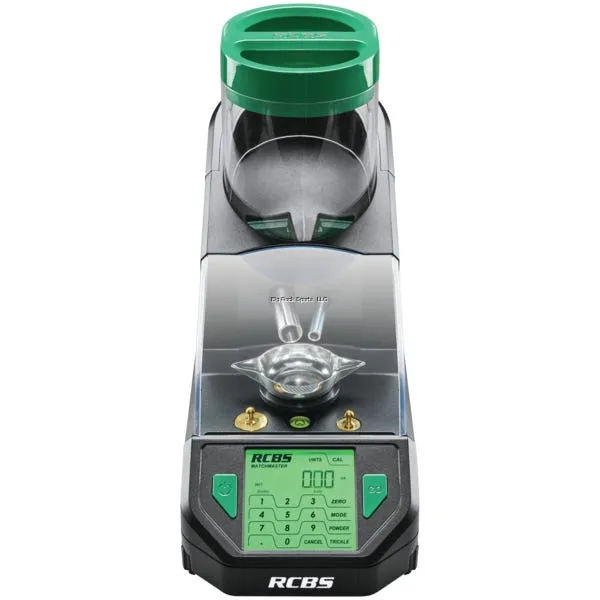
RCBS MatchMaster Powder Dispenser
RCBS MatchMaster powder dispenser — the dearest powder-handling listing we track, at nearly forty times the price of the cheapest real measure. It is a speed and resolution purchase for high-volume precision loading. Worth stating plainly: it will not make a bad load good, and the propellant it meters is the component you cannot currently buy from any retailer in our catalog.
The top of that ladder costs nearly forty times the bottom. The honest reading: the cheap combination of a mechanical measure, a beam scale and a trickler loads ammunition to the same charge weight as the expensive machine. What you buy as you climb is seconds per round and convenience, which matters a great deal at volume and not at all for a box of fifty. The thing worth buying first is the scale, because the whole discipline rests on knowing what the charge weighs.
What are you competing against?
Handloading is a decision against buying finished ammunition, so the alternative deserves a live number rather than a memory of one.
9mm Luger Price Index
Live · Oct 22, 20269mm by the Thousand, Cheapest Per Round
Prices updated Oct 22, 2026
Winchester USA Forged 9mm 115 Grain 1000-Rounds Bulk FMJ
9mm · 115gr · 1,000 rds

CCI Ammunition Blazer Aluminum 9mm 115-Grain 1000-Rounds Bulk FMJ
9mm · 115gr · 1,000 rds
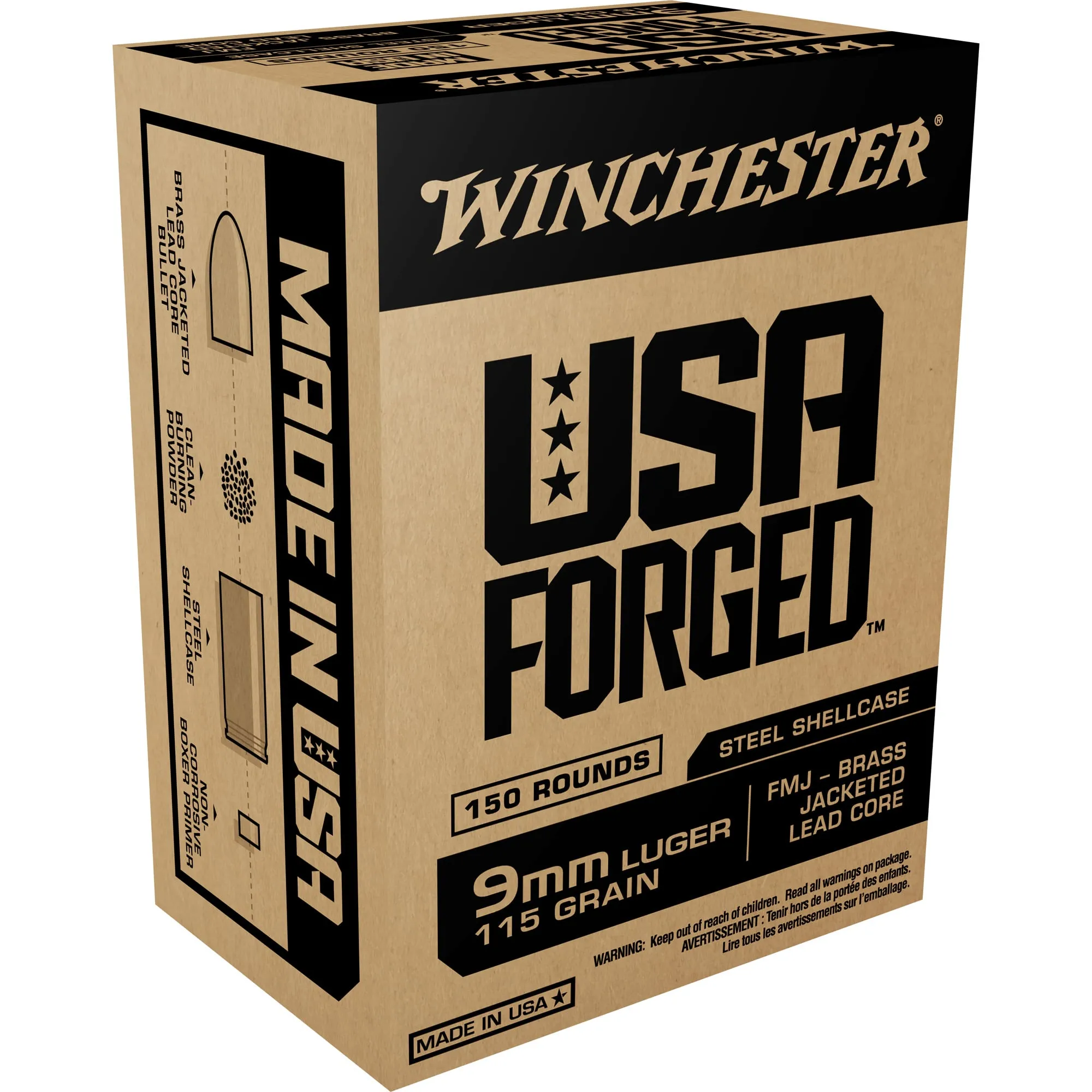
Winchester USA 9mm Ammunition, 1000 Rounds FMJ 115Gr - WIN9SK
9mm · 115gr · 1,000 rds

Winchester Centerfire Handgun Brass 9mm 115-Grain 1000-Rounds FMJ Bulk
9mm · 115gr · 1,000 rds

PMC Ammunition Bronze Brass 9mm 115-Grain 1000-Rounds Bulk FMJ
9mm · 115gr · 1,000 rds

PMC Ammunition Bronze Brass 9mm 124 Grain 1000-Rounds Bulk FMJ
9mm · 124gr · 1,000 rds
.223 Remington / 5.56 NATO Price Index
Live · Oct 22, 2026For the commodity cartridges, the case-lot price above is the number any handload has to beat, and it is a hard target — the full argument lives in is reloading still cheaper than buying ammunition. Where reloading earns its keep is the cartridges with no bulk tier at all, like .308 Winchester, where even the cheapest listings are small boxes:
.308 Winchester, Cheapest Per Round
Prices updated Oct 22, 2026
BARNAUL AMMO 308 WIN 145Gr FMJ Poly Coated Steel Case 20rd
.308 Winchester · 145gr · 20 rds

BARNAUL AMMO 308 Win 150Gr HPBT Polycoated Steel Case 20rd
.308 Winchester · 150gr · 20 rds

BARNAUL AMMO 308 Win 140gr SP Polycoated Steel Case 20rd
.308 Winchester · 140gr · 20 rds

BARNAUL AMMO 308 Win 145Gr FMJ Zinc Steel Case 20rd
.308 Winchester · 145gr · 20 rds

BARNAUL AMMO 308 Win 168Gr SPBT Polycoated Steel Case 20rd
.308 Winchester · 168gr · 20 rds

BARNAUL AMMO 308 Win 168Gr FMJBT Polycoated Steel Case 20rd
.308 Winchester · 168gr · 20 rds
Run your own arithmetic rather than taking anyone's word for it — including ours:
Cost Per Round Calculator
The only number that matters when comparing ammo. Shipping included.
One caveat on that calculation. A powder you cannot buy has an infinite price, so the break-even is not really a number until you have a local supply. That is the sense in which availability is the whole selection criterion: the cheapest cost per round is the one you can actually produce this month, not the one that pencils out on a spreadsheet. Component prices move for the same reasons loaded ammunition prices do, which we break down in why ammo prices move.
What a beginner should actually do
- Pick your cartridge and your bullet weight first. Powder is chosen last, not first.
- Buy a current manual and shortlist every powder published for that combination.
- Walk into a local shop and buy whichever shortlisted powder is on the shelf. Ask what they restock reliably; that answer is worth more than any review.
- Buy one powder that spans several of your cartridges if you can. Fewer powders on the bench means fewer mistakes and less stock to chase.
- Buy the scale before the better measure. Verify every charge weight against published data.
- Order bullets, brass and tooling online, where comparing retailers and waiting both work — and where a price alert does the waiting for you.
None of this makes handloading a bad idea. It makes it a local activity with an online tail: the brass and bullets come from the internet, the powder and primers come from a shop you can drive to. If you want the rest of the component picture, brass prep covers the case you are reusing, the starter kit guide covers the bench, and if you are weighing all of this against simply shooting more, how many rounds it takes to get good is the honest volume question. Our standards for what we will and will not claim are in how we rank ammunition; we do not test propellants and have not published a single velocity figure here for that reason. For what the finished article costs today, start with 9mm prices or the whole live ammunition index.
Get alerted when 9mm price drops hit.
We watch every listing and email you the moment the cost per round drops.
Set Up a Free Price AlertAmmoSpotter earns a commission when you buy through links on this page. It never changes what you pay, and it never decides what we recommend — our picks are ranked on live cost-per-round data pulled from every retailer we track. Full disclosure.
Frequently Asked Questions
Which powder should a beginner start with?+
Can I buy reloading powder online?+
Can I substitute a different powder if I cannot find the one in my load data?+
Do I need an electronic dispenser, or is a $34 scale enough?+
How much does powder add to the cost of a round?+
Is black powder or a substitute the same thing as smokeless powder?+
Shop the data

About the author
AmmoSpotter Research Desk
Price & Ballistics Research
The AmmoSpotter Research Desk analyzes live retail pricing across every ammunition, firearm and accessory listing we track. Recommendations here are ranked against real cost-per-round data pulled daily from the retailers we monitor - not against manufacturer marketing copy.
- ✓Tracks 180,000+ live product listings across 6 retailer feeds
- ✓Records price history on every listing, every day
- ✓Cost-per-round methodology applied to all ammunition rankings
- ✓No product is ranked without a verifiable in-stock retail price
- ✓Affiliate relationships never influence rankings
Related Guides
Brass Prep Explained: Sizing, Trimming and Annealing
Brass prep is the part of reloading that nobody puts in the starter kit photo. The press is the glamour item, the primer is the component everybody argues about, and the case is the thing you quietly reuse — which is ...
Primer Types Explained: Small, Large, Pistol, Rifle and Magnum
A primer is a cup, a pellet of impact-sensitive compound and an anvil, and choosing the wrong one ranges from "wide velocity spreads" to "pierced primer and gas in your face." There are only a handful of types, the ch...
Reloading Starter Kit 2026: What You Actually Need, Priced From Our Catalog
Reloading starter kits are packaged to look like the complete answer. Open the box, bolt the press down, start making ammunition. That is not how it goes, and the gap between the kit price and the money you actually s...

Is Reloading Still Cheaper Than Buying Ammo? (2026 Break-Even Math)
Reloading used to be a single-sentence decision. Components cost less than loaded ammunition, so if you shot enough, you loaded your own. That arithmetic held for decades. It does not hold uniformly anymore, and the r...

Best .22 LR Ammo 2026: Bulk, Match and Hunting on Live Prices
- .22 LR is the cheapest trigger time available, and it is not close. The live floor below is roughly what a single centerfire rifle round costs in loose change. - Bulk barely helps. Across our catalog the 50-round bo...

How to Buy Ammo Online Without Overpaying (2026 Guide)
Most ammunition buying advice stops at "shop around." That is not a process, and it is not why people overpay. People overpay because ammunition is priced in a unit nobody compares — the box — while the thing being bo...