.30-06 Springfield vs .308 Winchester
The ballistic gap is smaller than the argument suggests. The catalog gap is larger. Both live price indexes are on this page.
This argument is older than almost everyone having it. The .30-06 Springfield has been in continuous use since before the First World War; the .308 Winchester arrived four decades later doing nearly the same job in a shorter case. Both fire the same .308-inch bullets. Both kill any animal in North America with the right load.
So the ballistic question is mostly settled and mostly small. The question that actually decides your purchase is what you can buy — how many loads exist, at what price, in what bullet weights, and how many rifles are chambered for it. That is the part nobody measures. We do, so here it is.
Is .30-06 actually more powerful than .308?
Yes, and less than you would guess from how the argument is conducted.
The .30-06 case holds more powder. Loaded with the same bullet, it leaves the muzzle faster, and the gap widens as bullets get heavier, because a larger case has more room to work with a long, heavy projectile. With a 150-grain bullet the two are close. With a 220-grain bullet the .30-06 is doing something the .308 cannot comfortably do at all — the shorter case simply runs out of space once a heavy bullet is seated deep enough to fit a short action.
For deer-sized game at ordinary distances, that difference does not change outcomes. Bullet construction and shot placement dominate, and both cartridges comfortably exceed what the job requires. Our deer hunting ammo guide works through which bullets actually matter for that.
Where the .30-06 has a legitimate edge is at the top of the weight range: heavy-for-caliber bullets for elk, moose and large bears, particularly where deep penetration is the priority. That is not marketing. It is case capacity, and it is the reason the cartridge has never gone away.
The trade is recoil. Same rifle weight, more powder, more push. That matters more than most buyers admit, because recoil is what makes people flinch, and flinching ruins shot placement — which we just established is the thing that actually matters.
Which one costs more per round right now?
Compare these two live, and read the average line against the average line:
.30-06 Springfield Price Index
Live · Sep 26, 2026.308 Winchester Price Index
Live · Sep 26, 2026The interesting result is how close they are. Across 275 live .30-06 listings we see a market average of $1.925 per round, a market floor of $0.850, and a cheapest box of $16.99. On the .308 side, 380 live listings give an average of $1.963 — a difference of under four cents — against a floor of $0.650 and a cheapest box of $11.99.
So the common claim that the '06 is the expensive one is not true at the average. It is true at the bottom. The .308 floor sits meaningfully below the .30-06 floor because cheap steel-case practice ammunition is made for .308 in volume and barely made for .30-06 at all. If you buy mid-priced hunting ammunition, the two cartridges cost you the same. If you want to shoot a hundred rounds off a bench without thinking about it, .308 is the one that lets you.
Cheapest .30-06 Per Round Right Now
Prices updated Sep 26, 2026
BARNAUL AMMO 30-06 140Gr Soft Point Steel 20rd
.30-06 Springfield · 140gr · 20 rds

BARNAUL AMMO 30-06 168Gr FMJBT Polycoated Steel Case 20rd
.30-06 Springfield · 168gr · 20 rds

BARNAUL AMMO 30-06 168Gr SPBT Polycoated Steel Case 20rd
.30-06 Springfield · 168gr · 20 rds

BARNAUL AMMO 30-06 145Gr FMJ Brass Polycoated Steel Case 20rd
.30-06 Springfield · 145gr · 20 rds

BARNAUL AMMO 30-06 168Gr FMJ Brass Coated Steel Case 20rd
.30-06 Springfield · 168gr · 20 rds
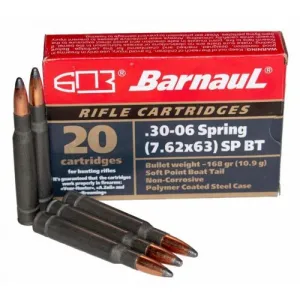
BARNAUL AMMO 30-06 150Gr HPJBT Polycoated Steel Case 20rd
.30-06 Springfield · 150gr · 20 rds
Cheapest .308 Per Round Right Now
Prices updated Sep 26, 2026
BARNAUL AMMO 308 WIN 145Gr FMJ Poly Coated Steel Case 20rd
.308 Winchester · 145gr · 20 rds

BARNAUL AMMO 308 Win 145Gr FMJ Zinc Steel Case 20rd
.308 Winchester · 145gr · 20 rds

BARNAUL AMMO 308 Win 140gr SP Polycoated Steel Case 20rd
.308 Winchester · 140gr · 20 rds

BARNAUL AMMO 308 Win 150Gr HPBT Polycoated Steel Case 20rd
.308 Winchester · 150gr · 20 rds

BARNAUL AMMO 308 Win 168Gr SPBT Polycoated Steel Case 20rd
.308 Winchester · 168gr · 20 rds

BARNAUL AMMO 308 Win 168Gr FMJBT Polycoated Steel Case 20rd
.308 Winchester · 168gr · 20 rds
Prices in both cartridges move for the same reasons, and the bottom of each market is the part that moves most — the five forces behind ammunition price spikes explain why the cheap imported end is always the first thing to disappear.
Where the .308 catalog is genuinely deeper
Cost per round is only half of availability. The other half is how much choice exists, and here the cartridges separate.
The rifle gap is structural, not a sampling accident. The .308 fits a short action, which makes for lighter, stiffer, cheaper rifles, and it is the basis of the AR-10 pattern, of most precision chassis rifles, and of nearly every semi-automatic .30-caliber rifle currently sold. The .30-06 needs a long action and is essentially a bolt-gun cartridge now. If you have not bought the rifle yet, that is a much bigger practical difference than twenty feet per second. Our bolt action hunting rifle guide covers what is actually available in each.
The case-quantity finding is worth sitting with, because it applies to both. Neither of these is a bulk cartridge in the sense that 9mm or 5.56 are. There is no deep pool of 500- and 1,000-round cases waiting for you. Budget for 20-round boxes and buy when the price is right rather than expecting a volume discount to rescue you. If you are planning a season's shooting around a round count, how many rounds it takes to get good is the more useful place to start than a cost-per-round table.
Where the .30-06 catalog wins: heavy bullets
Run the same comparison at the top of the weight range and it reverses. Among live listings at 180 grains and above, we currently track 88 in .30-06 against 59 in .308. The '06's catalog is simply built heavier, which lines up exactly with what the cartridge does well.
Heavy .30-06 Loads We Track
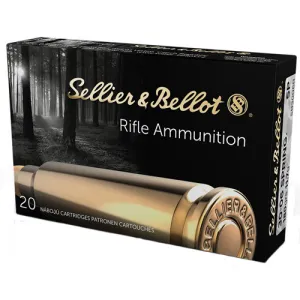
SELLIER BELLOT SB3006B Rifle 30-06 Springfield 180 gr Soft Point Ammunition | 20 Rounds
Sellier & Bellot 180-grain soft point. This is the bullet weight that defines what the .30-06 does better than a .308, and in our listings it is where the cartridge's heavy end starts.

Sellier & Bellot 30-06 Springfield 180 Grain Soft Point Cut-Through Edge (SPCE) 20 Round Box
Sellier & Bellot's cut-through-edge soft point in 180 grain, carried by more than one retailer we track — which matters more than a few cents of list price when you need it in season.
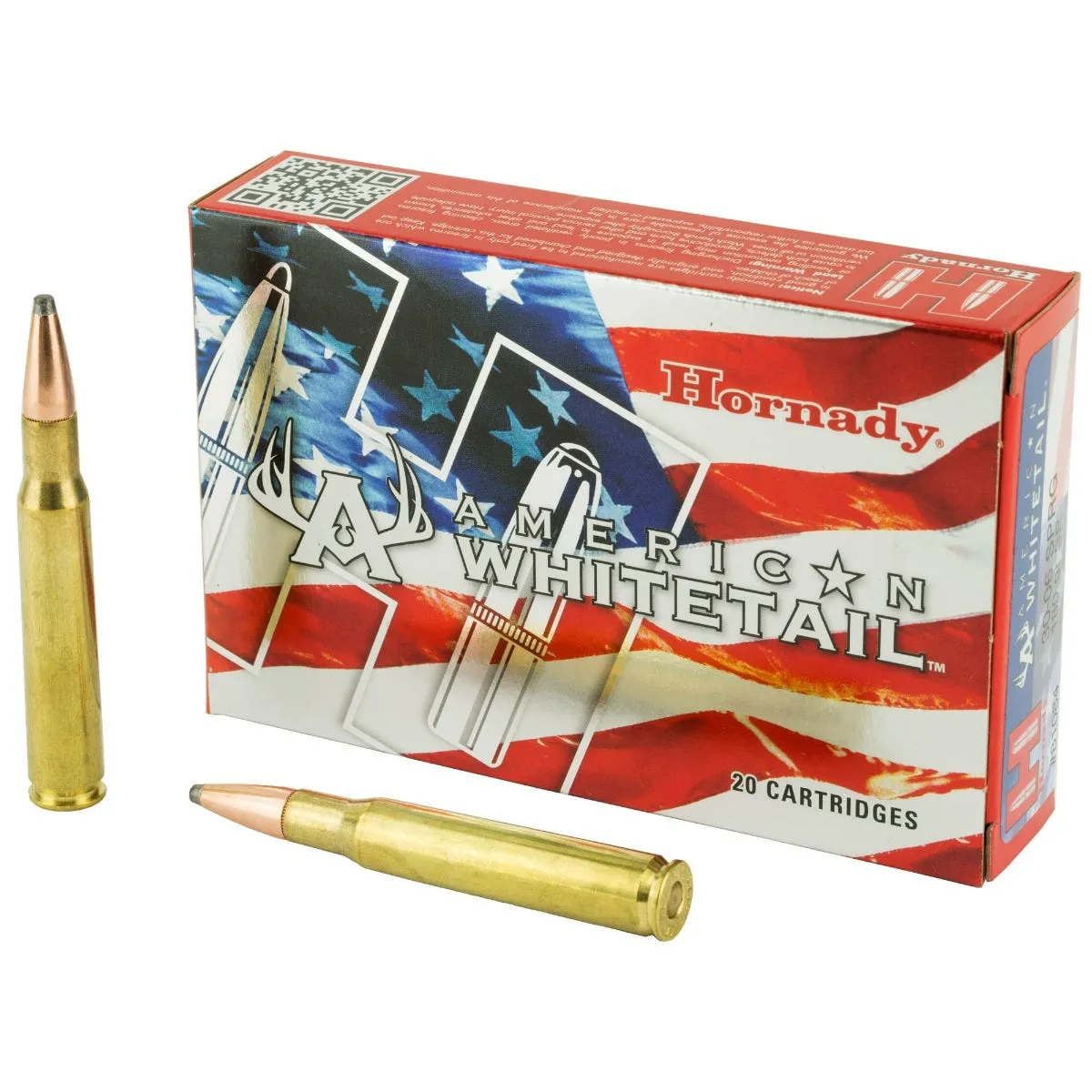
Hornady American Whitetail Brass .30-06 180-Grain 20-Rounds InterLock
Hornady American Whitetail, 180-grain InterLock. A conventional cup-and-core hunting bullet from a major maker, listed by two retailers.
If you hunt elk, moose or anything where you want a heavy, tough bullet driven hard, that selection advantage is the real argument for the cartridge — more so than the velocity numbers. Bullet weight is one of the most misunderstood variables in ammunition selection, and our grain weight explainer covers what it does and does not change.
Does M1 Garand .30-06 need to be different?
If you own a Garand, yes, and this is the one place in this comparison where the wrong box can damage a rifle.
The Garand's gas system was designed around the pressure curve of the military ball ammunition of its era. Some modern commercial loads — particularly heavy-bullet hunting ammunition built with slower-burning powders — produce higher pressure at the gas port than the operating rod was designed to absorb. The failure mode is a bent op rod, not a burst receiver, but op rods are neither cheap nor easy to replace.
There are two clean answers: buy ammunition that explicitly names the M1 Garand on the box, or fit an adjustable gas plug and shoot what you like. Several makers list Garand-specific loads, and we track them:
Garand-Labelled .30-06
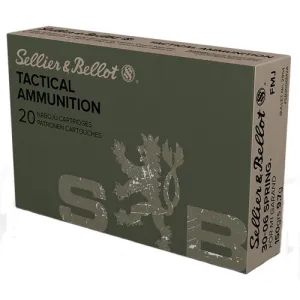
SELLIER BELLOT 30-06 150Gr FMJ M1 Garand 20rd
Sellier & Bellot 150-grain FMJ, marketed for the Garand. If you shoot an '06 because you own a Garand, buy ammunition that names the rifle rather than guessing at a hunting load's pressure curve.
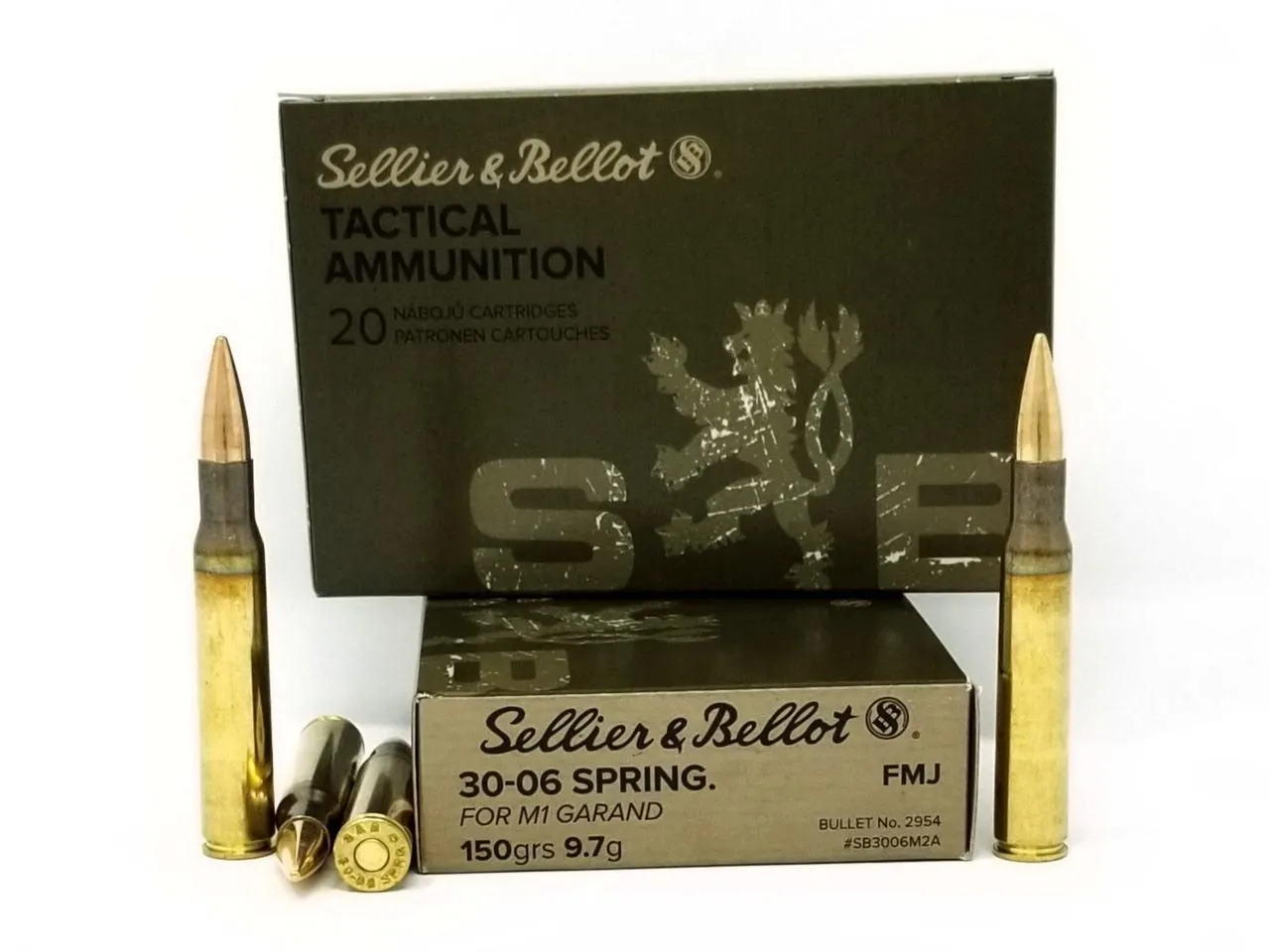
Sellier and Bellot Tactical Ammunition Brass .30-06 150 Grain 20-Rounds FMJ for M1 Garand
Sellier & Bellot 150-grain FMJ, also catalogued for the M1 Garand and carried by two retailers. Same reasoning as above.
The same category of issue exists on the .308 side of the fence in some semi-auto designs, which we touched on in .308 vs 7.62x51 NATO — that piece also settles the related question of whether NATO-marked ammunition is safe in a commercial chamber.
So which one should you buy?
Buy .308 Winchester if you do not already own a rifle in either, if you want to shoot more than a box a year, if you want the option of a semi-auto or a lighter short-action hunting rifle, or if recoil tolerance is anywhere in the conversation. Its floor is lower, its rifle selection is twice as deep, and nothing it gives up matters for deer-sized game.
Buy .30-06 Springfield if you already own one — there is no reason on this page to replace it — if you hunt large game where heavy bullets are the priority, or if you shoot a Garand. The ammunition will not cost you more on average, and the heavy end of its catalog is better stocked.
Do not buy either expecting a bulk-ammunition bargain. If that is your goal, the answer is a different cartridge entirely; see how the economics differ in best 5.56 and .223 ammo, where case quantities are routine rather than exceptional.
If the rifle is coming from an online retailer, the transfer process is its own small project — how FFL transfers work walks through it. And before you order ammunition, confirm what ships to your address using our shipping restrictions guide, because the delivered price and the listed price are not always the same number.
How we arrive at these figures
Every price and count on this page comes from live retailer listings, normalized to cost per round and filtered to exclude storage boxes, reloading components and loose projectiles that otherwise distort a caliber's floor. We do not chronograph ammunition, we do not shoot groups, and we do not publish terminal performance claims of our own — our methodology states exactly what we will and will not assert.
Browse both markets in full on our .30-06 Springfield deals page and our .308 and 7.62 NATO deals page, both sorted by cost per round.
Get alerted when .30-06 Springfield price drops hit.
We watch every listing and email you the moment the cost per round drops.
Set Up a Free Price AlertAmmoSpotter earns a commission when you buy through links on this page. It never changes what you pay, and it never decides what we recommend — our picks are ranked on live cost-per-round data pulled from every retailer we track. Full disclosure.
Frequently Asked Questions
Is .30-06 more powerful than .308?+
Which is cheaper, .30-06 or .308?+
Which cartridge has better rifle selection?+
Can I shoot modern hunting ammunition in an M1 Garand?+
Is .30-06 too much recoil for a new hunter?+
Should I pick .30-06 for elk or moose?+

About the author
AmmoSpotter Research Desk
Price & Ballistics Research
The AmmoSpotter Research Desk analyzes live retail pricing across every ammunition, firearm and accessory listing we track. Recommendations here are ranked against real cost-per-round data pulled daily from the retailers we monitor - not against manufacturer marketing copy.
- ✓Tracks 180,000+ live product listings across 6 retailer feeds
- ✓Records price history on every listing, every day
- ✓Cost-per-round methodology applied to all ammunition rankings
- ✓No product is ranked without a verifiable in-stock retail price
- ✓Affiliate relationships never influence rankings
Related Guides

Best .308 Winchester Ammo 2026: Hunting, Match and Practice Loads on Live Prices
- .308 is really two markets. The cheap tier lives near the live floor; the hunting and match tier sits multiples above it. The catalog average describes neither. - Steel-case FMJ sets the price floor for this cartrid...

.308 vs 6.5 Creedmoor: What the Live Price Data Actually Says
- On catalog average the two cartridges cost essentially the same. .308 averages $1.945 per round across our listings; 6.5 Creedmoor averages $1.913. - The real gap is at the bottom. .308's floor is $0.650 per round; ...

Best Deer Hunting Ammo by Caliber (2026): What Each Cartridge Costs to Feed
- The mainstream deer cartridges — .308 Winchester, 6.5 Creedmoor, .30-06 Springfield — cost close enough per round that price should not pick your rifle. - Cost per round is misleading on hunting ammo: you buy it in ...
.308 Winchester vs 7.62x51 NATO: Safe to Mix, and Which Label Costs Less
Two boxes sit on the same shelf. One says .308 Winchester, one says 7.62x51 NATO, and the internet has spent twenty years arguing about whether swapping them will hurt your rifle. The argument usually gets framed as a...

Best Bolt Action Rifles for Hunting (2026): Priced Live, Cartridge First
- We track roughly 4,500 bolt-action rifles. The grids below are priced live at the moment you load this page. - Sort any bolt-action category cheapest-first and the top is rimfire, not deer rifles. Read the chamberin...
Best .300 Blackout Ammo 2026: Supersonic and Subsonic on Live Prices
.300 Blackout exists to solve one problem: fitting a heavy, slow bullet into an AR-15 that cycles reliably with nothing changed but the barrel. It does that well. What it does not do is cost the same as feeding the ri...