Best Ammo for Hog Hunting
Five of 16,174 live ammunition listings are marketed at hogs, every one of them single-source and priced from $1.60 a round — so the real question is which cartridge you can afford to shoot in volume.
Is "hog ammunition" even a real product category?
Barely. We searched all 16,174 live ammunition listings for a title naming a hog, a boar or a pig. After stripping out the false positives — and there are plenty, because the shelf is full of dove-and-pigeon birdshot — five listings remain:
- Hornady Full Boar in .243 Winchester, at $1.600 per round
- Winchester Hog Special in 7.62x39, at $1.600
- Gorilla Pig Punisher in .300 Blackout, at $1.775
- Fort Scott Brush Hog in .308 Winchester, two listings at $2.332 and $2.350
Every one of those is stocked by a single retailer, so there is no price to compare. For scale, 206 listings carry the word "varmint" and 88 carry "deer".
Why hogs are the one hunting purchase where cost per round matters
A deer hunter fires one or two rounds a season. At that volume, the price of ammunition is irrelevant — buy the best-constructed bullet your rifle shoots well and never think about it again. That is exactly the advice in our deer ammunition guide, and it is correct for deer.
Hogs break that logic. Across much of the South there is no closed season, no bag limit worth the name, and landowners who actively want them gone. People shoot a lot of hogs, often at night, often more than one per sounder. The round count starts looking less like deer hunting and more like a training budget.
So the selection criterion changes. You are no longer buying one perfect box. You are buying a cartridge you can keep buying.
Cost Per Round Calculator
The only number that matters when comparing ammo. Shipping included.
Which hog cartridges actually have a bulk tier?
This is the finding that should drive your decision, and it is the one no amount of ballistics discussion will surface. Here is the pack-size depth of each commonly recommended hog cartridge in our live index — how many listings exist at case quantity, and the largest pack available at all.
| Cartridge | Live listings | Listings at 500+ rounds | Largest pack |
|---|---|---|---|
| .223 Remington | 400 | 23 | 14,000 |
| 5.56x45mm NATO | 140 | 27 | 1,000 |
| 7.62x39mm | 76 | 7 | 1,000 |
| 10mm Auto | 222 | 1 | 1,000 |
| .308 Winchester | 408 | 1 | 500 |
| .300 Blackout | 205 | 0 | 250 |
| 6.5 Creedmoor | 244 | 0 | 60 |
| .350 Legend | 53 | 0 | 60 |
| .44 Magnum | 83 | 0 | 50 |
| .45-70 Govt | 99 | 0 | 20 |
Read the bottom half of that table carefully. Every one of the 99 live .45-70 listings is a 20-round box. .350 Legend has 52 of 53 listings at 20 rounds. .300 Blackout — the cartridge most often recommended for suppressed hog work — has no case quantity whatsoever, and 158 of its 205 listings are 20-round boxes.
Of .308's 408 listings, 388 are 20-round boxes and exactly one exceeds 250 rounds.
.223 Rem & 5.56 NATO Price Index
Live · Oct 22, 20267.62x39mm Price Index
Live · Oct 22, 2026.308 Winchester Price Index
Live · Oct 22, 2026.300 Blackout Price Index
Live · Oct 22, 2026Four widgets, one conclusion: the cartridges with volume shelves are also the cheap ones, and the gap is not small. If you shoot hogs in quantity, that compounds every single trip.
7.62x39 by Cost Per Round, Boxes and Cases
Prices updated Oct 22, 2026
RED ARMY STANDARD 7.62x39 124Gr FMJ 1000rd
7.62x39mm · 124gr · 1,000 rds

RED ARMY STANDARD 7.62x39 124Gr HPBT 1000rd
7.62x39mm · 124gr · 1,000 rds

RED ARMY STANDARD 7.62x39 124Gr FMJ Steel Case 20rd
7.62x39mm · 124gr · 20 rds

GLOBAL ORDNANCE 7.62x39 122Gr Steel Case 20rd Ammunition
7.62x39mm · 122gr · 20 rds

BARNAUL AMMO 7.62x39 Full Metal Jacket 123Gr Steel Case 20rd
7.62x39mm · 123gr · 20 rds

BARNAUL AMMO 7.62x39 125Gr SP Lacquered Steel Case 20rd
7.62x39mm · 125gr · 20 rds
Does the word "hunting" on the box cost you anything?
Yes, but not in the way you would expect. We compared the price per round of listings whose titles contain "hunt" against everything else in the same cartridge:
- .308 Winchester: hunting-titled floor $1.080 vs $0.600 for the rest — but the averages are $2.06 and $1.965, essentially identical.
- 7.62x39mm: hunting-titled floor $1.260 vs $0.302. More than four times the price, for the cheapest example of each.
- .223 Remington: $0.659 vs $0.350.
- 6.5 Creedmoor: $1.465 vs $0.910, and averages of $1.961 and $1.963 — identical to three decimal places.
The pattern is consistent: the hunting label does not raise the average price, it deletes the bottom of the shelf. You are not paying a premium for a better bullet so much as being excluded from the cheap FMJ that makes up the floor. Which is reasonable — you cannot hunt with most of that FMJ anyway — but it means "hunting ammo is expensive" is the wrong way to think about it. The expensive part is that your cheapest option disappears.
One honest exception: in 12 gauge the comparison inverts, because the genuinely premium shells are waterfowl and turkey loads that never use the word "hunting" in the title.
Which bullets can you actually buy for this?
Terminal performance on a mature boar is where most hog articles spend their words. We are not going to, because we do not conduct terminal testing — our ranking methodology sets out exactly which claims we refuse to make, and this is one of them. If you want to understand what the numbers on the box do and do not mean, muzzle energy versus velocity is the place to start.
What we can tell you is what exists to buy. Counting listings by bullet-construction word, within each cartridge:
| Cartridge | Soft point | Bonded | Hard cast | Solid / mono |
|---|---|---|---|---|
| .308 Winchester | 44 | 12 | 0 | 14 |
| .223 Remington | 27 | 2 | 0 | 7 |
| .350 Legend | 15 | 3 | 0 | 1 |
| 7.62x39mm | 10 | 1 | 0 | 1 |
| .300 Blackout | 8 | 1 | 0 | 4 |
| 5.56x45mm NATO | 1 | 2 | 0 | 5 |
Two things jump out. Hard cast is zero in every rifle cartridge — it exists in handgun calibers (98 listings catalog-wide, mostly 10mm, .44 Magnum and the heavy revolver rounds) and essentially nowhere else. And the 5.56 designation carries exactly one soft-point listing, which matters more than it sounds.
Hog-Suitable Loads, Priced Live
BARNAUL AMMO 7.62x39 125Gr SP Lacquered Steel Case 20rd
A 125-grain soft point in 7.62x39, steel-cased and lacquered, at the lowest cost per round of any expanding rifle bullet we track in a hog-suitable cartridge. Single-vendor, 20-round box. If you own an AK-pattern or 7.62x39 AR and want an expanding bullet rather than FMJ, this is the entry point.
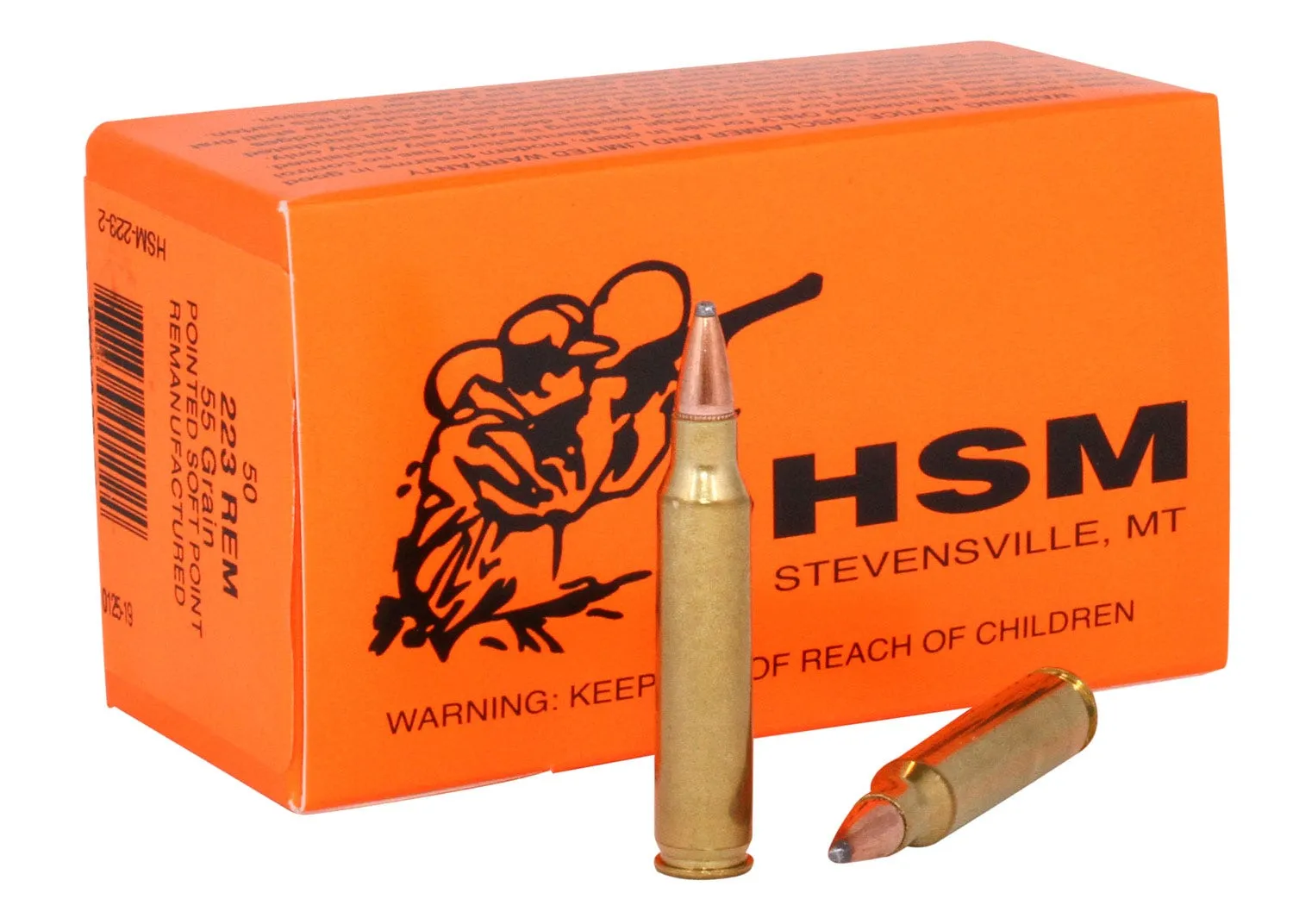
HSM VARMINT .223 REM 55GR SOFT POINT 50 ROUNDS PER BOX
One of only 27 soft-point listings in .223 Remington, and unusually sold in a 50-round box rather than 20 — which is why its cost per round lands well under the 20-round soft points. Listed at two retailers, so it is worth comparing before you buy.

Sellier and Bellot Rifle Brass .308 Win 180-Grain 20-Rounds Soft Point Cut-Through Edge (SPCE)
A 180-grain soft point at two retailers. .308 Winchester has the deepest expanding-bullet shelf of any cartridge here — 44 soft points and 12 bonded loads — and this sits near the bottom of it on cost per round.
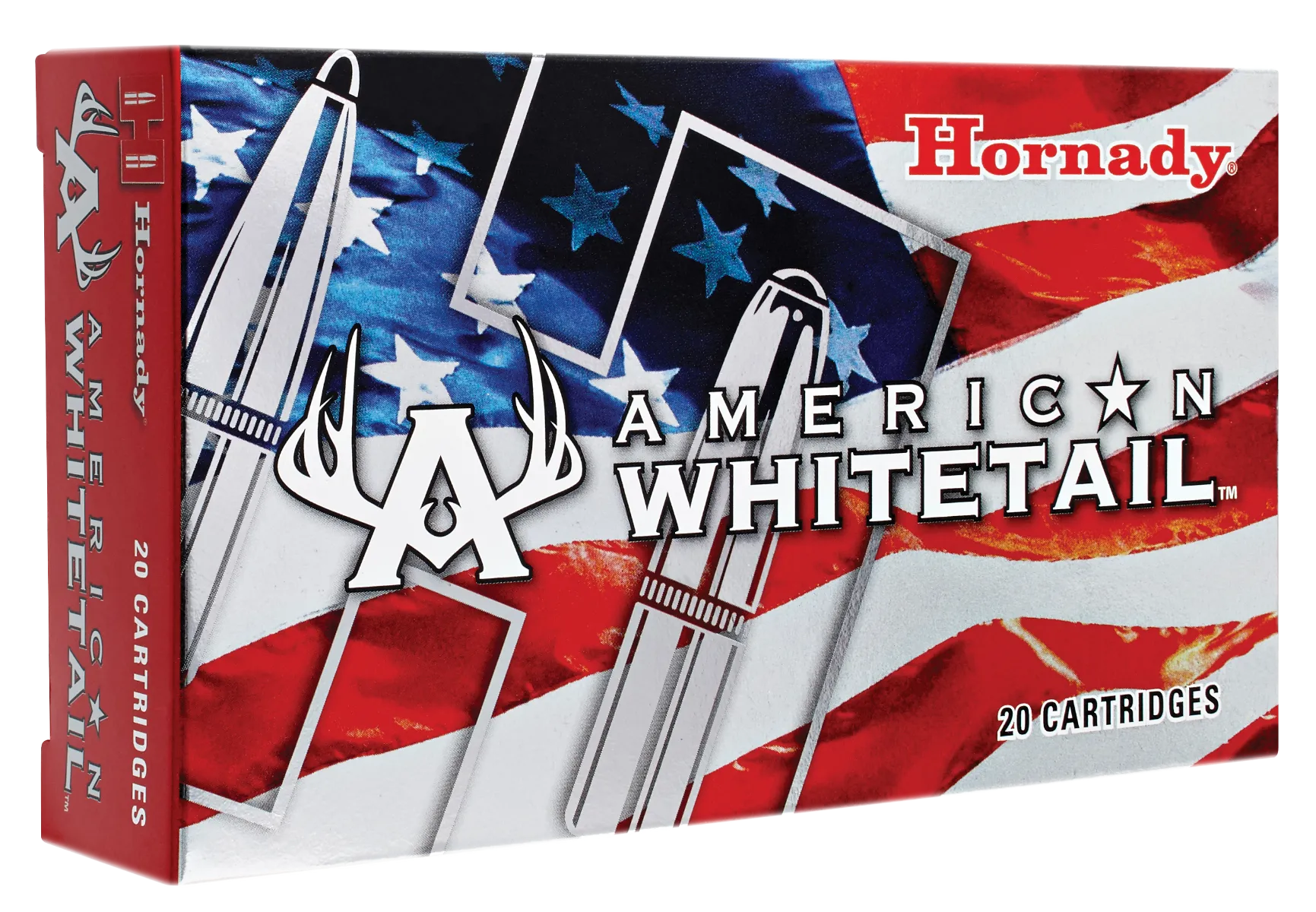
Hornady American Whitetail .308 Win 150 Grain 20-Rounds InterLock Spire Point
150-grain InterLock, multi-vendor. A step up in construction from a plain cup-and-core soft point without moving into the premium tier. Note that the same line exists in 165 grain at an almost identical price per round, so bullet weight is not what you are paying for here.

Winchester Power Point Brass .300 AAC Blackout 150-Grain 20-Rounds PP
150-grain Power Point, at two retailers. Supersonic .300 Blackout is the choice if your rifle is short, suppressed or both. The trade-off is pack depth: there is no .300 Blackout case quantity on the shelf at all, which is covered below.

Fiocchi Defense Dynamics 12 GA-2.75 9 Pellet 1Buck 25-Rounds
Nine-pellet #1 buck in a 25-round box at two retailers, and among the cheapest per round of the 92 buckshot listings we track. This is a short-range, dense-cover answer, and the 12-gauge shelf has far more buckshot than slug choices.
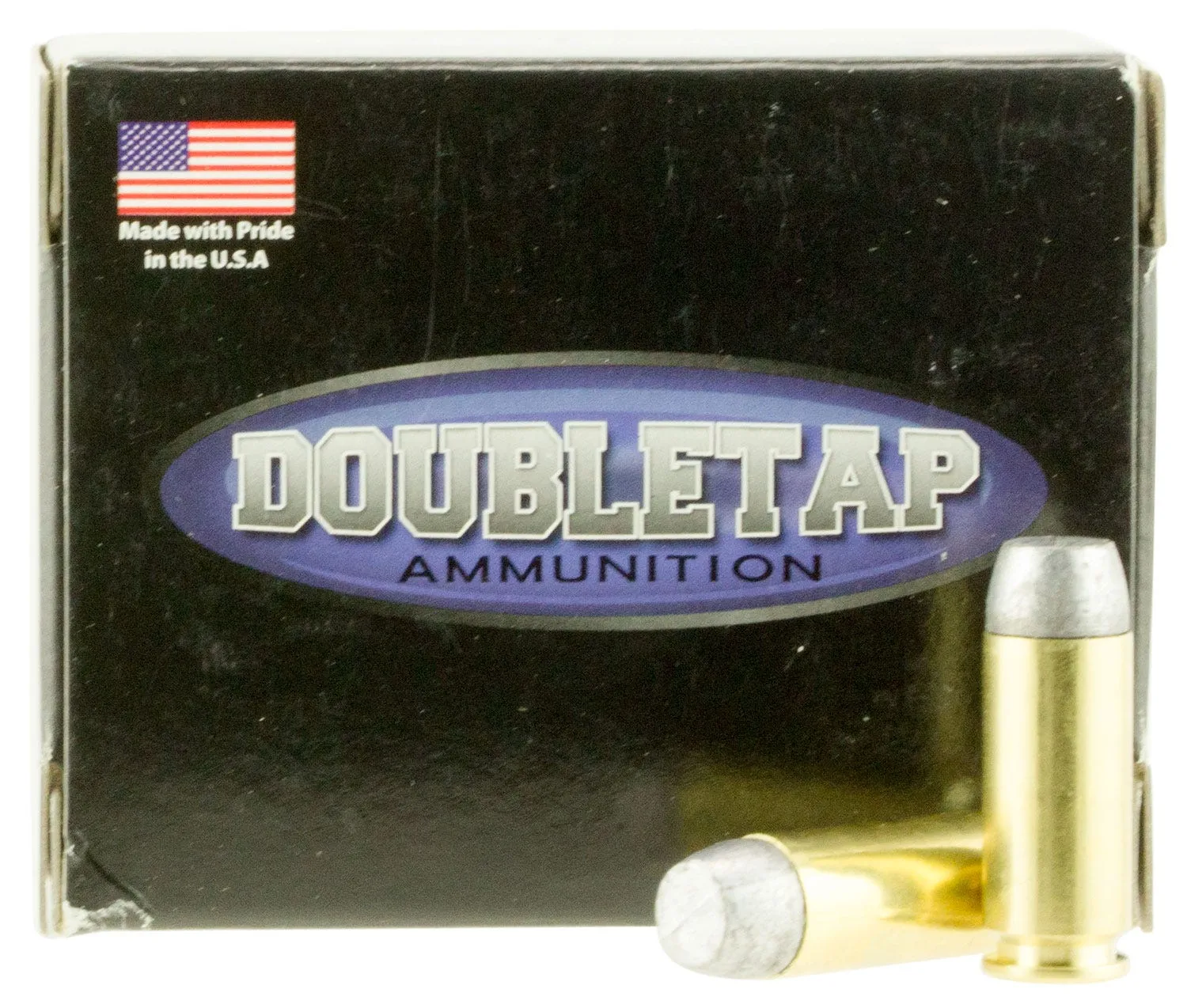
DoubleTap Hunter Brass 10mm 230-Grain 20-Rounds HCSLD
A 230-grain hard-cast solid in 10mm Auto, multi-vendor. Hard cast returns zero listings in every rifle cartridge we checked — if you want that bullet construction, it exists in handgun calibers and essentially nowhere else, which makes it a sidearm decision rather than a rifle one.

Winchester Hog Special Power Point 7.62x39mm 123gr PSP Ammo, 20Rds
A 123-grain pointed soft point in 7.62x39 sold explicitly as a hog load. It is one of only five listings in our entire ammunition index marketed at hogs, it is single-source, and it costs more than three times the cheapest expanding 7.62x39 above. Pinned here because it does not appear in the live 7.62x39 blocks on this page — the listing carries no caliber value in the feed.
Is 5.56 enough, and does the shelf let you choose?
Set aside the terminal argument. There is a purchasing argument that gets missed.
The reason .223/5.56 looks so good in the pack-depth table is the bulk FMJ shelf — 500 and 1,000-round cases of 55-grain ball at the market floor. But that ammunition is FMJ, and FMJ is a poor choice for an animal built like a hog. The moment you want an expanding bullet in this bore, you leave the bulk tier entirely: you are buying 20 or 50-round boxes of soft point at roughly 1.5 to 2 times the bulk floor.
So the real 5.56 proposition for hogs is: cheap practice, moderately priced hunting ammunition, and a deep rifle and magazine ecosystem. Our 5.56 and .223 guide ranks the loads on live cost per round, and the .223 and 5.56 deal index is where to watch the floor.
The 7.62x39 case is the mirror image and is underrated here: it has a genuine case-quantity shelf and ten soft-point listings, including the cheapest expanding rifle bullet in this entire article. The 7.62x39 index carries the full shelf.
And .308 is the deep end for bullet choice — 44 soft points, 12 bonded — at roughly double the floor and with effectively no bulk tier. The .308 index and our .308 ammunition guide have the detail.
Lowest Box Price on .308 Winchester
Prices updated Oct 22, 2026
BARNAUL AMMO 308 WIN 145Gr FMJ Poly Coated Steel Case 20rd
.308 Winchester · 145gr · 20 rds

BARNAUL AMMO 308 Win 150Gr HPBT Polycoated Steel Case 20rd
.308 Winchester · 150gr · 20 rds

BARNAUL AMMO 308 Win 140gr SP Polycoated Steel Case 20rd
.308 Winchester · 140gr · 20 rds

BARNAUL AMMO 308 Win 145Gr FMJ Zinc Steel Case 20rd
.308 Winchester · 145gr · 20 rds

BARNAUL AMMO 308 Win 168Gr SPBT Polycoated Steel Case 20rd
.308 Winchester · 168gr · 20 rds

BARNAUL AMMO 308 Win 168Gr FMJBT Polycoated Steel Case 20rd
.308 Winchester · 168gr · 20 rds
Note what that grid returns: the cheapest .308 boxes on the shelf are steel-cased, and one of them is a 140-grain soft point. Steel case is a legitimate way to cut the cost of a hunting cartridge that has no bulk tier — check your rifle's chamber and your own extraction history first.
What about a shotgun?
For close work in thick cover, buckshot and slugs are the traditional answer, and the 12-gauge shelf is deep: 92 buckshot listings and 41 slug listings, with buckshot starting cheaper per round.
12 Gauge Price Index
Live · Oct 22, 2026But the pack-depth trap applies here too, and worse than the table suggests:
The 12 Gauge Bulk Tier, Cheapest Per Round
Prices updated Oct 22, 2026
Estate Super Sport Competition Target Load 12 GA #7.5-Shot 1oz 200-Rounds 2.75
12 Gauge · 200 rds

Fiocchi Shooting Dynamics 12 GA-2.75 #8 Shot 1 oz 250-Rounds
12 Gauge · 250 rds
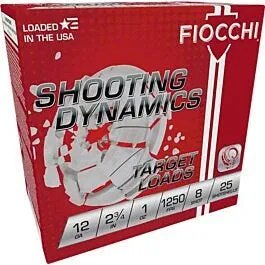
Fiocchi Target Load 12 GA-2.75 #8 Shot 1 oz 250-Rounds
12 Gauge · 250 rds
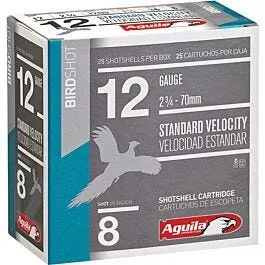
Aguila Shotshell 12 GA-2.75 #8 Shot 1-1/8 oz 250-Rounds
12 Gauge · 250 rds

Federal Top Gun 12 Gauge 2.75 Inch 1145 FPS 1.125 Ounce 7.5 Shot 250 Shells
12 Gauge · 250 rds

Remington Gun Club 12 GA #7.5-Shot 250-Rounds 2.75
12 Gauge · 250 rds
Every row in that block is a target load — #7.5 and #8 birdshot in 200 and 250-shell cases for clay shooting. The 12-gauge bulk tier is essentially all birdshot. There is no case-quantity buckshot or slug equivalent, so a shotgun does not escape the volume problem; it just hides it behind a cheap-looking market floor.
The parts of this that are not about ammunition
Three adjacent costs and constraints worth planning for before you buy a case of anything:
- Suppressors. Night hunting and multiple shots per sounder are the two reasons hog hunters buy cans, and it is a cartridge-shaping decision — it is what pushes people onto .300 Blackout and its missing bulk tier. Read the suppressor buying guide before you let the can choose your ammunition.
- Shipping. Ammunition shipping is restricted in more places than people expect, and no retailer in our feeds publishes a shipping cost, so every price on this page is item-only. How to check shipping restrictions covers it before you order a case.
- Lead. Some jurisdictions restrict lead projectiles for some hunting; if that applies to you, lead-free hunting ammunition maps what is actually available.
On the legal side generally: whether hogs are game or nuisance, whether you may hunt them at night, over bait, from a vehicle or with a light, and what licence you need all vary by state and sometimes by county, and these rules change frequently. We will not state any jurisdiction's current rule as settled — verify yours directly with your wildlife agency before the hunt.
So what should you actually buy?
If you shoot hogs occasionally and already own a deer rifle, buy a soft point or bonded load in whatever you own and stop reading. The cartridge question is a non-issue at low volume.
If you shoot hogs in quantity — which is the whole reason this guide exists — the live data says: pick a cartridge with a volume shelf, accept that your cheap ammunition will be FMJ and your hunting ammunition will not be, and watch the floor rather than the average. Prices on this page move; the forces behind that movement are worth understanding if you are buying by the case. Set an alert on the cartridge you settle on and let the price come to you:
Get alerted when .308 Winchester price drops hit.
We watch every listing and email you the moment the cost per round drops.
Set Up a Free Price AlertAmmoSpotter earns a commission when you buy through links on this page. It never changes what you pay, and it never decides what we recommend — our picks are ranked on live cost-per-round data pulled from every retailer we track. Full disclosure.
Frequently Asked Questions
What is the best cartridge for hog hunting?+
Is 5.56 enough for hogs?+
Is .300 Blackout good for hogs?+
What does hog hunting ammunition cost per round?+
Can you hunt hogs with buckshot or slugs?+
Can you hunt hogs at night, and does that change the ammunition?+

About the author
AmmoSpotter Research Desk
Price & Ballistics Research
The AmmoSpotter Research Desk analyzes live retail pricing across every ammunition, firearm and accessory listing we track. Recommendations here are ranked against real cost-per-round data pulled daily from the retailers we monitor - not against manufacturer marketing copy.
- ✓Tracks 180,000+ live product listings across 6 retailer feeds
- ✓Records price history on every listing, every day
- ✓Cost-per-round methodology applied to all ammunition rankings
- ✓No product is ranked without a verifiable in-stock retail price
- ✓Affiliate relationships never influence rankings
Related Guides

Best Deer Hunting Ammo by Caliber (2026): What Each Cartridge Costs to Feed
- The mainstream deer cartridges — .308 Winchester, 6.5 Creedmoor, .30-06 Springfield — cost close enough per round that price should not pick your rifle. - Cost per round is misleading on hunting ammo: you buy it in ...
Best .300 Blackout Ammo 2026: Supersonic and Subsonic on Live Prices
.300 Blackout exists to solve one problem: fitting a heavy, slow bullet into an AR-15 that cycles reliably with nothing changed but the barrel. It does that well. What it does not do is cost the same as feeding the ri...

Best .308 Winchester Ammo 2026: Hunting, Match and Practice Loads on Live Prices
- .308 is really two markets. The cheap tier lives near the live floor; the hunting and match tier sits multiples above it. The catalog average describes neither. - Steel-case FMJ sets the price floor for this cartrid...
Best 10mm Auto Ammo 2026: Hunting, Woods Carry and Bear Defense Loads
- 10mm Auto has a trimmed floor of about $0.440 per round in our index — but an average of roughly $1.235 across 213 live listings, and a ceiling of $2.990 . - That floor-to-average gap is the biggest in any mainstrea...
Best .350 Legend Ammo 2026: Straight-Wall Deer Loads on Live Prices
- .350 Legend has a trimmed floor of $0.752 per round and the cheapest box in our index is $14.99 — the only straight-wall rifle cartridge we track with a box under $20. - Against .450 Bushmaster ($1.523 floor) and .4...
.30-06 vs .308: Which Should You Buy, on Live Prices and Real Availability
This argument is older than almost everyone having it. The .30-06 Springfield has been in continuous use since before the First World War; the .308 Winchester arrived four decades later doing nearly the same job in a ...