Best AR-15 Triggers
Most AR-15 triggers cluster inside one $60 window, most listings never state a pull weight, and the cheapest rows in the category are not triggers at all.

What does an AR-15 trigger actually cost?
We track 101 live listings that name an AR-15 or AR-10 trigger in the title, once guards, pins, springs and trigger shoes are stripped out. They run from $20.29 to $324.99, with a median of $190.00 and an average of $185.05. The quartiles are tight: $149.99 and $226.95.
| Price band | Listings | What it is |
|---|---|---|
| Under $50 | 4 | Mil-spec and basic three-piece trigger groups |
| $50–$99 | 11 | Enhanced duty groups, entry single-stage |
| $100–$139 | 7 | Entry drop-ins |
| $140–$199 | 47 | The mainstream drop-in market |
| $200–$249 | 19 | Match and competition two-stage |
| $250 and up | 13 | Adjustable and competition flagships |
Nearly half the market lives in one $60 window. That is the most useful fact in this guide: once you have decided to spend more than about $140, you are choosing between a lot of products that cost close to the same. The decision is specification and feel, not price.
The bottom of the range is worth naming too, because it is the baseline you are upgrading from. A standard mil-spec trigger group starts at $31.79 in our data, with a plain curved CMMG trigger at $20.29. Those are what ships in most rifles.
Entry-Tier AR Triggers Under $100
Prices updated Oct 11, 2026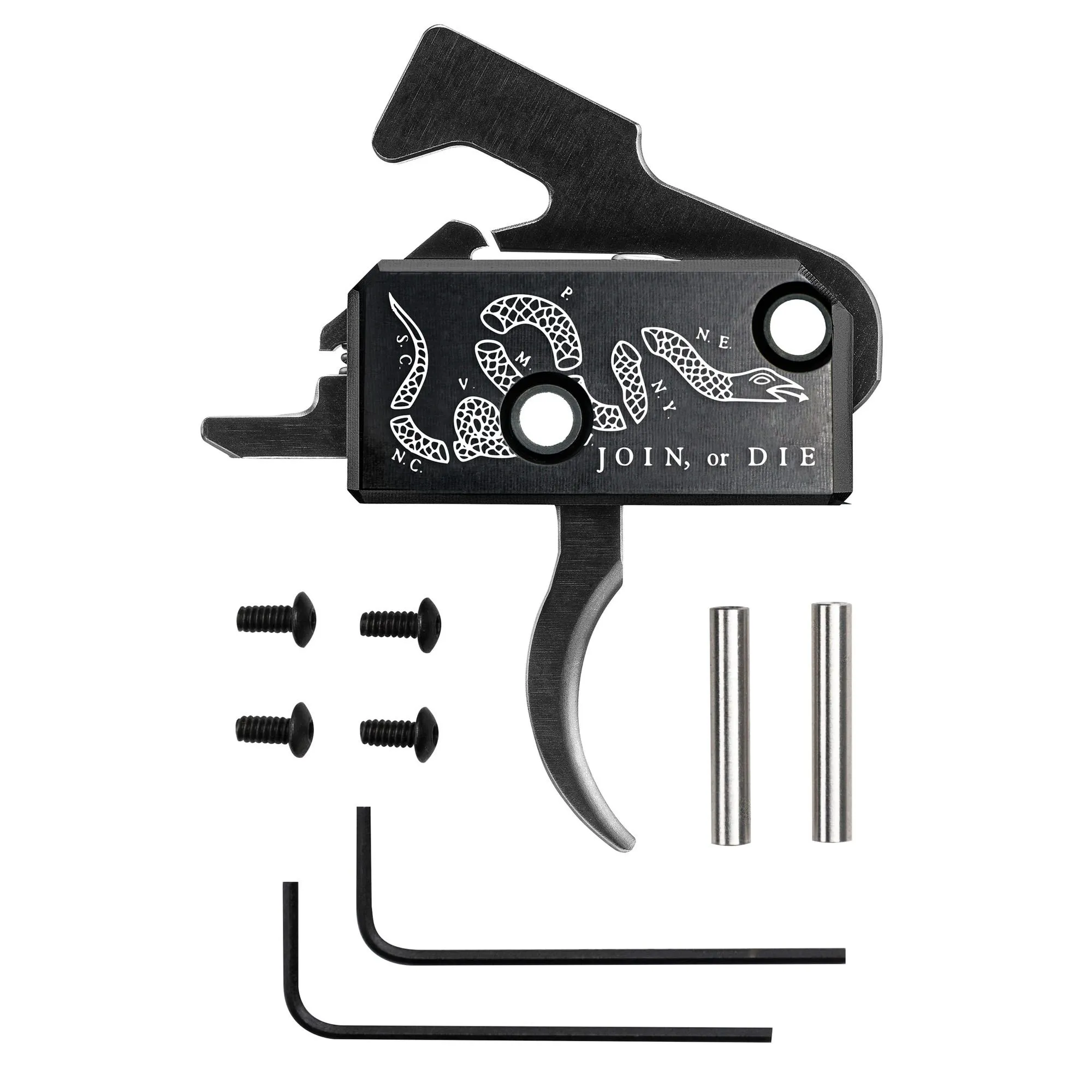
Rise Armament Super Sporting Trigger Curved Join or Die
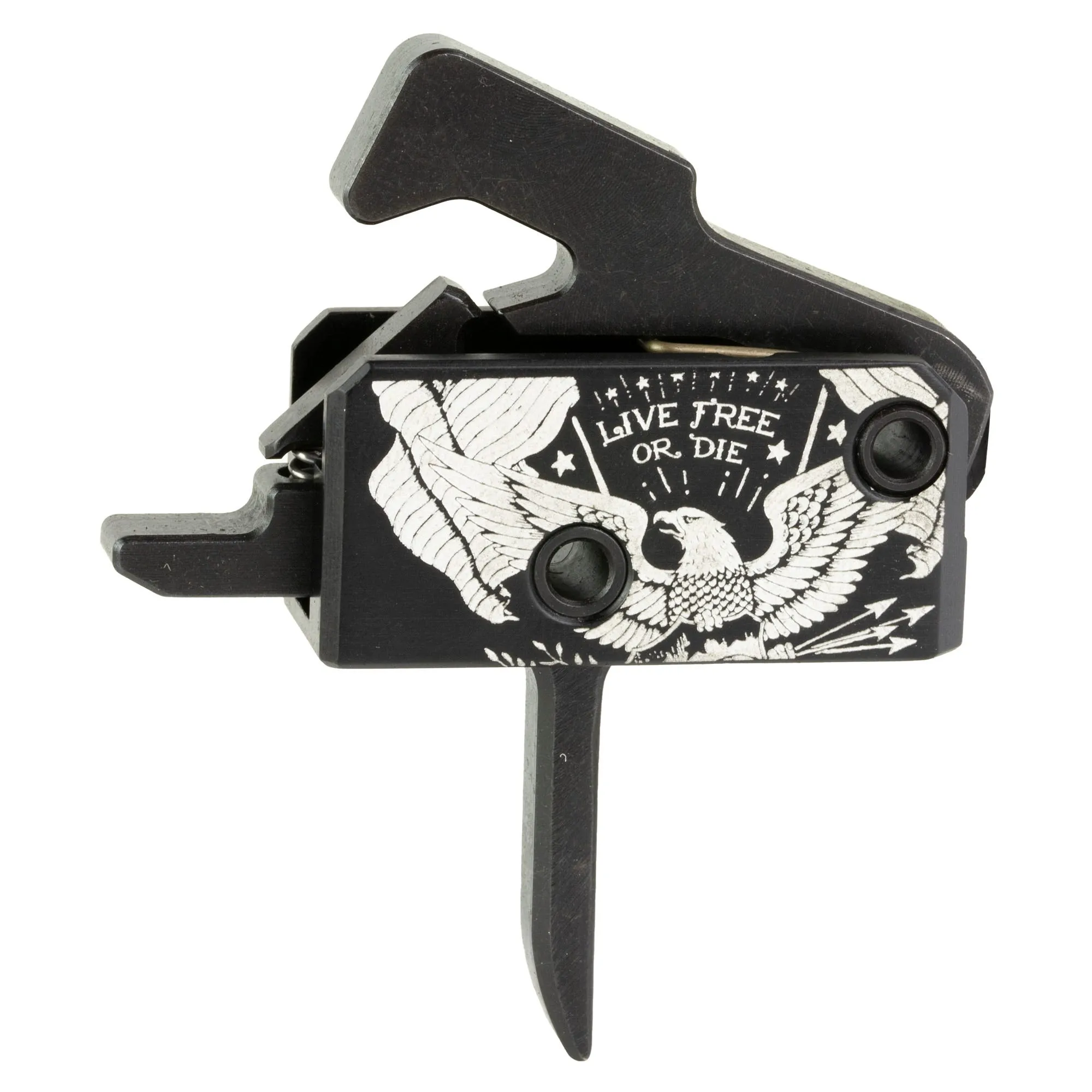
Rise Armament Rave Super Sporting Trigger Single-Stage Flat Live Free or Die Logo
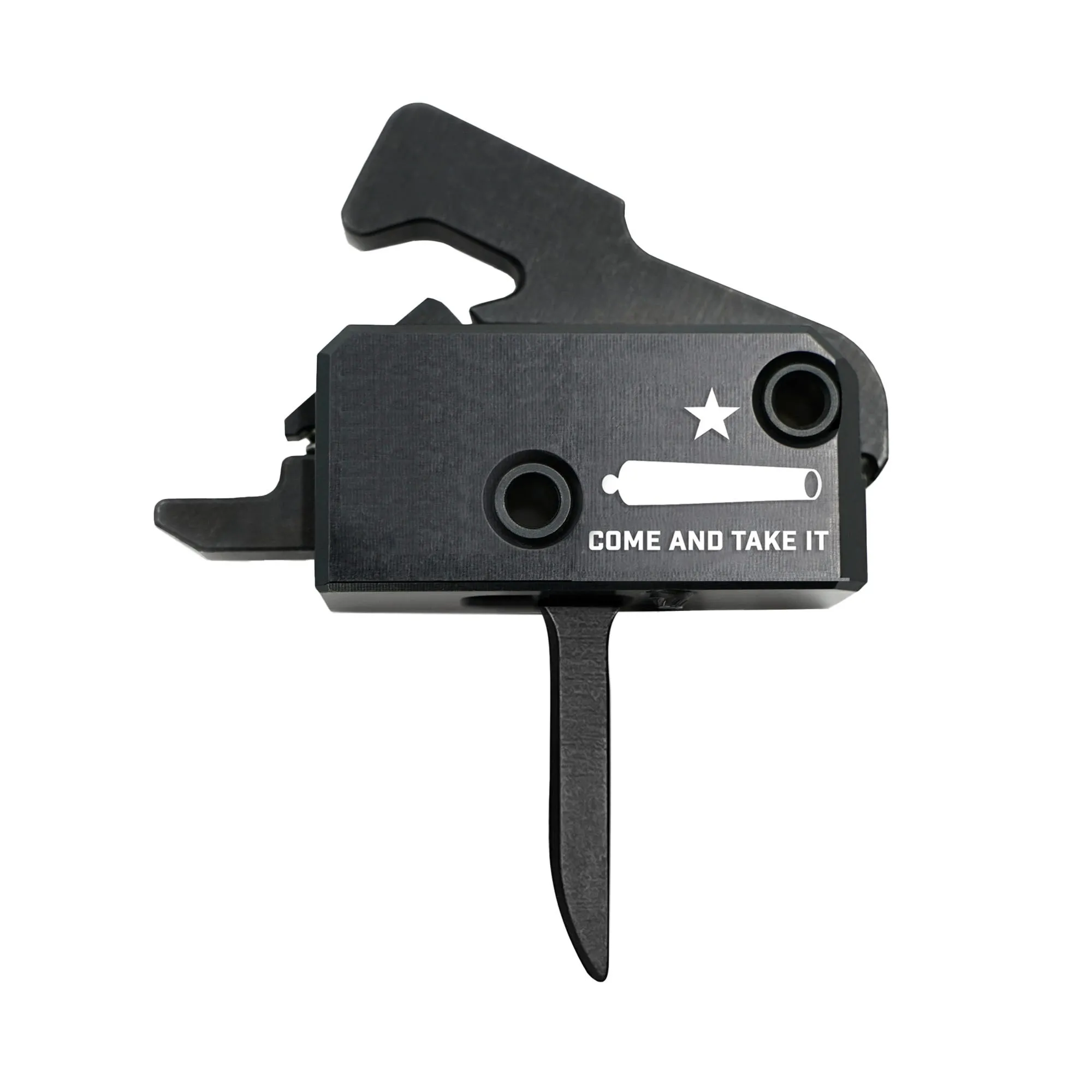
Rise Armament Super Sporting Trigger Flat Come And Take It Logo
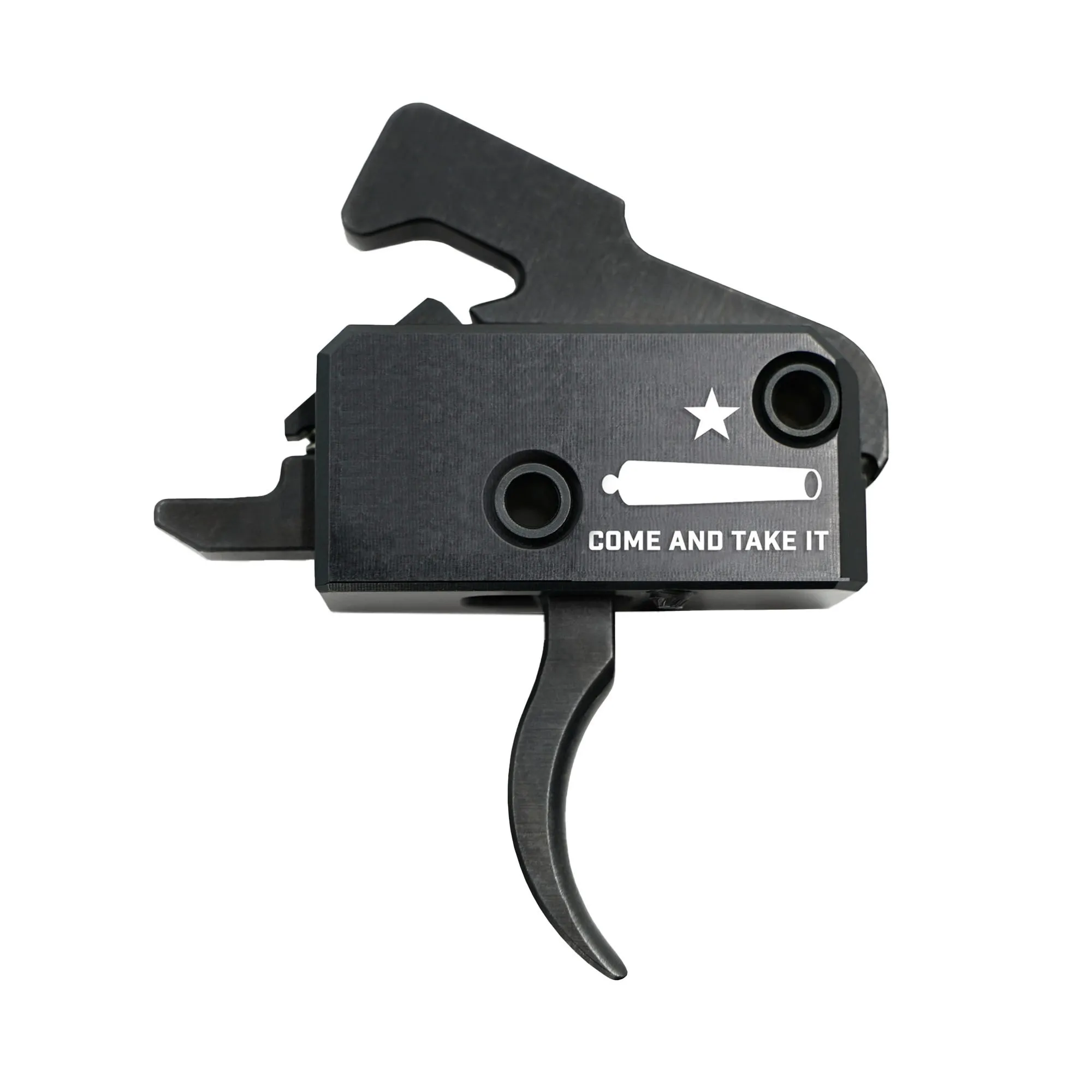
Rise Armament Super Sporting Trigger Curved Come And Take It Logo
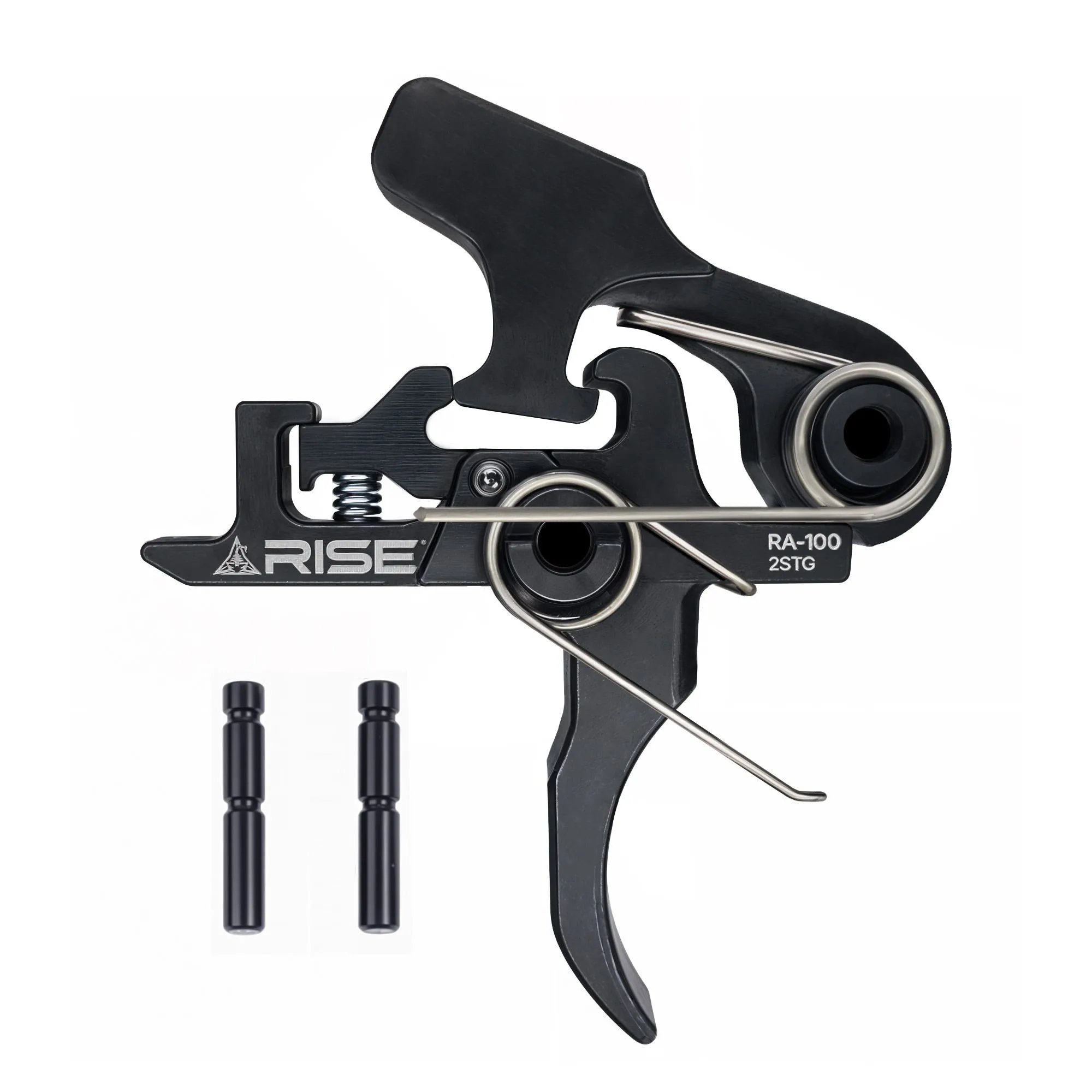
Rise Armament RA-100 Trigger Two-Stage
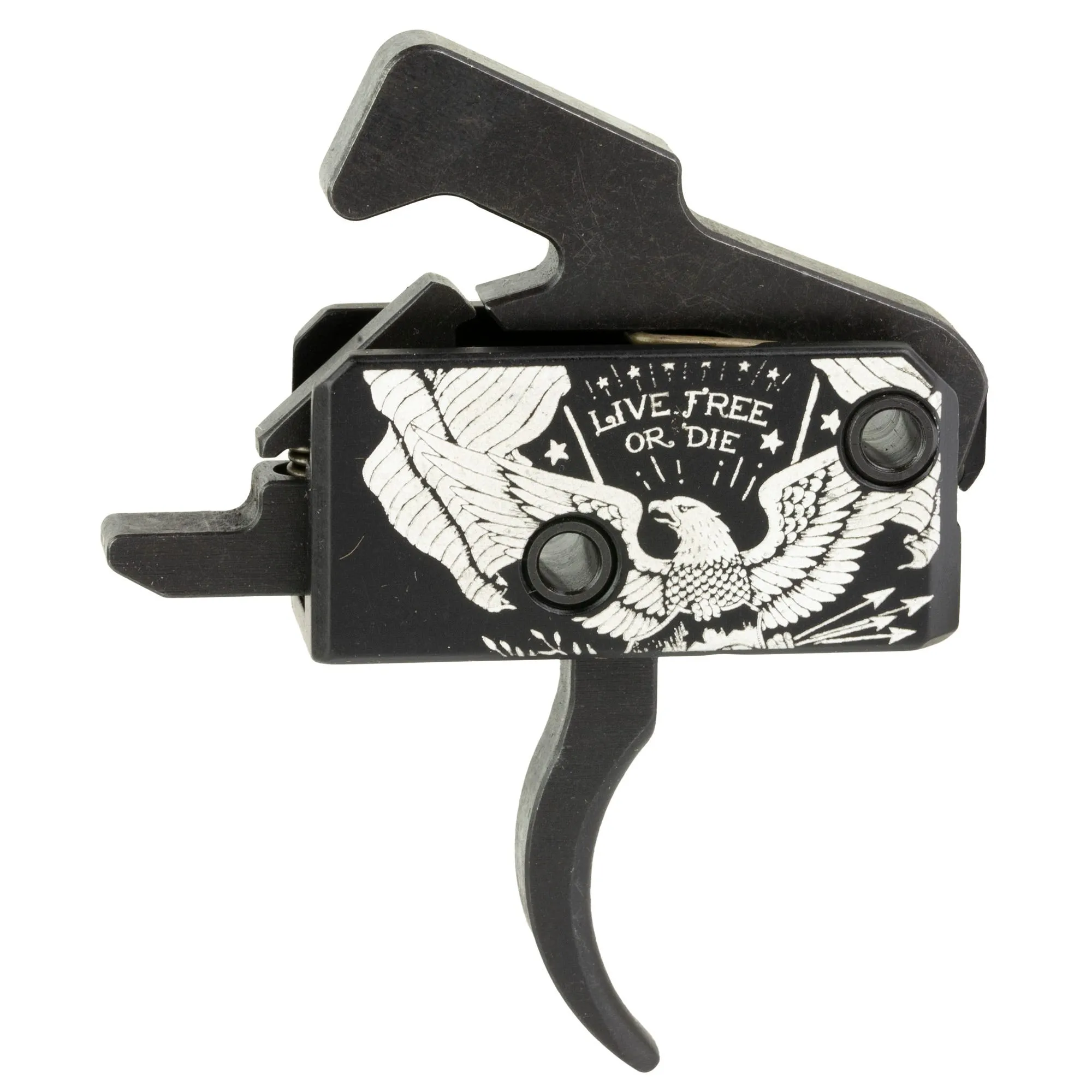
Rise Armament Rave Super Sporting Trigger Single-Stage Curved Live Free or Die Logo
Why are the cheapest listings in the trigger category not triggers?
Because the category is named Triggers - Triggerguards, and the guards are a tenth of the price.
Across all 721 live listings in that category, 56 are trigger guards and 88 contain no instance of the word "trigger" at all — they are pins, detents, safety selectors and springs filed alongside. On top of that, 111 listings are Glock parts and roughly 140 name some other platform entirely: Remington 700 and 870, Savage, Ruger, Tavor, 1911, AK.
So this is what you get if you sort the whole category by price:
What the Cheap End of the Category Actually Contains
Prices updated Oct 11, 2026
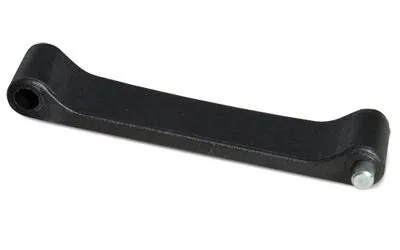

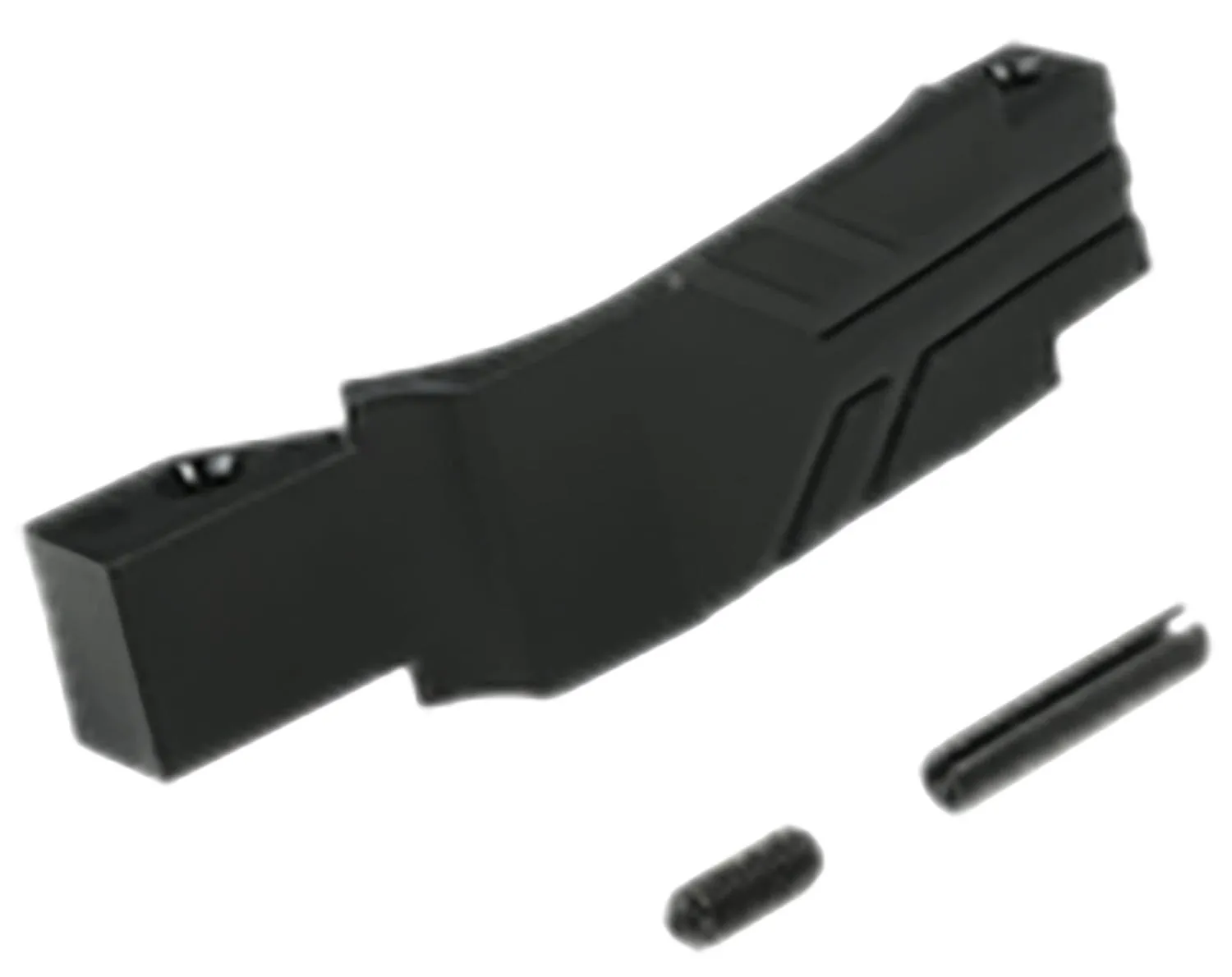
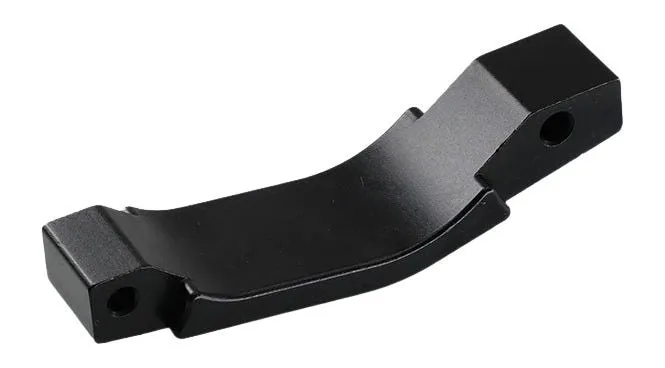
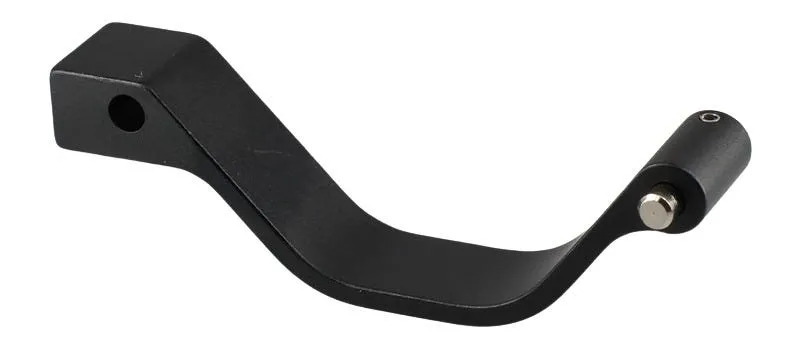
Six trigger guards between $4.49 and $6.49. Useful if you need a guard. Useless as a shortlist, and this is exactly how a $5 part ends up in a "cheapest AR-15 trigger" round-up somewhere else.
Can you price-shop a trigger, or should you wait for a price drop?
Both levers exist here, and both are weaker than you would hope.
55 of the 101 listings are stocked by two or more retailers — a real contrast with complete uppers, where not one of 528 listings is carried by more than one retailer. But the median cross-retailer difference on those 55 is just 1.05%. Seven are priced within half a percent of each other. This is a shelf where the advertised price is mostly the price.
The exception is worth the five minutes: 18 of the 55 differ by 10% or more and 13 differ by 20% or more, with the widest at 31.6%. So checking is cheap and occasionally pays well — it just does not pay reliably.
Waiting pays less. 44 of the 101 (43.6%) are currently above their own recorded low, median gap 7.69%. For comparison, around 70% of the ammunition we track sits above its own recorded low. Triggers are near their floor far more often than ammunition is, which makes sense: there is no seasonal demand spike for fire control groups.
The pull weight is the spec you are buying, and most listings don't state it
Only 29 of the 101 listings put a pull weight in the title. Roughly 70% of the shelf sells you the defining characteristic of the product without naming it.
Among the 29 that do state one:
| Stated pull | Listings | Cheapest | Median |
|---|---|---|---|
| 2 lb | 6 | $199.90 | $199.90 |
| 3 lb | 2 | $109.99 | $200.99 |
| 3.5 lb | 9 | $140.95 | $169.99 |
| 4 lb | 6 | $189.99 | $219.99 |
| 4.5 lb | 5 | $99.99 | $195.95 |
| 5 lb | 1 | $195.95 | $195.95 |
A lighter pull is not reliably more expensive. The 3.5 lb median sits below the 4 lb median, and the cheapest 4.5 lb listing is cheaper than the cheapest 3 lb one. These counts are small and I would not build a theory on them, but they are enough to kill the assumption that pull weight is a price ladder. What you actually pay for at the top of the market is adjustability and two-stage mechanisms, not lightness.
On the other specs the catalog is equally quiet: 26 listings say two-stage against 20 single-stage, 26 say curved against 24 flat, and only 18 say drop-in. Flat versus curved is a preference, and the catalog splits almost exactly down the middle on it — there is no "right" answer being priced in.
Mid and Match Tier Drop-In Triggers
Prices updated Oct 11, 2026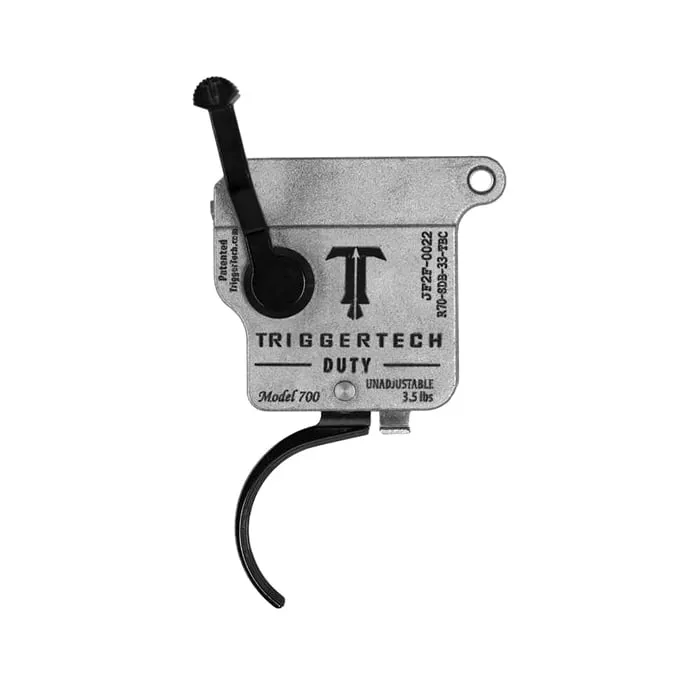
TriggerTech Duty Curved Trigger 3.5 lbs for Remington 700
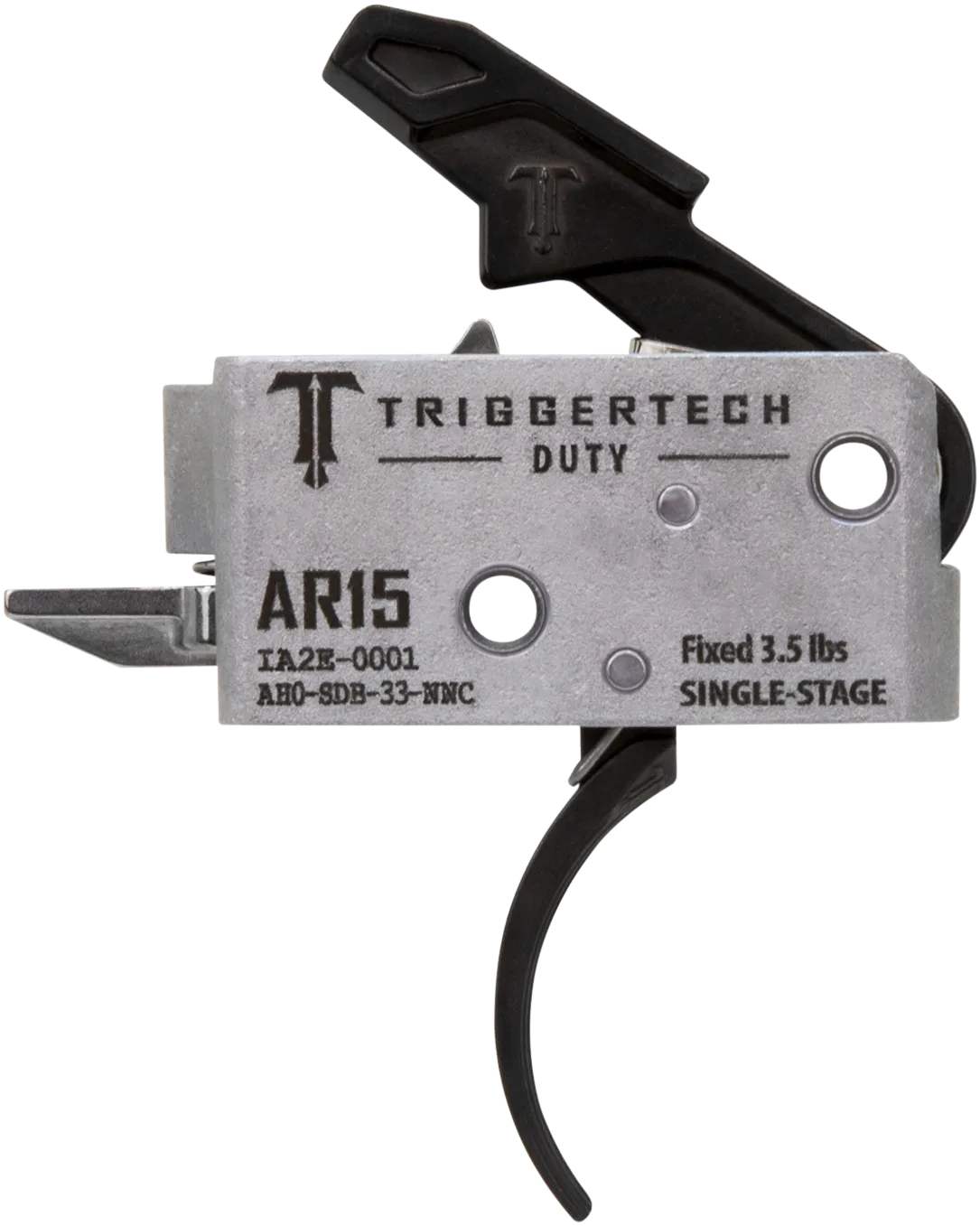
TriggerTech Duty Single-Stage Curved for AR-15
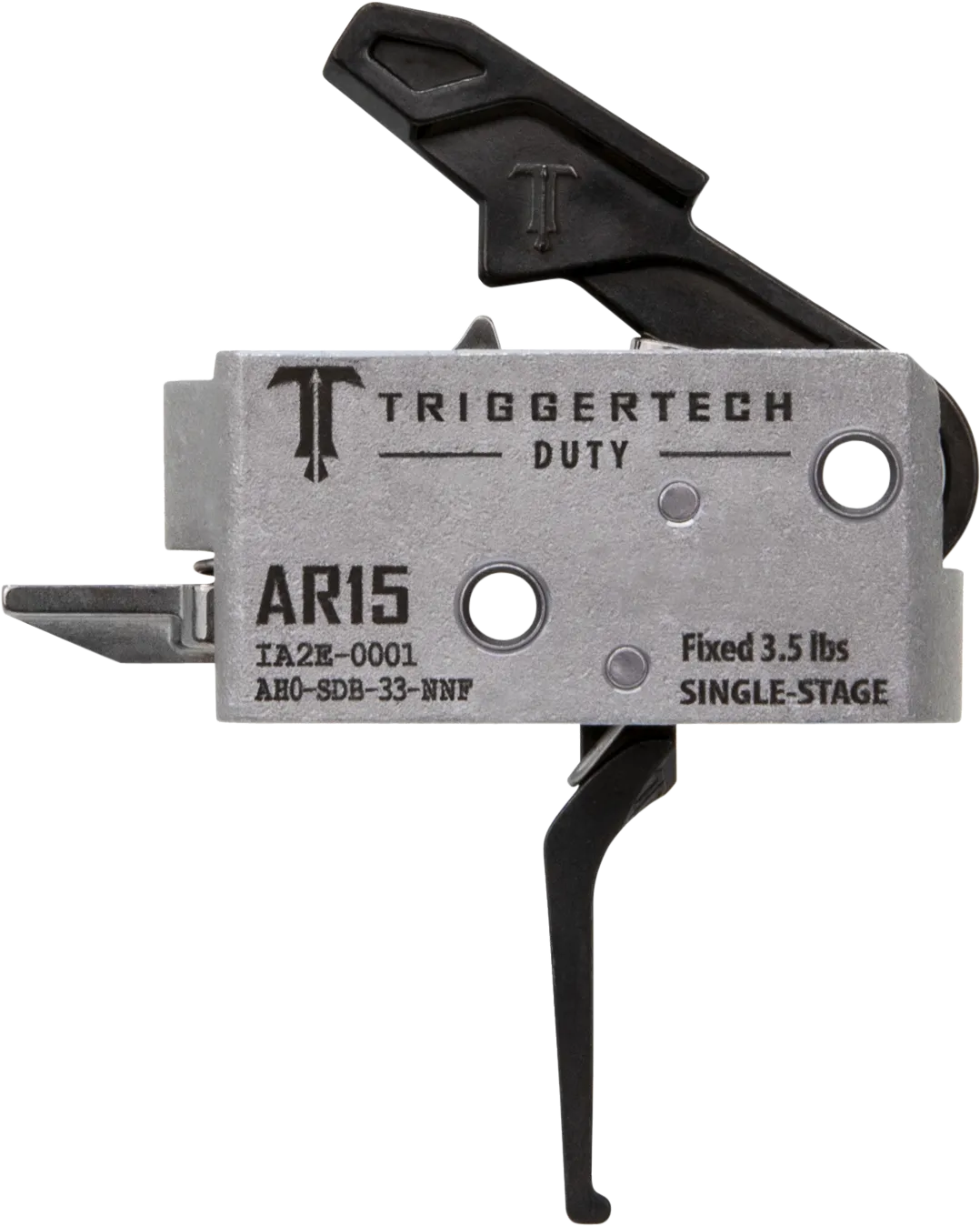
TriggerTech Duty Single-Stage Flat for AR-15
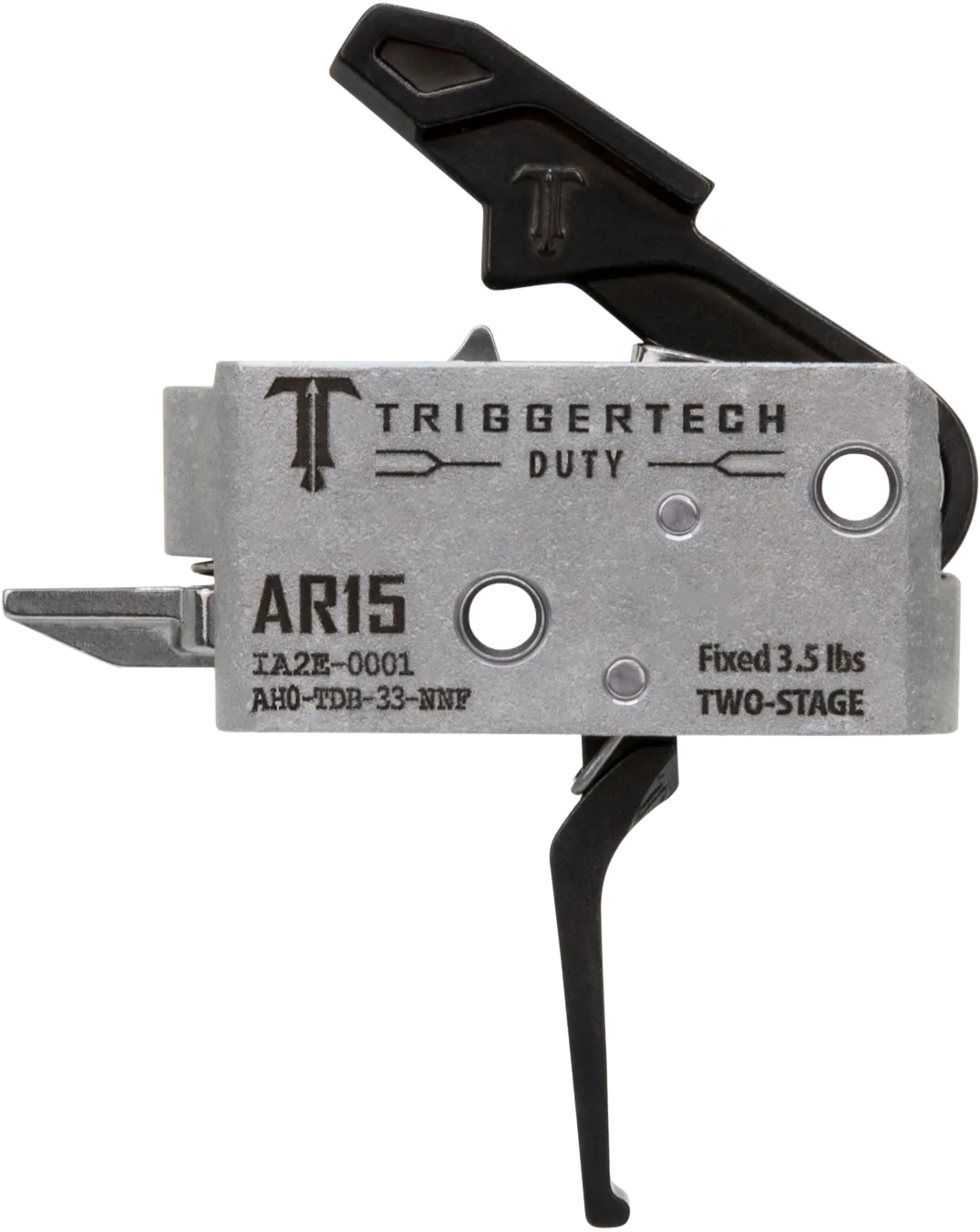
TriggerTech Duty Two-Stage Flat for AR-15
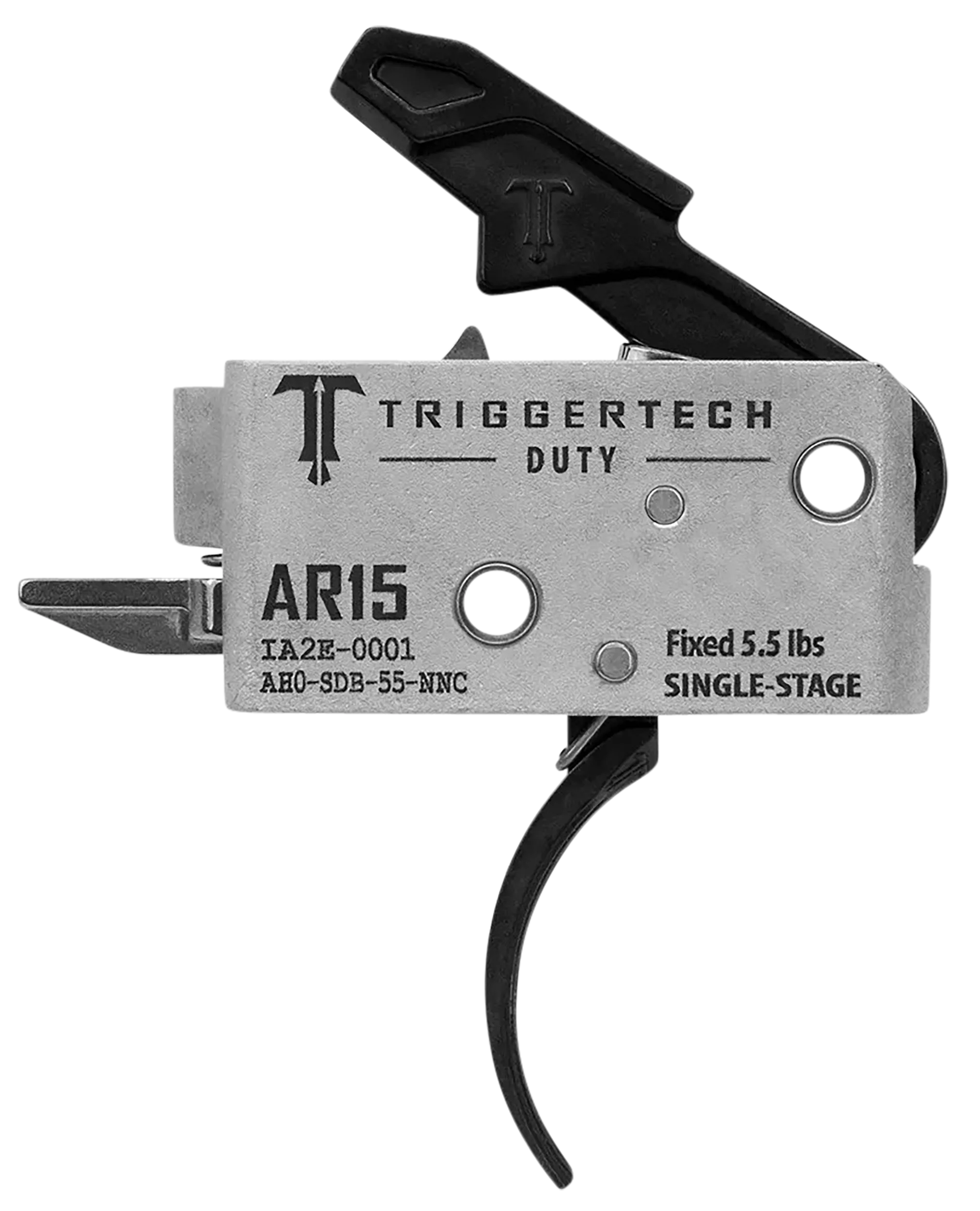
TriggerTech Duty Mil-Spec Single-Stage Curved for AR-15
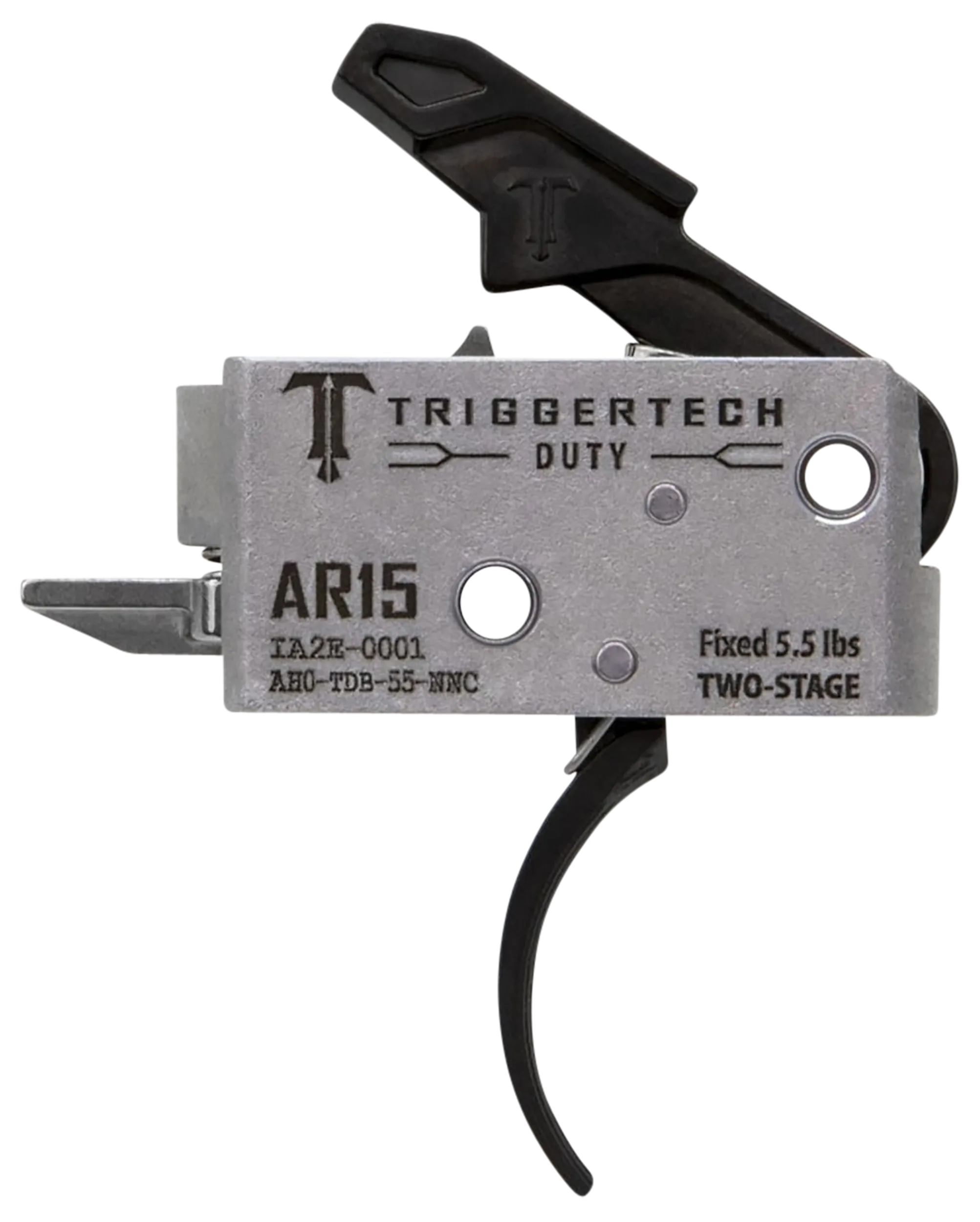
TriggerTech Duty Mil-Spec Two-Stage Curved for AR-15
One row in that grid is a Remington 700 trigger rather than an AR one — the same category bleed described above. The rest are AR-15 and AR-10 drop-ins, and the spread from the $139.99 duty models to the $324.99 flagships is the clearest picture of this market you will get in one block.
What else would that money buy?
This is the comparison that never appears in a trigger round-up, and it is the one that should.
5.56 NATO and .223 Remington Price Index
Live · Oct 11, 2026At that market floor, the $190.00 median trigger is about 420 rounds of 5.56. The upgrade itself — mil-spec group at $31.79 to the median drop-in — is roughly $158, or about 350 rounds. A $324.99 flagship is a little over 700.
Cost Per Round Calculator
The only number that matters when comparing ammo. Shipping included.
Put against rimfire the gap gets harder to ignore. The .22 LR floor is a fraction of 5.56's, so the median trigger is roughly 3,200 rounds of rimfire practice:
Bulk .22 LR Bricks Right Now
Prices updated Oct 11, 2026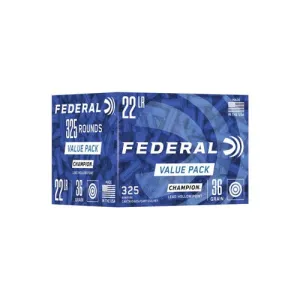
FEDERAL AMMO Champion Value Pack 22LR 36gr Lead Hollow Point Ammunition | 325 Rounds
.22 LR · 36gr · 325 rds
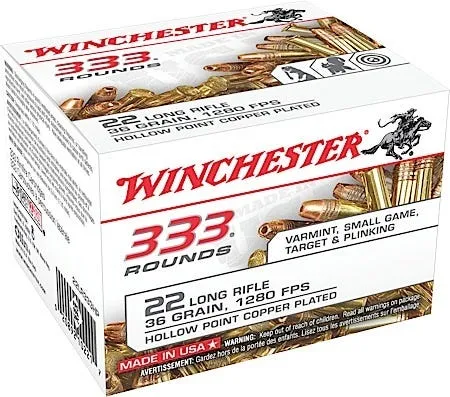
Winchester USA Brass .22 LR 36 Grain 333-Rounds Bulk CPHP
.22 LR · 36gr · 333 rds
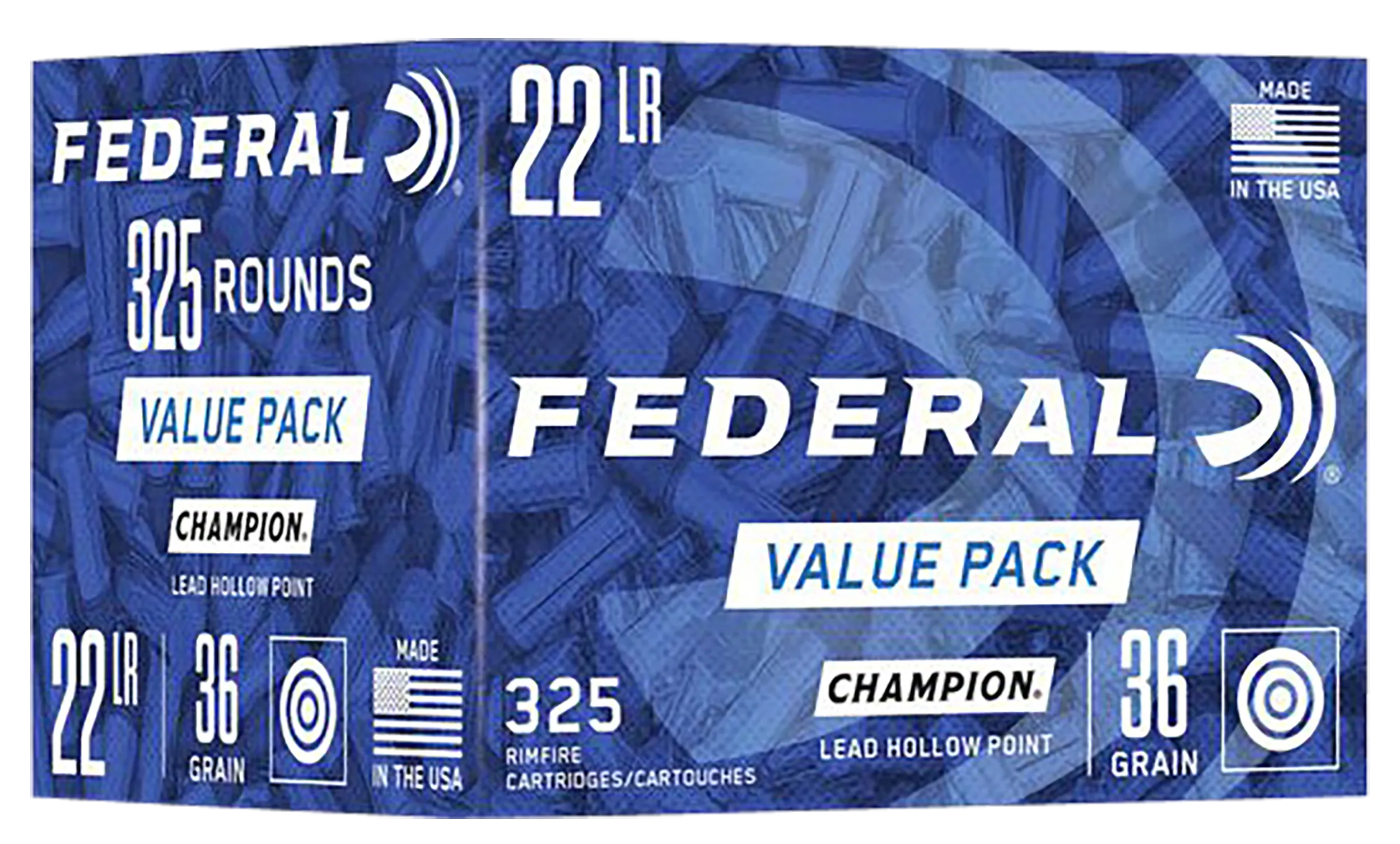
Federal Champion Training Value Pack Brass .22 LR 36 Grain 325-Rounds LHP
.22 LR · 36gr · 325 rds
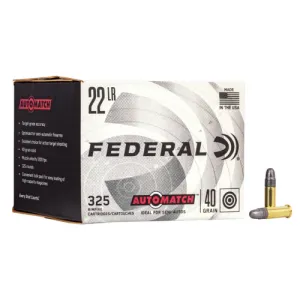
FEDERAL AMMO AutoMatch 22LR 1200 FPS 40Gr 325rd
.22 LR · 40gr · 325 rds
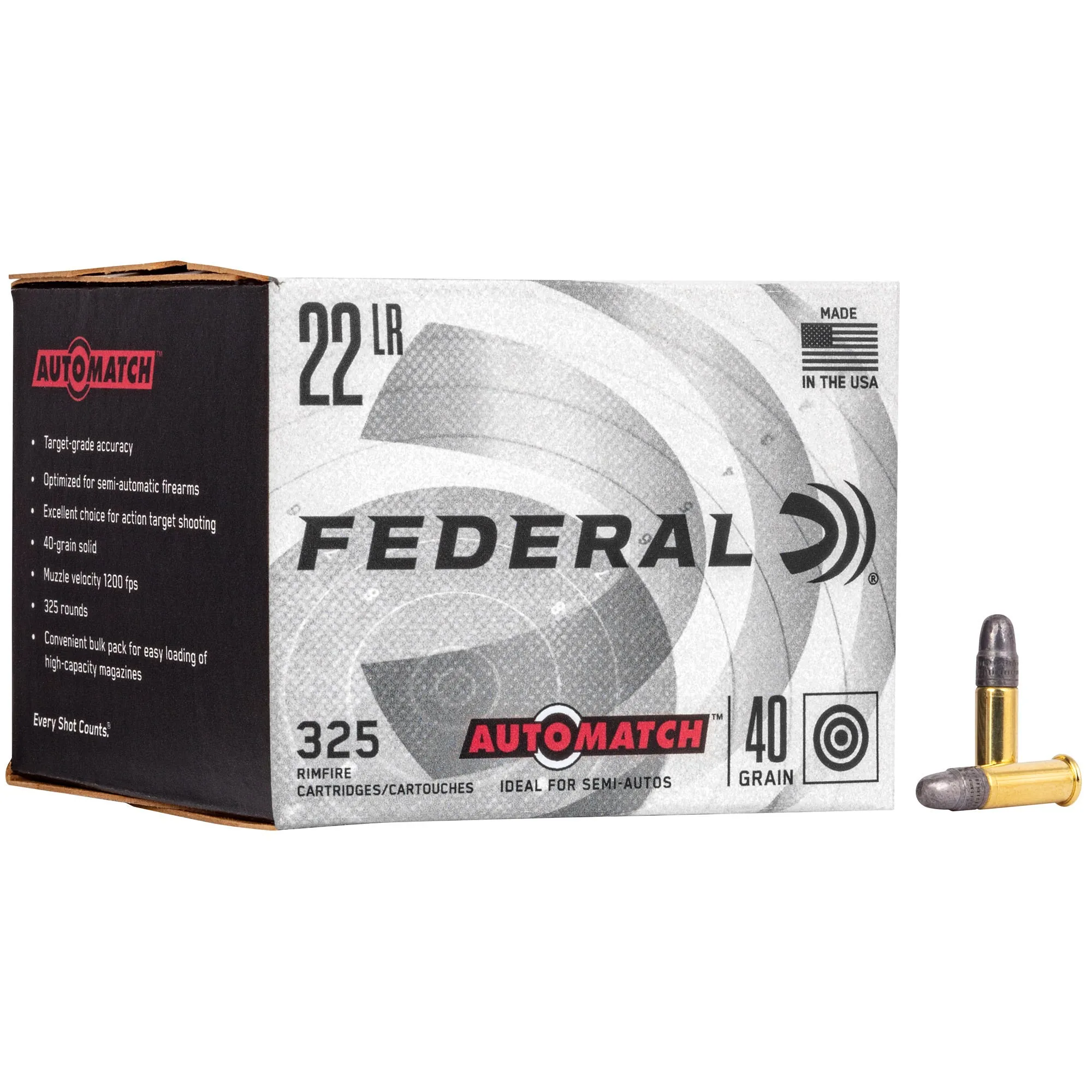
Federal Champion Training Bulk Ammo Brass .22 LR 40-Grain 325-Rounds LRN
.22 LR · 40gr · 325 rds
FEDERAL AMMO Value Pack 22LR 36gr Copper Plated Hollow Point Ammunition | 325 Rounds
.22 LR · 36gr · 325 rds
I am not going to tell you a trigger is a waste of money. A good trigger genuinely makes it easier to shoot the accuracy a rifle already has, and that is a real thing to buy. But our guide to how many rounds it takes to get good puts the honest version of this trade-off in numbers, and if your rifle has seen a few hundred rounds, the ammunition wins. Both at once is better than either: see bulk 5.56 and .223 by cost per round, what the good 5.56 loads cost and the .22 LR rankings for the cheapest way to buy trigger time.
One caution on timing an ammunition purchase alongside a parts purchase: cartridge prices move on different forces than parts prices do, as why ammo prices move sets out. A good month for triggers is not automatically a good month for cases of 5.56.
Binary and forced-reset triggers: read this part twice
We track 23 listings in a separate Binary Triggers category, from $74.99 to $629.99, averaging $307.08. They are a genuinely different product class — binary systems that fire on pull and release, and forced-reset designs.
They are also the one AR-15 part where the legal position is both unsettled and highly local. In general terms: several states restrict or prohibit binary triggers outright, forced-reset triggers have been the subject of repeated federal enforcement action and litigation with positions that have changed more than once, and retailers maintain their own ship-to lists that may be narrower than the law. Nothing in that paragraph is stable enough to rely on from an article of any age, including this one. Verify the current federal position and your own state's rule before you order, and confirm the retailer will ship to you.
Binary and Forced-Reset Listings
Prices updated Oct 11, 2026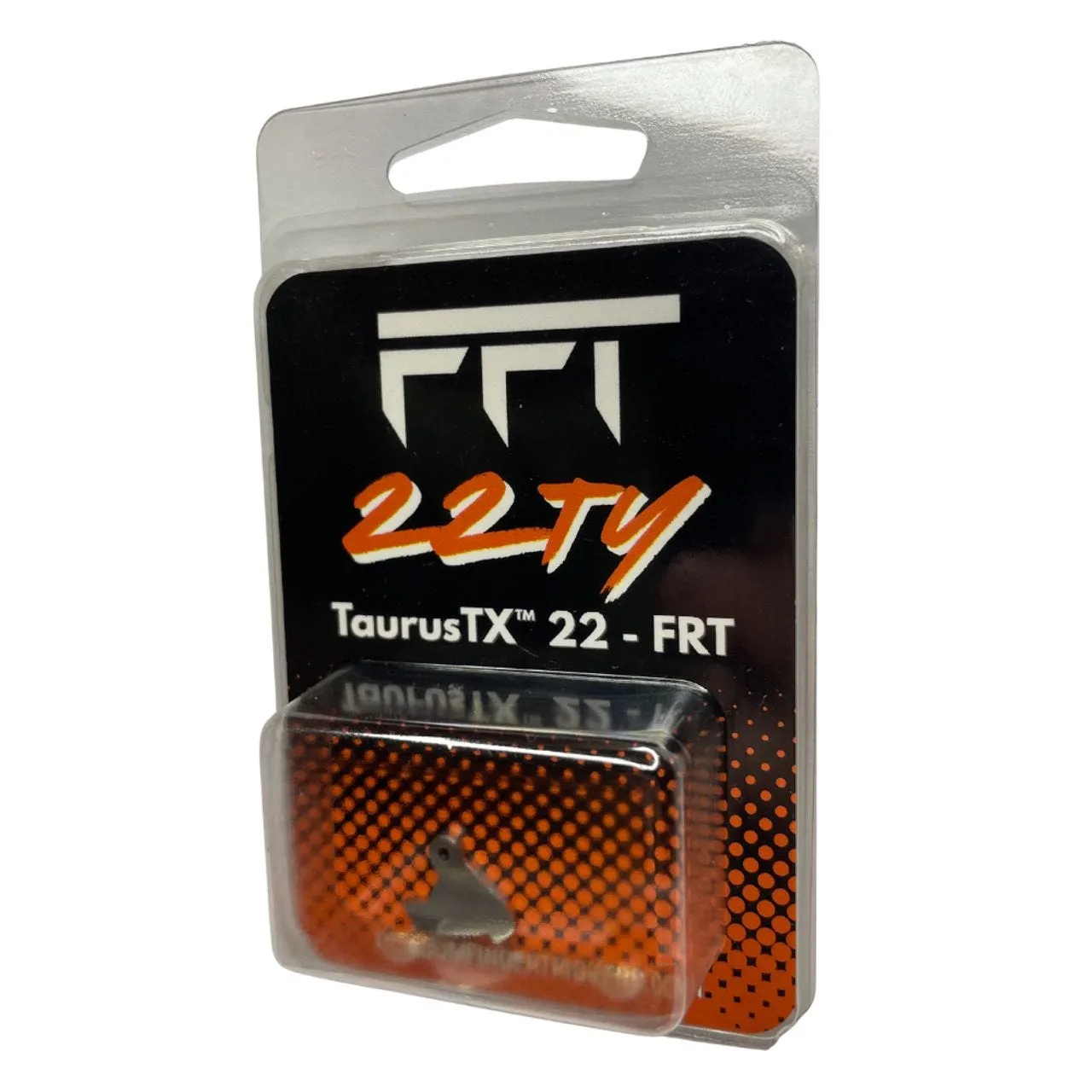
Freedom Finger Triggers Taurus TX 22 Forced Reset Trigger Stainless
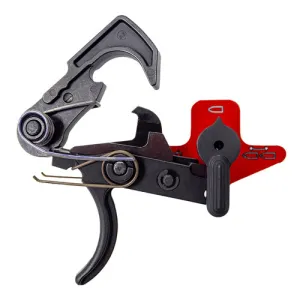
Franklin Armory BFSIII AR-Essential Binary Rifle Trigger Curved
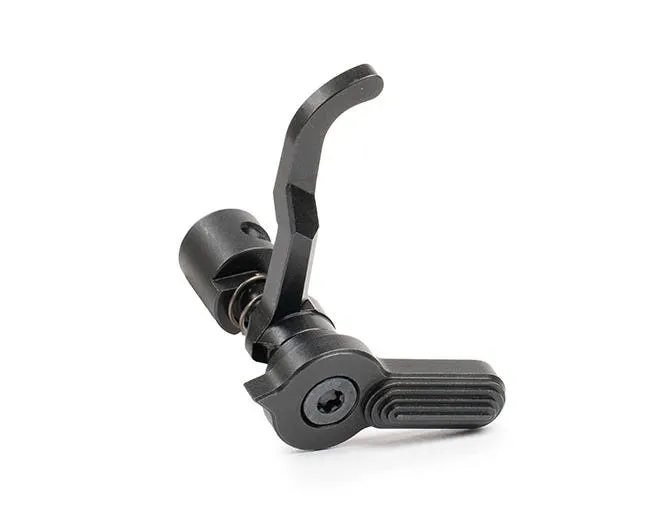
Atrius Development Mil-Spec Forced Reset Selector for AR-15
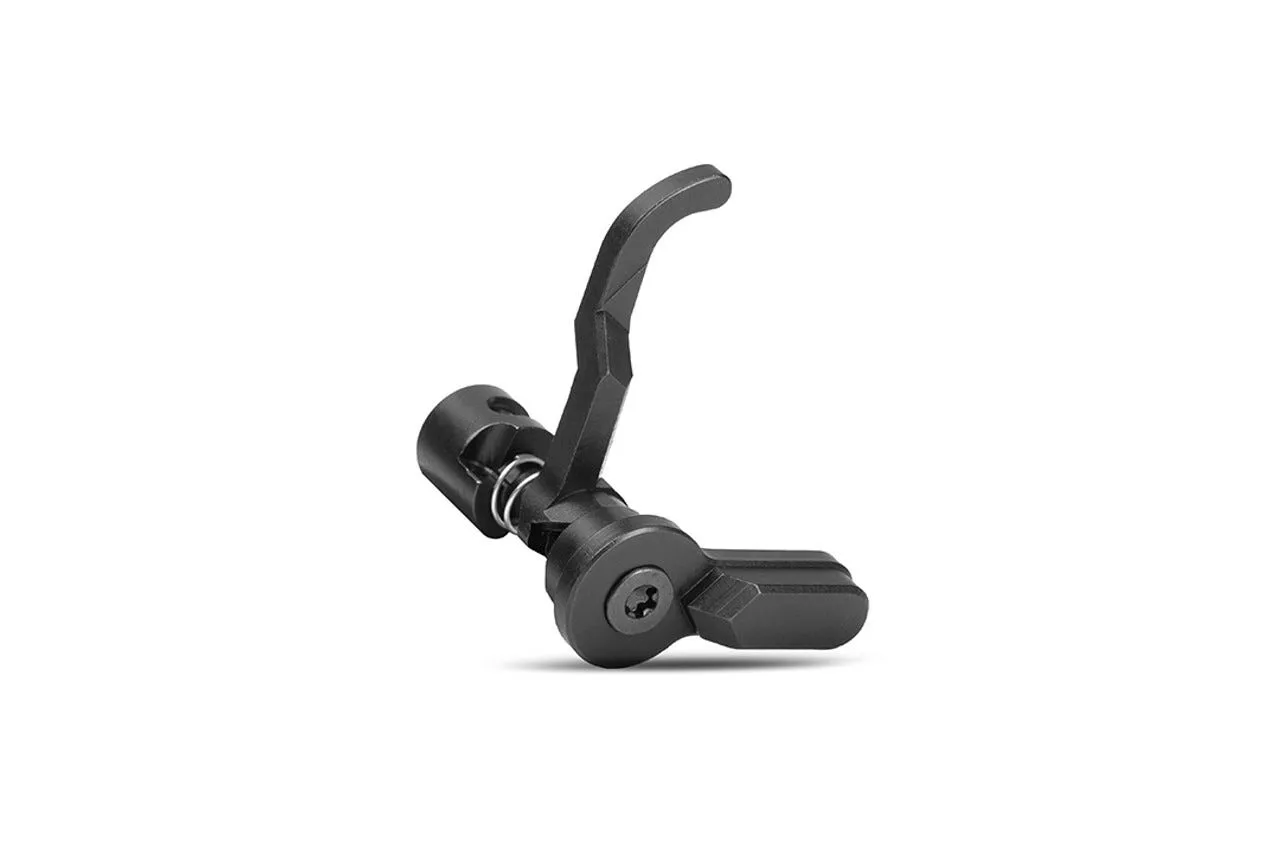
Atrius Development 3-Position Forced Reset Selector - Fits AR-15
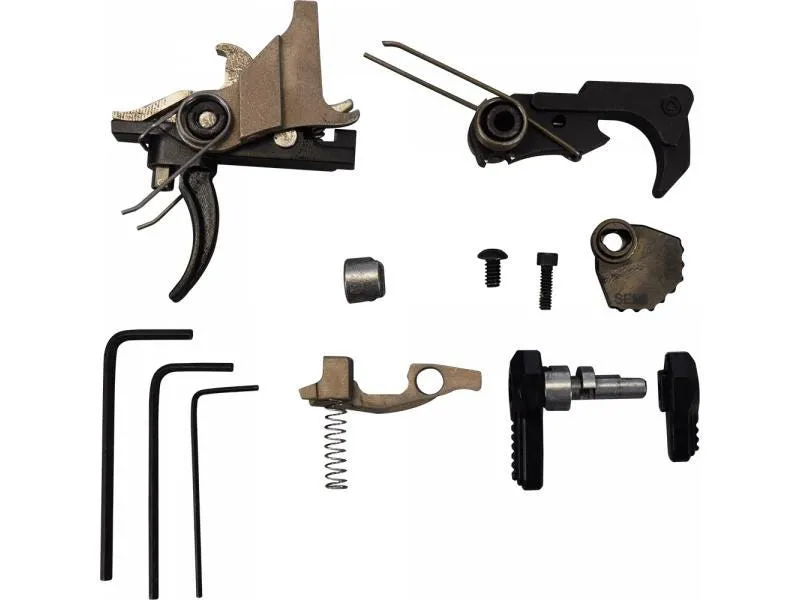
FosTech Outdoors Echo Sport Trigger for AR-15
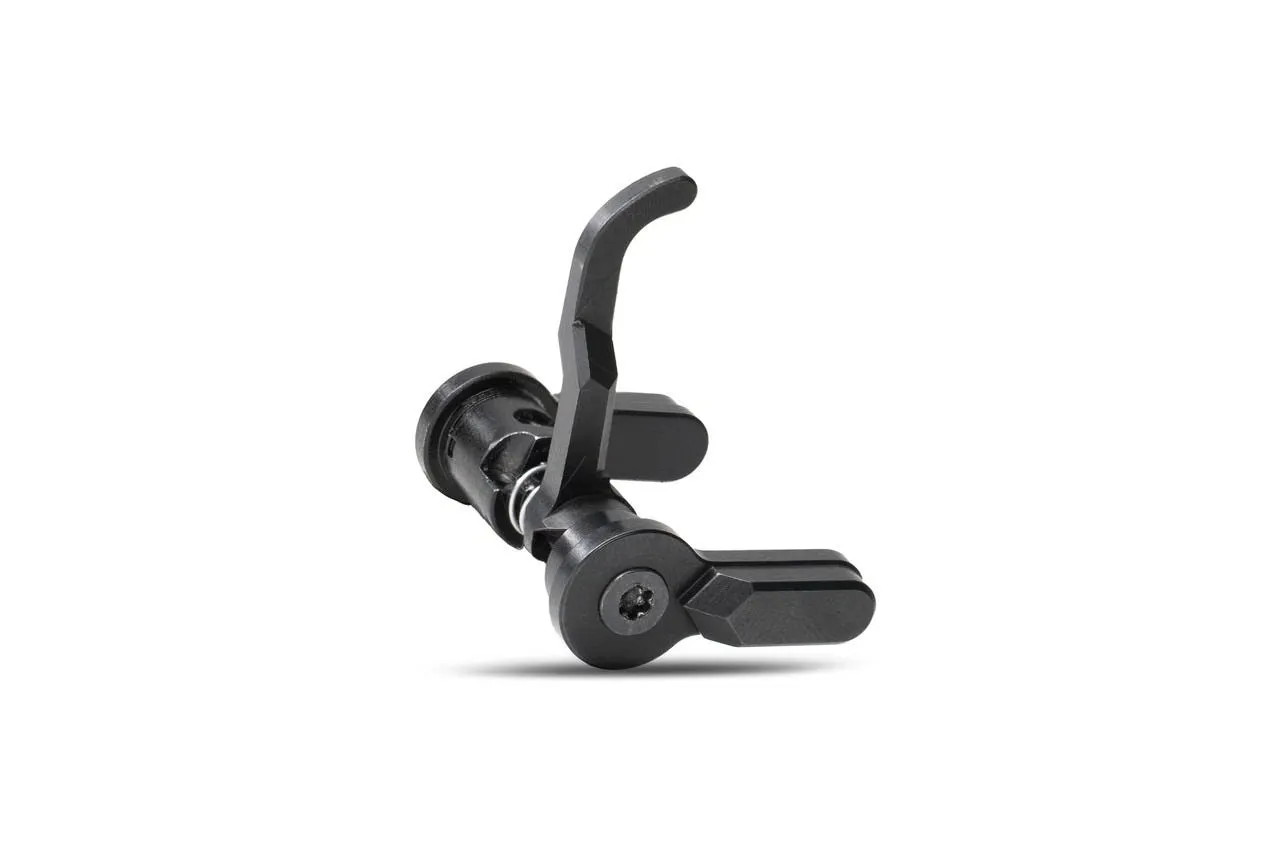
Atrius Development 3 Position Forced Reset Selector Ambidextrous - Fits AR-15
Two notes on that grid: the cheapest row is a Taurus TX22 part rather than an AR one, and several listings are selectors for other platforms — CZ Scorpion, SCAR, Ruger 10/22. Read each title. If you want a sense of how a federally registered route works instead, our suppressor buying guide walks the registration process end to end, and our FFL transfer guide covers which parts need a dealer at all — a trigger does not, a lower receiver does.
What to check before you buy
- Pull weight and stage count. Absent from most listings. Get it from the manufacturer's page before you commit.
- Pin size. Large-pin Colt-pattern and standard small-pin lowers are not interchangeable, and a handful of listings specify one.
- Drop-in cassette or component set. Only 18 listings say drop-in. A cassette is faster to install; a component set is cheaper and usually lighter.
- Is it actually an AR trigger? The category holds Glock, Remington, Savage and Tavor parts at similar prices.
- Is it stocked anywhere else? Usually the price is identical, but one in four multi-retailer listings differs by 20% or more.
Get alerted when .223 Remington price drops hit.
We watch every listing and email you the moment the cost per round drops.
Set Up a Free Price AlertWe do not test triggers, measure pull weights or run any ballistics testing of our own — everything above is drawn from live retail listings and our own price history, and we document exactly what we will and won't claim. For the rest of the rifle, our guides to complete uppers, magazines and build versus buy use the same data, and the full accessory catalog is searchable by price.
AmmoSpotter earns a commission when you buy through links on this page. It never changes what you pay, and it never decides what we recommend — our picks are ranked on live cost-per-round data pulled from every retailer we track. Full disclosure.
Frequently Asked Questions
How much should I expect to pay for an AR-15 trigger?+
Is a drop-in trigger worth it over a mil-spec trigger group?+
Can I comparison shop an AR-15 trigger between retailers?+
Why don't trigger listings state the pull weight?+
Are binary and forced-reset triggers legal?+
Does a better trigger make the rifle more accurate?+
Shop the data

About the author
AmmoSpotter Research Desk
Price & Ballistics Research
The AmmoSpotter Research Desk analyzes live retail pricing across every ammunition, firearm and accessory listing we track. Recommendations here are ranked against real cost-per-round data pulled daily from the retailers we monitor - not against manufacturer marketing copy.
- ✓Tracks 180,000+ live product listings across 6 retailer feeds
- ✓Records price history on every listing, every day
- ✓Cost-per-round methodology applied to all ammunition rankings
- ✓No product is ranked without a verifiable in-stock retail price
- ✓Affiliate relationships never influence rankings
Related Guides
Best AR-15 Uppers 2026: What the Live Listings Actually Show
- 528 complete AR-15 uppers are live right now, from $119.99 to $6,599.99, median $499.99. - 505 of those 528 carry one of two brand names. The complete-upper aisle is effectively one company deep. - Not one of the 52...

AR-15 Build vs Buy 2026: Which Actually Costs Less, Priced Live
- At the floor of the market, a parts-bin AR-15 and a complete budget rifle land in the same price band. Building is not a discount. - The cheapest complete uppers in our catalog are listed without a bolt carrier grou...
Best AR-15 Magazines 2026: What 482 Live Listings Actually Cost
- We track 482 live AR-15 magazine listings. 263 of them sit between $10 and $20, which is the only price band that matters for most buyers. - Reduced-capacity magazines cost more than full-capacity ones, by median an...
AR-15 Twist Rate and Ammo Selection: What Your Barrel Rules Out
Twist rate is the one barrel spec that decides what you are allowed to buy. Not what you should buy, or what shoots best — what will physically fly straight out of your rifle. A bullet your barrel cannot spin fast eno...

Best 5.56 & .223 Ammo 2026: Practice, Defense and Precision
5.56x45mm NATO and .223 Remington are the most-purchased rifle cartridges in America, and the most confusing to buy. The same rifle will accept ammunition ranging from bulk steel-cased plinking loads to match ammuniti...
How to Zero a Rifle Scope: The Procedure, and What It Costs in Ammunition
- Zeroing is cheap in dollars and expensive in cartridges. The procedure is free; the ammunition is not. - Bore-sighted and done properly, budget nine to twelve rounds. Without bore sighting, twenty to forty. - Torque...