AR-15 Barrel Twist Rate and Ammo Selection
Twist rate does not change what practice ammo costs. It changes which half of the catalog you are allowed to shop in, and that half is priced very differently.
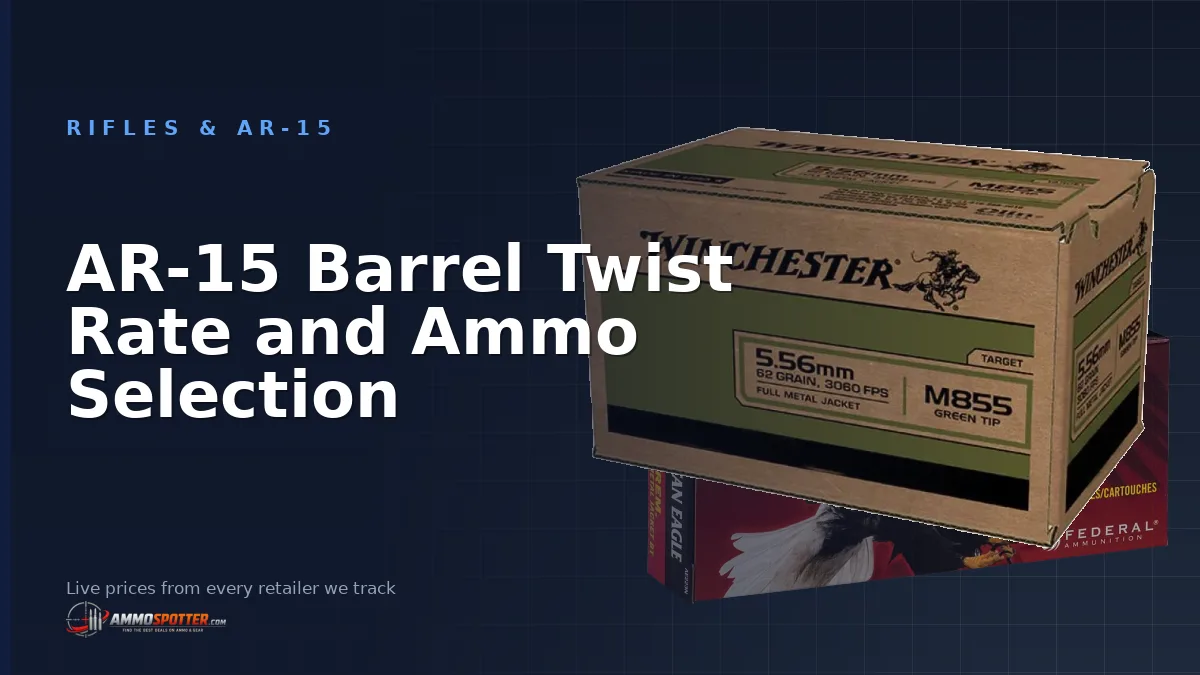
Twist rate is the one barrel spec that decides what you are allowed to buy. Not what you should buy, or what shoots best — what will physically fly straight out of your rifle. A bullet your barrel cannot spin fast enough tumbles, and no amount of money spent on that load fixes it.
Here is the part nobody says out loud: for most AR-15 owners, the constraint never binds. The ammunition that dominates our live .223 and 5.56 listings is the same 55- and 62-grain practice fodder that works in every twist rate ever fitted to an AR. Twist rate starts costing you something only when you want the heavy end — and the heavy end is a different price tier entirely.
How do you find your AR-15's twist rate?
Three places to look, in order of reliability.
The barrel itself. Most AR barrels are roll-marked near the chamber or under the handguard at the gas block, usually as chambering plus twist: 5.56 NATO 1/7, .223 WYLDE 1:8. That mark is the answer.
The listing you bought it from. Barrel and upper-receiver listings state twist as a spec because it is a buying criterion — you will see 1:7 and 1:8 written into the product titles in the barrel grid further down this page.
Measure it. If the barrel is unmarked or you bought the rifle used, run a tight patch on a cleaning rod into the bore, mark the rod where it meets the receiver, push it down and watch the mark rotate. Mark the rod again after one full rotation. The distance between marks, in inches, is the twist rate.
Which bullet weights does each twist rate handle?
This is the widely published rule of thumb. Treat it as a starting point, not a guarantee, because it is really bullet length that matters and long polymer-tipped or solid-copper bullets need more spin than their weight implies:
| Twist | Where you find it | Comfortable | Borderline | Don't bother |
|---|---|---|---|---|
| 1:12 | Older varmint barrels, some .223 bolt guns | 40–55gr | 60–62gr | 68gr and up |
| 1:9 | Budget and older ARs, many bolt guns | 50–69gr | 73–77gr | 80gr and up |
| 1:8 | The current general-purpose default | 55–77gr | 80gr | 85gr and up |
| 1:7 | Mil-spec-pattern ARs | 55–80gr | 85gr | 90gr in some barrels |
Two things push a load from "comfortable" to "borderline" that the table cannot show. Short barrels give less velocity, and less velocity from the same twist means less spin — which is why 77-grain loads built specifically for 10.5-inch uppers exist. And cold, dense air is harder on a marginal bullet than thin air at altitude.
For the match-shooting end of this — where the difference between 69gr and 77gr is the whole point — we go deeper in our .223 match ammo guide.
Does your twist rate change what practice ammo costs?
Not meaningfully, and this is the most useful thing on the page.
Our live .223 and .223-equivalent listings are heavily concentrated in the 55-grain-and-under band, with the 56–64-grain band the next largest. Everything above 70 grains is a small fraction of what is actually on shelves. So the cheap end of the market — the part you buy by the case — is twist-agnostic by construction:
.223 / 5.56 Price Index
Live · Sep 23, 2026Cheapest Bulk .223 and 5.56 by Cost Per Round
Prices updated Sep 23, 2026
Wolf Military Classic Steel .223 Rem 55 Grain 500-Rounds Bulk FMJ
.223 Remington · 55gr · 500 rds

PMC Ammunition Bronze .223 Rem 55 Grain 1000-Rounds FMJ Bulk
.223 Remington · 55gr · 1,000 rds

Red Army Standard Centerfire Rifle Steel .223 Rem 55-Grain 500-Rounds Bulk FMJ
.223 Remington · 55gr · 500 rds

Wolf Performance Ammo PolyFormanc Steel Bulk .223 Rem 55 Grain 500-Rounds
.223 Remington · 55gr · 500 rds

PMC Ammunition X-Tac Rifle Brass 5.56 55 Grain 1000-Rounds FMJBT Bulk
5.56x45mm NATO · 55gr · 1,000 rds

Winchester M855 5.56 Bulk Ammo 62 Grain FMJ 1000rds (Unpainted Tip) - WM8551000
5.56x45mm NATO · 62gr · 1,000 rds
Every load in that grid will stabilize in a 1:12 barrel, never mind a 1:8. If your shooting is practice volume, your twist rate has no effect on your ammunition budget at all — the levers that matter are case material and pack size, which we cover in the AR-15 ammo guide and in best bulk 5.56 by the case.
The 62-grain class is where this gets interesting. It is heavy enough to need 1:9 or faster, which excludes only genuinely old barrels, and it prices alongside the 55-grain field rather than above it:
62-Grain Loads for Any 1:9 or Faster Barrel
Winchester M855 5.56 Bulk Ammo 62 Grain FMJ 1000rds (Unpainted Tip) - WM8551000
Winchester M855 in a 1,000-round case. The 62-grain steel-core bullet is short enough that any 1:9 or faster barrel handles it, and it is priced with the bulk 55-grain field rather than above it. Check your range rules first, because some indoor ranges refuse steel-core projectiles.
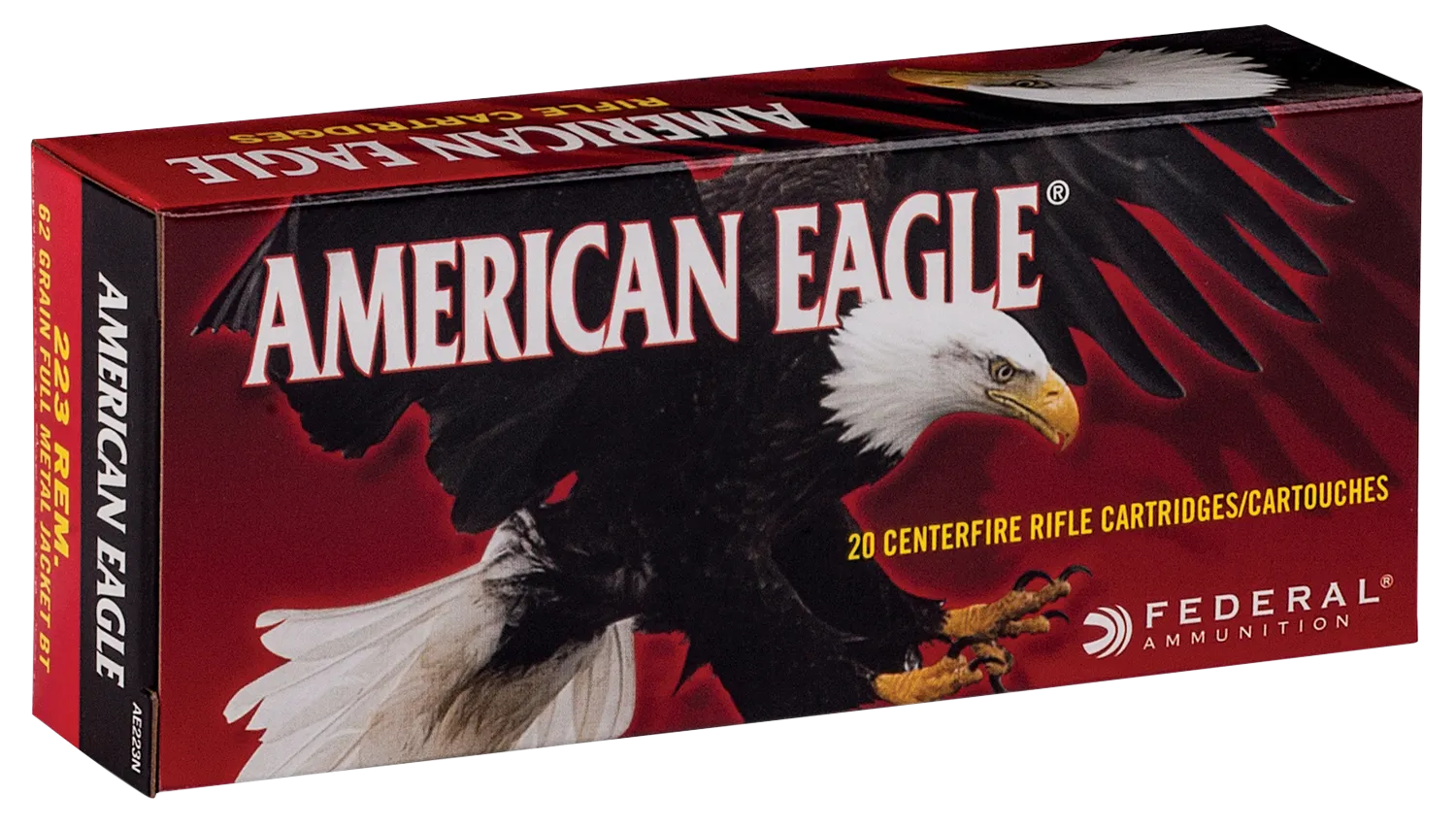
Federal American Eagle Brass .223 Rem 62-Grain 500-Rounds Bulk FMJBT
Federal American Eagle 62-grain FMJBT in a 500-round box, loaded as .223 Remington so it is safe in either chamber. A reasonable middle if you want brass cases and a bullet weight your barrel is certain to stabilize.

MAGTECH 5.56 x 45 62Gr FMJ 3100 FPS 50rd
Magtech 5.56 62-grain FMJ in a 50-round box. Useful if you want to confirm how your rifle groups with the heavier practice weight before committing to a case.

PMC X-TAC 5.56 NATO 62gr LAP Ammunition | 20 Rounds
PMC X-TAC 5.56 62-grain LAP in a 20-round box. The cheapest sensible way to find out whether your barrel shoots the 62-grain weight class well before you buy any quantity of it.
What does a 1:9 or 1:12 barrel actually rule out?
The expensive half. Once you cross roughly 70 grains, you leave the bulk market and enter loads that are packaged, produced and priced like match ammunition — mostly 20-round boxes, made in smaller runs.
Heavy Band: 1:8 and Faster
FEDERAL AMMO American Eagle 223 Rem 75gr Total Metal Jacket Ammunition | 20 Rounds
Federal American Eagle 75-grain total metal jacket, loaded as .223 Remington. A heavy-band bullet at a practice-line price, which makes it a cheap way to test whether your barrel stabilizes 75 grains.
HORNADY 5.56 NATO Frontier 75Gr BTHP Match 20rd
Hornady Frontier 75-grain BTHP in 5.56 NATO. Frontier is Hornady's value line, so it sits at the bottom of the heavy match field rather than the top.

Fiocchi Hyperformance SBR .223 Rem 77 Grain 20-Rounds HPBT
Fiocchi Hyperformance SBR 77-grain HPBT, loaded as .223 Remington. Short-barrel loads matter here because a 10.5-inch upper gives a heavy bullet less velocity, and less velocity means less spin from the same twist rate.
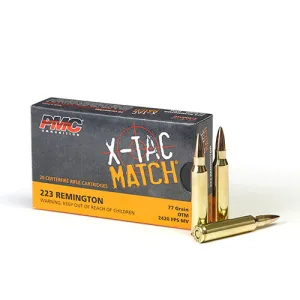
PMC X-TAC Match 223 REM 77gr Open-Tip Ammunition | 20 Rounds
PMC X-TAC Match 77-grain OTM loaded to .223 Remington pressure, so it works in a .223-chambered bolt gun as well as a 5.56 AR with a fast twist.
Compare those per-round figures against the bulk grid above. That gap is not a twist-rate tax; it is the difference between commodity FMJ produced by the pallet and a bullet made to a tighter spec in smaller batches. A fast-twist barrel does not make you pay it — it gives you the option to pay it.
Which matters if your rifle has a job that needs the heavy band: barrier-blind defensive loads, wind performance past 300 yards, or a suppressed setup where the extra bullet weight helps. If your rifle's job is a flat range at 100 yards, a 1:9 barrel is not holding you back.
Is a faster twist rate ever a disadvantage?
Occasionally, at the other end. Very high spin rates put more stress on a bullet's jacket, and some light, thin-jacketed varmint projectiles — the 35- to 50-grain frangible designs meant for explosive expansion on small game — can come apart in flight out of a 1:7 barrel at full velocity. It is not common with modern bullets, and it is not a reason to avoid 1:7. It is a reason not to assume "faster is strictly better" and to watch your groups if you shoot light varmint loads from a fast barrel.
For everything in the 55- to 77-grain range, which is the overwhelming majority of the .223 and 5.56 market, a 1:8 barrel has no meaningful downside. That is why it became the factory default.
Is twist rate or the chamber stamp the more important number?
The chamber stamp, and it is not close — because it is the safety question, not the accuracy question.
Twist rate that is wrong for a load gives you bad groups and tumbling bullets. A chamber that is wrong for a load gives you a pressure problem. 5.56 NATO is loaded hotter than .223 Remington and the chamber has a longer leade to accommodate it, so the general rule is that 5.56 and .223 Wylde chambers fire both, and a barrel marked .223 Remington only should be fed .223 only. We break down the specifics in .223 vs 5.56.
These two marks are independent. Plenty of 1:8 barrels are chambered in .223 Wylde and plenty are 5.56. Read both.
Is it cheaper to change the ammo or change the barrel?
If your twist rate genuinely blocks what you need, a barrel swap is on the table — and unlike a complete rifle, a barrel ships to your door with no FFL transfer involved, which is a real cost difference. (For when a transfer is required, see how FFL transfers work.)
AR Barrels by Price
Prices updated Sep 23, 2026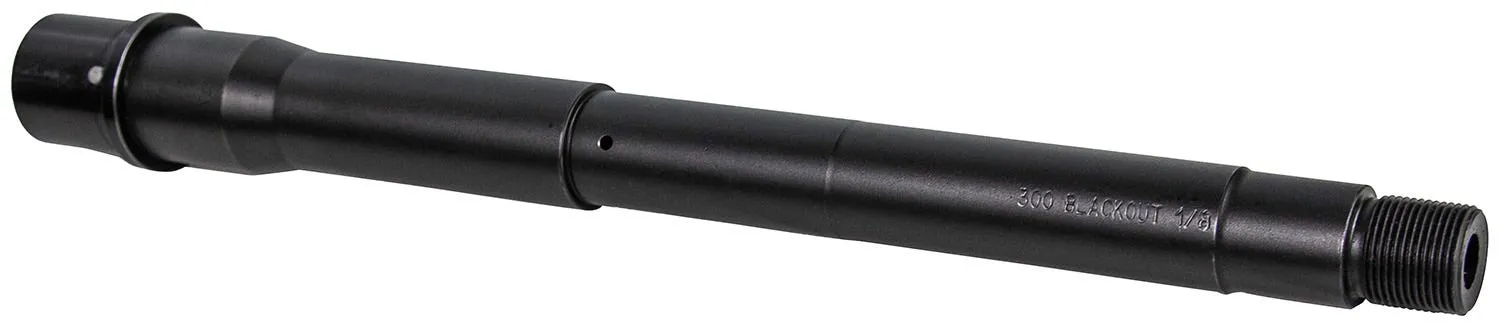
Diamondback DB Barrel .300 AAC Blackout 10 Barrel Pistol-Length
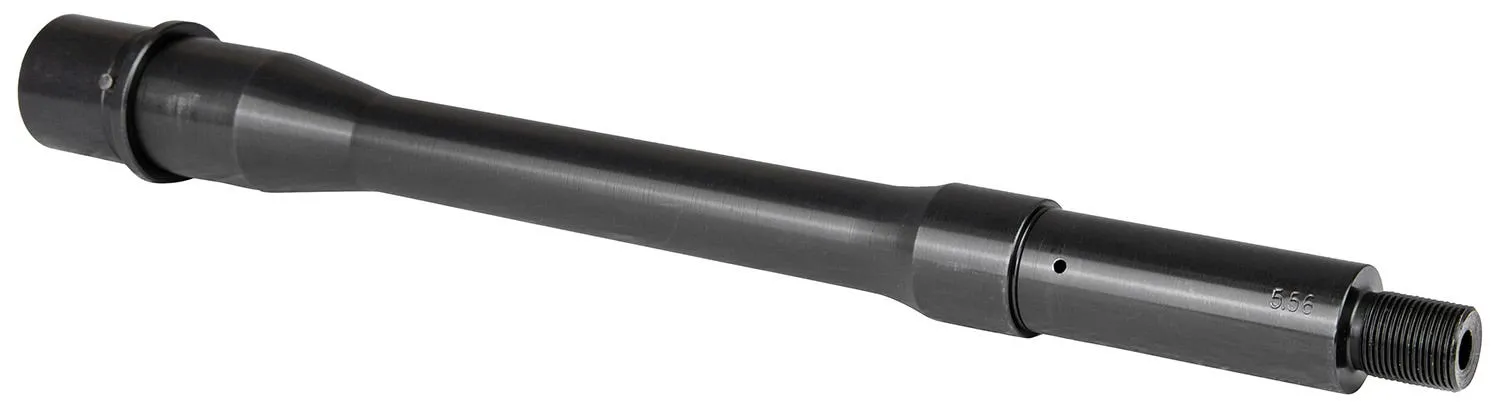
Diamondback DB Barrel 5.56 10 Barrel
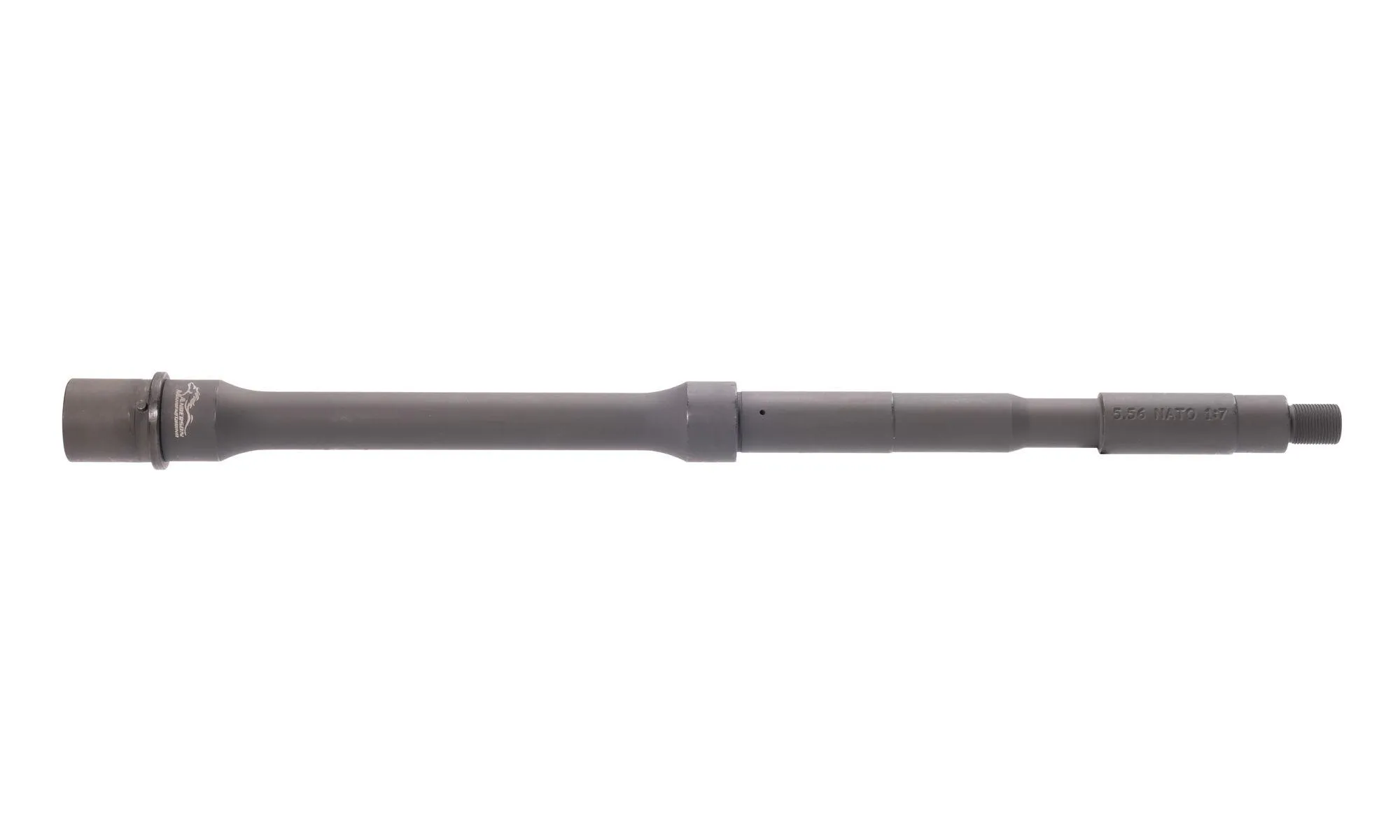
Anderson Manufacturing Contour Barrel 16 for AR-15 1/2-28
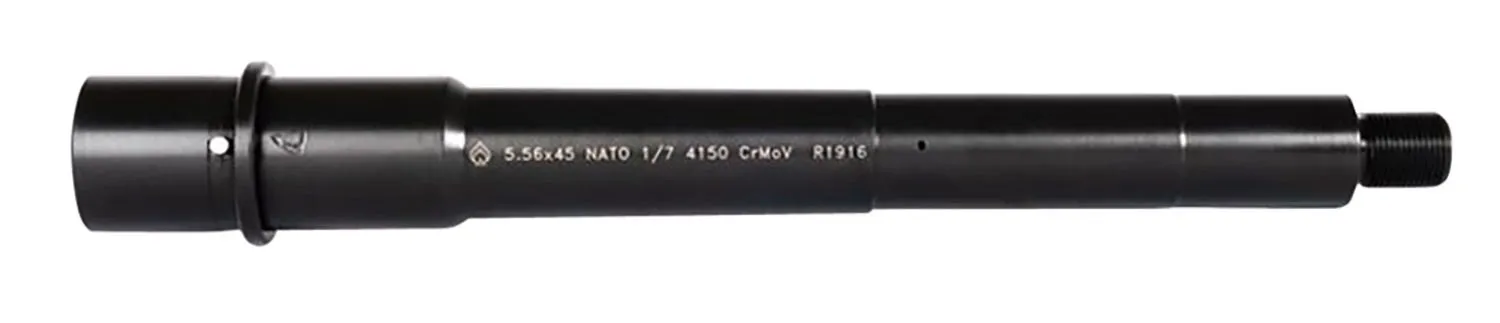
Ballistic Advantage Modern Series 5.56 NATO 8 Barrel

Diamondback DB Barrel 300 Blackout 16 Pistol-Length
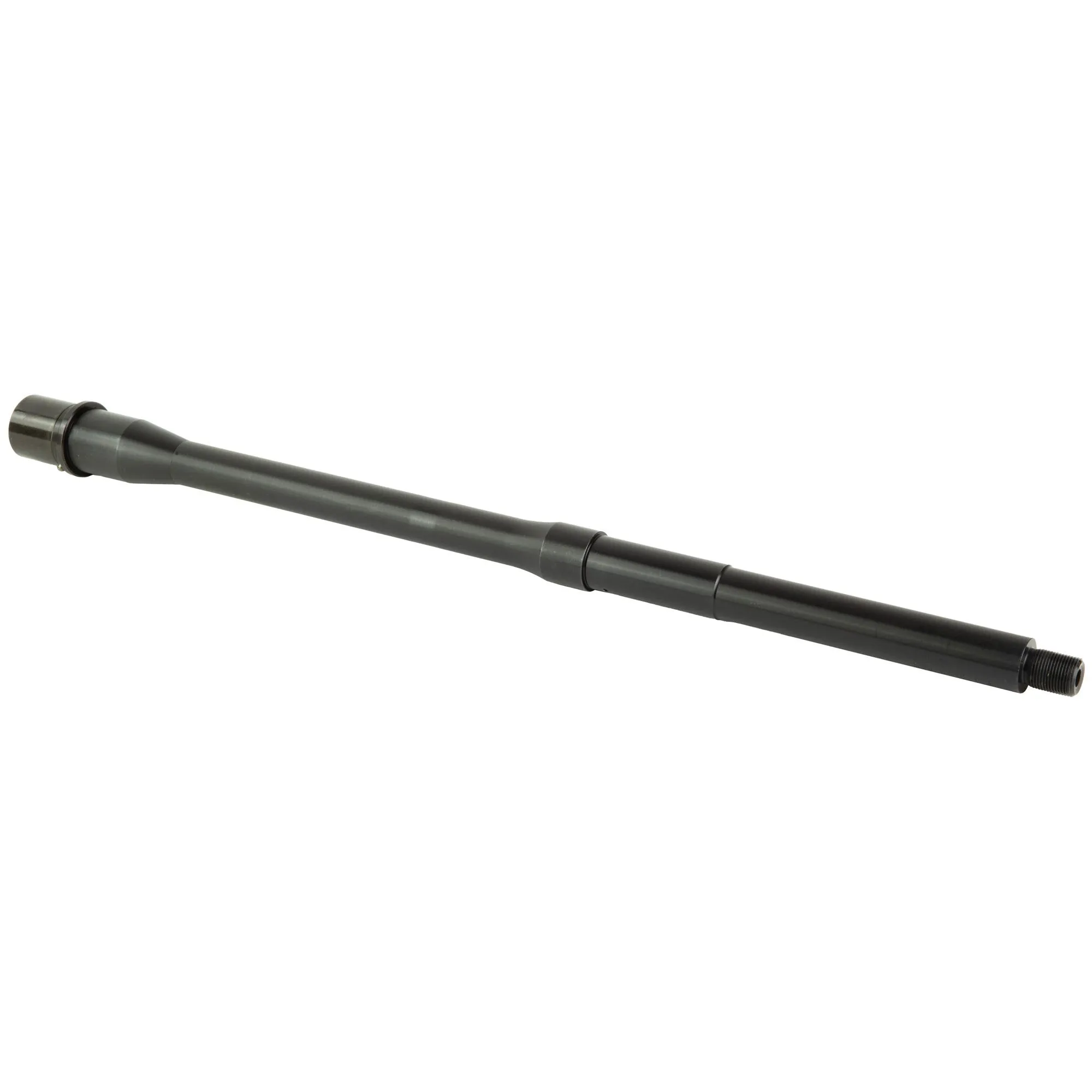
Diamondback DB Barrel 5.56 / .223 Rem 16 Barrel Mid Length
Read those listings carefully rather than shopping on price. The cheap end of the barrel market mixes chamberings — 5.56, .300 Blackout and 9mm sit next to each other — and a meaningful number of listings do not state the twist rate in the title at all. A barrel whose twist you cannot confirm before buying puts you back where you started.
Be honest about the arithmetic before you order one. The per-round gap between the light and heavy bands only adds up over thousands of rounds, and a barrel is a purchase plus labour or an afternoon with a vise block. Rebarreling makes sense when the rifle's purpose has changed — a precision build, a suppressed short barrel — not to chase one load.
The cheapest option of all is the one people forget: a dedicated .22 LR upper or conversion kit sidesteps the whole question, because rimfire twist rates are a separate conversation and the cost per round is a fraction of centerfire.
How do you confirm your barrel actually stabilizes a load?
Buy one box. Shoot a group at 100 yards. Look at the holes.
Round holes mean the bullet arrived point-first and the load is stable in your barrel. Oval holes, or worse, sideways keyhole-shaped holes, mean the bullet is yawing and that load is finished as far as your rifle is concerned. No brand loyalty, no break-in period and no amount of extra cost changes that answer.
This is why the borderline row of the table matters more than the comfortable row. If you own a 1:9 barrel and want 75 grains, the correct move is one 20-round box and one range trip, not a case. If it groups and the holes are round, buy more. If it doesn't, you spent the price of a single box learning where your barrel's limit is — and you can set a price alert on the weight class that does work for you:
Get alerted when .223 Remington price drops hit.
We watch every listing and email you the moment the cost per round drops.
Set Up a Free Price AlertBefore you go deeper on specific loads, start with best 5.56 and .223 ammo for the practice, defensive and precision picks by tier, and check shipping restrictions before you order anything in volume — some of the best cost-per-round listings are from retailers that can't ship to every state.
AmmoSpotter earns a commission when you buy through links on this page. It never changes what you pay, and it never decides what we recommend — our picks are ranked on live cost-per-round data pulled from every retailer we track. Full disclosure.
Frequently Asked Questions
How do I find out my AR-15's twist rate?+
Does twist rate matter for cheap bulk 55 grain ammo?+
Can I shoot 77 grain ammo in a 1:9 twist barrel?+
Is a 1:7 twist barrel better than 1:8?+
Is it cheaper to buy different ammo or a different barrel?+
Does twist rate affect whether 5.56 ammo is safe in my rifle?+

About the author
AmmoSpotter Research Desk
Price & Ballistics Research
The AmmoSpotter Research Desk analyzes live retail pricing across every ammunition, firearm and accessory listing we track. Recommendations here are ranked against real cost-per-round data pulled daily from the retailers we monitor - not against manufacturer marketing copy.
- ✓Tracks 180,000+ live product listings across 6 retailer feeds
- ✓Records price history on every listing, every day
- ✓Cost-per-round methodology applied to all ammunition rankings
- ✓No product is ranked without a verifiable in-stock retail price
- ✓Affiliate relationships never influence rankings
Related Guides

Best 5.56 & .223 Ammo 2026: Practice, Defense and Precision
5.56x45mm NATO and .223 Remington are the most-purchased rifle cartridges in America, and the most confusing to buy. The same rifle will accept ammunition ranging from bulk steel-cased plinking loads to match ammuniti...

AR-15 Ammo Guide 2026: What to Feed It, Why, and What It Costs
The rifle is the cheap part. Over any realistic ownership period an AR-15 costs less than the ammunition that goes through it, which means the ammunition decision is the expensive one — and it is the one most buyers m...
Best .223 Match Ammo: Twist Rate First, Then Live Cost Per Round
Most .223 match-ammo advice starts with brands. That's the wrong starting point. Before you choose between Gold Medal, ELD Match and Black Hills, one number stamped on your barrel decides which of them can work at all...

.223 vs 5.56: The Difference That Actually Matters
The cases are dimensionally near-identical. The ammunition will chamber in either rifle. That is exactly why this matters — nothing physically stops you from making the mistake. The two real differences 1. Pressure 5....
5.56 vs 7.62x39: Which Costs Less to Shoot, and Where That Flips
The usual version of this argument is about ballistics. The useful version is about what you will actually spend, and on that question both cartridges have a claim — depending entirely on which shelf you buy from. 7.6...

AR-15 Build vs Buy 2026: Which Actually Costs Less, Priced Live
- At the floor of the market, a parts-bin AR-15 and a complete budget rifle land in the same price band. Building is not a discount. - The cheapest complete uppers in our catalog are listed without a bolt carrier grou...