Best Bulk 5.56 Ammo: 1,000-Round Cases Compared
We track every 5.56 case on the market and normalize it to cost per round — and the case is not always the cheapest way to buy.

Is a 1,000-round case of 5.56 actually the cheapest way to buy?
Not always. Not even usually, in the way people assume.
Here is the current market, live:
5.56x45mm NATO Price Index
Live · Nov 18, 2026Now compare that floor to what the cheapest cases are asking. As of this writing, the two cheapest 1,000-round cases we track — a Winchester M855 case and a PMC X-Tac case — are both $499.99, or $0.500 per round. Respectable. But the cheapest 5.56 in our entire catalog right now is a 50-round Magtech box at $23.99, which is $0.480 per round. A fifty-round box is beating every case on the market.
That is not a fluke of one listing. It is what happens in a normalized catalog: retailers discount to move specific SKUs, and the discount lands wherever it lands. Case packaging is correlated with lower per-round pricing; it does not cause it.
The practical consequence is simple. Stop shopping for "bulk" and start shopping for cost per round. If you have never run that comparison properly, cost per round is the only ammo price metric that matters explains why every other number on a product page is noise.
Every 1,000+ Round 5.56 Case We Track, Cheapest Per Round First
Prices updated Nov 18, 2026
PMC Ammunition X-Tac Brass 5.56 NATO 62-Grain 1000-Rounds GT Bulk
5.56x45mm NATO · 62gr · 1,000 rds

PMC Ammunition X-Tac Rifle Brass 5.56 55 Grain 1000-Rounds FMJBT Bulk
5.56x45mm NATO · 55gr · 1,000 rds

PPU Metric Rifle Ammo Brass 5.56 55 Grain 1000-Rounds FMJBT Bulk
5.56x45mm NATO · 55gr · 1,000 rds
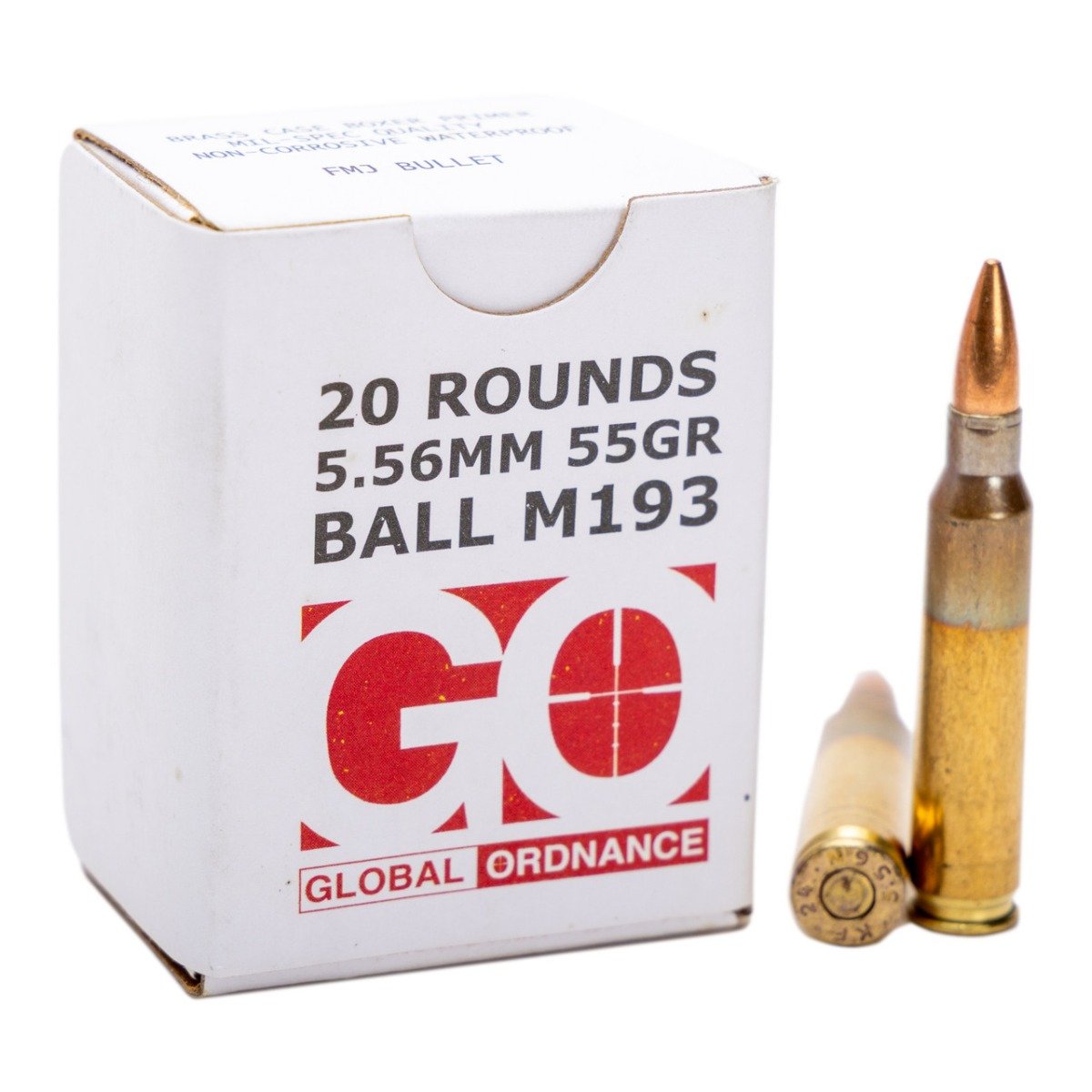
Global Ordnance M193 5.56 55 Grain 1000-Rounds FMJ
5.56x45mm NATO · 55gr · 1,000 rds

Winchester USA Lake City Brass 5.56 55-Grain 1000-Rounds FMJ Bulk
5.56x45mm NATO · 55gr · 1,000 rds

Winchester USA White Box Brass 5.56 NATO 55-Grain 1000 Rds per Case FMJ Bulk
5.56x45mm NATO · 55gr · 1,000 rds
Winchester M855 5.56 Bulk Ammo 62 Grain FMJ 1000rds (Unpainted Tip) - WM8551000
5.56x45mm NATO · 62gr · 1,000 rds

Winchester USA M855 Green Tip Brass 5.56 NATO 62-Grain 1000-Rounds FMJ Bulk
5.56x45mm NATO · 62gr · 1,000 rds
What the case spread actually looks like
Sort that block by cost per round and look at the bottom of it, not the top.
The distance between the cheapest 1,000-round case and the most expensive one we carry is large — large enough that a buyer who grabs "a case of 5.56" without checking can pay close to double what a disciplined buyer pays for the same round count. Both purchases look identical in a shopping cart. Both are "buying in bulk."
This is the entire reason we publish a live floor. A static article that told you "expect to pay X for a case" would be wrong within a month and would give you no way to tell a good case from a bad one on the day you actually shop. The forces that move these numbers — contract production, component costs, demand shocks — are covered in why ammo prices move, and none of them respect a published price list.
The 500-round case is usually the worst deal on the shelf
If there is one consistent finding in the 5.56 catalog, it is this: the mid-size case is the weakest tier.
It asks for a bulk-sized commitment — a few hundred dollars, a real storage footprint — while pricing closer to retail than to case pricing. The 500-round listings we track cluster above the best 1,000-round cases on a per-round basis, and several sit above much smaller packs. The Hornady Frontier 500-round case at $269.99 is $0.540 per round; the Aguila 300-round pack at $159.99 is $0.533; a 150-round Hornady Frontier pack at $77.39 is $0.516. The bigger box is losing to both smaller ones.
The takeaway is not "never buy 500 rounds." It is that pack size is not a proxy for value, and the middle of the range is where that breaks down most reliably. We looked at this across the whole catalog in is bulk ammo actually cheaper — the pattern is not unique to 5.56.
M193 or M855: which case should you actually buy?
For most people buying in volume, this is a range-policy question, not a ballistics question.
M193 is 55-grain and the default general-purpose load. M855 is 62-grain with a steel penetrator core, which is why some indoor ranges refuse it and why some steel-target policies exclude it. Neither has an advantage on paper at typical range distances that justifies overthinking it.
The pricing runs close enough that either can be the better buy on a given day — the PMC X-Tac 62-grain M855 case at $519.99 is $0.520 per round against the $0.500 cases above it. Check your range's rules first, then buy whichever is cheaper that week. M193 vs M855 covers the twist-rate and terminal differences in full, and we are explicit about what we will and will not claim regarding either load's performance.
Should you buy bulk .223 Remington instead?
Worth checking, because it frequently undercuts 5.56 on a per-round basis.
The rule most people half-remember is real and directional: a 5.56 NATO chamber will safely fire .223 Remington, but a rifle chambered strictly in .223 should not be fed 5.56. Check the markings on your barrel before you act on that. The .223 vs 5.56 difference that actually matters is the short version.
Steel-case .223 is where the deepest bulk discounts live, and it comes with real trade-offs in extraction, fouling and the fact that you are not reloading those cases. Steel case vs brass lays out what you give up. If you were planning to save the brass anyway, price that in — for a high-volume 5.56 shooter, reloading economics are more favorable than most people assume.
Bulk .223 Remington, Cheapest Per Round
Prices updated Nov 18, 2026
Patriot Sports Rifle Ammunition .223 Rem 55 Grain 1000-Rounds FMJ
.223 Remington · 55gr · 1,000 rds

PMC Ammunition Bronze .223 Rem 55 Grain 1000-Rounds FMJ Bulk
.223 Remington · 55gr · 1,000 rds

Wolf Military Classic Steel .223 Rem 55 Grain 500-Rounds Bulk FMJ
.223 Remington · 55gr · 500 rds

Wolf Performance Ammo PolyFormanc Steel Bulk .223 Rem 55 Grain 500-Rounds
.223 Remington · 55gr · 500 rds

Fiocchi Training Dynamics Brass .223 Rem 55-Grain 1000-Rounds FMJBT Bulk
.223 Remington · 55gr · 1,000 rds
Winchester USA Lake City Rifle Ammo .223 Rem 1000-Round 55 Grain FMJ Bulk
.223 Remington · 55gr · 1,000 rds
What a case costs you beyond the price tag
Three costs do not appear on the product page.
Shipping and restrictions. Ammunition is heavy, and free-shipping thresholds are the main reason a case can beat several small orders even at an identical per-round price. Restrictions also vary by state and locality, they change, and some destinations will not accept ammunition at all. Verify the current rules for your own address rather than trusting any list — including ours. How to check before you order walks through it.
Storage. A thousand rounds of 5.56 is bulkier and heavier than people picture. Cool, dry and stable matters far more than age; ammunition stored well lasts decades, ammunition stored in a humid garage does not.
Capital. Money in a case is money not in anything else, and you have locked in today's price. That is a hedge if prices rise and a mistake if they fall. It is a legitimate reason to buy deep — just be honest that it is a bet, not a saving.
How much 5.56 should you actually buy at once?
Start from consumption, not from a round number.
Work out what you genuinely shoot in a year. How many rounds it takes to get good is a useful reality check, and most people discover their real figure is either far above or far below what they assumed. Then buy the quantity that covers a meaningful stretch of that at a price at or below the live floor — and stop.
Buying more than you will shoot in several years to save a couple of cents per round is not thrift. It is inventory. The same reasoning applies to the rest of the kit: how many magazines you actually need has a similar answer, and it is smaller than the internet suggests.
How to buy a case without overpaying
- Check the live floor in the index above. That is your benchmark, and it moves.
- Sort every candidate by cost per round, never by case price.
- Confirm the round count in the listing. Case sizes are not standardized, and 800- and 600-round packs are priced to look like 1,000-round cases.
- Check M193 against M855 that week — the cheaper one changes.
- Price the .223 equivalent before committing, if your rifle is chambered for it.
- Add shipping before you compare, and confirm the retailer ships to you.
- If nothing is at or below the floor, wait. It comes back.
For the full range of 5.56 loads beyond bulk FMJ — defensive, match and everything else — start with our 5.56 and .223 ammo guide. Or browse every live listing on the .223 / 5.56 ammo page and sort it yourself.
Get alerted when 5.56x45mm NATO price drops hit.
We watch every listing and email you the moment the cost per round drops.
Set Up a Free Price AlertAmmoSpotter earns a commission when you buy through links on this page. It never changes what you pay, and it never decides what we recommend — our picks are ranked on live cost-per-round data pulled from every retailer we track. Full disclosure.
Frequently Asked Questions
How much does a 1,000-round case of 5.56 cost?+
Is buying 5.56 by the case actually cheaper?+
What is a good price per round for bulk 5.56?+
Should I buy M193 or M855 in bulk?+
Can I shoot bulk .223 Remington in my 5.56 rifle?+
How long does bulk 5.56 ammo last in storage?+

About the author
AmmoSpotter Research Desk
Price & Ballistics Research
The AmmoSpotter Research Desk analyzes live retail pricing across every ammunition, firearm and accessory listing we track. Recommendations here are ranked against real cost-per-round data pulled daily from the retailers we monitor - not against manufacturer marketing copy.
- ✓Tracks 180,000+ live product listings across 6 retailer feeds
- ✓Records price history on every listing, every day
- ✓Cost-per-round methodology applied to all ammunition rankings
- ✓No product is ranked without a verifiable in-stock retail price
- ✓Affiliate relationships never influence rankings
Related Guides

Best 5.56 & .223 Ammo 2026: Practice, Defense and Precision
5.56x45mm NATO and .223 Remington are the most-purchased rifle cartridges in America, and the most confusing to buy. The same rifle will accept ammunition ranging from bulk steel-cased plinking loads to match ammuniti...

Bulk vs Box: How Much You Actually Save Buying a Case
The standard advice is to buy by the case because bulk is cheaper. We track every live ammunition listing we can get, normalized to cost per round, so we tested that advice against the data instead of assuming it. The...

M193 vs M855: Which 5.56 Should You Actually Buy?
The green tip looks like a premium tier. It is not. M855 is a specialized barrier round that trades close-range fragmentation and range access for the ability to punch through light steel — and it usually costs more t...

Cost Per Round: The Only Ammo Price Metric That Matters
There is exactly one reason ammunition is hard to price-compare: it is advertised in boxes and consumed in rounds. Box counts are not standardized. A "box" of 9mm might be 50 rounds. A "value pack" might be 100, or 11...
Best .223 Match Ammo: Twist Rate First, Then Live Cost Per Round
Most .223 match-ammo advice starts with brands. That's the wrong starting point. Before you choose between Gold Medal, ELD Match and Black Hills, one number stamped on your barrel decides which of them can work at all...

Best Shooting Glasses and Gloves 2026: One Listing in 342 States a Rating
- We track 342 live eye protection listings , from $1.39 to $255.00, median $19.29 — and 254 glove listings from $2.29 to $81.59, median $29.49. - Exactly one of those 342 titles states an impact standard. Seven say "...