How Often Should You Actually Clean Your Gun?
Stop cleaning on a calendar. The interval that matters is round count, ammo type and whether there is a can on the end.
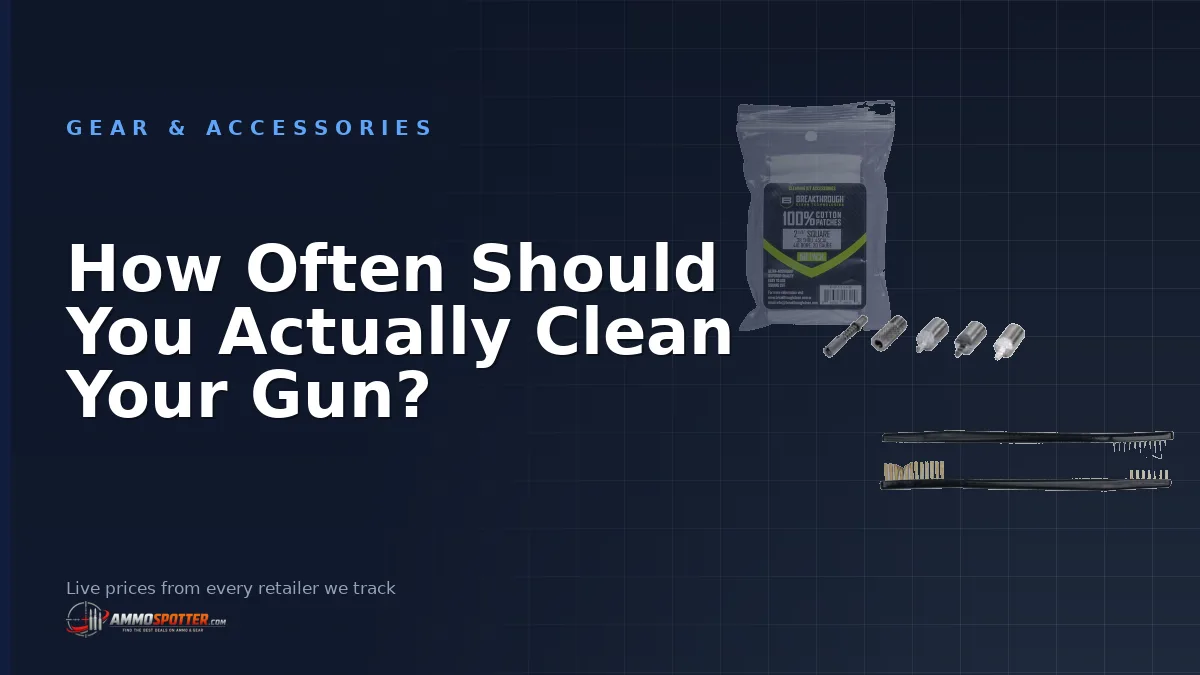
So how often should you actually clean your gun?
The honest answer is that the question is usually framed wrong. "Every time you shoot it" is a habit inherited from corrosive-primed military ammunition and blued steel, and it survives because it sounds responsible. "When it stops working" is the opposite error, popular with people who have never had a gun stop working at a bad moment.
The useful framing is that cleaning is three separate jobs that people collapse into one word:
- Lubrication — keeping an oil film on the parts that slide against each other. This is the one that affects whether the gun runs, and it is the one most people skip while scrubbing.
- Fouling removal — carbon, copper and lead out of the bore and off the bolt face. This affects accuracy and, eventually, function.
- Inspection — looking at the gun closely enough to notice a cracked extractor, a flattened spring or a loosening optic mount.
Inspection should happen every time you have the gun apart. Lubrication should happen on a schedule you can actually keep. Fouling removal is the only one of the three that is genuinely optional in the short term, and it is the one the internet argues about.
What fouling actually does to a gun
Carbon fouling is hard, dry and mostly inert. It builds on the bolt face, in the chamber, in the gas system of a semi-auto and in the first few inches of the bore. It does not rust the gun. What it does is take up space — in a rifle's bolt carrier, enough carbon behind the gas rings or in the firing pin channel will eventually change timing or light-strike a primer.
Copper fouling plates the bore from jacketed bullets and changes how the barrel shoots before it changes whether it shoots. A precision rifle may show a shifting zero or a widening group; a carbine used at defensive distances will not care for a very long time.
Lead fouling is the one that behaves differently. It is soft, it smears, and it comes from unjacketed bullets — which in practice means rimfire and cast-bullet handgun loads. It accumulates in the chamber and on the breech face rather than forming a hard crust in the bore.
The thing none of these do is attack the metal. Rust is a separate problem with separate causes: humidity, skin oils, water, and salt from corrosive primers. If you internalize one thing, make it this — the urgency behind "clean it immediately" is about corrosion, and modern non-corrosive ammunition removed most of that urgency decades ago.
Why the ammo you shoot sets the interval, not the calendar
Fouling is a function of rounds fired and what those rounds were made of. Two shooters who both "clean monthly" can be 50 rounds and 3,000 rounds apart.
Rimfire is the fastest fouler per round. Unjacketed lead and a wax or grease bullet lubricant leave soft residue that ends up in the action. Bulk .22 LR makes this worse simply because it is cheap enough to shoot in volume — which is the whole appeal.
.22 LR Price Index
Live · Oct 26, 2026Bulk .22 LR by Live Cost Per Round
Prices updated Oct 26, 2026
Federal American Eagle Brass .22 LR 38 Grain 4000-Rounds Bulk CPHP
.22 LR · 38gr · 4,000 rds

BROWNING BPR Value Pack 22LR 36gr Hollow Point Ammunition | 800 Rounds
.22 LR · 36gr · 800 rds

WINCHESTER AMMO 22 LR USA 36Gr Copper Plated HP 500rd
.22 LR · 36gr · 500 rds

REMINGTON 22 LR 38Gr Standard V LRN 550rd
.22 LR · 38gr · 550 rds

Aguila Super Extra High Velocity Bulk .22 LR 40-Grain 500-Rounds CPSP
.22 LR · 40gr · 500 rds
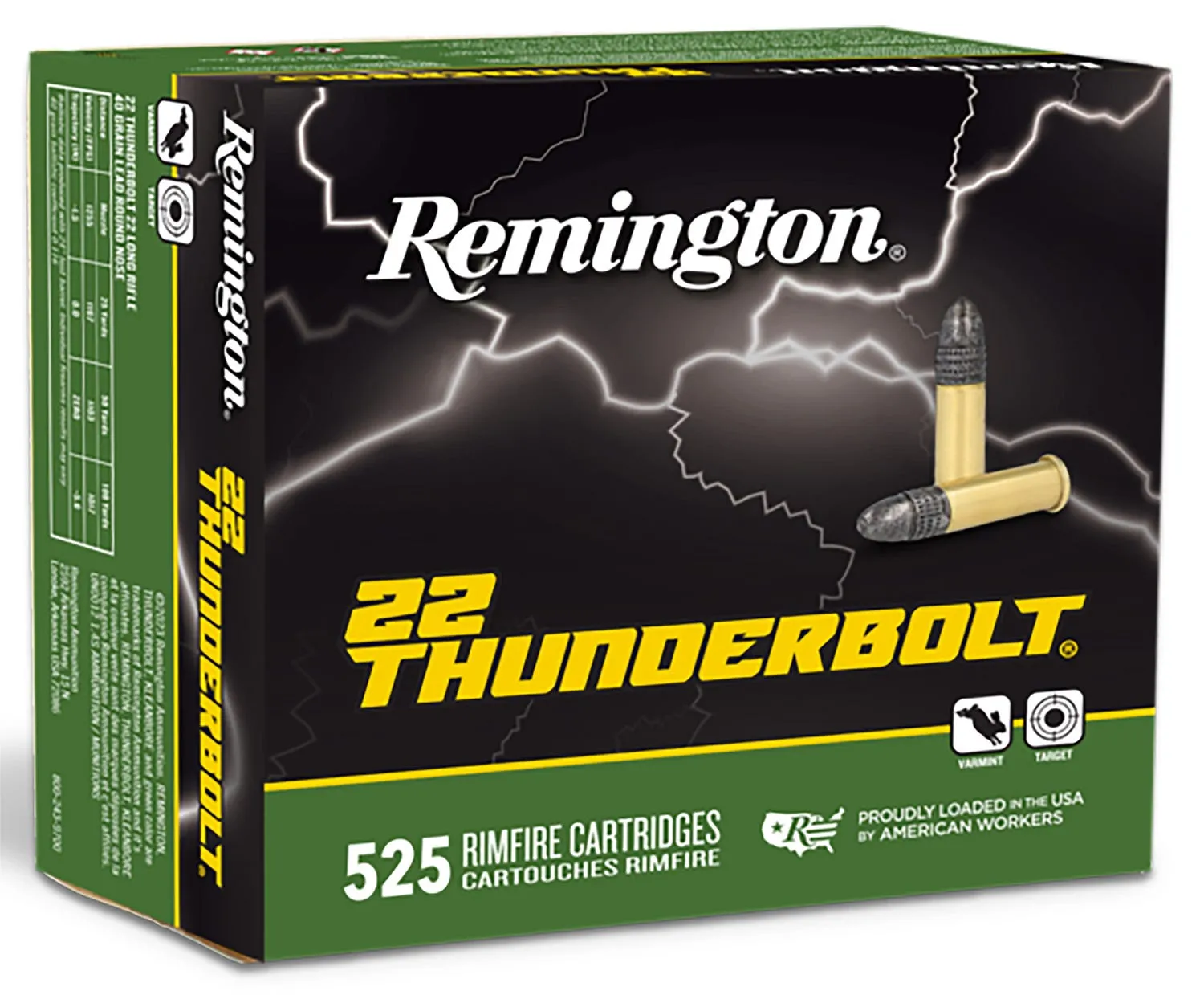
Remington Thunderbolt Bulk .22 LR 40 Grain 525-Rounds LRN
.22 LR · 40gr · 525 rds
A brick of rimfire at these prices is an afternoon, not a season. If your semi-auto .22 has started failing to feed or short-stroking, that is almost always a gummed bolt face and chamber, not a worn-out gun — and it is the clearest example of round count driving the schedule. See our .22 LR ammo guide for which bulk loads are worth shooting in volume, or browse live .22 LR prices directly.
Steel-case and surplus-adjacent centerfire tend to leave more residue and often use a sealant that bakes into the chamber. That is not a reason to avoid it; it is a reason to expect a dirtier gun.
Brass-case factory centerfire — most of what our 5.56 and .223 guide covers — is the clean end of the spectrum. A modern carbine will run far longer between cleanings on quality brass-case ammunition than most owners' habits assume.
Does suppressed shooting change the schedule?
Yes, more than any other single variable, and it changes it in the action rather than the barrel.
A suppressor raises back pressure. On a direct-impingement semi-auto that means more combustion gas driven back through the gas tube and out around the bolt carrier — which is why suppressed AR shooters notice carbon on the carrier, in the firing pin channel and on the charging handle far sooner than they would unsuppressed. Gas blowback into the receiver is also why suppressed shooting feels dirtier at the shooter's face.
If you run a can, assume your host gun's interval is roughly halved and that the parts needing attention are the bolt carrier group and the gas rings, not the bore. Our suppressor buying guide covers the purchase side, and most centerfire rifle cans are sealed, not user-serviceable — follow the manufacturer's instructions rather than general advice, and verify your state's rules before buying anything in this category.
What does a cleaning session actually cost?
This is where the frequency debate gets easier to settle, because the consumables are not the expensive part of owning a gun.
Cleaning Gear, Cheapest Live Prices First
Prices updated Oct 26, 2026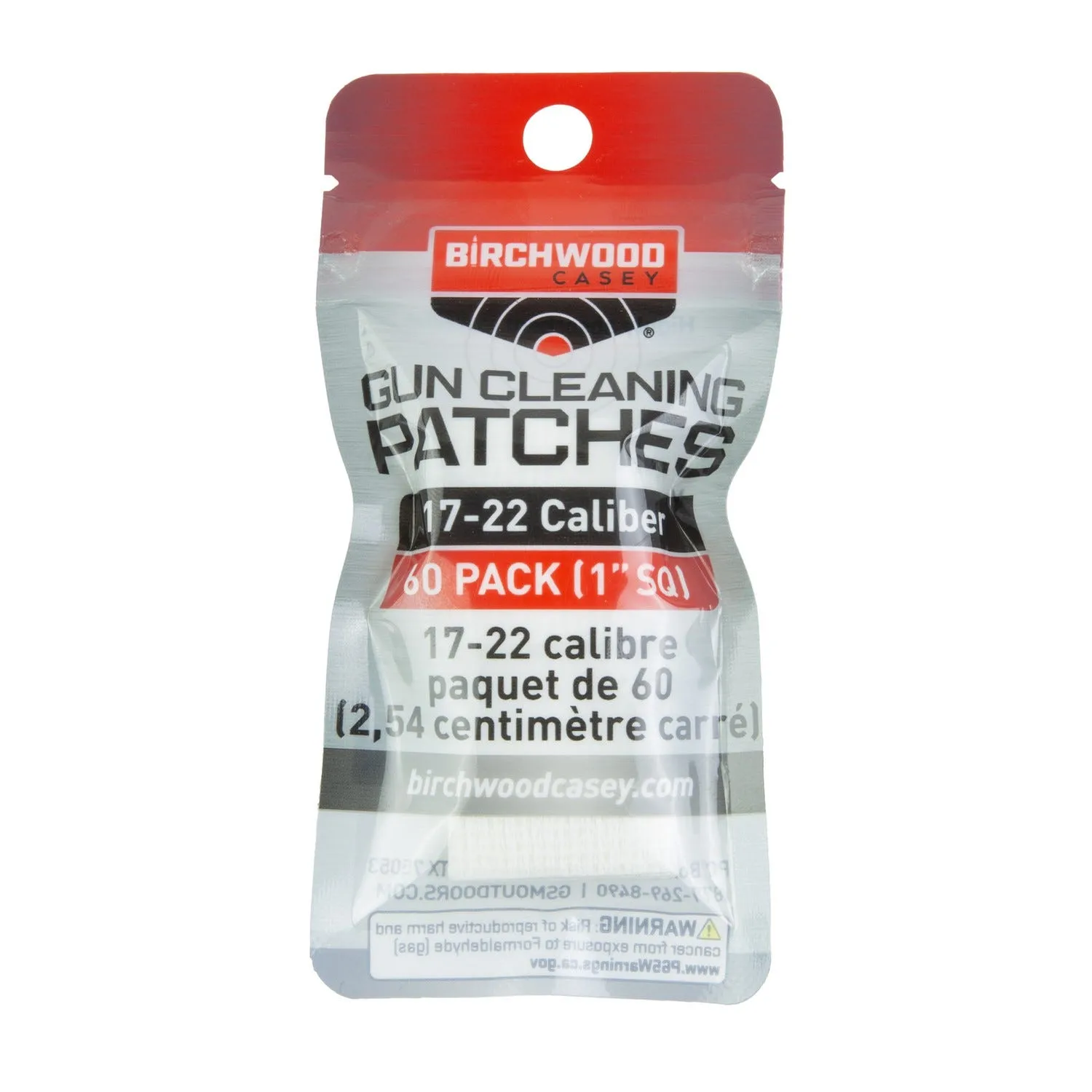
Birchwood Casey Patches 1 60-Pack for .17/.22 Caliber Airguns
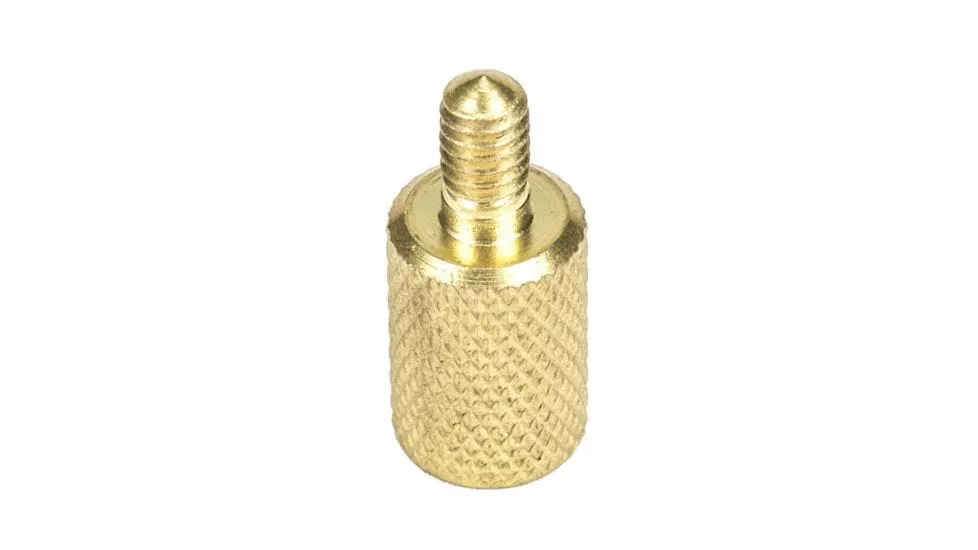
Breakthrough Shotgun Rod Adapter
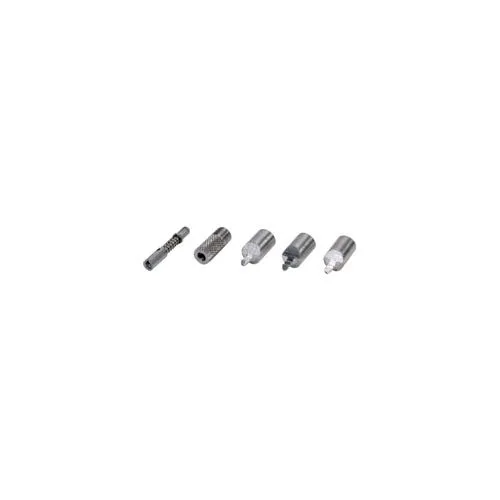
Gunslick 5PC Snap-LK Kit ShotgunS
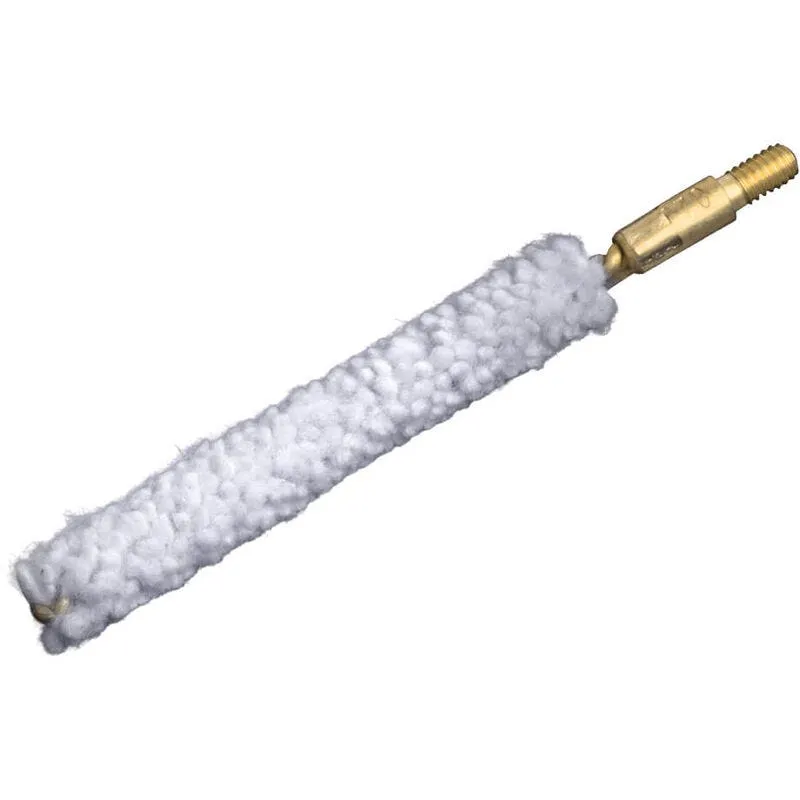
Breakthrough Clean Technologies Bore Mop 7mm/.270/.284

Otis Technologies CLP Tubed .5 oz
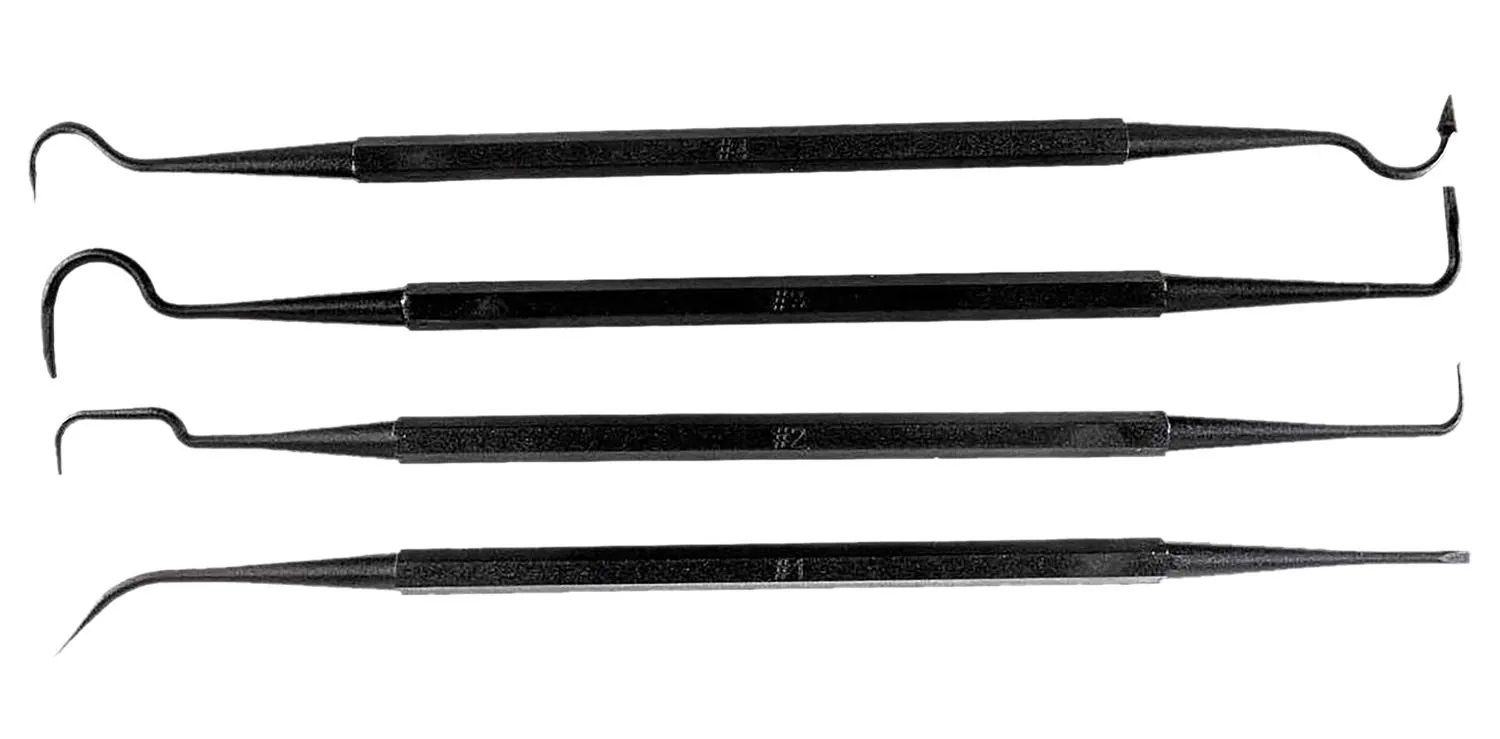
Tapco Gun Pick Tool Set Cleaning 4-Piece
Solvents and Bore Cleaners, Cheapest First
Prices updated Oct 26, 2026
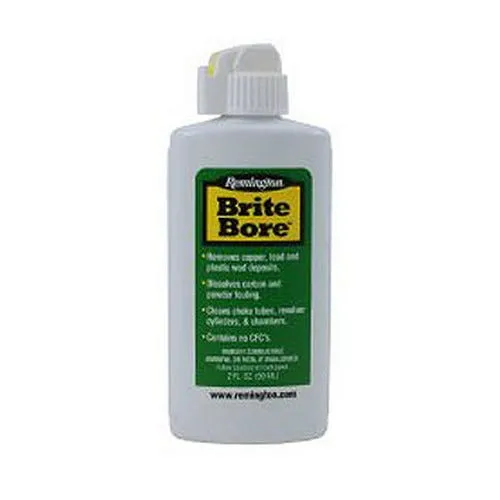
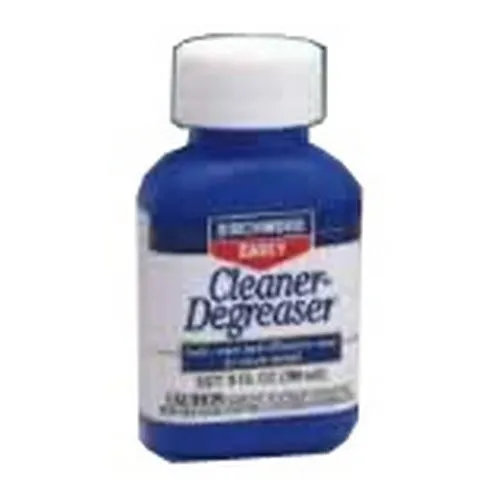

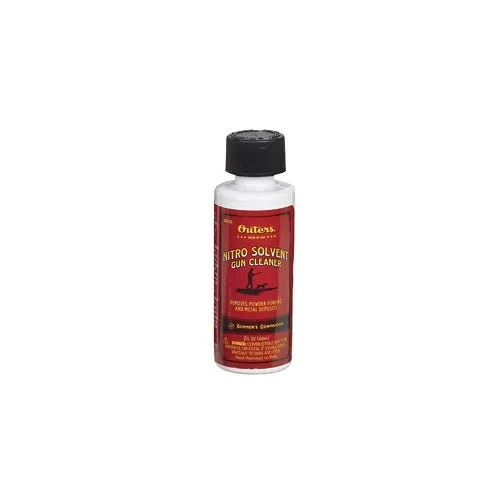
At the time of writing, our catalog has a Hoppe's No. 9 synthetic blend bore cleaner at $6.09, a Hoppe's Boresnake 12-gauge CLP kit at $7.79, a GunMaster universal pistol kit at $8.09 and Birchwood Casey handgun brush three-packs from $4.49 — all live retail prices, all of which outlast many sessions. Those grids above are pulling current prices as you read this page, not numbers typed into the prose.
Now compare that to what you fed the gun. A single range trip's ammunition typically costs several times a year's worth of solvent and patches:
Cost Per Round Calculator
The only number that matters when comparing ammo. Shipping included.
That asymmetry is the actual argument. Cleaning more often does not cost money in any amount worth discussing — which is exactly why the case against over-cleaning has to rest on wear and time, not budget. For a longer look at what moves the expensive side of that equation, see why ammo prices move, and if you want to compare specific products rather than intervals, our cleaning kit round-up and gun oil comparison do that on live pricing.
A round-count schedule you can actually follow
The intervals below are a defensible default, not a measured finding — we do not run durability testing, and your manufacturer's manual outranks this table. Treat it as a starting point you adjust based on what the gun looks like when you open it.
| Gun and use | Lubricate / inspect | Full fouling removal |
|---|---|---|
| Range handgun, brass-case | Every session | Every few thousand rounds, or when accuracy or extraction changes |
| Carry handgun | Monthly, whether shot or not | After each range session that involved real volume |
| Semi-auto .22 LR | Every session | Whenever feeding or cycling gets unreliable |
| AR-pattern carbine, unsuppressed | Every session | Every 1,000–2,000 rounds; see our AR-15 maintenance schedule |
| AR-pattern carbine, suppressed | Every session | Roughly half the unsuppressed interval, focused on the bolt carrier group |
| Precision bolt gun | Every session | When groups open up, and never from the muzzle end |
| Hunting rifle | Before and after the season | After the season, then store oiled |
| Anything fed corrosive surplus | Same day | Same day |
For the step-by-step on the carbine case, our AR-15 cleaning walkthrough covers field-strip order and the parts worth attention.
When to clean immediately, regardless of round count
Four triggers override any schedule:
- Corrosive ammunition. Same day, water-based, then oil.
- Water or sweat exposure. Rain, a dropped gun in a creek, a long humid day with a carry gun against your body. Strip it, dry it, oil it.
- Before long-term storage. Fouling will not hurt the gun, but a bore with fingerprints and a dry action in a humid safe will. Clean, oil, and check it periodically.
- Before you trust it. If a gun is going to be a defensive gun, a hunting gun on opening morning, or a competition gun, it gets cleaned, lubricated and then function-checked with the ammunition you intend to use. The cleaning is the small part; the verification is the point. This is the same logic behind carrying enough spare magazines and behind practicing enough rounds to know the gun — the equipment and the proof go together.
Can you over-clean a gun?
Yes, and it rarely looks like a single catastrophe. It looks like a crown worn unevenly by a steel rod pushed from the muzzle a thousand times, a throat eroded slightly faster by aggressive brushing, a detent spring launched across the garage during a disassembly that was not necessary, and an action run dry because solvent stripped the lubricant and nothing replaced it.
The pattern worth adopting is narrow: lubricate often, inspect every time, scrub rarely, and use a bore guide and a coated or one-piece rod when you do scrub. If you are chasing accuracy specifically, understand what you are actually chasing first — our piece on muzzle energy versus velocity is a useful corrective on how much of perceived performance is ammunition rather than barrel condition.
And when something does change, be skeptical about the cause. A group that opened up after 400 rounds of a new lot is far more likely to be the ammunition than the fouling. We publish how we rank ammunition partly to be explicit about which claims we will and will not make — the same standard applies here. We can price your solvent to the cent. We cannot tell you how many rounds your particular barrel will shoot before it matters, and nobody selling you a cleaning rod can either.
Get alerted when 9mm price drops hit.
We watch every listing and email you the moment the cost per round drops.
Set Up a Free Price AlertAmmoSpotter earns a commission when you buy through links on this page. It never changes what you pay, and it never decides what we recommend — our picks are ranked on live cost-per-round data pulled from every retailer we track. Full disclosure.
Frequently Asked Questions
Do you have to clean your gun after every range trip?+
How long can a gun sit dirty before it is a problem?+
Does shooting .22 LR require cleaning more often?+
Does a suppressor mean cleaning the host gun more often?+
Can you clean a gun too much?+
What does gun cleaning actually cost per year?+
Shop the data

About the author
AmmoSpotter Research Desk
Price & Ballistics Research
The AmmoSpotter Research Desk analyzes live retail pricing across every ammunition, firearm and accessory listing we track. Recommendations here are ranked against real cost-per-round data pulled daily from the retailers we monitor - not against manufacturer marketing copy.
- ✓Tracks 180,000+ live product listings across 6 retailer feeds
- ✓Records price history on every listing, every day
- ✓Cost-per-round methodology applied to all ammunition rankings
- ✓No product is ranked without a verifiable in-stock retail price
- ✓Affiliate relationships never influence rankings
Related Guides
AR-15 Maintenance Schedule by Round Count: What to Check, and What the Interval Costs
- Nobody publishes a round count for AR-15 parts life. Across 4,135 live listings in the four parts categories we track, exactly 4 mention a round count at all. - So the schedule is condition-based. Inspect on an inte...
Best Gun Cleaning Kits 2026: What 464 Live Listings Say About Piece Counts
- 464 live cleaning-kit listings , floor $1.99, median $29.49 , and 236 of them under $30. This is not a category where spending more buys much. - 403 of the 464 never state a piece count. Where it is stated, 12–14-pi...
Best Gun Oil 2026: Priced by the Ounce, Not by the Bottle
- We track 287 live lubricant listings , from $2.69 to $299.99, median $11.69 . - Priced per fluid ounce the same shelf spans $0.57 to $31.16 — a 55-fold range that the sticker price completely hides. - The cheapest l...
How to Clean an AR-15: A Round-Count Schedule and What It Costs
- We track 2,368 live cleaning and lubricant listings . The median is $11.39 and 1,055 of them cost under $10. This is the cheapest shelf in the catalog. - Only 76 of those 2,368 name the AR-15 platform , starting at ...
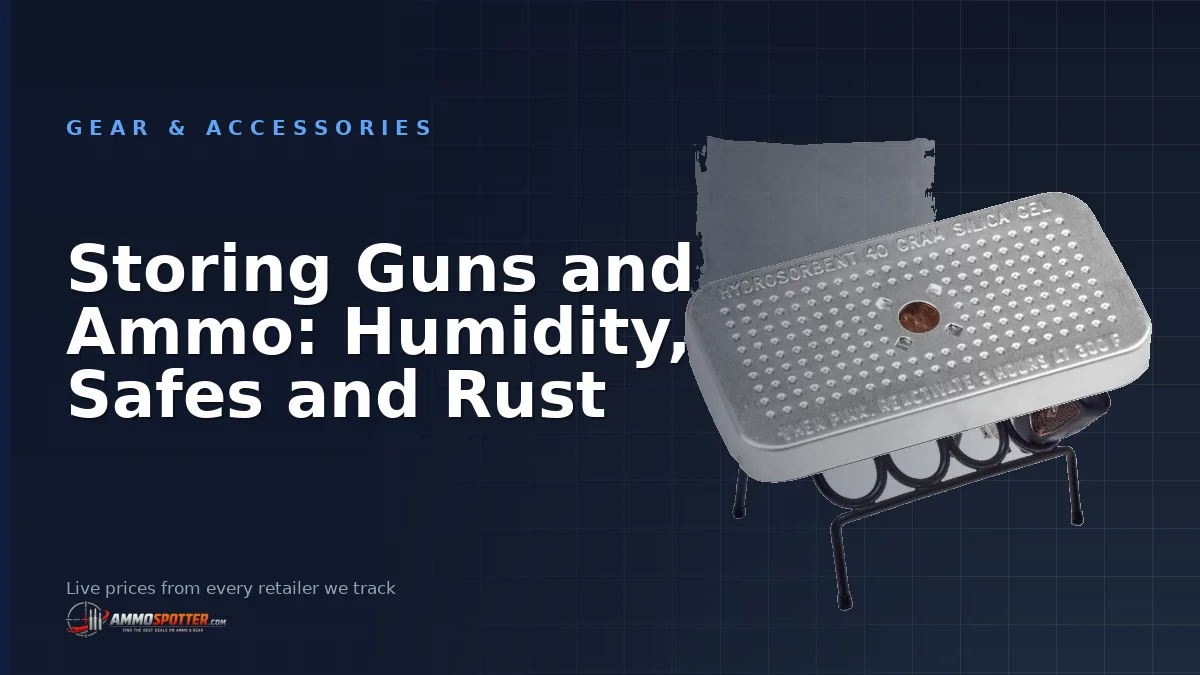
Storing Guns and Ammo: Humidity, Safes and Rust
- A safe does not control humidity. It is an insulated steel box that slows air exchange, which can make the problem worse rather than better. - Measure before you buy anything. A hygrometer inside the safe costs less...

How Many Magazines Do You Actually Need?
Magazines are a rounding error next to what you spend on ammunition, and they cause a disproportionate share of malfunctions. That asymmetry is the whole argument: buying enough good magazines is the cheapest reliabil...