Subsonic vs Supersonic Ammo Explained
Subsonic ammo removes the sonic crack, not the gunshot. Here is what the label really buys you, what it costs per round, and which cartridges do it without a fight.
What makes a load subsonic
Sound travels at roughly 1,125 feet per second at sea level in standard conditions, and that figure moves with temperature and altitude — colder air is slower, so a load that is marginal on a hot afternoon can be safely under the line on a winter morning. A bullet travelling below that speed makes no sonic boom. A bullet above it drags a small, sharp pressure wave behind it for as long as it stays supersonic, and that is the crack you hear downrange.
That is the whole distinction. Subsonic is not a construction, a powder, or a quality tier. It is a velocity bracket, and every ammunition maker reaches it the same way: a heavier bullet moving slower, so the cartridge can still deliver usable momentum without breaking the sound barrier.
Which means every subsonic load is a deliberate trade. You are converting velocity into bullet weight. What that does to energy, trajectory and drop is the subject of muzzle energy vs muzzle velocity — read it if you want the arithmetic, because a heavy slow bullet and a light fast one can print the same energy figure while behaving nothing alike.
Subsonic does not mean quiet
A gunshot has three noise sources: the muzzle blast, the sonic crack of the bullet, and the mechanical noise of the action. Subsonic ammunition eliminates exactly one of them.
Fire a subsonic load through an unsuppressed rifle and it is still a gunshot. Everyone within a few hundred yards will know. What you have removed is the whip-crack that tells a listener which direction the bullet went — meaningful for some purposes, irrelevant to hearing safety.
Fire the same load through a suppressor and the two halves multiply. The can handles the muzzle blast, the load handles the crack, and what is left is mostly the action. That is the combination people are actually describing when they talk about quiet. Neither piece gets you there alone.
If the suppressor half of the equation is still ahead of you, the process, the wait and the real costs are laid out in our suppressor buying guide.
Where the sound barrier actually gets crossed
The label on the box is a claim about a specific load fired in a specific test barrel. Three things move your real velocity relative to that claim.
Barrel length. A shorter barrel gives the expanding gas less distance to work, so velocity drops. For subsonic purposes this works in your favour — it pushes a load further under the line, not over it. The failure case runs the other way: a load sitting close to the barrier fired from a longer barrel than the one it was tested in. How barrel length changes velocity covers the mechanism in full.
Temperature. Two effects stack, and they fight each other. Hot ammunition generally produces more velocity, and hot air raises the speed of sound. A load that is marginal in both directions can be quiet in January and crack in July.
Load-to-load variation. Ammunition is manufactured to a tolerance, not to a number. A load advertised comfortably under the barrier stays under it. A load advertised right at the edge will have individual rounds on both sides of it, which is why intermittent cracking is a normal experience with borderline ammunition rather than a sign of a defective batch.
The practical rule: if quiet is the point, buy loads built well under the line rather than ones that merely claim to be under it, and verify in your own gun.
What subsonic actually costs per round
Here is the part that is hard to get anywhere else. Subsonic is a price decision as much as a ballistic one, and the premium is completely different depending on which cartridge you are asking.
.22 LR Price Index
Live · Sep 28, 20269mm Luger Price Index
Live · Sep 28, 2026.300 Blackout Price Index
Live · Sep 28, 2026Those three blocks are live market floors for each cartridge as a whole — mostly standard supersonic ammunition, because that is what most of the market is. Now compare them to what the subsonic loads in the same cartridges cost:
Subsonic Loads We're Tracking Right Now
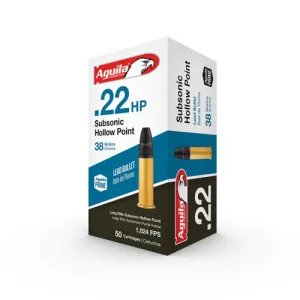
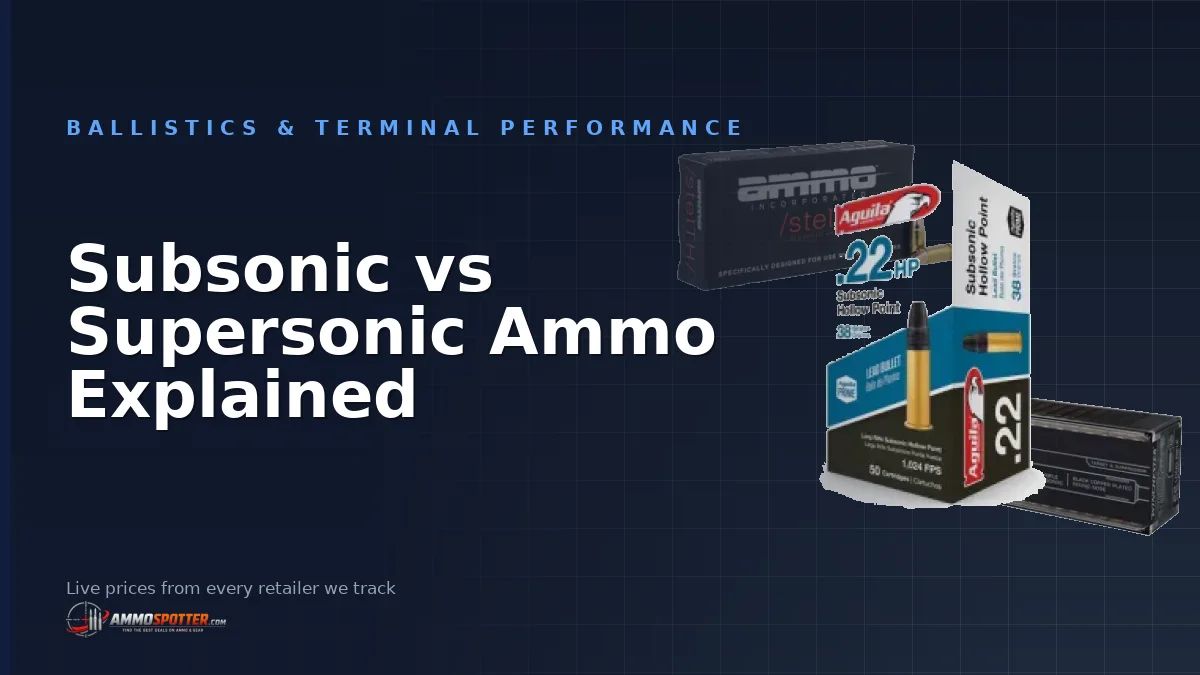
AGUILA AMMO 22 LR 38Gr Subsonic HP 50rd
Rimfire is where subsonic stops being a premium product. A .22 LR load built under the sound barrier costs a fraction of any centerfire subsonic option, which makes it the honest starting point if you want to hear what a suppressor actually does.
Pros
- ✓Lowest cost per round of any subsonic option we track
- ✓Purpose-built under the sound barrier rather than borderline
- ✓Works in most rimfire rifles without modification
Cons
- ✗Rimfire energy only — training and small game, not a defensive answer
- ✗Some semi-auto rimfires need standard-velocity ammo to cycle
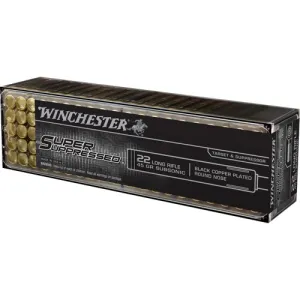
WINCHESTER AMMO Super Suppressed 22LR 45Gr Subsonic 100rd
A heavier rimfire bullet loaded for suppressed use, sold in a 100-round pack. The heavier projectile is the usual approach to staying under the sound barrier without giving up all the energy a lighter load throws away.
Pros
- ✓Sold in 100-round packs rather than 50
- ✓Bullet weight chosen for suppressed use
Cons
- ✗Still rimfire — no centerfire terminal performance
- ✗Cycling in blowback semi-autos varies by gun
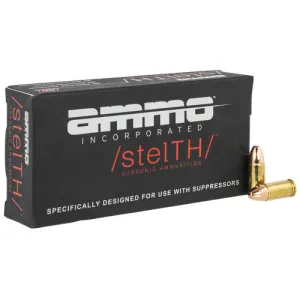
AMMO INC 9mm 147Gr TMC Stelth Subsonic 50rd
A heavy-for-caliber 9mm subsonic in a 50-round box. 9mm is the cheapest centerfire route to subsonic because heavy-bullet loads are mainstream in this cartridge rather than a specialty item.
Pros
- ✓50-round box instead of the 20-round specialty packaging
- ✓Heavy-for-caliber bullet, the standard subsonic approach in 9mm
Cons
- ✗Heavy subsonic loads can fail to cycle tuned or lightly sprung pistols
- ✗Point of impact shifts versus your standard practice load
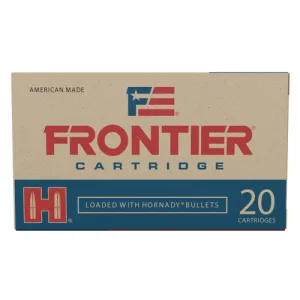
HORNADY 300 Blackout 208Gr FMJ Subsonic Frontier Ammo 20rd
Heavy-bullet .300 Blackout, the cartridge designed from the start to do this job. This is the configuration everything else in the subsonic rifle world is measured against, and it is priced like a commodity rather than a boutique load.
Pros
- ✓Cartridge purpose-designed for subsonic use in short barrels
- ✓Heavy bullet retains far more energy than any rimfire option
Cons
- ✗Costs noticeably more per round than supersonic 5.56 practice ammo
- ✗Gas system usually needs tuning to run subsonic reliably

SIG SAUER 300 Blk 125Gr CTT Supersonic 20rd Ammo
The same cartridge loaded above the sound barrier, included so the comparison is concrete. Identical chamber, identical magazine, completely different acoustic and ballistic result — this is the load you want when range matters more than noise.
Pros
- ✓Flatter trajectory and more retained velocity downrange
- ✓No gas tuning compromise for subsonic function
Cons
- ✗Produces a sonic crack no suppressor can remove
- ✗Defeats the point if quiet is your reason for buying the can
Read the two together and the shape of the decision appears. In rimfire, the subsonic premium is small enough to ignore — which is why .22 LR is where most people should first find out whether they actually like shooting suppressed. In centerfire, the premium is real and recurring, and it compounds against every round of practice you plan to do. Our look at how many rounds it takes to get good is the number to multiply it against.
Run your own comparison against any box you are considering, shipping included, rather than trusting a sticker price:
Cost Per Round Calculator
The only number that matters when comparing ammo. Shipping included.
The forces that move these numbers week to week — and the reason a subsonic load can jump while its supersonic sibling does not — are covered in why ammo prices move.
Which cartridges go subsonic without a fight
.22 LR is barely a conversion at all. Rimfire operates at low velocity to begin with, and subsonic rimfire is a mainstream product line rather than a specialty. It is also the cheapest ammunition in existence, which makes it the natural training answer; the .22 LR buying guide covers where the value sits.
.300 Blackout was designed for this. The cartridge exists to push a heavy bullet from a short barrel with the powder fully burned, which is the definition of the subsonic problem. If you want a rifle cartridge that is genuinely good subsonic rather than tolerable, this is the one, and our .300 Blackout guide splits the supersonic and subsonic sides apart. Browse the live set at .300 Blackout ammo.
Cheapest .300 Blackout Right Now
Prices updated Sep 28, 2026
Wolf Performance Ammo Polyformance Steel Case .300 AAC Blackout 145 Grain 20-Rounds
.300 Blackout · 145gr · 20 rds

NOSLER Custom Brass 300 AAC Blackout Bulk Brass 250rd
.300 Blackout · 250 rds

SELLIER BELLOT SB300BLKB 300 AAC Blackout 147gr Full Metal Jacket Ammunition | 20 Rounds
.300 Blackout · 147gr · 20 rds

ARMSCOR Precision 300 AAC Blackout 147gr Full Metal Jacket Ammunition | 100 Rounds
.300 Blackout · 147gr · 100 rds

SELLIER BELLOT SB300BLKSUBA 300 AAC Blackout 200gr Full Metal Jacket Subsonic Ammunition | 20 Rounds
.300 Blackout · 200gr · 20 rds

MAGTECH 300 AAC Blackout HPFB 115Gr 50rd
.300 Blackout · 115gr · 50 rds
9mm and .45 ACP are easy because heavy-for-caliber bullets already exist in volume. .45 ACP in particular is close to the line in standard loadings, so the subsonic version is not exotic. The full 9mm load landscape is in our 9mm guide.
Cheapest Bulk 9mm Right Now
Prices updated Sep 28, 2026
Winchester USA Forged 9mm 115 Grain 1000-Rounds Bulk FMJ
9mm · 115gr · 1,000 rds

CCI Ammunition Blazer Aluminum 9mm 115-Grain 1000-Rounds Bulk FMJ
9mm · 115gr · 1,000 rds

Aguila Centerfire Handgun Bulk 9mm 115 Grain 300-Rounds FMJ
9mm · 115gr · 300 rds

Aguila Centerfire Handgun Bulk 9mm 124-Grain 300-Rounds FMJ
9mm · 124gr · 300 rds

PMC Ammunition Bronze Brass 9mm 124 Grain 1000-Rounds Bulk FMJ
9mm · 124gr · 1,000 rds

PMC Ammunition Bronze Brass 9mm 115-Grain 1000-Rounds Bulk FMJ
9mm · 115gr · 1,000 rds
5.56 NATO is the hard case. The cartridge is built around high velocity from a long barrel, and getting under the sound barrier means a bullet so heavy and slow that twist-rate stabilization and reliable function both become projects. It is done, but it is the least rewarding version of this exercise. For suppressed rifle options generally, see best ammo for suppressed rifles.
The trade-offs nobody puts on the box
Function. A semi-auto runs on the same pressure the subsonic load is deliberately giving up. Rifles usually want an adjustable gas block, and a suppressor's backpressure often helps more than the gas setting does. Pistols can need spring changes. Plan on tuning, and plan on verifying with the exact load you intend to buy in quantity, not a similar one.
Trajectory. A slow heavy bullet drops faster. At short range this is irrelevant; past that, the holdovers between your supersonic and subsonic loads diverge quickly, and a zero that works for one is wrong for the other.
Terminal performance. Bullets designed to expand generally need velocity to do it. Many subsonic loads are simply heavy solids that punch straight through, which is fine for suppressed practice and a consideration if you were planning to use the same load defensively. Do not assume a heavy subsonic bullet behaves like a defensive load just because it is heavy.
Is subsonic worth it for you?
- If you do not own a suppressor yet, subsonic ammunition is mostly a waste of money. Buy the can first, or at least commit to it.
- If you are finding out whether you like suppressed shooting, do it in rimfire. The premium is small and the lesson is the same.
- If you want a suppressed rifle that actually works, start from a cartridge designed for the job rather than converting one that resents it.
- If the same gun has to do range work and quiet work, budget for two loads, two zeros, and a gas setting that compromises between them.
- Buy on cost per round with shipping included, and set an alert rather than paying whatever this week's number is — subsonic runs in smaller batches, and the price moves more than bulk practice ammo does.
Get alerted when .300 Blackout price drops hit.
We watch every listing and email you the moment the cost per round drops.
Set Up a Free Price AlertAmmoSpotter earns a commission when you buy through links on this page. It never changes what you pay, and it never decides what we recommend — our picks are ranked on live cost-per-round data pulled from every retailer we track. Full disclosure.
Frequently Asked Questions
What does subsonic ammo actually mean?+
Is subsonic ammo quieter without a suppressor?+
Why is subsonic ammo more expensive per round?+
Will subsonic ammo cycle my semi-auto?+
Which cartridges work best subsonic?+
Do I need a tax stamp to shoot subsonic ammo?+

About the author
AmmoSpotter Research Desk
Price & Ballistics Research
The AmmoSpotter Research Desk analyzes live retail pricing across every ammunition, firearm and accessory listing we track. Recommendations here are ranked against real cost-per-round data pulled daily from the retailers we monitor - not against manufacturer marketing copy.
- ✓Tracks 180,000+ live product listings across 6 retailer feeds
- ✓Records price history on every listing, every day
- ✓Cost-per-round methodology applied to all ammunition rankings
- ✓No product is ranked without a verifiable in-stock retail price
- ✓Affiliate relationships never influence rankings
Related Guides

Muzzle Energy vs Muzzle Velocity: What Actually Matters
Every ammunition box prints a velocity figure, and most print an energy figure next to it. Both are real. Both get used to argue things they cannot support — that one cartridge "hits harder," that a lighter bullet is ...
Best .300 Blackout Ammo 2026: Supersonic and Subsonic on Live Prices
.300 Blackout exists to solve one problem: fitting a heavy, slow bullet into an AR-15 that cycles reliably with nothing changed but the barrel. It does that well. What it does not do is cost the same as feeding the ri...
How Barrel Length Changes Velocity — And What It Should Change About Your Ammo
- Shorter barrel, same load, less velocity. That part is physics and it only runs one way. - The velocity printed on the box was measured in a test barrel. Unless yours matches that length, the number is not yours. - ...

Best Ammo for Suppressed Rifles 2026: Subsonic Loads Ranked on Live Prices
- A suppressor silences muzzle blast. It does nothing about a supersonic bullet's crack. The ammunition, not the can, decides how quiet the rifle actually is. - .300 Blackout in 200–220 grain is the only mainstream ce...
Terminal Ballistics: Expansion, Penetration and What Gel Tests Show
- Ballistic gelatin is a calibration medium , not a tissue substitute. It exists so two bullets can be compared fairly, not so a number can be quoted at you. - Expansion and penetration trade against each other. The p...
Effective Range by Caliber: An Honest Table (2026)
- "Effective range" is not a property of a cartridge. It is the shortest of three limits: terminal energy, your practiced hit rate, and how much trigger time you can afford. - For almost every shooter, the binding lim...