5.56 NATO vs 7.62x39
One of these has the cheaper floor and the thinner catalog. The other costs more at the bottom and less everywhere above it. Both price indexes are live on this page.
The usual version of this argument is about ballistics. The useful version is about what you will actually spend, and on that question both cartridges have a claim — depending entirely on which shelf you buy from.
7.62x39 owns the floor. The cheapest steel-case imports are the least expensive centerfire rifle rounds on the market. But the catalog behind that floor is shallow, and the moment you want brass cases, expanding bullets or a case of anything, 5.56 and .223 have the deeper and better-supplied market. Here is where each one wins, with both indexes live on this page.
What actually differs between 5.56 and 7.62x39?
The projectiles are not in the same class. 5.56 NATO fires a .224-inch bullet, typically 55 to 77 grains, fast. 7.62x39 fires a .311-inch bullet, almost always 122 to 125 grains, considerably slower. That single difference drives everything else.
The 5.56 bullet's speed and light weight give it a flatter trajectory and very little recoil, which is why it is easy to shoot well and easy to shoot quickly. The trade is that it loses effectiveness as velocity drops, so short barrels and long distances both work against it.
7.62x39 starts slower and arcs more, which puts a practical ceiling on it somewhere around a couple of hundred yards for most shooters. In exchange it delivers a heavy .30-caliber bullet that behaves more like a short-range deer cartridge than a varmint round. Recoil is noticeably firmer than 5.56 but not unpleasant.
Neither is a general upgrade over the other. They are two different answers to the same design problem, and the price data reflects two different supply chains.
Which one is cheaper per round right now?
Both, depending on where you look. Compare the floor line and the average line on these two blocks:
7.62x39 Price Index
Live · Sep 23, 2026.223 / 5.56 Price Index
Live · Sep 23, 2026The floor goes to 7.62x39 and the average goes the other way. That is not a quirk of the day we published this — it is structural. The cheap steel-case imports that set the 7.62x39 floor are a narrow band of the market, and once you step off that band the cartridge has very little volume production behind it. 5.56 and .223 have a wide middle: dozens of domestic and imported brass-case options competing on price.
You can see the same thing in how much of each market is available by the case:
7.62x39 by the Case, Cheapest Per Round
Prices updated Sep 23, 2026
RED ARMY STANDARD 7.62x39 124Gr FMJ 1000rd
7.62x39mm · 124gr · 1,000 rds

RED ARMY STANDARD 7.62x39 124Gr HPBT 1000rd
7.62x39mm · 124gr · 1,000 rds
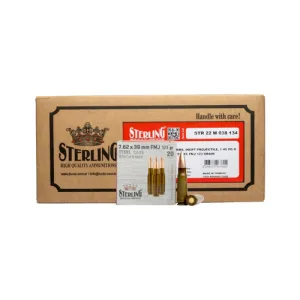
STERLING 7.62x39 123Gr Steel Case Ammunition | 1000 Round CASE
7.62x39mm · 123gr · 1,000 rds
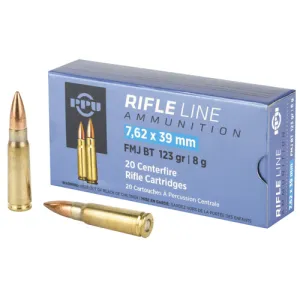
PPU 7.62x39 123Gr FMJ 840rd
7.62x39mm · 123gr · 840 rds
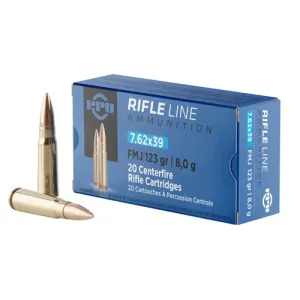
PPU 7.62x39 123gr FMJ 840rd Case
7.62x39mm · 123gr · 840 rds

Wolf Military Classic Steel 7.62 X 39 124 Grain 1000-Rounds Bulk FMJ
7.62x39mm · 124gr · 1,000 rds
Bulk .223 and 5.56, Cheapest Per Round
Prices updated Sep 23, 2026
Wolf Military Classic Steel .223 Rem 55 Grain 500-Rounds Bulk FMJ
.223 Remington · 55gr · 500 rds

PMC Ammunition Bronze .223 Rem 55 Grain 1000-Rounds FMJ Bulk
.223 Remington · 55gr · 1,000 rds

Red Army Standard Centerfire Rifle Steel .223 Rem 55-Grain 500-Rounds Bulk FMJ
.223 Remington · 55gr · 500 rds

Wolf Performance Ammo PolyFormanc Steel Bulk .223 Rem 55 Grain 500-Rounds
.223 Remington · 55gr · 500 rds

PMC Ammunition X-Tac Rifle Brass 5.56 55 Grain 1000-Rounds FMJBT Bulk
5.56x45mm NATO · 55gr · 1,000 rds

Winchester M855 5.56 Bulk Ammo 62 Grain FMJ 1000rds (Unpainted Tip) - WM8551000
5.56x45mm NATO · 62gr · 1,000 rds
The 7.62x39 bulk grid is nearly the entire bulk market for that cartridge. The .223/5.56 grid is the top of a much longer list. If you buy in volume and care about having options when one retailer runs dry, that depth has value that the floor price does not capture.
Why does 7.62x39 get expensive as soon as you leave steel case?
Because the affordable tier is an import story, and the rest of the cartridge is a niche-production story.
Steel-case ammunition is cheap because steel is cheaper than brass and the factories making it run at enormous scale for non-US markets. Availability of those imports has shifted more than once over the years, and it can shift again — which is exactly why this cartridge's price history is more volatile than 5.56's. We cover that dynamic generally in why ammo prices move, and the case-material trade-off itself in steel case vs brass.
Here is what the non-steel tier looks like:
7.62x39 Beyond the Steel-Case Floor
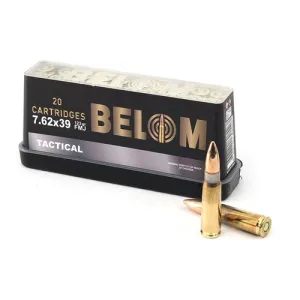
BELOM 7.62x39 123gr Full Metal Jacket Brass Ammunition | 20 Rounds
Belom 123-grain FMJ in brass. If your range bans steel case or your rifle is one you plan to reload for, this is roughly where the brass tier starts in our listings.

Fiocchi Range Dynamics Brass 7.62 X 39 123 Grain 50-Rounds FMJ
Fiocchi Range Dynamics 123-grain FMJ, 50 rounds to a box. The larger box is what keeps its cost per round competitive with the 20-round brass offerings.

PMC Ammunition Bronze Brass 7.62 X 39 123-Grain 20-Rounds FMJ
PMC Bronze 123-grain FMJ in brass, listed by more than one retailer we track — which matters in a cartridge this dependent on imports.

PPU Subsonic Brass 7.62 X 39 182-Grain 20-Rounds FMJ
PPU 182-grain subsonic in brass. It exists, and it is the only realistic subsonic 7.62x39 path, but read the suppressor section below before you plan around it.
Compare those against the .223/5.56 grid above. The same money buys you a much wider field in 5.56. If your range prohibits steel-case ammunition — plenty of indoor ranges do, usually over the bimetal jackets rather than the cases themselves — the 7.62x39 cost advantage largely evaporates before you have fired a round.
What do the rifles themselves cost?
Closer together than the argument implies. Entry-tier examples of both platforms:
Entry-Tier AR-15 Rifles by Price
Prices updated Sep 23, 2026
Radical Firearms Forged MHR 5.56 16 Barrel 30-Rounds
5.56x45mm

Radical Firearms Forged Milspec 5.56 NATO 16 Barrel 30-Rounds B5 Stock
5.56x45mm

Radical Firearms RPR .350 Legend 16 Barrel 10-Rounds
.350 Legend

Radical Firearms SOCOM Gray 5.56 NATO 16 Barrel 30-Rounds
5.56x45mm

Radical Firearms RF-15 OD Green .300 AAC Blackout 16 Barrel 30-Rounds
.300 AAC Blackout

Radical Firearms SOCOM OD Green 5.56 NATO 16 Barrel 30-Rounds
Century Arms AK-Pattern Rifles by Price
Prices updated Sep 23, 2026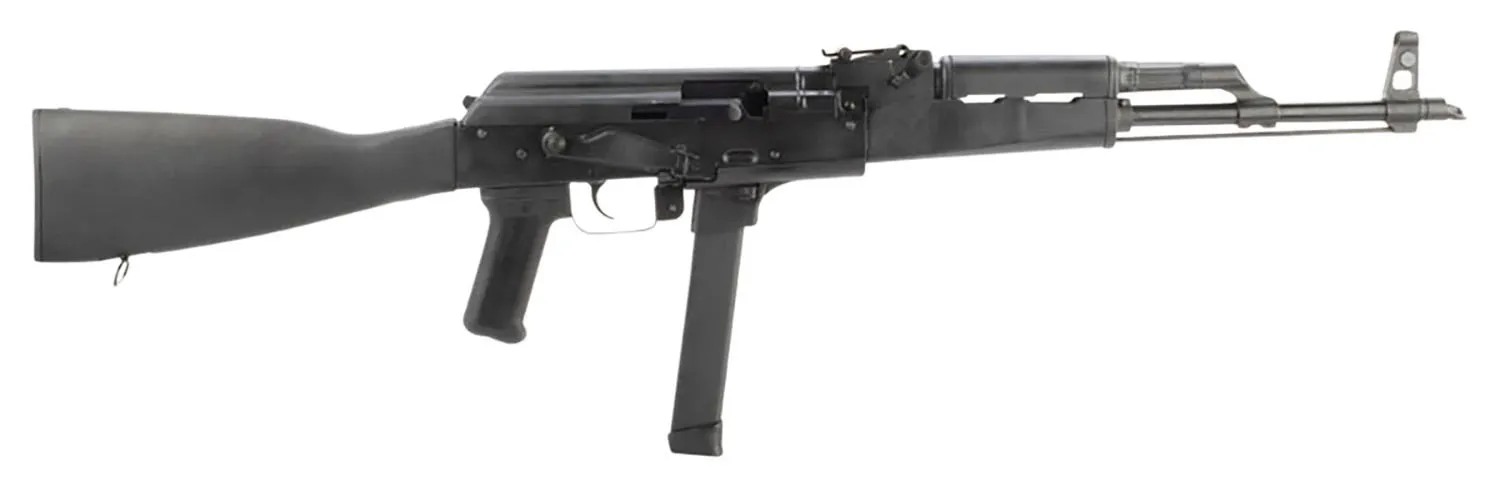
Century Arms WASR-M 9mm 17.5 Barrel 33-Rounds Adjustable Front Sight
9mm
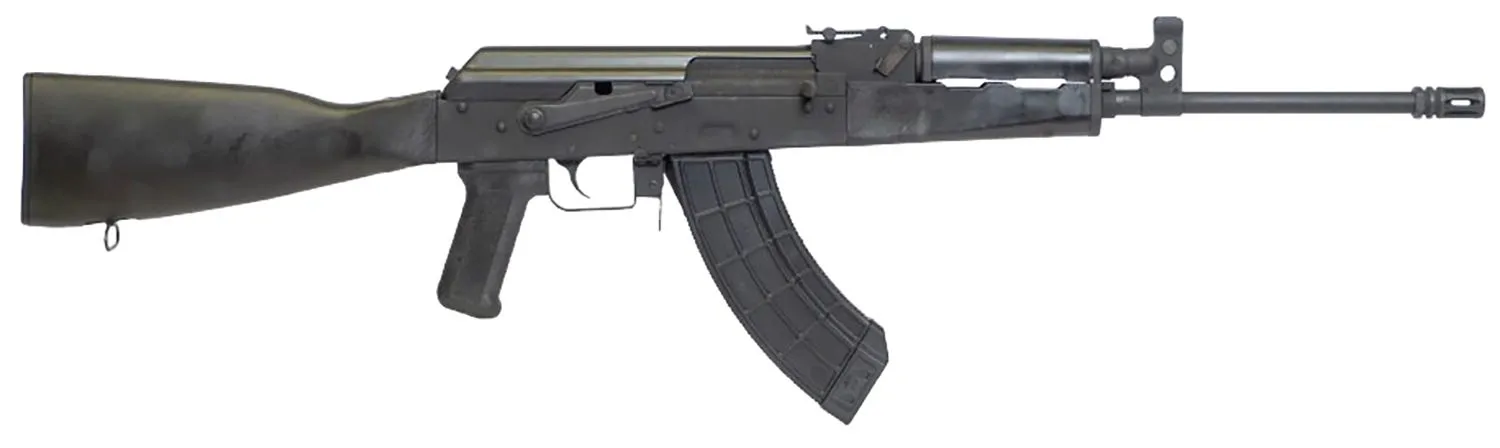
Century Arms VSKA Tactical 7.62 X 39 16.5 Barrel 30-Rounds
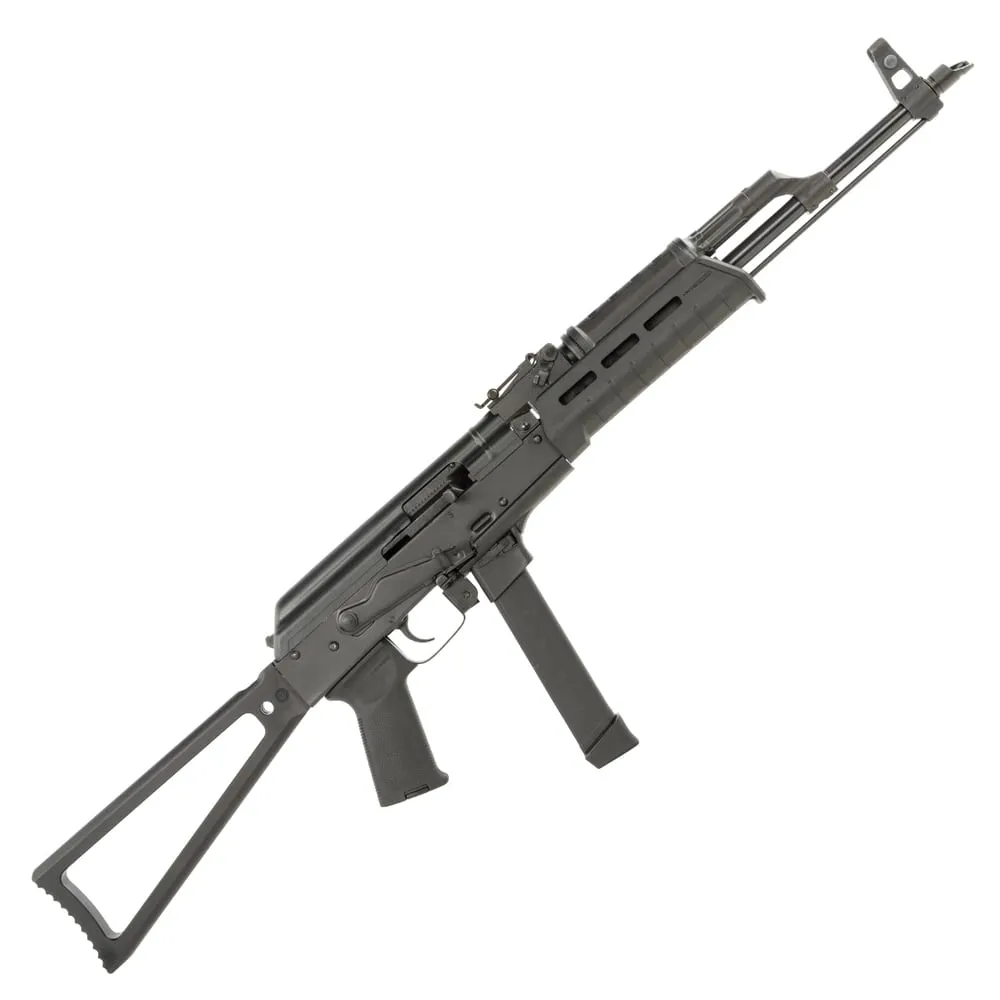
Century Arms WASR 9mm 17.5 Barrel 33-Rounds
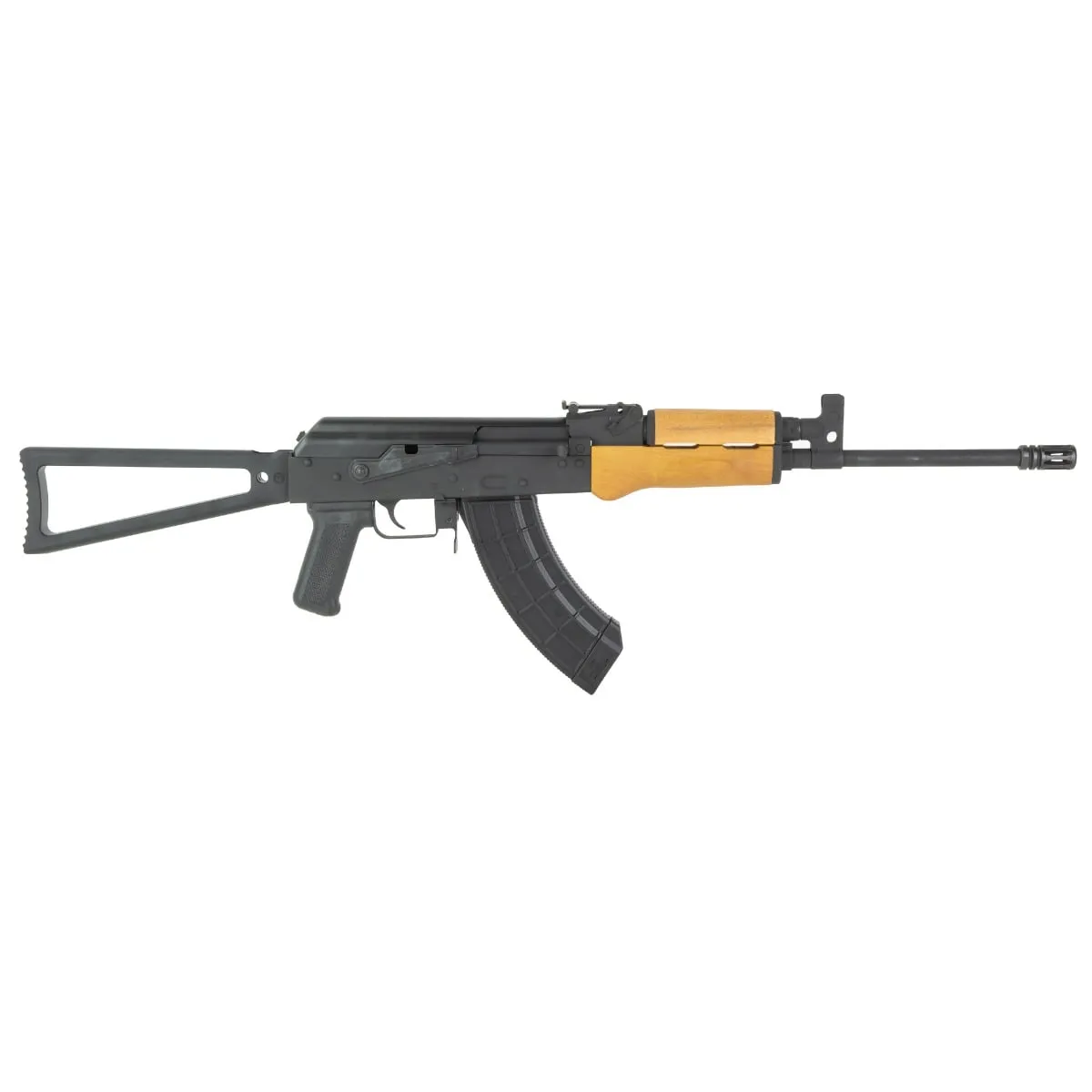
Century Arms VSKA Paratrooper Wood 7.62 X 39 16.25 Barrel 30-Rounds Triangle Stock
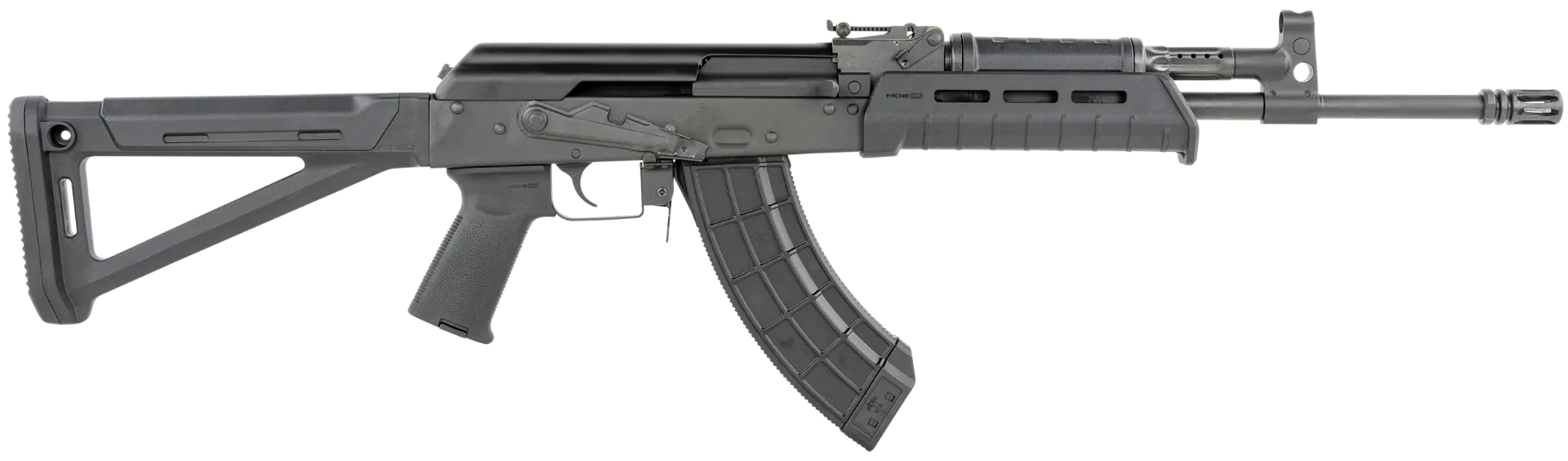
Century Arms VSKA Tactical 7.62 X 39 16.5 Barrel 30-Rounds Magpul Furniture
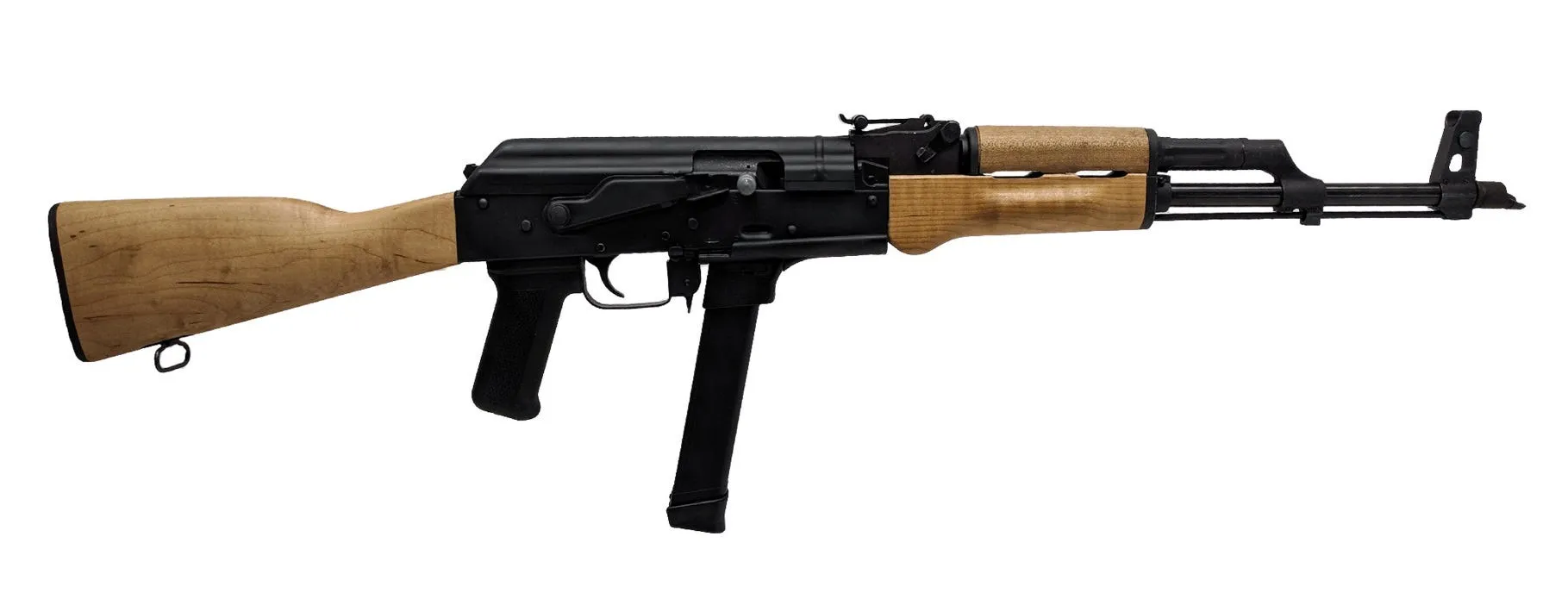
Century Arms WASR-M Wood / Black 9mm 16.25 Barrel 33-Rounds Adjustable Sights
Read the chamberings in both grids rather than assuming. The AR grid includes .300 Blackout and .350 Legend rifles alongside the 5.56 guns, and the AK-pattern grid includes 9mm WASR-M carbines that are not 7.62x39 at all. That is a catalog reality, not a recommendation.
Either way, a complete rifle is an FFL transfer — see how buying a gun online actually works before you order, because the transfer fee is a real line item that neither grid shows.
The purchase price is also the smaller number over any reasonable ownership period. At a few thousand rounds a year, the ammunition outspends the rifle quickly, which is the argument for picking the cartridge first and the rifle second. If you want a sense of what "a few thousand rounds" means in practice, we worked through it in how many rounds it takes to get good.
Which one is better for hunting?
7.62x39, for most people, within its range — with the enormous caveat that legality is a local question.
A 123- or 125-grain expanding .30-caliber bullet at moderate velocity is a well-proven short-range deer proposition, and it is one of the few genuinely cheap ways into a deer rifle. 5.56 with a heavy expanding bullet works on deer-sized game too, but it is legal in fewer places and leaves less margin for imperfect shot placement.
7.62x39 Expanding Loads, Cheapest First

BARNAUL AMMO 7.62x39 125Gr SP Lacquered Steel Case 20rd
Barnaul 125-grain soft point in lacquered steel. The least expensive expanding 7.62x39 bullet in our listings, and the reason this cartridge gets described as a short-range deer round.

Sellier and Bellot Rifle 7.62 X 39 124 Grain 20-Rounds SP
Sellier and Bellot 124-grain soft point. A step up in case quality from the steel-case imports, listed by more than one retailer.

SPEER AMMO 7.62x39 30 Cal .310 Diameter 123Gr Gold Dot 50rd
Speer Gold Dot 123-grain in a 50-round box. Gold Dot is a bonded defensive design rather than a hunting bullet, and 50-round packaging keeps the per-round cost down.
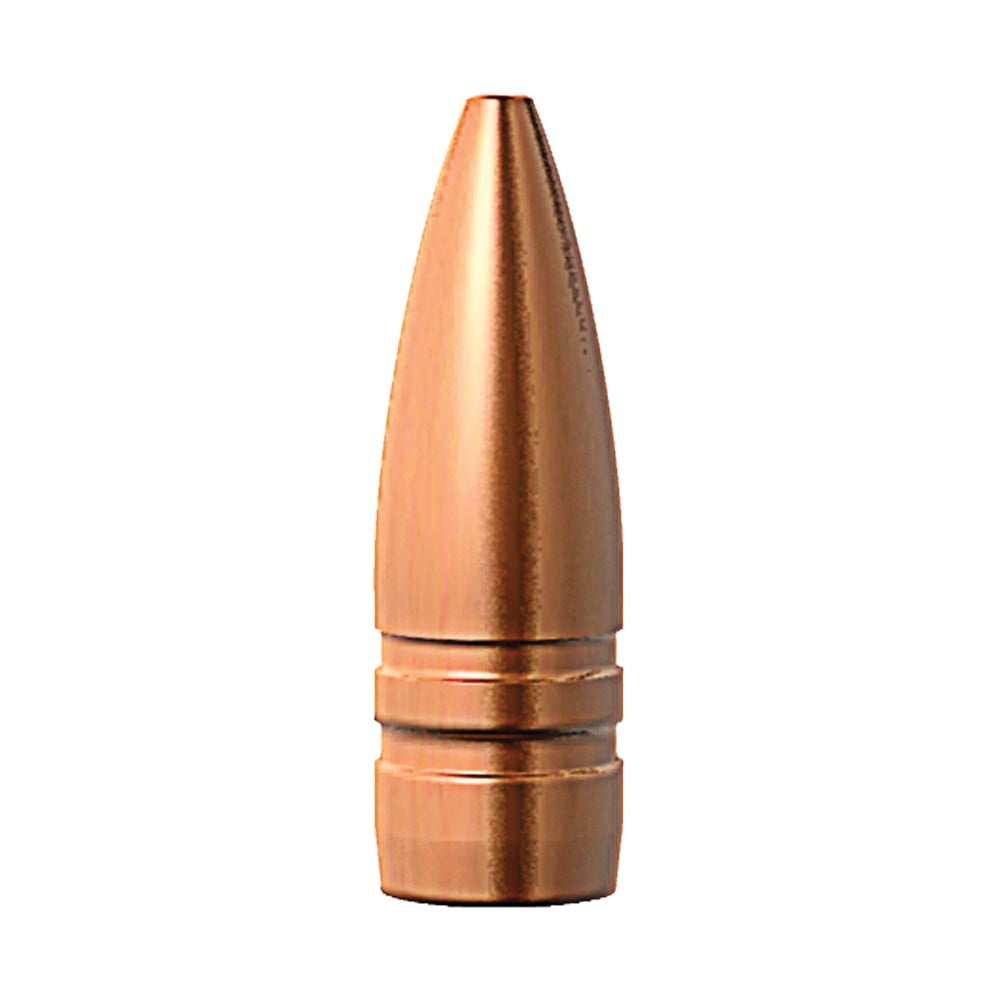
BARNES AMMO TSX BT 7.62x39 123Gr 0.31Dia 50rd
Barnes TSX 123-grain, an all-copper expanding bullet. Relevant if you hunt somewhere that restricts lead projectiles — check your state and unit rules, because they vary.

Ammo Inc. Hunt LR Brass 7.62 X 39 123 Grain 20-Rounds SST
Ammo Inc Hunt LR with the 123-grain SST bullet. Toward the top of the 7.62x39 price range, which is the point this section is making.
Notice where the expanding loads land relative to the steel-case floor in the index above. A hunting 7.62x39 load is not cheap ammunition — it just sits in a cartridge whose practice ammunition is.
What about suppressors and subsonic loads?
Neither cartridge is the natural answer here, and 7.62x39 is the weaker of the two.
Subsonic 7.62x39 exists — there is one in the picks above — but the cartridge was not designed around it, and subsonic loads in a rifle built for supersonic pressure frequently will not cycle the action reliably. 5.56 subsonic is worse still. The cartridge that was purpose-built for this job is .300 Blackout, which is why it exists at all.
If quiet is the actual goal, read the suppressor buying guide first and choose the cartridge around that decision, not the other way around. NFA paperwork, wait times and state eligibility are the constraints that matter, not the ammunition price.
What does the ecosystem around each rifle cost?
This is where the real difference hides.
Optics. Mounting a modern optic on an AR is solved — a flat-top receiver and a mount. On an AK-pattern rifle it is a genuine decision involving side rails, rail covers or a dust-cover mount of varying quality. Neither is difficult, but only one is free. If you are choosing an optic at the same time, red dot vs LPVO covers that trade separately.
Magazines. Both platforms have deep, cheap magazine markets, and both have junk at the bottom of them. How many you actually need is a question we answered in how many magazines do you need.
Ammunition selection. The AR shooter can change bullet weight, case material, pressure and terminal design across a wide field, as our best 5.56 and .223 ammo picks show, and can change the barrel's twist rate to use more of it. The 7.62x39 shooter has far fewer choices. For a lot of people that simplicity is a feature.
Shipping. Both are subject to the same state-level ammunition shipping rules, and some of the best cost-per-round listings come from retailers that cannot ship everywhere — check shipping restrictions before you plan a case purchase around a price.
So which should you buy?
Pick 7.62x39 if your shooting is inside 200 yards, you want a cheap high-volume practice cartridge and you are content with steel-case imports, or you want an inexpensive short-range hunting rifle. Track the 7.62x39 index and buy cases when the floor drops, because this cartridge's supply is less stable.
Pick 5.56 if you want distance, lighter recoil, or the ability to change what your rifle does by changing ammunition. The .223 and 5.56 market is deeper at every tier above the floor, and you will find a load for whatever the rifle's job turns out to be.
If you are undecided and buying your first centerfire rifle, the deeper ammunition market is worth more than a few cents per round. If you already own one and are considering the other, the honest answer is that you are buying a second rifle, not saving money.
Either way, set an alert on the cartridge you land on and buy on the dips rather than the day you run out:
Get alerted when 7.62x39mm price drops hit.
We watch every listing and email you the moment the cost per round drops.
Set Up a Free Price AlertFor the 5.56 side of that decision, start with best 5.56 and .223 ammo, and if the .223-versus-5.56 chamber question is still open for you, we settled that one separately.
AmmoSpotter earns a commission when you buy through links on this page. It never changes what you pay, and it never decides what we recommend — our picks are ranked on live cost-per-round data pulled from every retailer we track. Full disclosure.
Frequently Asked Questions
Is 7.62x39 cheaper than 5.56?+
Which has more stopping power, 5.56 or 7.62x39?+
Can an AR-15 shoot 7.62x39?+
Is 7.62x39 good for deer hunting?+
Why is 7.62x39 ammo so variable in price?+
Which is cheaper to own overall, an AK or an AR?+

About the author
AmmoSpotter Research Desk
Price & Ballistics Research
The AmmoSpotter Research Desk analyzes live retail pricing across every ammunition, firearm and accessory listing we track. Recommendations here are ranked against real cost-per-round data pulled daily from the retailers we monitor - not against manufacturer marketing copy.
- ✓Tracks 180,000+ live product listings across 6 retailer feeds
- ✓Records price history on every listing, every day
- ✓Cost-per-round methodology applied to all ammunition rankings
- ✓No product is ranked without a verifiable in-stock retail price
- ✓Affiliate relationships never influence rankings
Related Guides

Best 5.56 & .223 Ammo 2026: Practice, Defense and Precision
5.56x45mm NATO and .223 Remington are the most-purchased rifle cartridges in America, and the most confusing to buy. The same rifle will accept ammunition ranging from bulk steel-cased plinking loads to match ammuniti...

.223 vs 5.56: The Difference That Actually Matters
The cases are dimensionally near-identical. The ammunition will chamber in either rifle. That is exactly why this matters — nothing physically stops you from making the mistake. The two real differences 1. Pressure 5....

Steel Case vs Brass Case Ammo: What You Actually Give Up
Steel-cased ammunition occupies a strange place in shooting culture: universally used, frequently condemned, rarely analyzed. The honest position is narrower than either camp claims. Steel is cheaper. It is cheaper fo...

AR-15 Ammo Guide 2026: What to Feed It, Why, and What It Costs
The rifle is the cheap part. Over any realistic ownership period an AR-15 costs less than the ammunition that goes through it, which means the ammunition decision is the expensive one — and it is the one most buyers m...
AR-15 Twist Rate and Ammo Selection: What Your Barrel Rules Out
Twist rate is the one barrel spec that decides what you are allowed to buy. Not what you should buy, or what shoots best — what will physically fly straight out of your rifle. A bullet your barrel cannot spin fast eno...
Best .223 Match Ammo: Twist Rate First, Then Live Cost Per Round
Most .223 match-ammo advice starts with brands. That's the wrong starting point. Before you choose between Gold Medal, ELD Match and Black Hills, one number stamped on your barrel decides which of them can work at all...