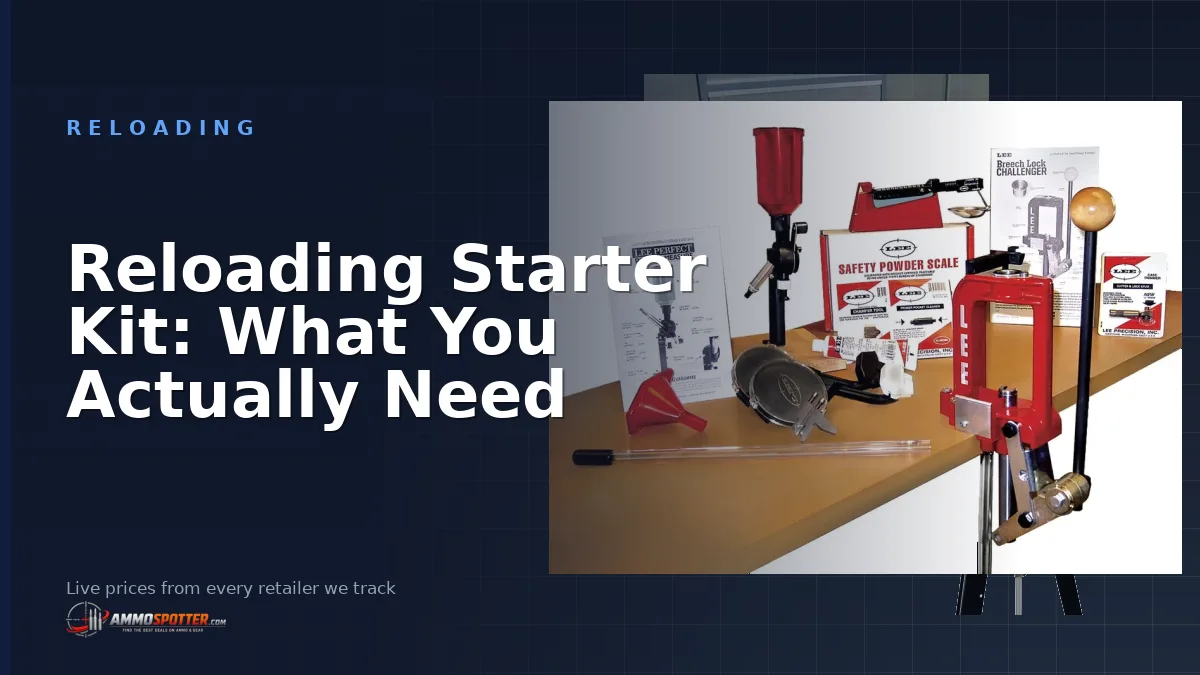
Reloading Starter Kit 2026: What You Actually Need, Priced From Our Catalog
Kits look complete but skip dies, a caliper and a load manual. Here's what to buy first, what it all costs, and the powder and primer problem.
Price & Ballistics Research
The AmmoSpotter Research Desk analyzes live retail pricing across every ammunition, firearm and accessory listing we track. Recommendations here are ranked against real cost-per-round data pulled daily from the retailers we monitor - not against manufacturer marketing copy.
143 published pieces
Kits look complete but skip dies, a caliper and a load manual. Here's what to buy first, what it all costs, and the powder and primer problem.
Bore sight, fix your mount, shoot groups and adjust once. Here's how to zero a scope in 9 to 12 rounds, what distance to use, and the mistakes that waste a box.
MOA and MRAD both measure angle, and neither is better or pricier. Pick the one your shooting partners use, and keep reticle and turrets in the same unit.
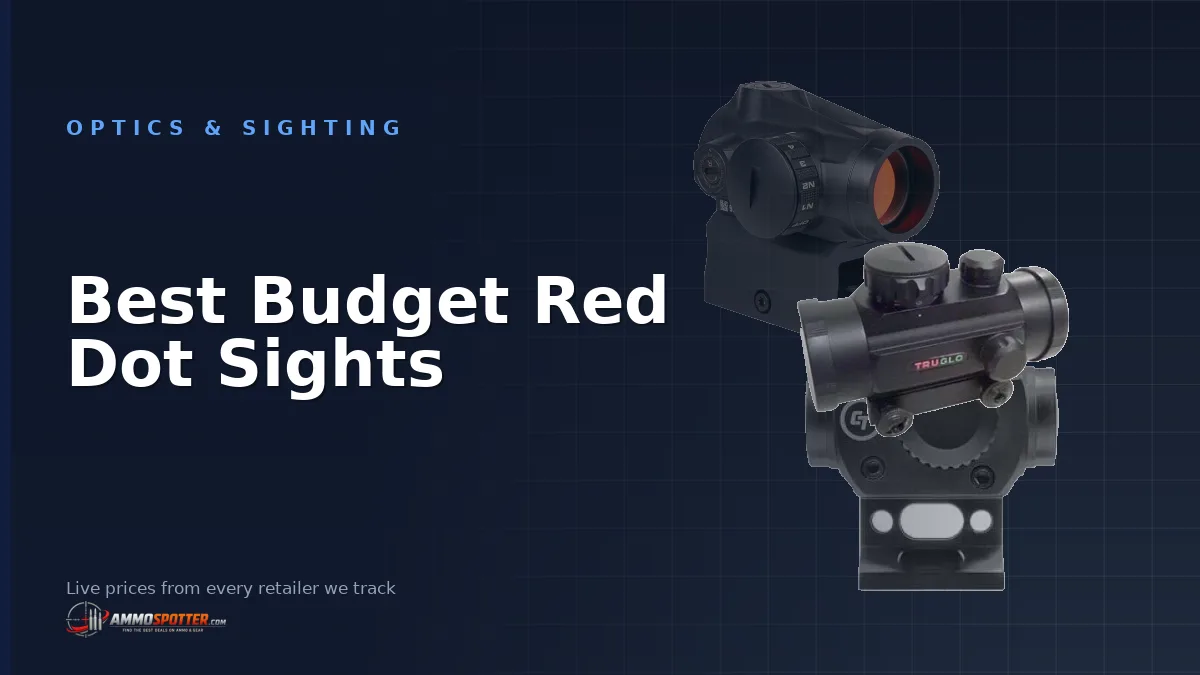
A usable rifle red dot starts around $40, and most people should stop at $90 to $150. Here's what each tier gets you, and what to check on a pistol dot.
A red dot is faster and lighter. An LPVO lets you see and shoot farther. Once you count the mount they cost about the same, so pick by how and where you shoot.
A suppressor has four costs, not one. Here's what cans cost by tier, what mounts add, and why ammo ends up being the biggest bill.
The can is a one-time cost. The host's ammo costs you every round. Here's why .22 LR and 9mm are the best first hosts, and when .300 Blackout or 5.56 make sense.
Gel tests compare bullets, they don't mimic a body. Here's how to read penetration and expansion numbers, and what better bullet engineering costs you.
Effective range isn't printed on the box. It's set by the bullet, your skill and how much practice you can afford. Here's a caliber-by-caliber table with live prices.
Subsonic ammo kills the sonic crack, not the gunshot. Here's what it costs, which calibers handle it easily, and the trade-offs nobody puts on the box.
Shorter barrels lose velocity, and the speed on the box came from a test barrel that isn't yours. Here's which calibers care most and how to buy ammo for a short barrel.
BC measures how well a bullet cuts through air: less drop, less drift, more speed downrange. It isn't accuracy. Here's when it matters and what it costs per round.
Velocity is measured, energy is calculated, and neither tells you what a bullet does on impact. Here's how to use both numbers and what energy costs.
Choke constrictions, shot sizes and buckshot sizes in plain charts, plus live prices showing hunting sizes cost about twice what clays sizes do.
For clays, cost per shell is what counts. Shoot #7.5 for trap and #8 for skeet. A flat mostly stops you overpaying, and shipping can wipe out the savings.
20 gauge target shells cost about the same as 12 gauge. Buckshot and slugs are where 20 gauge costs more, and where it has far less to choose from.
.300 Blackout costs more than 5.56, but not where you'd expect. Plain subsonic costs the same as supersonic. Expanding bullets and small boxes are the premium.
.30-06 and .308 cost about the same per round on average. .308 has cheaper practice ammo and far more rifles. .30-06 has more heavy bullets for elk and moose.
A rifle marked .308 takes either round. Here's why the pressure argument is mostly a myth, when headspace matters, and what each label costs per round.
7.62x39 has the cheapest rounds, but 5.56 is cheaper and easier to find once you leave steel case. Here's how they compare on ammo, rifles and hunting.
Most AR owners never hit a twist rate limit, since cheap 55 and 62-grain ammo works in any barrel. Here's when twist matters and how to check yours.
Check your barrel's twist rate before you buy .223 match ammo. Here's which bullet weights it can handle and what each tier of match ammo costs.
Most 9mm cracks through a can. Here's which 147-grain and subsonic loads stay quiet, why carbines need heavier bullets, and what it costs per round.
.380 is the smaller round but costs more per round than 9mm, because it's rarely sold in bulk. Here's why, and how to choose between them.